Builders
 Carpenters
 Electricians
 Flooring Specialists
 Gardeners
 Handymen
 Heating Engineers
 Painters & Decorators
 Plasterers & Renderers
 Plumbers
 Roofers
 Tilers
 my
myBoiler Installation Cost
At a Glance
- The average boiler installation cost is around £2,400 in the UK.
- It typically takes 1 day for a heating engineer to install a new boiler.
- How much a new boiler costs in the UK, the labour cost to fit a boiler, and what impacts the prices you're quoted in 2026.
- How long the job usually takes and what's involved in a boiler replacement.
- How to find a local boiler fitter with MyJobQuote.
Get free estimates
Are you a trade? Get more work today!
£2,400
Table of Contents
- How Much Does a New Boiler Installation Cost?
- How Much to Fit a Boiler? (Labour Only)
- How Much Does a New Boiler Cost? (Supply Only)
- Factors That Impact Boiler Installation and Replacement Costs
- Additional Boiler Installation Costs
- New Boiler Grants and Financial Help
- Signs You Need a New Boiler Installed
- What's Involved in a New Boiler Installation?
- Checklist: Hiring Local Boiler Installers in the UK
- FAQs
How Much Does a New Boiler Installation Cost?
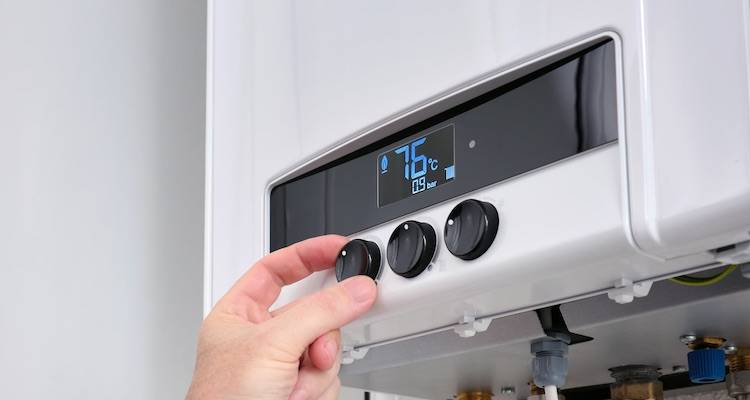
The average boiler installation and replacement cost across the UK is around £2,400. This includes the cost of a new boiler, as well as the boiler fitting cost.
Boiler replacement costs you're quoted will mainly depend on the type of boiler you're installing, whether you're moving the boiler at the same time or need new pipework, and where you're located in the UK.
Excluding supply costs, and in standard cases, you should expect the cost of boiler installation to be around £1,000. However, prices you're quoted for labour could be as low as £600 or as high as £1,700.
Gas combi boiler installation, along with new central heating costs, typically ranges between £1,200 and £4,000. This remains the most commonly installed type of boiler in the UK.
Homeowners who get quotes for the fitting of a mid-range gas combi boiler will land in the middle of this range, in the £1,800 to £2,800 bracket. You can replace a gas combi boiler for less than this, but only if it's a simple swap-out for a basic boiler model.
Keep reading for an overview of how much all the different types of boilers cost to install in 2026.
I'd like to have a smart, hi-tech boiler fitted. Are there any specific requirements to accommodate this type of installation?
"It all depends on the location of your gas meter and where you want to put the boiler. Also, what type of system do you have? It can depend on many factors, all new boilers are A-rated and condensing."
Boiler Installation Prices
The table below provides an overview of typical new boiler installation and replacement costs in the UK.
| Boiler Type | Average Cost (Supply + Installation) |
|---|---|
| Combi Boiler | £1,200–£4,000 |
| System Boiler | £1,100–£4,000 |
| Conventional Boiler | £1,750–£5,500 |
| Electric Boiler | £2,300–£4,600 |
| Biomass Boiler | £8,400–£16,000 |
Want a custom price?
Post your job
How Much Does It Cost to Replace or Convert a Boiler?
What you pay also depends on whether you're swapping your existing boiler for the same type or converting to something different. Gravity-fed systems (sometimes called regular or conventional boilers) generally cost the most to convert from, as they involve removing a cold water tank and hot water cylinder.
| Job | Average Cost (Supply + Installation) |
|---|---|
| Combi to Combi (same location) | £1,200–£3,500 |
| Combi to System | £1,200–£4,000 |
| Combi to Conventional | £1,200–£4,000 |
| System to System (same location) | £1,250–£4,000 |
| System to Combi | £1,200–£3,500 |
| System to Conventional | £1,200–£4,000 |
| Conventional to Conventional (same location) | £2,500–£4,500 |
| Conventional to Combi | £2,500–£4,500 |
| Conventional to System | £2,500–£4,500 |
| Back Boiler to Combi | £3,200–£5,800 |
| No Existing Boiler (new combi system from scratch) | £4,200–£7,500 |
Want a custom price?
Post your job
Swapping a boiler for the same type in the same spot is nearly always the cheapest option, as it avoids new pipework, flue changes, or tank removal. Converting between a combi and a system boiler often costs a similar amount to a like-for-like swap, but converting to or from a conventional boiler tends to cost more in every case, since the tank and cylinder need removing regardless of which boiler you're moving to. Moving the boiler's location adds further cost on top of any of these figures.
Calculate Your New Boiler Installation Cost
Looking for a quick estimate on boiler installation costs?
Try our boiler installation cost calculator to get an estimated figure.
All you need to do is submit a few details about your property and boiler needs.
Boiler sizing depends on the number of radiators in your home. A small to medium home with one bathroom typically needs a boiler with an output of 24 to 30kW, while a larger home will need a more powerful boiler.
If you're unsure about the size of boiler you need for your home, try our boiler size calculator.
These calculators give you a useful starting point, but the best way to get an accurate price is to request quotes from local boiler installers.
Quotes through MyJobQuote are fast, free, with no obligation to go ahead.
What type of new boiler are you installing?
Combi boiler
11 votes - 58%58% of votes
Conventional boiler
3 votes - 16%16% of votes
Electric boiler
2 votes - 11%11% of votes
Biomass boiler
0 votes - 0%0% of votes
System boiler
3 votes - 16%16% of votes

19 votes
See results
Hide results
How Much to Fit a Boiler? (Labour Only)
The average cost of labour when getting a new boiler installed is between £600 and £1,900.
Exactly where you land in that range depends on the job. The table below gives typical labour-only costs and timescales for common scenarios.
| Job Type | Labour Cost Only | Typical Timescale |
|---|---|---|
| Like-for-like swap (same type, same location) | £600–£900 | 4 to 6 hours |
| Like-for-like swap (same type, new location) | £1,000–£1,300 | 1 to 2 days |
| Converting to a different boiler type (same location) | £900–£1,300 | 1.5 to 2 days |
| Converting to a different type and a new location | £1,400–£1,900 | 2 to 3 days |
| Converting a back boiler to a combi | £1,200–£1,700 | 2 to 3 days |
Want a custom price?
Post your job
A straightforward like-for-like swap is usually finished within a day, since the pipework, flue, and gas supply are already in place. Converting to a different boiler type, or moving its location, adds time for new pipework and flue routing, which is reflected in the higher labour cost.
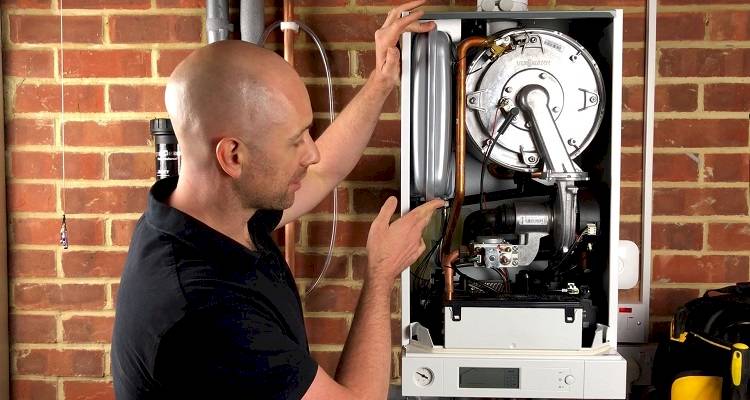
However, these labour costs are dependent on the following:
- If you're having a like-for-like replacement boiler (e.g., same type of boiler, in the same location).
- Converting to a different boiler type or fuel increases the labour cost to install your new boiler.
- The ease of access to the current boiler position.
- If you want the new boiler installed in a different location.
The bottom line: the more straightforward the job, the less you'll pay in labour.
How much does a combi boiler installation cost (labour only)? Could I also get a price for replacing 11 radiators (4 doubles, supply and labour)?
"I would say roughly £400 to £800 for the boiler installation if it's a straight swap, but if it's a conversion, then it could be anything up to £1,000.
For the radiators, I would say it's a day's work (if all went well), so between £300 and £400."
For the radiators, I would say it's a day's work (if all went well), so between £300 and £400."
How Much Does a New Boiler Cost? (Supply Only)
New boiler prices vary depending on the type of boiler and whether or not it is from one of the leading manufacturers.
| Boiler Type | Supply Cost |
|---|---|
| Combi Boiler | £600–£2,300 |
| System Boiler | £500–£1,700 |
| Conventional Boiler | £1,150–£2,800 |
| Electric Boiler | £1,700–£2,900 |
| Biomass Boiler | £7,800–£14,500 |
Want a custom price?
Post your job
Let's look at the most common boiler types in detail:
Combi Boiler Cost
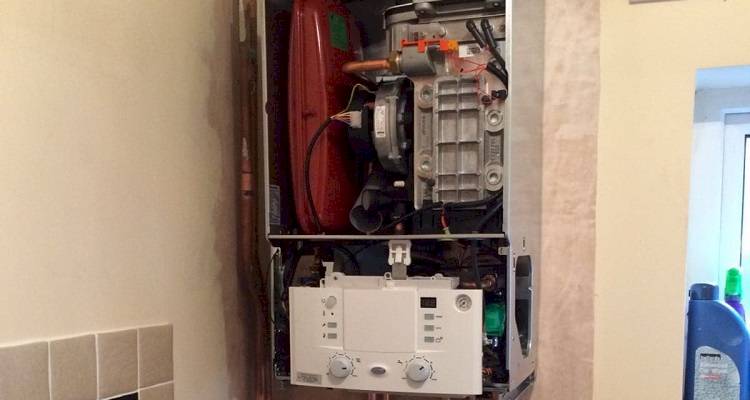
A combi boiler heats water on demand for your central heating and hot water system, without the need for a separate hot water tank. When it comes to installing a new boiler, a combi-boiler that runs off gas is the most common option within the UK.
Combi Boiler: £600 to £2,300
- Running Costs — Cheapest fuel per unit if using gas, at around 7.33p per kWh.
- Hot Water Capacity — Might not be suitable for very large homes with high demand.
- Water Pressure — Requires high water pressure.
- Installation — Efficient and compact design, connected to the mains.
- Suitability — Not an option for homes that are located off-grid, and gas options use fossil fuels.
System Boiler Cost
A system boiler takes its water supply directly from the mains, but stores the hot water in a cylinder. This type of boiler doesn't need a cold water tank, and allows for more than one hot water outlet.
System Boiler: £500 to £1,700
- Hot Water Capacity — Hot water can run out.
- Water Pressure — Good water pressure.
- Installation — Requires a separate hot water cylinder, taking up more space than a combi boiler.
- Suitability — Useful for homes with more than one bathroom.
Conventional Boiler Cost
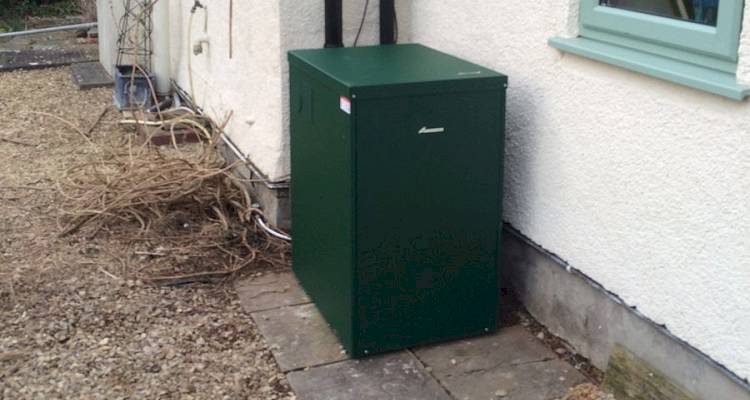
Conventional boilers are perfect for larger homes and are composed of a cold water storage tank (often fitted into the loft), along with a hot water cylinder, and are usually either a gas boiler or an oil boiler.
Conventional Boiler: £1,150 to £2,800
- Running Costs — Cheaper than electricity. Oil running costs are around 9p to 11p per kWh.
- Hot Water Capacity — Can use multiple taps at the same time.
- Water Pressure — Good water pressure.
- Installation — Requires a cold water tank and a hot water cylinder, and more complex to install.
- Suitability — Great for heating larger homes but fuel for an oil boiler needs to be ordered in advance.
The cost of installing an oil boiler is around £2,200 to £5,500 (not including fuel prices) although oil-fired boilers are often more commonly found in off-grid properties.
Electric Boiler Cost
An electric boiler is less common than gas, but a great option for a new boiler as it is energy-efficient and environmentally friendly. If you are looking for an A-rated boiler, electric boilers are a good choice.
Electric Boiler: £1,700 to £2,900
- Running Costs — Higher than gas, at around 26.11p per kWh under the 2026 Ofgem price cap.
- Hot Water Capacity — Not suitable for high demand, and may need a hot water cylinder.
- Installation — Compact design, no flue required.
- Suitability — Almost 100% energy-efficient, and produces heat without any noise.
Biomass Boiler Cost
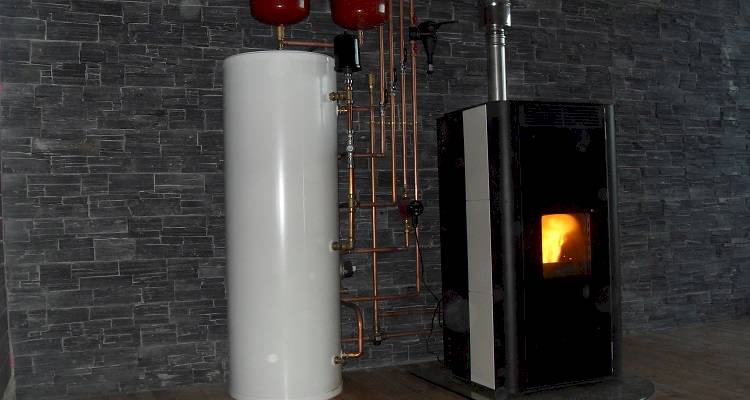
A biomass boiler is an environmentally-friendly option for a new boiler, as it works by burning wood to produce the energy required to heat your water. This is usually done with wood chips, pellets, or logs.
Biomass Boiler: £7,800 to £14,500
- Running Costs — Low running costs, at around 7p to 9p per kWh.
- Installation — Requires a bulky fuel store, with an expensive upfront cost.
- Suitability — Energy efficient and useful for off-grid homes, although high maintenance.
I'm planning ahead for a new boiler in my 4-bedroom house. What should I budget for?
"This would depend on the boiler you want to put in, how many rads, and the complexity of the job, as there are many variables to consider. Rough price including installation: £2,400 or more."
Factors That Impact Boiler Installation and Replacement Costs
The cost of installing a new boiler is determined by:
- The boiler's brand — Premium boiler brands like Viessmann, Vaillant, and Worcester Bosch will typically charge more than mid-range boiler brands like Baxi and Ideal.
- Your home's location — Homes in London or the surrounding areas can cost £250 to £700 more than those in the north of the UK due to increased demand.
- Replacing boiler like-for-like — Swapping your old combi boiler for a new combi boiler will have significantly lower labour costs than if you were to change fuel type.
- Replacing boiler with a different fuel type — New pipework, fuel lines, upgrading or removing water tanks, electrical and flue work will all bump up your installation and boiler replacement costs if you're changing your boiler's fuel type. A boiler conversion cost is typically higher than a straightforward like-for-like replacement because of the additional system alterations needed.
- National or local installer — Opting for a local provider will carry lower labour costs than if you were to choose a national installation company, as their overheads will be lower, saving you £500 to £1,500 in labour costs.
- Time of year — Heating engineers are busiest over the winter months, so booking your installation in spring or summer can sometimes mean a lower price and a quicker appointment.
- Access to your boiler — A boiler that's hard to reach, such as one in a loft or a tight cupboard, can take longer to remove and fit, which increases labour costs.
- Pipework and flue changes — If new pipework or flue routing is needed to fit the boiler in a new position, or to suit a different boiler type, this adds to both materials and labour time.
- Boiler output — A higher kW boiler, needed for larger homes with more radiators and bathrooms, generally costs more to buy than a smaller model for a flat or one-bathroom house.
Ask a Trade
Got a question that only a tradesperson can answer? We have thousands of trades ready to answer any question you may have.
Ask your question

Additional Boiler Installation Costs
Replacing your boiler doesn't mean you need to overhaul your home's entire heating system. Removing your old boiler is normally included as standard in a replacement job, so it isn't an extra cost, but a few optional add-ons are worth budgeting for.
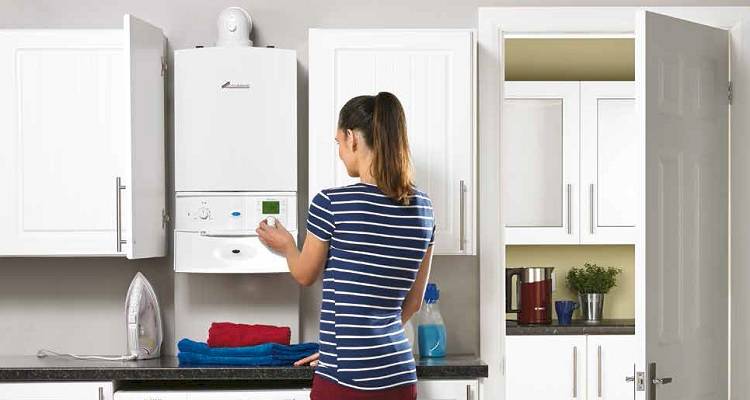
- Magnetic filter — around £120 to £250, to help stop future debris building up and protect your new boiler.
- Smart thermostat — around £265, giving you control over your heating from your phone and helping to manage energy use.
- Thermostatic radiator valves (TRVs) — around £70 to £140 per radiator, letting you set different temperatures room by room to cut energy use in rooms you don't use often.
- New radiators — around £200 per radiator to remove and replace, worth considering if you're still getting cold spots after a system flush.
- Boxing in your boiler — around £335, to keep the unit out of sight and tidy up the room.
- Boiler relocation — around £750 on average, though this varies depending on the pipework, flue, and distance involved.
New Boiler Grants and Financial Help
There are several schemes in the UK that could help reduce the cost of installing a new boiler that are worth looking into. Below are a few details related to each one:
- Boiler Upgrade Scheme (BUS) — Provides financial support towards the installation of low-carbon heating systems. This also includes help with the cost of heat pumps.
- ECO4 (Energy Company Obligation) — Helps eligible households and homeowners improve their property's energy efficiency, including replacing old boilers by installing one that is more efficient.
- Local authority grants — Check with your local council, as they may also offer grants or loans for work relating to improving energy efficiency, which may include a boiler replacement scheme.
Eligibility criteria apply to each of the above schemes, so it's worth checking your circumstances before planning to have a new boiler fitted as you may be able to save some money along the way.
Signs You Need a New Boiler Installed
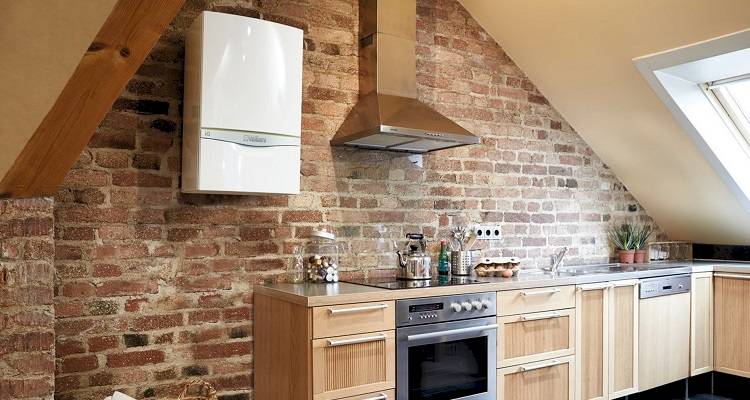
Is it time to replace your boiler?
Here are the tell-tale signs to look out for that signal it's time to replace a boiler:
- Odd noises — If you're hearing popping, knocking, or hissing noises while your boiler's in use, it might be a sign that the internal components are failing.
- Frequent repairs — You should have your boiler serviced once a year, but if you're finding yourself booking additional repair services each year, it can be a sign that it needs replacing with a newer model.
- Leaking system — Repeated leaks or loss of pressure can indicate a problem with your boiler or central heating system. These issues should always be investigated by a qualified engineer and repaired or replaced if necessary to ensure safe and efficient operation.
- Temperature fluctuations — If you've noticed your water takes a long time to heat up or switches between hot and cold when running, it can be an indicator that something's wrong with your boiler.
- Boiler age — If your boiler is over 15 years old, it's time to replace it. Doing so can potentially save you an estimated £250 to £350 per year on your energy bills.
- Planning an extension — You should add a new boiler to your house extension costs if you're planning on extending your home, as your existing boiler may be too small to heat your new square footage adequately.
Should You Repair or Replace Your Boiler?
Not every issue means you need a full replacement. Here's a general guide to help you decide.
Repairing may be enough if:
- Your boiler is under 10 years old.
- Breakdowns are rare and the repair bill is under roughly £500.
- The rest of your heating system is in good working order.
Replacing is usually better value if:
- Your boiler is over 10 to 15 years old.
- Repair costs are adding up and have passed roughly £500 in total.
- Parts are becoming hard to source for your model.
- Your energy bills keep rising despite regular servicing.
If my boiler's heat exchanger breaks, should I repair it or replace the whole boiler?
"That all depends on the type of boiler you have. Some boilers it's cheaper to replace the main heat exchanger, but on others it's considered to be beyond economical repair."
What's Involved in a New Boiler Installation?
You shouldn't ever fit a new boiler as a DIY project as the consequences of poor boiler installation can be fatal, and it isn't something you should try and cut corners on purely to save time and money.
Boiler installations must be carried out by a registered engineer. By using MyJobQuote, you can find local heating engineers in your area. We recommend homeowners request at least three separate quotes before committing.
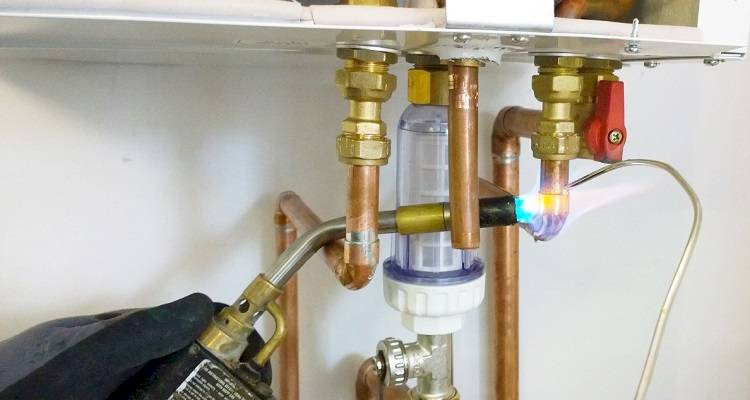
Once you've decided you need a boiler replacement and have found a suitable installer, here's a breakdown of what to expect (based on the steps involved for installing a standard gas combi boiler):
Before the Job
- Initial assessment — The installer will check your existing system and boiler location, assessing any potential complications before work begins. If any pipework changes or upgrades are needed, then your engineer will need to plan these in advance.
During the Job
- Removing the old boiler — The time this takes will vary depending on the existing system and the complexity of the job.
- Preparing the system — The installer will flush and clean the system to remove debris. Any necessary pipework changes or upgrades will also be carried out, particularly if the boiler location is changing.
- Installing the new boiler — The new boiler is then fitted into place, along with any recommended protective extras, such as a system filter, filling loop, or magnetic filter.
After the Job
- Final checks — The installer will run the boiler and system to ensure everything is working correctly, making any tweaks if and where required.
- Instructions — As well as leaving you with an instruction manual, there should be time to demonstrate how to use the controls and carry out any basic maintenance such as adjusting the pressure and bleeding radiators where appropriate.
- Register the boiler — The final step is registering the boiler with the manufacturer so that your product guarantee is valid. This then provides cover in the event any problems arise during the warranty period.
How long does it take to fit a new boiler if it's a straightforward combi-to-combi swap?
"If it's just a standard combi-to-combi installation, it generally takes about 4 to 6 hours in total. If you need water, have a word with the installer, as they'll be able to make provisions to get the cold water back on sooner."
Checklist: Hiring Local Boiler Installers in the UK
There are a few things you will need to consider before hiring someone to fit a new boiler for you. Here's what we suggest:
- Have you received at least 3 quotes? Find different installers in your area via MyJobQuote and request at least three separate quotes, at no obligation to go ahead, so you can compare prices.
- Have they provided a detailed breakdown? Ask for the quote to be itemised, so you see exactly what's included, while keeping an eye out for any hidden boiler costs that may be involved.
- Do they hold suitable qualifications? Make sure your installer's qualifications match your fuel type: Gas Safe registered for gas, NICEIC for electric, OFTEC for oil, and HETAS for biomass. Some manufacturers also offer specific training or certification for their products, so a Worcester accredited installer will be better-qualified to install a Worcester boiler.
- Do they have positive feedback? Check for online reviews such as their MyJobQuote profile and read what any recent customers have to say about the quality of work and the tradesmen involved.
- Does your new boiler installation come with a warranty? Any reputable company will issue a warranty or guarantee on its work. However, you should always have this in writing in the event of any dispute.
- What insurance does your tradesman have? The majority of companies and individuals will hold at least Public Liability Insurance in the event of personal injury or accidental damage.
FAQs
How Much to Fit a Worcester Bosch Boiler?
The cost to fit a Worcester Bosch boiler typically ranges from £1,200 to £4,500, depending on the model, complexity of the installation, and if you are changing the boiler type.
Can I Install a Boiler Myself?
Installing a boiler is not recommended as a DIY project. Depending on the type of boiler, they require specialised knowledge in gas, plumbing and electrical work, which can be dangerous if done incorrectly. Always use a qualified professional for safety and compliance. Gas boilers need to be fitted by a Gas Safe engineer.
Do I Need Planning Permission to Install a New Boiler?
Planning permission isn't normally required if you're replacing an existing boiler without major structural changes. However, if you live in a listed building, a conservation area, or installing an external flue, then it is always best to check with your local council first for any advice.
Can I Convert a Gravity-Fed System to a Combi Boiler?
Yes. A gravity-fed system is another name for a conventional or regular boiler, and converting one to a combi is a popular upgrade. It costs more than a like-for-like swap, since the storage tank and cylinder need removing and new pipework and flue routing are usually required. See the "How Much Does It Cost to Replace or Convert a Boiler?" table above for typical prices.
What Is a Condensing Boiler?
A condensing boiler recovers heat from exhaust gases that inefficient boilers waste, reducing your carbon footprint and cutting running boiler costs. All new gas boilers installed in the UK must be condensing by law, which means that any modern boiler replacement will be an A-rated condensing boiler as standard.
Why Is It So Expensive to Install a New Boiler?
Most of the cost comes from labour, not the boiler itself. A Gas Safe registered engineer needs time to remove the old unit, adapt pipework and the flue where needed, fit and test the new boiler, and register it with the manufacturer. Costs rise further if you're changing boiler type, moving its location, or fitting in a home with no existing gas or heating infrastructure.
What Is the Best Time of Year to Replace a Boiler?
Late spring and summer, roughly May to September, tend to be quieter for heating engineers, which can mean shorter waits and more competitive quotes. Booking in advance rather than waiting for a winter breakdown also gives you more time to compare quotes rather than needing an emergency callout.
Is It Worth Replacing a 15-Year-Old Boiler?
In most cases, yes. Boilers over 15 years old tend to run well below the efficiency of a modern A-rated condensing boiler, meaning higher energy bills, and parts can become harder to source. If your boiler is this age and breakdowns or repair costs are becoming frequent, replacement is usually the better long-term option, even though it's a larger upfront cost.