Builders
 Carpenters
 Electricians
 Flooring Specialists
 Gardeners
 Handymen
 Heating Engineers
 Painters & Decorators
 Plasterers & Renderers
 Plumbers
 Roofers
 Tilers
 my
myGreen Roof Cost
At a Glance
- The average cost of installing a green roof is approximately £150 per square metre.
- Most green roof installations take 1 to 7 days to complete.
- A complete breakdown of green roof installation costs per square metre by type.
- What affects the price and how long installation takes.
- How to find and hire a roofer to install your green roof using MyJobQuote.
Get free estimates
Are you a trade? Get more work today!
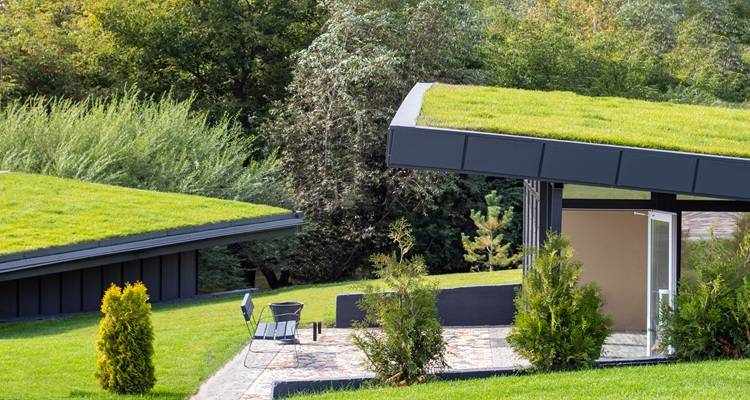
A green roof is one that is completely or partially covered in vegetation and installed above a waterproof layer. It's also known as an eco, sedum or living roof.
Homeowners choose to install green roofs for several reasons, including their ability to absorb rainfall, help keep the rooms below cooler in hot weather, provide habitats for insects, and make use of an otherwise unoccupied space. They also look a lot nicer than flat grey roofs.
£150 psm
Table of Contents
- How Much Does a Green Roof Cost?
- How Much Do Green Roof Installers Cost?
- Supply Cost of a Green Roof
- Additional Green Roof Costs
- What Impacts Green Roof Costs?
- Building Regulations for a Green Roof
- Types of Green Roof
- Cost of Alternative Types of Roof Covering
- Checklist: Hiring Green Roof Installers in the UK
- FAQs
How Much Does a Green Roof Cost?
With a range of options available, the average cost of fitting a green roof will vary. However, in general, an intensive roof is the most expensive at around £150 to over £300 per square metre.
Which type of green roof are you considering?
Extensive (sedum or wildflower)
2 votes - 100%100% of votes
Semi-intensive
0 votes - 0%0% of votes
Intensive
0 votes - 0%0% of votes
Biodiverse or wildlife-focused
0 votes - 0%0% of votes

2 votes
See results
Hide results
A semi-intensive green roof is likely to cost around £80 to £150 per square metre, and a simple, extensive roof costs between £35 and £50 per square metre.
Green Roof Price per m²
The table below provides an idea of the costs to install different types of green roofs, as well as related extras.
All green roof systems in the table include the structural deck, waterproofing, a root barrier, drainage, a filter layer, substrate, and vegetation.
| Green roof job | Estimated timescale | Average price |
|---|---|---|
| Intensive green roof | 5 to 7 days | £150–£300 per m² |
| Semi-intensive green roof | 2 to 5 days | £80–£150 per m² |
| Medium extensive green roof | 1 to 3 days | £50–£100 per m² |
| Small extensive green roof | 1 to 2 days | £35–£50 per m² |
| Structural preparation | 1 to 4 weeks depending on size and roof type | £20–£50 per m² |
| Waterproofing upgrades | 3 to 7 days | £10–£25 per m² |
| Drainage layers | 1 to 2 days | £15–£25 per m² |
| Maintenance (e.g. weeding, reseeding) | Initial monthly checks, then twice yearly | £3–£10 per m² |
Want a custom price?
Post your job
How Much Do Green Roof Installers Cost?
A major part of the overall cost of installing a green roof is the labour. In particular, the preparation of the roof before adding the planting layers can increase your labour costs as multiple trades are often needed.
Roofing Specialists
Roofers are essential to the installation of your green roof and charge around £250 to £350 per day, depending on where in the UK you live.
Waterproofing Contractors
Waterproofing the roof should be done by a qualified professional. Depending on the type you choose, costs range from £40 to £150 per square metre for liquid plastic roofing and £100 to £160 per square metre for GRP (glass reinforced plastic) fibreglass roofing.
Structural Professionals
A structural engineer costs between £90 and £200 per hour, depending on the project type and your location. Where structural reinforcement is needed for an existing roof, a carpenter will charge £240 to £360 per day.
Green Roof Installers
Depending on the type of green roof, installers charge between £50 and £200 or more per square metre. Extensive roofs are the most affordable, while intensive or semi-intensive roofs are more complex and therefore more expensive.
Landscapers
If you hire a separate landscape gardener for your intensive or semi-intensive roof, the hourly rate is around £30 to £60 or £150 to £280 per day.
Timescales
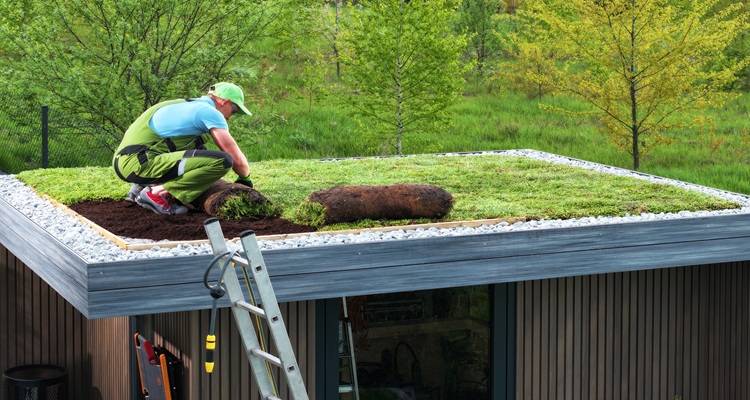
An extensive roof can be fitted in 1 to 3 days. However, an intensive green roof may take 1 to 4 weeks, according to the amount of structural preparation needed, including a structural survey.
In general, the timescale for installing a green roof depends on several factors, including:
- Size of the Roof — larger areas take longer to structurally prepare and fit out.
- Type of Green Roof System — extensive systems are relatively quick to install by rolling out sedum mats across the roof surface, while intensive systems are more like planting a garden and therefore take longer.
- Site Access — where getting in and out of the site is difficult or restricted, this adds to the project timeline, as materials may have to be manually unloaded and moved.
- Weather Conditions — the installation of a green roof can be affected by heavy rain, high winds or storms as it involves working at height outside. Similarly, very hot weather can dry out plants, sedum mats, etc., and is also not good for working on a roof.
- Preparation Needed — the amount of preparatory structural and waterproofing work needed before you lay a green roof adds to the timeline.
Supply Cost of a Green Roof
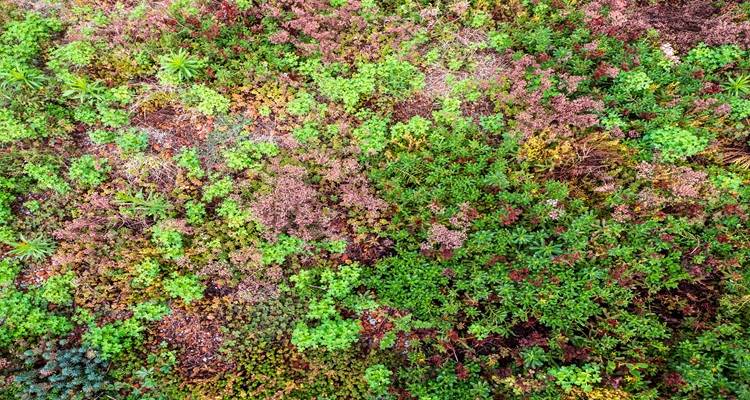
Budgeting for the supplies to fit a green roof means knowing exactly what you'll need and how much the materials cost.
Root-Resistant Waterproof Membranes
Using a combined waterproof and root-resistant membrane removes the need for separate elements to protect your roof from water and root damage. Expect to pay between £15 and £40 per square metre.
If buying these materials separately, a waterproof layer of EPDM rubber membrane costs £10 to £20 per square metre, and liquid waterproofing costs £25 to £50 per square metre. A root barrier membrane typically costs £5 to £10 per square metre.
Protection Layers
A protective mat or layer of fleece guards the waterproof membrane underneath against being damaged or punctured by the upper layers of drainage board and substrate. The cost is approximately £2.50 to £5 per square metre.
Drainage Boards
Green roof systems include drainage boards made from rigid or semi-rigid plastic. They contain dimples or nodes for holding water to hydrate the plants and perforations, which allow excess rainwater to drain. Drainage boards also prevent structural waterlogging. Costs range from £15 to £25 per square metre.
Filter Fleece
The filter fleece prevents particles from the growing medium from getting washed down into the drainage layer and clogging outlets. It also helps to protect the waterproof layer from abrasion and related damage. Some drainage boards come with pre-attached filter membranes. To purchase it on its own costs from £1.50 to £3 per square metre.
Growing Medium
Standard soil is not used for green roofs for various reasons, including its weight. Instead, a substrate or growing medium is used which contains crushed brick, perlite, expanded clay mix or pumice. It's lightweight, free-draining and discourages weeds.
Costs range from £7 to £10 for a 25kg bag, which covers a square metre to a depth of 25mm. Bulk costs are £110 to £130 per cubic metre. Depending on the depth, a cubic metre covers between 9 and 22 square metres.
Sedum Mats or Trays
Extensive green roofs typically use sedum mats or trays as they are more shallow than intensive green roofs. Prefabricated trays cost £15 to £35 per tray, including the substrate and drainage. Prices for sedum mats or blankets are between £20 and £45 per square metre.
Plants
Depending on the type of green roof you want to fit, extensive or intensive, you can choose from sedums, alpines, wildflowers, grasses, shrubs, and even small trees. Costs vary, but you can typically expect to pay from £15 to £130+ per square metre.
Edging
Green roof edging is typically an L-shaped profile made from metal or sometimes plastic, with perforations or slits. Its purpose is to contain the vegetation and substrate while letting water drain away into gutters or run-offs.
They can be used at the edge of the roof or to separate plants from gravel areas. Prices range from approximately £15 to £25 per linear metre.
Irrigation Components
Intensive green roofs need more regular watering, and an irrigation system is typically necessary. Components range from manual watering kits for £5 to £15 per square metre and automated drip systems with prices from £200 to £600.
Factors which will increase the supply costs of a green roof include the size of the area, depth of the build-up and the quality of the materials that you use. The more complex the planting scheme and the deeper the system, the higher the total price will be.
Additional Green Roof Costs
The main installation cost is not always the full amount that you need to budget for when building a green roof. There are additional costs that may not seem obvious at first, but which are essential for the safety, success and longevity of your green roof.
Structural Surveys
A structural survey checks the current condition and structural integrity of an existing building to determine its ability to support a green roof. The cost of a structural survey for a green roof is £500 to £1,500.
Engineer Calculations
Structural engineer calculations are needed to ensure that the load-bearing capacity of the building is sufficient to hold the green roof. In particular, the additional weight of wet soil, mature plants and hard landscaping can significantly impact the structure. Prices are between £300 and £800 for a structural engineer's calculations.
Reinforcing the Roof Deck
Depending on the type you choose, you may need to reinforce your roof deck before fitting a green roof. The added weight can be significant, from 55 to 350 kilograms per square metre, or more. Strengthening the deck can cost from £30 to £100 per square metre.
Access Equipment
The materials used in a green roof can be heavy, and access equipment such as a ladder hoist or telehandler may be needed to get them up on the roof.
Hiring costs for a ladder hoist are between £80 and £125 a day or £160 to £230 for a week. A telehandler is used for large, bulk quantities of material and costs £150 to £250 per day or £300 to £500 for weekly hire.
Scaffold Hire
Scaffolding is the safest way to gain access to fit a green roof. Hiring costs depend on how many sides you need, minimum hire periods and where you live in the UK. The average cost of scaffolding is around £400 to £500 per week. For small buildings such as a garden shed, a scaffold tower typically suffices, and it costs £30 to £75 to hire a small-sized tower.
Waste Removal
Skip hire is the most convenient way to remove waste when fitting a green roof. Costs will vary across the country and according to skip size. However, a standard 8-yard builder's skip costs on average £160 to £370.
Upgrading Insulation
To construct a 'warm roof', one that has the insulation on top of the roof deck and underneath the waterproof layer, rigid boards such as polyisocyanurate (PIR) are typically used. Extruded polystyrene (XPS) is used in an inverted roof, where the insulation sits above the waterproof layer. XPS costs £15 to £60 per board, depending on thickness. PIR costs £20 to £75 per board, again depending on its thickness.
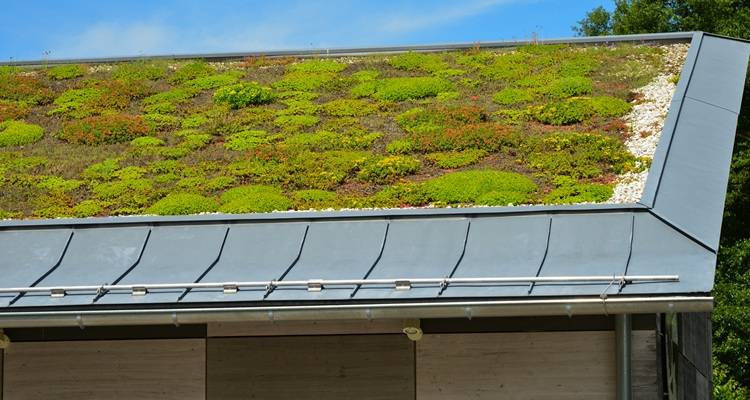
Replacing the Roof Covering Underneath
In some cases, homeowners may need to replace the existing roof covering when retrofitting a green roof. Fitting EPDM rubber costs between £70 and £100 per square metre, while fibreglass roofing is more expensive at £100 to £160 per square metre.
If the existing waterproof membrane is not fully intact, the old finish must be cut into manageable sections and stripped back to the timber joists and plywood or OSB deck so the membrane can be replaced. The waste can then be placed in a skip for legal disposal.
Once exposed, the deck should be checked for rot, structural sagging and moisture damage, then cleaned of grease or adhesive. Repairs and loose fixings must be dealt with before the new waterproofing and planting system is installed. Removal costs rise when the old covering is damaged and harder to extract cleanly, when a rotten deck makes the work hazardous, when drainage needs replacing or upgrading, or when structural reinforcement is required.
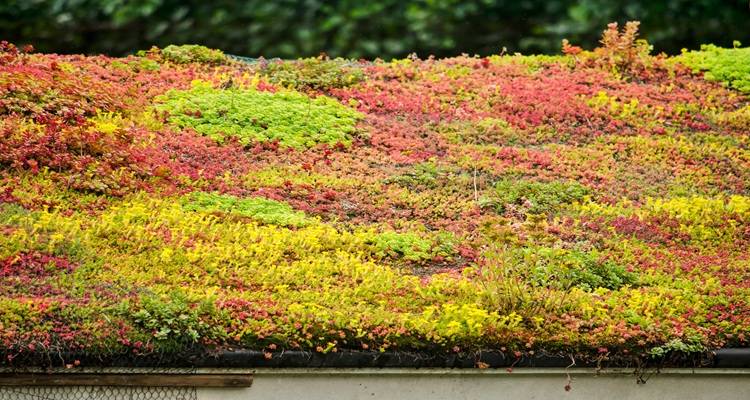
Ongoing Maintenance
Extensive roofs need relatively little maintenance, but should be checked twice a year to remove weeds and fallen leaves and clear drainage outlets. Once established, they generally only need watering during prolonged dry spells. However, intensive or semi-intensive roofs are more complex, heavier and need regular care and checking. Budget between £15 and £25 per square metre for annual maintenance needs.
When retrofitting a green roof to an existing building, it's possible that previously hidden issues will be revealed, such as inadequate waterproofing, poor drainage, rotten decking, or weak structural support. All can add significantly to the final price.
What Impacts Green Roof Costs?
Understanding the different elements that affect the final cost of your green roof installation helps you to budget accordingly.
Size of the Roof
The surface area of the roof will impact your costs as larger roofs require more materials and increased labour. Material prices can be mitigated by economies of scale, which will reduce your outlay per square metre. In other words, the more materials you order, the lower the price per unit.
Type of Green Roof System
Extensive green roofs are cheaper than intensive or semi-intensive variations as they use sedum mats or interlocking trays as opposed to a diverse range of plants in deep containers. These lightweight systems also don't require as much structural reinforcement, further reducing costs.
Designs that include specialist waterproofing, irrigation, edging, walkways, or a wider planting scheme also cost more.
Depth of the Substrate
Intensive green roofs usually need a growing layer at least 200mm deep, with greater depths needed for shrubs and trees, which adds to your outlay. Extensive roofs use shallower layers, with sedum mats normally laid over at least 60mm of growing material. Sedum trays have this material included.
Plant Choice
Your choice of green roof type will dictate, to a certain extent, which plants to include, such as succulents, grasses, wildflowers, or shrubs. The cost depends on which you choose and how many you need.
Structural Suitability
The roof's load-bearing capacity determines if it's structurally suitable for a green roof, with most needing added reinforcement for intensive types. Depending on the extent of the work, this will add to your budget.
Waterproofing Requirements
Adequate waterproofing is essential when fitting a green roof. The amount, extent and type of waterproofing you fit will determine how much you pay.
Drainage Design
Good drainage is key to the success and lifespan of your green roof, including keeping plants healthy and preventing damp from damaging the structure. The type and design of the drainage used will have an impact on the cost.
Ease of Access
Access to the site of a green roof installation affects your budget. If access is narrow, sloping or restricted to specific times of day, materials may need to be manually offloaded and moved to where they are needed, adding to your labour costs.
Location
Labour rates vary across the UK and are often higher in London and the South East.
Building Regulations for a Green Roof
In England and Wales, several Building Regulations apply when adding a green roof or altering the roof beneath it. Scotland and Northern Ireland have their own requirements, so check with your council's building control team before starting work.
Structural Loading
Part A of the Building Regulations covers the design, construction or alteration of structural components of a building, including roofs, walls and floors. A green roof adds significant weight to the structure, and it must be able to deal with that load.
Fire Performance
Part B of the Building Regulations applies to the design of the green roof and its ability to stop fire spreading across the roof and into the building or adjacent structures. Fire breaks need to be installed, and non-combustible substrates and fire-resistant membranes used.
Insulation
A U-value measures how much heat passes through the roof (a lower figure means better insulation). For a new roof on an existing home, the maximum is 0.15 W/m²K in England and 0.13 W/m²K in Wales.
In England, renovating more than half of an existing roof generally means upgrading the whole roof to 0.16 W/m²K or lower, although building control can advise on an acceptable alternative if structural limits prevent this.
Waterproofing
Part C of the Building Regulations relates to the need for a roof to be completely weatherproof to prevent water ingress, damp, condensation, and structural or interior damage.
Drainage
Adequate provisions for drainage from a green roof must be made to comply with Approved Document H of the Building Regulations, including accessible maintenance outlets.
Planning Permission
In England, most green roofs don't require planning permission and fall under Permitted Development (PD) Rights, depending on the scale of the work and the type of property you own.
If you live in a conservation or other restricted area, own a listed building or are altering the height and appearance of the roof, you will need to contact your local authority's planning department before proceeding.
For peace of mind, even with PD rights, you can obtain a Lawful Development Certificate in case you wish to sell the house in the future and want to prove that the roof is compliant with local planning laws.
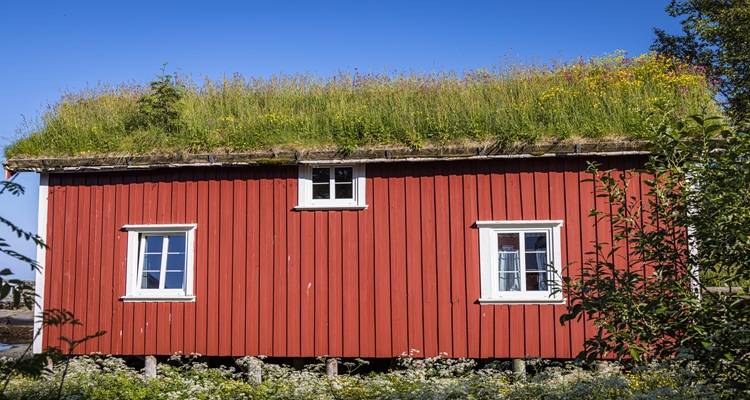
Types of Green Roof
There are several types of green roof: extensive, intensive, semi-intensive, sedum, wildflower, and biodiverse. Some terms are used interchangeably, such as extensive with sedum and wildflower with biodiverse, but there are subtle differences.
Extensive Green Roofs
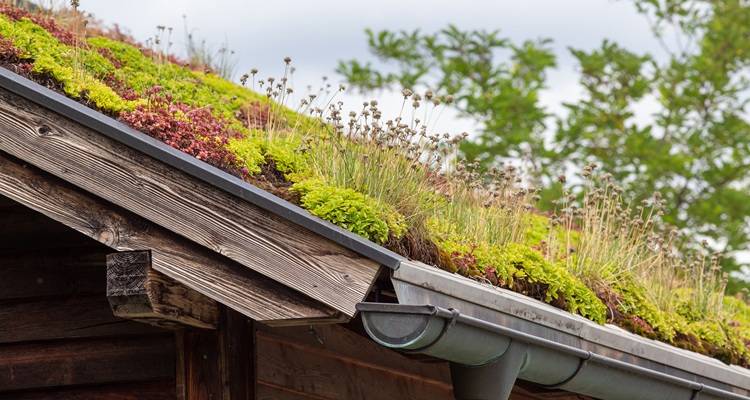
An extensive green roof covers a large surface area but at a shallow depth. They are suitable for retrofitting as they are lightweight, often consisting of sedum mats. As a result, they're also known as sedum roofs.
However, extensive roofs don't exclusively use sedums and can also use mosses and low-growing succulents. Extensive roofs are the most affordable and low-maintenance.
Intensive Green Roofs
Intensive green roofs are deeper than extensive roofs and are more like a ground-level garden, supporting a wide range of plants, shrubs and even small trees. They don't usually cover the same amount of space as an extensive roof because of their weight.
They are more expensive due to the increased materials, plants and labour needed, as well as typically requiring a dedicated irrigation system. Unsurprisingly, an intensive roof needs more maintenance than an extensive roof.
Because of the substantial amount of weight involved, an intensive green roof is not typically suitable as a retrofit but as a new roof on an extension or new build with the right structural support.
Semi-Intensive Green Roofs
A semi-intensive green roof is a type of hybrid, taking characteristics from both intensive and extensive roofs. The substrate is moderate and doesn't need the same structural support as a full intensive green roof. It can support a wide range of plants, not only sedums, grasses, mosses, or succulents.
It's suitable for roofs where you want a diverse variety of plants, but the structure cannot hold the weight of a full intensive green roof. While cheaper, a semi-intensive green roof needs regular maintenance and more attention than an extensive roof.
Sedum Roofs
A sedum roof features sedum specifically, rather than other types of succulents. Two common varieties used for green roofs are Sedum spurium and Sedum acre. They are hardy and drought-tolerant, laid on the roof in mats, blankets or trays.
Sedum roofs are one of the most affordable types and are lightweight, making them suitable for retrofitting. They are also low maintenance.
Wildflower Roofs
Wildflower roofs contain a mix of native wildflowers, hardy grasses and herbs, providing a visually appealing alternative to a regular flat roof and attracting insects and birds. In terms of weight, a wildflower roof is more akin to a semi-intensive green roof as the substrate needs to be moderately deep to support tall flowers and grasses.
Costs are similar.
Medium maintenance is required as they need an annual cut to encourage growth for the following year, as well as regular watering in dry periods. The lifespan of the flowers may vary depending on species, often relying on self-seeding to naturally regenerate.
Biodiverse Roofs
A biodiverse roof is similar to a wildflower green roof, but its aim is to recreate a natural habitat that has been lost. Like a wildflower roof, it contains native plants but also elements like logs or exposed aggregate to attract wildlife.
Structurally, it needs similar support to a semi-intensive green roof and so is not always suitable for retrofitting. Plan for maintenance at least twice a year. Costs are also similar to a semi-intensive green roof.
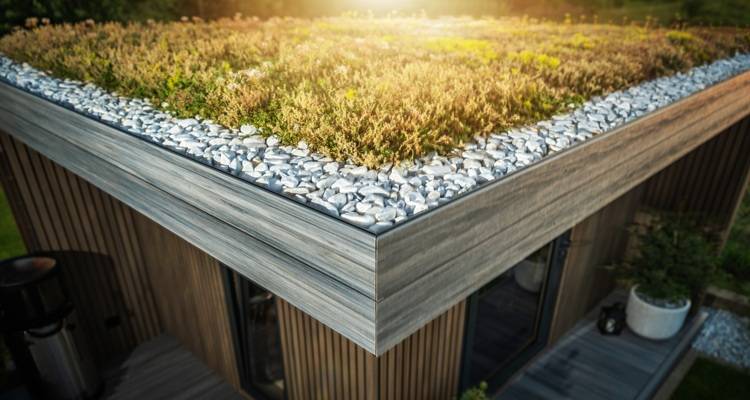
Cost of Alternative Types of Roof Covering
When considering a green roof, it's important to compare it with the available alternatives in terms of cost, appearance, maintenance, and insulation value.
Felt Roofing Cost
The most traditional flat roof covering, felt, is commonly seen on garages, workshops and shed roofs. It's an economical alternative costing approximately £40 to £70 per square metre for materials and labour.
Felt is typically dark grey or black with a textured, granulated finish. It should be inspected twice a year for degradation, frost damage, leaks, or blistering. By itself, felt roofing has little insulation value and needs to be paired with some form of rigid insulation.
EPDM Rubber Roofing Cost
The full installation cost of EPDM rubber roofing is around £50 to £100 per square metre. Material costs are £10 to £25 per square metre if the task is done as a DIY project. It has a sleek, smooth appearance with no joins, so it provides a continuous roof covering.
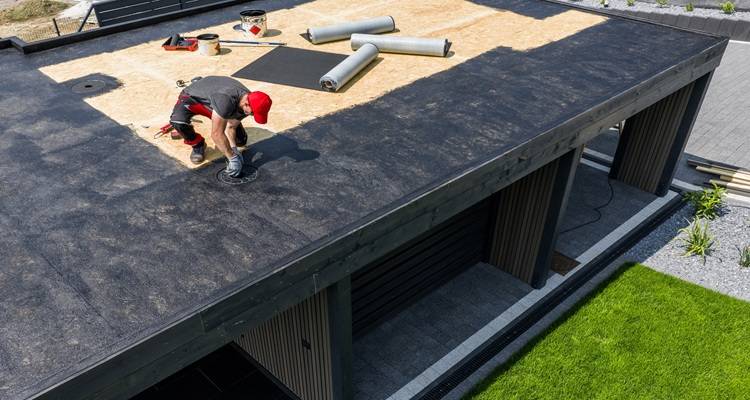
Twice-yearly visual checks are recommended, and debris should be swept off the roof with a soft brush to discourage moss and algae growth. EPDM rubber roofing has no real thermal value and is fitted with rigid insulation to meet Building Regulations.
Fibreglass Roofing Cost
Fibreglass roofing, also called GRP, is another seamless product for flat roofs. It consists of a liquid resin, a catalyst and fibreglass matting to provide a durable, waterproof covering.
GRP is available in multiple colours, with black and grey being the most popular, and its initial glossy appearance weathers to a satin finish.
Annual inspections and removal of debris are recommended, and the topcoat can be renewed periodically to maintain waterproofing. It has no insulation value by itself and is typically installed with rigid insulation boards.
Roof Terrace/Roof Decking Cost
A roof terrace or deck is a space built on a flat roof for outdoor living or growing plants. It's a popular choice in urban environments and typically requires planning permission. The cost is likely to be between £650 and £1,400 per square metre.
Maintenance includes the upkeep of the visible elements, but also the structure itself and its waterproofing. Insulation for a roof terrace needs to meet Building Regulations and typically uses rigid insulation boards.
Ask a Trade
Got a question that only a tradesperson can answer? We have thousands of trades ready to answer any question you may have.
Ask your question

Checklist: Hiring Green Roof Installers in the UK
You can post your green roof job on MyJobQuote and compare quotes from local roofers. Ask each contractor the following before you choose one:
- How much green roof experience do you have? Green roofs are specialised systems, so check that the contractor is competent in both installation and waterproof roofing work.
- Can you show previous installations? Ask for examples and, where possible, view completed work or speak to previous clients. Check MyJobQuote reviews for feedback on reliability, punctuality, tidiness, and communication.
- Do you have public liability insurance? Confirm that the policy is current and ask to see evidence before work begins.
- What is included in the written quote? It should clearly cover the structural assessment, waterproofing, scaffolding and maintenance advice, with technical terms explained in plain English.
- What aftercare do you offer? Ask whether the roof will be checked before installation, what support is available afterwards and whether the work is guaranteed. Compare like-for-like quotes rather than choosing an unusually low price, as cutting corners or using sub-standard materials can cost more in the long term, particularly if structural or waterproofing work is omitted.
FAQs
Does a Green Roof Need Planning Permission?
In England, a green roof on a house can usually be installed under permitted development rights, but these rights do not apply to flats or maisonettes. Check with your local council if your home is in a conservation or other protected area as extra restrictions or different rules may apply. If your property is listed, you may also need listed building consent. Outside England, check the local planning rules before starting work.
Is a Green Roof Worth the Budget?
A green roof can help the waterproofing underneath last longer by protecting it from sunlight and extreme temperatures. It can also help keep your home cooler in summer and potentially raise the value of your home. Whether it's worth the upfront cost depends on your long-term goals.
What Level of Maintenance Does a Green Roof Need?
Extensive green roofs need low to moderate maintenance while intensive roofs require frequent attention as they're more like a ground-level garden, needing weeding, cutting, and watering. The drainage outlets of all green roofs should be checked regularly for blockages.