Builders
 Carpenters
 Electricians
 Flooring Specialists
 Gardeners
 Handymen
 Heating Engineers
 Painters & Decorators
 Plasterers & Renderers
 Plumbers
 Roofers
 Tilers
 my
myAsk a Trade
Got a question that only a tradesperson can answer? We have thousands of trades ready to answer any question you may have.
Ask your question
Choosing the right boiler size is essential to save energy, ensure your heating system runs efficiently and keep your bills within your budget.
Boiler size means the output in kilowatts (kW), which is the amount of energy needed to provide your home with heating and hot water. If you install a boiler that's too small, it may not provide enough heat and hot water for your family. Buy one that's too large and you're wasting energy and money.
So, how do you find out what size boiler you need before installing a new boiler? Use our free boiler size calculator below to get a quick estimate. It's based on your heating needs and the number of bedrooms, bathrooms and radiators you have.
Find the right boiler size by answering the questions about your home, then select the boiler type you want and click calculate to get your answer.
Why not try it now?
Getting a boiler size estimate for your home only takes a few minutes.
Simply work through the steps below, and the boiler size calculator will do the rest:
As a general guide:
However, to find the ideal boiler type for your home, you do have to take a number of factors into consideration:
If you have underfloor heating or a large family, then you are likely to need a higher hot water demand than the average household, which means you may need a slightly bigger boiler. If you are unsure, then ask a local heating engineer for any advice.
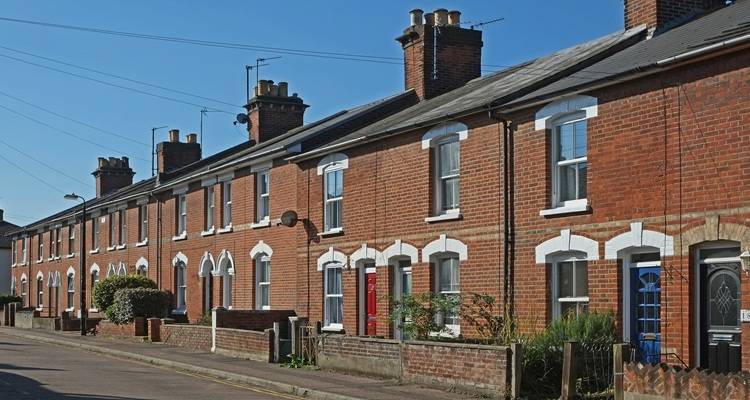
Below we take a look at what size combi boiler would be recommended if you were looking at installing a new boiler in the following situations. This is also with the assumption a 3-bed semi-detached (or larger) is likely to have a second toilet or multiple bathrooms that require heating.
| Property Type | Number of Radiators | Recommended Boiler Size |
|---|---|---|
| 1-Bed flat | 5 | 9 to 12kW |
| 2 Bed Terrace | 8 | 12 to 18kW |
| 3-Bed Semi-detached home | 10 to 12 | 18 to 26kW |
| 4/5-Bed detached | 16 to 20 | 27 to 40kW |
Combi boiler size is usually dependent on needing more power than system or regular boilers, largely due to the fact they supply hot water on demand.
Below we provide recommendations on what size system or regular boiler would be recommended based on property type and number of radiators. Again, this is with the assumption a 3-bed semi-detached (or larger property) has an additional bathroom or toilet that may also require new central heating.
| Property Type | Number of Radiators | Recommended Boiler Size |
|---|---|---|
| 1-Bed flat | 5 | 24kW |
| 2 Bed Terrace | 8 | 27kW |
| 3-Bed Semi-detached home | 10 to 12 | 28 to 34kW |
| 4/5-Bed detached | 16 to 20 | 34 to 43kW |
Underfloor heating runs cooler than radiators, so it doesn't automatically need a bigger boiler size. Instead, boiler sizing depends on your floor area and how much heat your home loses, not your radiator count.
If your home has both underfloor heating and radiators, select the higher radiator and hot water demand options in our boiler size calculator to cover the combined load.

Just to clarify, by "boiler size" our calculator is referring to the boiler's output energy (measured in kW) and not the physical dimensions of the boiler or the space it requires. As such, our guide relates to how much heating and hot water the boiler is able to produce, rather than its physical measurements.
Having said that, if your system boiler size requires a high energy output, you don't necessarily need one that's going to take up a lot of room. Many modern boilers currently on the market are available as a compact design, often well-suited to properties that don't have much storage room.
There are three main types of boiler you can choose from. It's important to assess the needs of your household so that your boiler matches those needs.
For example, if you have a large family and people are likely to use the showers at the same time, then you need a boiler that can provide strong water pressure even when more than one shower is being used.
Below are some of the key points to consider when choosing a combi boiler:
Now you know roughly what size boiler you need, it's worth knowing what you might pay for it.
Boiler prices vary depending on the type, brand and kW output you choose, but as a guide, supply and installation typically costs:
If gas isn't an option for your home, an oil boiler installation typically costs around £3,300, while a biomass boiler installation costs around £13,000 on average. Both are worth considering if you're off-grid or want a more sustainable way to heat your home.
For a more accurate boiler estimate try our boiler installation cost calculator.
Only a qualified Gas Safe registered engineer can install a gas boiler. We can help you find heating engineers in your area to give you free, no-obligation quotes. Enter your postcode to get started. It's free, quick and easy, and you'll be able to compare at least 3 quotes to find the one that suits you best.
Request a quote from local Gas Safe Engineers today.
Last updated by MyJobQuote on 17th August 2026.
Real prices from real homeowners
We use hundreds of thousands of real homeowner quotes submitted to MyJobQuote to provide the pricing data on this page.
Last updated 17/08/26.


Been told I need one before getting a heat pump quote. What's the going rate?
Odd one this. There's a small puddle under the boiler in the morning but nothing while the heating is actually running,...
Engineer says the pump on our boiler is on its way out, it's making a right racket when the heating comes on. He's quote...
Why is my boiler making a strange noise when the hot water tap is on
Our boiler bangs and gurgles when the heating fires up, but the radiators are fine. Sounds like air in the system. How d...
We had a split unit put in the bedroom last summer. But how often does it actually need servicing and what's the usual c...
Copyright 2026 MyJobQuote.co.uk. All rights reserved
Privacy Policy | Terms and Conditions | Sitemap
MyJobQuote.co.uk is rated 4.68 stars by reviews.co.uk based on 4113 reviews