Builders
 Carpenters
 Electricians
 Flooring Specialists
 Gardeners
 Handymen
 Heating Engineers
 Painters & Decorators
 Plasterers & Renderers
 Plumbers
 Roofers
 Tilers
 my
myAir Conditioning Installation Cost
At a Glance
- The average cost of installing air conditioning is around £1,200.
- Most jobs take between 4 and 7 hours to complete.
- NEW! Use our air conditioning cost calculator for an instant estimate.
- Air conditioning installation costs in 2026 by unit type and property size.
- How long you'll need to set aside for air conditioning installation, and what's typically involved.
- What to look for when hiring an air conditioner installer.
Get free estimates
Are you a trade? Get more work today!
£1,200
Table of Contents
- How Much Does Home Air Conditioning Cost to Install?
- Air Conditioning Installation Price List
- Types of Air Conditioning Systems
- What Affects the Cost of Installing Air Conditioning in the UK?
- Things To Consider When Installing Aircon
- Are There Grants for Air Conditioning Installations?
- Labour Cost to Install Air Conditioning
- Air Conditioning Installation Costs by Region
- Air Conditioning Installation Costs by Season
- Additional Air Conditioning Installation Costs
- What's Involved in Installing Air Conditioning?
- Planning Permission for Air Conditioning
- Checklist: Hiring Contractors to Install Air Conditioning in the UK
- FAQs
Air Conditioning Cost Calculator
How Much Does Home Air Conditioning Cost to Install?
Air conditioning installation prices typically start at around £550 for a wall-mounted unit in a single room, and can go up to £15,000 or more for a whole-home ducted system.
These prices include the kit (including brackets, pipework and trunking) and full fitting by an F-Gas qualified air conditioning installer. Some quotes also include all electrical work, but make sure to check what's included in each quote.
Most UK homeowners install air conditioning on a per-room basis. As a general guide:
- Single room (e.g. living room, bedroom or home office) — £550 to £2,100 installed.
- Multi-Room Systems — Add around £600 to £1,200 per additional room (labour rates are lower when multiple rooms are installed in one job).
- Whole-Home Ducted Systems — £3,000 to £15,000+ depending on layout.
Rather than thinking in square metres, it's more helpful to consider how many rooms you want to cool. A typical UK bedroom is around 10 to 15m², while a living room is often 15 to 25m², and installation costs are usually priced based on these real-world spaces.
Larger open-plan rooms, high ceilings, or sun-exposed areas may increase costs due to higher cooling requirements.
Air Conditioning Installation Price List
Below, we have provided a table showing the estimated costs of domestic air conditioning installation. This includes the prices of materials and labour:
| Air Conditioning Unit Type | Total Cost (incl. labour) | Average UK Homeowner Spend |
|---|---|---|
| Portable or freestanding air conditioning unit | N/A (DIY) | ~£200 |
| Window air conditioning unit | £650–£1,200 | ~£950 |
| Floor/wall-mounted air conditioning unit | £550–£2,100 | ~£1,200 |
| Ducted air conditioning system | £3,000–£15,000+ | ~£6,000–£10,000+ |
Want a custom price?
Post your job
Want a number that's bang on for your home?
Try our air conditioning installation cost calculator above, then compare a couple of quotes from local air conditioning installers using MyJobQuote. That way you'll know exactly what the cost of installing air conditioning looks like for you.
Types of Air Conditioning Systems
To help you choose, let's go over the different types of air conditioning units and the pros and cons of each type:
Split Air Conditioner Cost
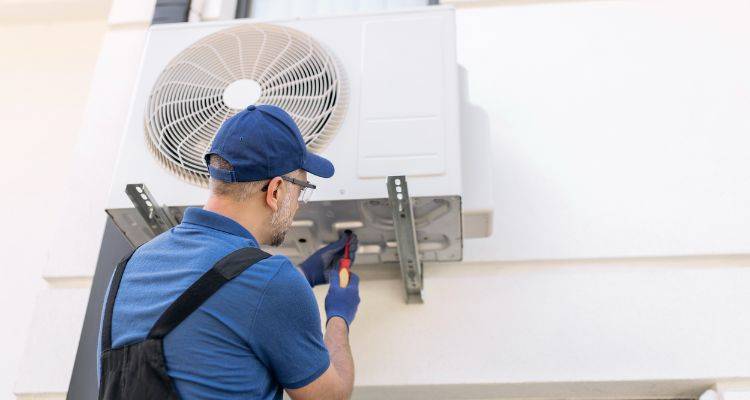
A split air conditioning system has two parts, including an indoor unit and an outdoor compressor. These tend to be more energy efficient than portable or window units.
On average, installation costs vary, and you can expect to pay between £550 and £2,100. But this depends on the size and intricacy of the job. They're a brilliant option for medium to large homes if you need long-term cooling.
Split aircon units are capable of 9,000 to 18,000 British Thermal Units (BTU), equivalent to ≈2.6 to 5.3 kW.
Pros
- ✔ These are generally the most cost-effective air conditioning units to run compared to portable units.
- ✔ They are subtle in their appearance.
- ✔ Can be easily expanded to cover multiple rooms.
Cons
- ✖ They require yearly maintenance.
- ✖ You may be limited in where you can put it due to the pipework and functionality.
- ✖ Not suitable for renters.
Window Air Conditioner Cost
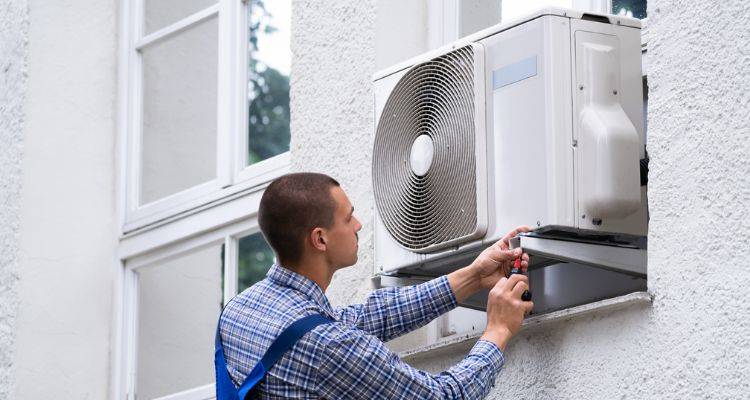
Window air conditioners are self-contained units. They fit into your existing window or wall opening. Typically, you'll pay roughly £650 to £1,200 to install (this includes labour costs).
This option works well for single rooms or small flats. That being said, the unit can block part of the window and may need support brackets.
Window aircon units can achieve an approximate BTU of 9,000 to 12,000, equivalent to ≈2.6 to 3.5 kW cooling output.
Pros
- ✔ Quick to set up.
- ✔ Can be placed in a window opening or wall hole.
- ✔ Some models are portable.
Cons
- ✖ Can obscure the window views.
- ✖ Often requires a sash or sliding window.
- ✖ May require support structures such as brackets or a reinforced framework.
Portable Air Conditioner Cost
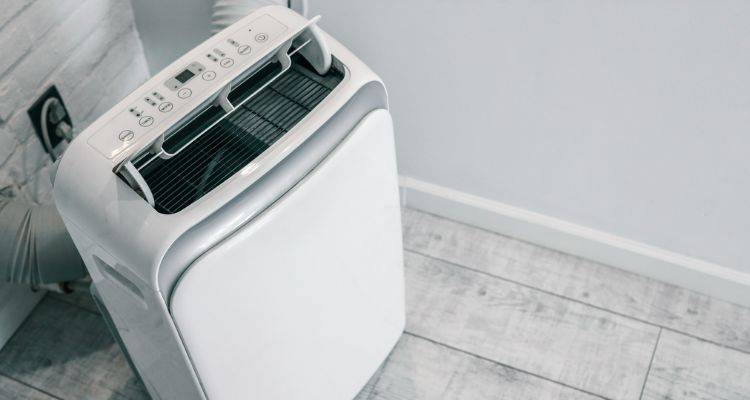
A portable air conditioner is sometimes also referred to as a spot cooler. These types of air conditioners are used as a cheap alternative to permanent systems. This is best for homes where the demand for air conditioning is not that frequent.
If you are purchasing a freestanding air conditioning unit, you can install it yourself. These are usually stand-alone units that need to be plugged in, vented through a window, and refilled with water or ice. You may need to empty a condensation tank.
Portable air conditioning units usually start at around £200, and can reach 6,000 to 10,000 BTU (≈1.8 to 3 kW).
Pros
- ✔ Can be stored away when not in use and transportable around the house.
- ✔ Easy to set up.
- ✔ Cheaper option compared to a fully-fitted aircon system.
Cons
- ✖ Must be positioned close to a window for the extractor vent.
- ✖ Not as effective at cooling larger rooms.
- ✖ Can be quite bulky.
Ducted Air Conditioning Cost
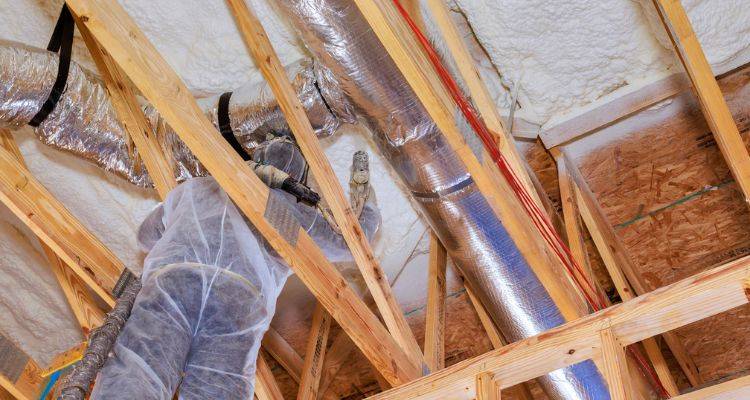
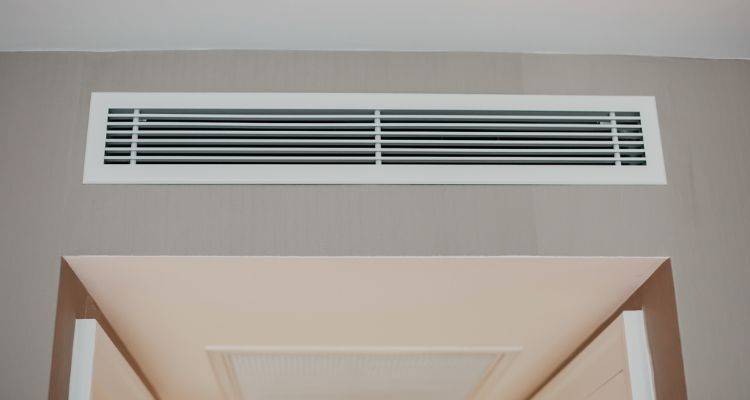
Ducted air conditioning, also known as central or concealed systems, can cool multiple rooms at the same time without bulky or invasive aircon units. They use hidden ducting to deliver air to rooms via ceiling or wall vents.
Because of the specialist nature of this aircon type, the costs are higher than other options, between £3,000 and £15,000+ installed. They have the highest BTU output of our residential options, at 18,000 to 60,000+ BTU (≈5 to 17+ kW).
Pros
- ✔ Easy multi-room cooling.
- ✔ Hidden system, no bulky aircon units.
- ✔ Ability to zone rooms for focused cooling with consistent temperatures.
Cons
- ✖ More expensive than other aircon solutions.
- ✖ Invasive and disruptive installation. Some repairs can be tricky.
- ✖ Not suitable for all homes (e.g., those with less space for ducting).
What Affects the Cost of Installing Air Conditioning in the UK?
- Location — Air conditioning installation in London (and surrounding areas) is usually more expensive than in other places in the UK.
- Room Size — Larger rooms require more powerful units (higher BTU) and can increase installation costs.
- Pipe Run Length and Trunking — Longer pipework routes usually mean higher labour and more finishing work.
- Wall Type — Solid brick or concrete walls can take longer to drill and make good than timber or plasterboard.
- Outdoor Unit Position — Wall brackets, roof mounting, or difficult access can increase time and materials.
- Drainage Setup — If gravity drainage isn't possible, a condensate pump may be needed (extra parts + installation).
- Electrical Work — If electrical upgrades are needed, such as a new fused spur, isolator switch, or consumer unit work, the total cost will increase.
- Access and Height — Flats, tight access, long carries, or ladder/scaffold work can increase labour time.
- Number of Rooms — Multi-split systems cost more due to additional indoor units, pipework, and commissioning.
- Ducted Complexity — More disruptive installs with duct routes, vents, and boxing-in increase labour and finishing costs. Ducted aircon (pictured below) is the most expensive to install.
Things To Consider When Installing Aircon
What BTU Is Needed For Different Room Sizes?
British Thermal Units (BTUs) measure the cooling power of an aircon unit.
A typical room (15 to 25m²) will need between 9,000 and 12,000 BTUs.
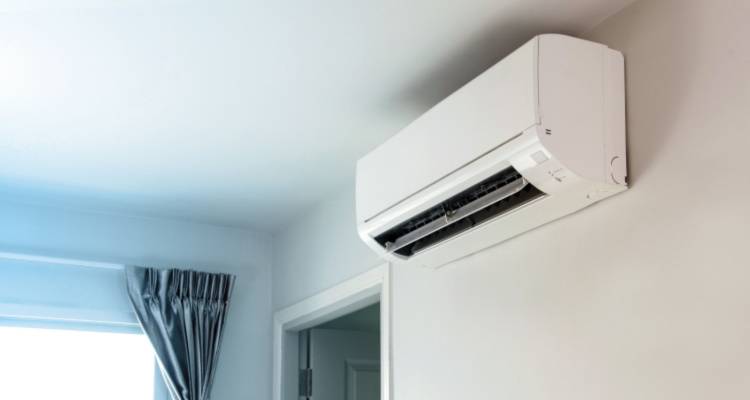
What impacts BTU requirements?
Rooms with higher ceilings, direct sunlight, or spaces with lots of heat-generating equipment will need more BTUs to cool efficiently.
To put that into practice...
| Room Size and Type | BTU Requirements |
|---|---|
| Small bedroom (Up to 10m²) | 5,000 to 7,000 BTU |
| Regular bedroom/home office (10 to 15m²) | 7,000 to 9,000 BTU |
| Large bedroom/living room (15 to 25m²) | 9,000 to 12,000 BTU |
| Large living room/open-plan room (25 to 35m²) | 12,000 to 15,000 BTU |
| Open-plan lounge/kitchen (35 to 50m²) | 15,000 to 18,000+ BTU |
Want a custom price?
Post your job
For a more accurate estimate of your system requirements, try our air conditioning BTU calculator below.
Air Conditioner BTU Calculator
Are Portable Units Worth It?
Portable units might be a good fit for your needs, but only if you only need it now and then. But unless you buy a proper window kit to seal the vent pipe, they're inefficient and let hot air seep back in.
Expect your air conditioner installation cost to start in the hundreds for one room and climb into the thousands for a whole property.
Air conditioning units - are they worth it?
"Air conditioning units can definitely be worth it - even in the UK!
With summers getting warmer and heatwaves becoming more common, having an AC unit can make a big difference in comfort, especially during those sticky nights.
It might seem like a luxury, but once you've experienced the relief it brings, it often feels like a smart investment."
With summers getting warmer and heatwaves becoming more common, having an AC unit can make a big difference in comfort, especially during those sticky nights.
It might seem like a luxury, but once you've experienced the relief it brings, it often feels like a smart investment."
Are There Grants for Air Conditioning Installations?
There are £2,500 installation grants available through the Boiler Upgrade Scheme (BUS), operating in England and Wales, but these are for eligible air-to-air heat pumps.
So, what's the difference between an air-to-air heat pump and air conditioning?
- Air conditioning units and air-to-air heat pumps can use the same technology to both heat and cool.
- Qualifying for the BUS comes down to eligibility: an air con unit being used exclusively for cooling won't qualify, but eligible air-to-air heat pumps can qualify.
To put that into context...
According to GOV.uk:
- A typical installation cost for an air-to-air source heat pump is estimated to be around £4,500 for a small flat or house.
- The BUS provides £2,500 towards installation costs.
- You must have an eligible air-to-air heat pump to qualify for the grant.
Good to know: The BUS already offers grants of £7,500 towards the cost of installing a ground source heat pump. Ground source heat pumps are another type of renewable energy, just taking heat from the ground instead of the air, but they require significantly more outdoor space to install than air source heat pumps, and typically have higher installation costs overall.
What's the bottom line?
The Boiler Upgrade Scheme can award £2,500 towards installation costs for eligible air-to-air source heat pumps, which work in a similar way to fitted air con by offering both heating and cooling properties.
Are there any grants for air conditioning in the UK?
"You can get a £2,500 government grant for an air-to-air heat pump (which functions as a reversible air conditioning system providing both heating and cooling) through the Boiler Upgrade Scheme."
Labour Cost to Install Air Conditioning
Many air con installers charge by the day rather than by the hour.
Across much of the UK, you'll most likely pay £150 to £220 per day for a single engineer.
In London, you could pay as much as £200 to £300 per day.
If your unit is hefty or tricky to get to, it may well involve two people. If this is the case, labour can be nearer £300 to £400 per day.
As for window units, these can often take a full day to fit, while wall-mounted splits are usually done in half a day if the run is easy.
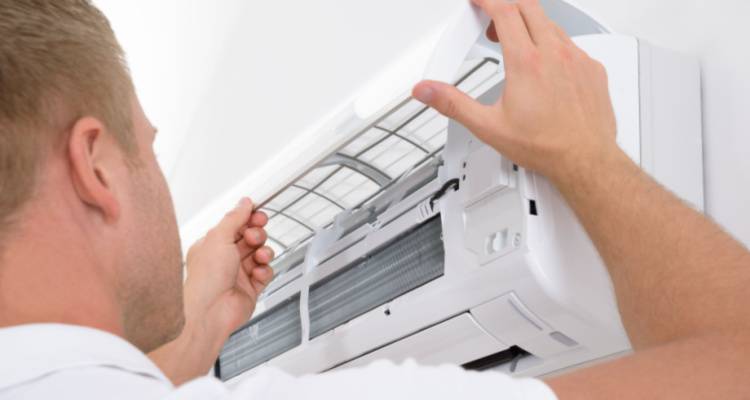
As a rough guide, a simple single-room install is usually priced at the lower end. Multi-splits and trickier jobs push costs up because of the extra pipework and time involved.
Tip: Be sure to ask if the price includes electrical connections and testing. Sometimes that's bundled, other times you'll need to hire an electrician separately.
Air Conditioning Installation Costs by Region
Air conditioning installation prices vary across the UK.
In London, you're likely to see higher prices than in the north of the country due to increased demand as well as congestion and parking issues and placement difficulties due to building constraints and close-by neighbours.
Let's take a look at some representative aircon installation costs across the UK:
| Location | Wall-Mounted Split (Single Room) | Ducted System (Whole Home) |
|---|---|---|
| London | £650–£2,500 | £3,600–£18,000+ |
| Birmingham | £550–£2,100 | £3,000–£15,000+ |
| Manchester | £525–£2,000 | £2,850–£14,500+ |
| Cardiff | £525–£2,000 | £2,850–£14,500+ |
| Belfast | £500–£1,900 | £2,750–£14,000+ |
| Glasgow | £525–£2,000 | £2,850–£14,500+ |
Want a custom price?
Post your job
The bottom line: You can expect air conditioning installation costs in London to be the highest out of the UK locations.
If you're in the north of the UK, or Northern Ireland, you can anticipate lower costs in comparison.
How do I get around regional aircon installation costs?
There's little you can do about regional variances in the price to have air conditioning installed, but you can be savvy and have your aircon installed during off-seasons, as we'll get into next.
How many rooms are you planning for your air conditioning installation?
Single room
5 votes - 28%28% of votes
Multiple rooms
12 votes - 67%67% of votes
Complete home set-up
1 votes - 6%6% of votes
Portable unit
0 votes - 0%0% of votes

18 votes
See results
Hide results
Air Conditioning Installation Costs by Season
It'll come as no surprise that air conditioning demand skyrockets in the warmer months.
This demand will raise installation costs, repair, and maintenance costs, so if you can avoid it, it's best to have an aircon specialist quote and install your units during off-peak, colder months.
Here's what you need to know:
- Spring (March to May) — This period has the baseline costs with no seasonal impacts.
- Summer (June to August) — Summer aircon installations can be 10% to 20% higher than the baseline costs.
- Autumn (September to October) — While demand is lower than peak summer, there's still a 5% increase in costs.
- Winter (November to February) — The cheapest aircon installation period, being 5% to 10% cheaper than the baseline.
And, to put those facts into numbers, here are average installation costs for wall-mounted air conditioning per season:
| Season | Months | Typical Installation Cost (Wall-Mounted, 1 Room) |
|---|---|---|
| Spring | March to May | £550–£2,100 |
| Summer (Peak) | June to August | £630–£2,400 |
| Autumn | September to October | £580–£2,200 |
| Winter (Off-Peak) | November to February | £520–£2,000 |
Want a custom price?
Post your job
Can air conditioning units also heat a room? We're converting the garage and wondering whether a wall-mounted air conditioning unit works as the main heat source in winter as well as cooling in summer?
"Yes, air conditioning units both heat and cool your home. If installed and maintained correctly, they are also a very efficient way of doing so."
How to Reduce Air Conditioning Installation Costs
Demand for aircon has risen in recent years due to the UK's warming climate. Understandably, installation and unit prices have risen, too.
Here's how to still be savvy with your air con spending to get the best deal for your budget:
- Install Off-Peak — If possible, book in winter or early spring when demand is lower.
- Do Multiple Rooms in One Visit — You'll usually pay less than installing one room at a time.
- Choose a Simpler Layout — "Back-to-back" installs (indoor and outdoor units close together) can reduce pipework and labour.
- Be Flexible on Unit Placement — If an installer can avoid long pipe runs or a pump, the quote is often lower.
- Compare Like-for-Like Quotes — Check BTU output, what's included (electrics, brackets, trunking), and warranty terms.
Additional Air Conditioning Installation Costs
When you get air con fitted, the costs don't end with the unit and labour, and you'll often need a few additional jobs to complete the work, as well as remembering to factor in ongoing service and maintenance fees.
Here's what you need to know:
Air Con Service Cost
While portable air con is a lot cheaper to buy initially, it's not as effective at cooling rooms as a wall-mounted system.
If you're looking for a cost-effective solution over a long-term period, you'll often find fixed aircon systems are the best choice. For homeowners wanting a whole-house solution, multi-split systems can run multiple indoor units, all connected to one outdoor unit.
With that in mind, let's look at the most common aircon servicing costs:
- Routine Air Conditioning Service Cost — £70 to £120 per unit for cleaning and safety checks.
- Filter Changes — £10 to £30 every 6 to 12 months (depending on usage).
- Repairs — Fan motors or circuit boards are around £150 to £400 if they fail.
Does air conditioning need servicing like a boiler?
"Yes, air conditioning needs to be serviced at least once every year. Regular servicing keeps it efficient, prevents breakdowns, improves cooling, and extends its life. The inside unit filters and fan blade get covered in dust and sometimes you get mould built up which can be detrimental to health.
The outside unit coils also gets blocked which needs to be cleaned out otherwise it could lead to failure. It has to be serviced by a qualified AC engineer."
The outside unit coils also gets blocked which needs to be cleaned out otherwise it could lead to failure. It has to be serviced by a qualified AC engineer."
Air Con Running Costs in the UK
Energy prices rise and fall. However, using an example unit rate of ~26.1p per kWh (July to September 2026, excluding standing charge), take a look at what various units may set you back.
The figures below are based on running them for 4 hours a day across a month:
| Unit Type | Typical Cooling Capacity | Monthly Running Cost | Notes |
|---|---|---|---|
| Portable unit | 1 to 1.5 kW | £31–£47 | Inexpensive to buy, but less efficient (incredibly noisy and finds it hard to cool bigger rooms) |
| Wall-mounted split (single room) | 2.5 to 3.5 kW | £78–£109 | Costs more upfront, but far more effective and efficient |
| Multi-split (2 to 3 rooms) | 4 to 6 kW | £126–£188 | Good for larger homes, running costs rise with use |
| Ducted central system | 6 to 12 kW | £188–£377 | Effective for whole-home cooling, but with higher running costs than smaller aircon units |
Want a custom price?
Post your job
This is based on 4 hours daily use for 30 days at 26.1p/kWh. Actual energy bills vary with room size, insulation, and how you use the unit.
Making Good and Decorating
Once you've had your air conditioning installed in your home, there's likely to be some redecorating to take care of:
- Re-Plastering Costs — Depending on the type of aircon you're having fitted, your walls may need making good after adding pipe runs, or opening up to add ducting. A patch repair usually costs £260.
- Painting and Decorating — If you don't want to do the painting yourself, remember to factor in the cost of redecorating the walls after your fresh plaster has been applied, which can be around £400 per room.
These additional costs don't apply to portable air con units.
Is air conditioning expensive to run?
"It depends on usage and how hard it has to work generally about per hour, but that's initial start up - once the room reaches ambient temperature it uses far less energy costing little, providing the installation engineer sizes it according to your room size and insulation."
What's Involved in Installing Air Conditioning?
If you don't have your air conditioning unit professionally installed, this could cause serious health risks and may affect the safety of your property. A DIY installation may also affect your home insurance.
Because of this, most homeowners choose to hire a contractor. With MyJobQuote, you can request multiple quotes from local air conditioning engineers. It's fast, free, and there's no obligation to go ahead.
If you are wondering how an air conditioner is installed, here are the steps involved in installing a wall-mounted split system air conditioning unit:
Before the Job
- Site Survey Completed — The engineer measures your room, decides where the indoor and outdoor units will go, and works out the pipe route and power needs.
- Unit Positions Chosen — Both units are positioned where they'll work best, with enough space around them and away from noisy spots.
- Electrics Checked — The installer sorts out where the power comes from and where the water drains.
During the Job
- Indoor Unit Fitted — A bracket goes on the wall, and the indoor unit is mounted level.
- Hole Drilled Through Wall — A neat hole is drilled for pipes, wires, and the drain pipe to pass through.
- Outdoor Unit Fitted — The outdoor box is mounted to the wall or placed on the ground, with rubber pads to reduce vibration.
- Pipes and Cables Connected — All the pipes and wires are run between the two units and tidied up with covers.
- System Tested for Leaks — The pipes are checked for leaks, and any air or moisture is removed.
- System Switched On — The gas is released, and the engineer tests that everything works properly and drains correctly.
After the Job
- Controls Explained — The installer shows you how to use the remote and change settings.
- Maintenance Tips Given — You'll receive guidance on how often to clean the filters and what to expect during future servicing.
Ask a Trade
Got a question that only a tradesperson can answer? We have thousands of trades ready to answer any question you may have.
Ask your question

Planning Permission for Air Conditioning
With smaller air con units, you can normally fit one without planning permission if no structural modification is needed. This is especially true if the outdoor box is out of sight behind the house.
However, there are times when you will need planning permission:
- Is your home listed or in a conservation area? If so, you'll likely need consent.
- Live in a flat and shared block? More often than not, you'll need permission too, as the unit changes the outside of the building.
- Because outdoor condensers give off a low hum, noise can be a problem, especially if they sit right by a neighbour's garden or window. So, the council may get involved.
- If the unit sits on a wall facing the street or highway, you'll likely need permission, as permitted development doesn't usually cover installations facing the street or highway.
- There are also size and position limits under permitted development rules. The outdoor unit can't exceed 0.6 cubic metres, and there are restrictions on how far it can protrude from the wall.
Tip: Before you book, speak to your local planning office. A good installer should also warn you if you might need consent.
What kind of tradesman would drill a hole in the wall to fit a portable air con unit hose through?
"I would contact a plumber or electrician, as they will have the hole cutters and expertise to complete this job."
Checklist: Hiring Contractors to Install Air Conditioning in the UK
There are several things you will need to consider before hiring someone to install a new air conditioning system for you. Below is a list of the main things you should consider when searching for the right contractor for the job:
- Do they hold the right qualifications? They must hold an F-Gas certificate to legally install air conditioning.
- Are they registered with REFCOM? Being registered with an industry body shows that they meet professional standards and comply with refrigerant handling regulations.
- Are they certified to carry out the electrical work? They should hold registration with NICEIC, NAPIT, or ELECSA to ensure the electrical installation meets Building Regulations.
- Do they offer any guarantees? Look for guarantees on both the installation work and the equipment.
- How much experience do they have? Ensure the engineer you hire has experience installing air conditioning and can show examples of their work.
- Are they insured? Ask for proof of public liability insurance to cover any accidental damage to your property.
- Do they have positive reviews? Check their MyJobQuote profile to see what other homeowners are saying about their work.
FAQs
How Long Do Air Conditioning Units Last?
How long your air conditioning unit lasts depends on how often it's used, whether it's serviced annually, and the unit's quality. A well-maintained split system or window unit should last you around 10 to 15 years. Portable air conditioning units tend to have a shorter lifespan, closer to 5 to 8 years, but work out cheaper per year.
Will Air Conditioning Help With Damp or Condensation?
Air conditioning can help with condensation issues, as it draws moisture from the air, reducing humidity. However, if you have serious damp problems, you'll need to address the root cause first, as air conditioning won't fix underlying issues caused by leaks, rising damp, or poor ventilation.
What Is the Best Alternative to an Air Conditioner?
Ceiling fans are the most popular alternative to an air conditioner. They need little maintenance and work well in homes that don't get very hot too often. They cost from £40 for a basic model to £600 for a smart fan with high-end specs.
If you want something portable, try a standing fan, a table fan, or a small plug-in cooling fan. They won't cool as effectively as an AC, but they're handy for smaller rooms or occasional use. They are available for less than £30.
Can I Install an Air Conditioning System Myself?
You should always hire a professional for your aircon installation. Since there are refrigerants (F-gases), the installation of a permanent or semi-permanent air conditioner should be carried out by an F-Gas qualified air conditioning engineer. The chemicals present must be handled safely, and the installation requires specialist knowledge, so this isn't a DIY job. Incorrect installation can be dangerous and may void warranties, too.
How Is a Window Air Conditioner Installed?
A window air conditioning unit should be fitted in a sash or sliding window that can accommodate the side of the unit. The unit will be positioned in the window frame, secured with locks to prevent the window from opening, and the side screens adjusted to block off the window opening. Once secured, the air conditioner is turned on and tested to ensure everything is working properly. Installation typically takes less than a day and is usually included in the £650 to £1,200 total cost.
Will Adding Air Conditioning Increase the Value of Your Home?
Yes, installing home air conditioning will add to the value of your home as it's an attractive feature to combat the UK's warmer summer months.
Why Are Aircon Units So Expensive To Install?
Labour is a major cost factor in air conditioning installation. The complexity of the job, the need for specialist skills and equipment, and the time required to complete the installation all contribute to higher costs. Additionally, F-gas regulations require certified installers, which is why installation often makes up £300 to £800 of the total cost.
Is It Cheaper To Leave AC on All Day?
No, it is generally more energy-efficient to set your air conditioning to a comfortable temperature and turn it off when you're not at home. Leaving it on all day can increase energy consumption and costs, especially if the temperature is set too low or if the room is unoccupied for long periods.
How Much Does It Cost To Install Air Conditioning in One Room?
For a typical UK bedroom or home office, installation usually costs between £550 and £2,100, including the unit and fitting. Prices vary depending on room size, pipework length, and electrical work required.
Do I Need Building Regulations Approval to Install Air Conditioning?
Your aircon unit will need to meet minimum efficiency standards for conservation of fuel and power (Part L, Energy Efficiency). Your installer should provide documentation proving compliance. All electrical work must meet safety standards (Part P, Electrical Safety), which is why your installer should be registered with NICEIC, NAPIT, or ELECSA, so that they can self-certify the electrical work.