Builders
 Carpenters
 Electricians
 Flooring Specialists
 Gardeners
 Handymen
 Heating Engineers
 Painters & Decorators
 Plasterers & Renderers
 Plumbers
 Roofers
 Tilers
 my
myCost to Retile a Shower
At a Glance
- The average cost of retiling a shower is £250.
- Most jobs take 2 to 4 days to complete.
- A complete shower retiling cost breakdown by type.
- How long the job takes and what's typically involved.
- How to find a local tiler using MyJobQuote.
Get free estimates
Are you a trade? Get more work today!
Wondering how much it costs to retile a bathroom shower?
Retiling a shower typically costs around £250, and can take anywhere from 2 to 4 days depending on the current condition of your bathroom, the complexity of your shower fixture, and your chosen bathroom retiling design.
However, what you pay for shower retiling can be affected by a few different factors, such as the shower size, the type of tiles, ease of access, and your location in the UK.
Are you ready for a quote for your job?
We have a range of local tilers ready to offer you a free quote!
Want to know the ins and outs of how much it costs to retile a shower?
Let's get started.
£250
Table of Contents
- How Much to Retile a Shower?
- Shower Retiling Supply Costs
- Additional Shower Retiling Costs
- Shower Retiling Labour Costs & Timescales
- Factors That Impact Shower Retiling Costs
- How Do I Choose the Right Shower Tile for Me?
- What's Involved in Retiling a Shower?
- Checklist: Hiring a Shower Retiler in the UK
- FAQs
How Much to Retile a Shower?
Retiling can revitalise your bathroom along with the addition of a few new furnishings and spring cleaning, and this doesn't have to cost much money.
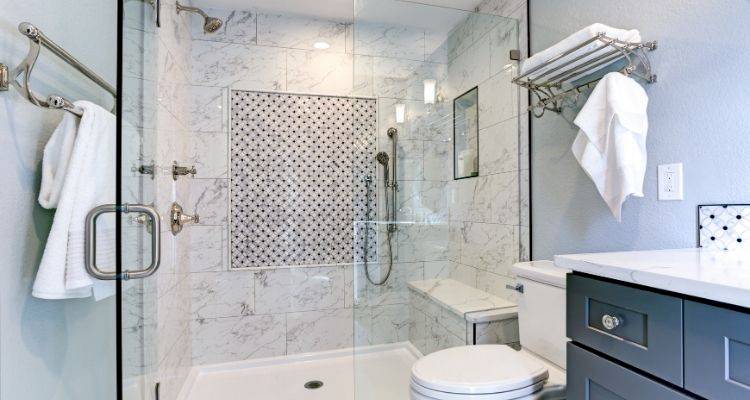
The average cost to retile a bathroom shower is around £250, with higher prices associated with premium shower tile materials. This is a great reduction on the average cost to retile a whole bathroom, giving you a new look on a budget.
Here's a closer look at the price of retiling a shower:
Shower Retiling Prices
| Job Description | Average Cost | Duration |
|---|---|---|
| Retiling with Ceramic Tiles | £250 | 2 to 4 Days |
| Retiling with Porcelain Tiles | £250 | 2 to 4 Days |
| Retiling with Natural Stone Tiles | £350 | 2 to 4 Days |
| Retiling with Glass Tiles | £400 | 2 to 4 Days |
| Retiling with Terracotta Tiles | £300 | 2 to 4 Days |
Want a custom price?
Post your job
Shower Retiling Supply Costs
The supply of materials for retiling a shower accounts for about 30% of the overall retiling cost, with labour accounting for the other 70%.
Shower tiles vary quite a lot in price, and in recent years, more people have opted for shower panels that come in different styles that are installed instead of tiles.
The two main types of shower wall tile are porcelain and ceramic, and both of these materials account for a large portion of the shower wall tile market.
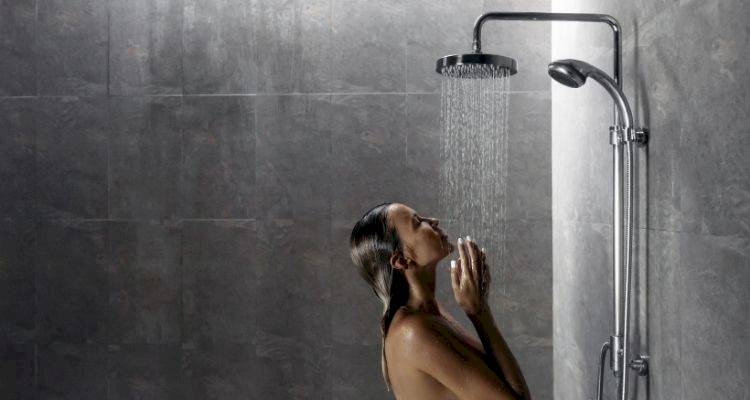
Porcelain and ceramic shower tiles are priced at around £30 per m². You can find fluctuations in this base price depending on the design, shape, and style of the tile, with more ornate and complex designs coming with higher costs.
There are other materials you can use for shower retiling, such as natural stone and terracotta, but these can be costly and hard to work with if you're not experienced, as some stone tiles will need additional sealing and maintenance to avoid degradation. Stone and terracotta tiles usually cost around £50 per m².
Additional Shower Retiling Costs
When you get your shower retiled, there are other jobs you may need or want to have completed at the same time. You can often get some great package deals when you incorporate a few different jobs into the same project when you use the same contractors to carry out the work.
We've explored some of the most common jobs associated with retiling a shower to give you some more information on them should they apply to you.
Tiling a Bathroom Floor
Most bathrooms have a matching décor throughout, with the walls matching or complementing the floor. If you're going to retile the shower, why not give the whole room a freshen-up by installing new floor tiles, too?
You have lots of choices when considering what materials or styles to opt for on your floor tiles. On average, new bathroom floor tiles cost £700 for 20m², taking about 2 to 3 days to complete in full.
Re-Grouting a Tiled Floor
If you already have your bathroom floor tiled and want it rejuvenated, you can ask your tiler to re-grout the surface for you.
The cost of re-grouting bathroom tiles ranges between £200 and £250 in labour fees, while supply costs will be kept low at £15 to £35.
My shower tiles have changed colour. Why has this happened? How can I stop it happening again?
"Tiles only really change colour when they are subject to excess water ingress. I would guess that being in the shower area, water has found a way behind the tiles whether that be through failed grout or Silicone. I would firstly assess these areas and consider the plan of action from your findings. Hope this helps."
Wall Repairs
When the tiles come off during shower retiling, they can bring half the wall with them, and this will need to be fixed before the new tiles can go on. In some cases the area will also need a skim of plaster to give the tiles a flat surface, and you should allow for the cost of plastering in that situation.
If the whole shower area needs new tile backer board it will cost more, since the old board has to be removed and fresh moisture-resistant boards fitted. Tiling straight on to a damaged surface will not last, so this is an extra cost you should consider before work starts.
Fixing Unexpected Problems
Other problems can also come to light when your tiles come off, such as an area of rot where water has been getting behind the tiling, or water that has been running down the studwork. The cost of extra repairs will depend entirely on what issues, if any, are found when removing the tiles. Serious issues, like water damage or problems that require a plumber, will cost more to resolve.
Shower Retiling Labour Costs & Timescales
A great way to work out labour costs is to figure out how many square metres you need tiling and multiply that by £30, as this figure is the typical cost per square metre for a tiler to complete the work.
However, when you get a quote on the work, the contractor will tell you exactly how much the work will cost and what that includes. Usually, the cost includes the labour and materials, but you should find out about waste removal for the old tiles and anything else involved in the price.
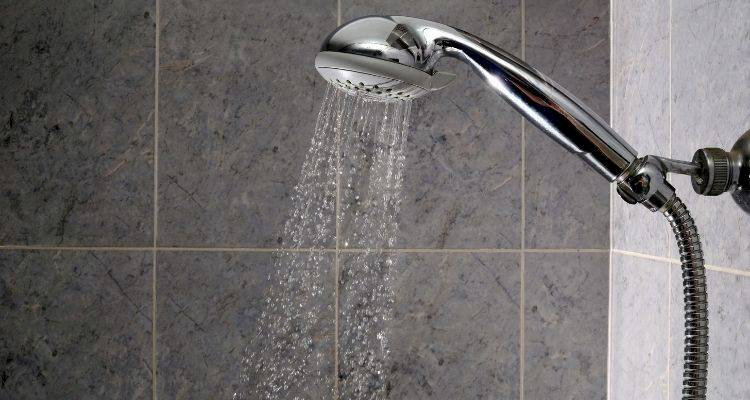
Quoting the job shouldn't take too long, nor should the stripping of the existing tiles, but the stage of applying the tiles can take a long time as it's integral that each tile is level, uniform, and installed correctly, so be patient at this point.
Sometimes, unforeseen setbacks and delays occur, like faulty tiles or necessary repairs, but this isn't extremely common.
Ask a Trade
Got a question that only a tradesperson can answer? We have thousands of trades ready to answer any question you may have.
Ask your question

Factors That Impact Shower Retiling Costs
There are a few cost-affecting factors for retiling a shower, and we've explored them in more detail here:
Type of Tile
The type of tile you opt for can have a significant impact on the job's overall cost. For example, a simple porcelain tile will only cost around £25 to £30 per m², but you can double that for a sandstone tile.
Of course, if you have the budget for expensive materials and they suit your preferences, then go for it! The type of tile can also impact the additional time it may take the tiler to complete the job, as some tiles are more supple and prone to breaking than others, requiring the tiler to work with extra caution.
Size of Shower
This factor is pretty self-explanatory. If your shower is bigger than the average shower, you can expect to pay a little more than the average cost, simply because more tiles and time are required.
Some people with bigger showers will opt for larger tiles to reduce the number of tiles required to be lined up and arranged uniformly, but this is all down to personal preference.
Ease of Access
While a big shower can increase the cost, so can showers that are tough to access.
Tight corners and awkward angles can complicate the application process, especially when adding those crucial millimetre movements to ensure all of the tiles are perfect. If you have a peculiarly shaped shower, ask the tiler about this during the quotation stage to avoid any surprises further down the line.
Would it be possible to fit mirrored tiles in a shower?
"It is possible to install mirror walls and mirror tiles in a bathroom or shower area. Still, it's not something we would recommend, as moisture will eventually destroy the mirror's edges and backing. They will look fine for 5-7 years maximum."
How Do I Choose the Right Shower Tile for Me?
There are a few different types of shower tile that we've mentioned throughout this article, so we're going to list them here with their pros, cons and costs to help you make an informed decision.
Ceramic Tile Cost
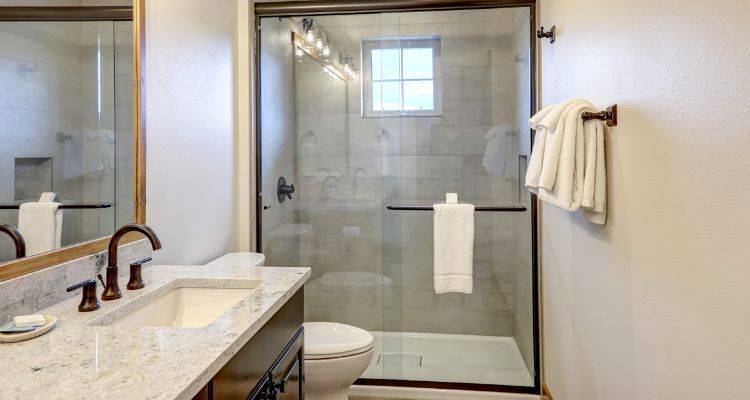
Ceramic tiles are one of the two most common tiles to find in a bathroom in the UK. They typically cost £25 to £30 per m².
Pros
- ✔ One of the most affordable tile options
- ✔ Easy to clean and maintain
- ✔ Plenty of design options available
- ✔ Straightforward installation
Cons
- ✖ Not as durable as some tile types.
- ✖ Can be slippery when wet.
- ✖ Glazed surface may chip easily.
Porcelain Tile Cost
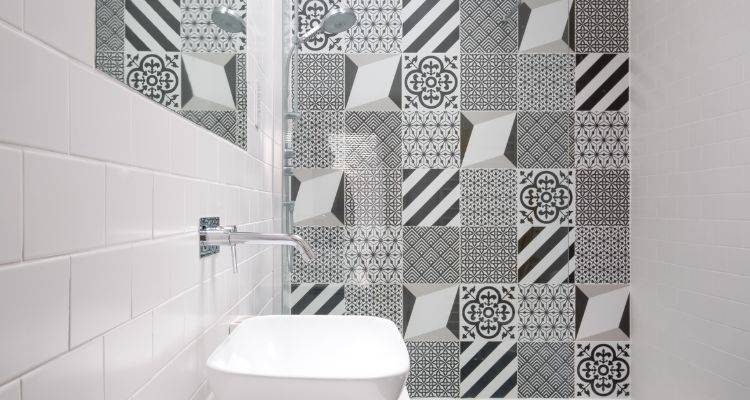
Porcelain tiles are very similar to ceramic tiles in terms of benefits and drawbacks. Like ceramic options, you should expect to pay around £25 to £30 per m² for porcelain tiles.
Pros
- ✔ Durable material
- ✔ Resistant to scratches and stains
- ✔ Some premium finish options mimic stone
Cons
- ✖ More expensive than ceramic tiles.
- ✖ Installation requires specialist tools.
- ✖ Some finishes can trap soap scum.
Glass Tile Cost
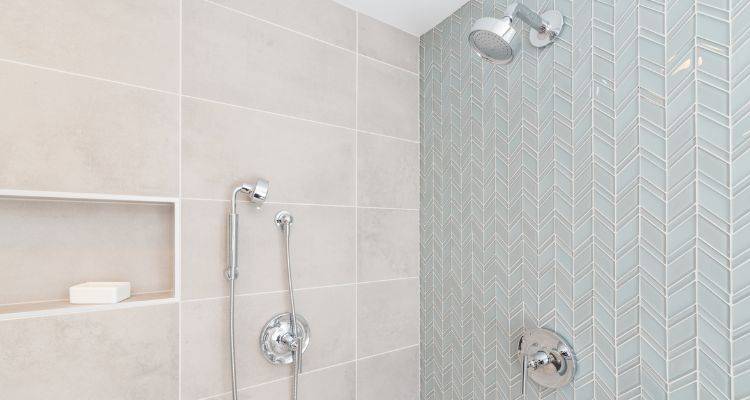
Glass tiles are a versatile option for showers because they suit most themes and styles. However, they are extremely expensive compared to porcelain and ceramic tiles, costing around £110 per m².
Pros
- ✔ Offers a modern aesthetic.
- ✔ Reflects light and makes the space seem brighter.
- ✔ Available in various colours and transparencies.
- ✔ Fits with most bathroom styles.
Cons
- ✖ One of the more expensive tile options.
- ✖ Shows dirt and fingerprints easily.
- ✖ Difficult to install perfectly.
- ✖ May crack if struck hard.
Marble Tile Cost
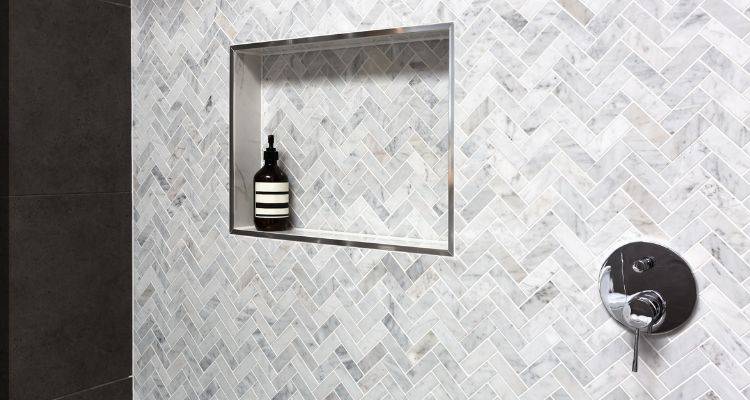
Some homeowners like the luxury of marble tiles in the bathroom. Unfortunately, the price is in line with that luxury and marble is certainly one of the more expensive bathroom tile materials, at around £140 per m².
Pros
- ✔ Creates a luxury aesthetic.
- ✔ Each tile is unique.
- ✔ Cool to the touch.
Cons
- ✖ Expensive tile option.
- ✖ Tiles are heavy.
- ✖ Susceptible to staining.
- ✖ Requires maintenance over time.
Natural Stone Tile Cost
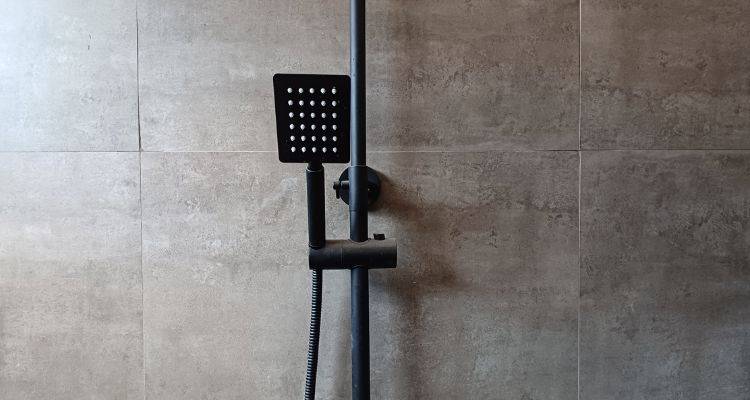
Natural stone tiles bring a natural, earthy, and spa-like feel to your bathroom. The price of natural stone tiles does range a little bit depending on the specific stone or blend in the tile, but as a whole, it is one of the more expensive options costing between £50 and £150 per m².
Pros
- ✔ Has a natural and earthy aesthetic.
- ✔ Each tile is a unique piece.
- ✔ Some types can be especially durable.
Cons
- ✖ Can be an expensive option.
- ✖ Needs sealing and regular maintenance.
- ✖ Heavier than some other tile types.
- ✖ Can be difficult to clean because of the textured surface.
Terracotta Tile Cost
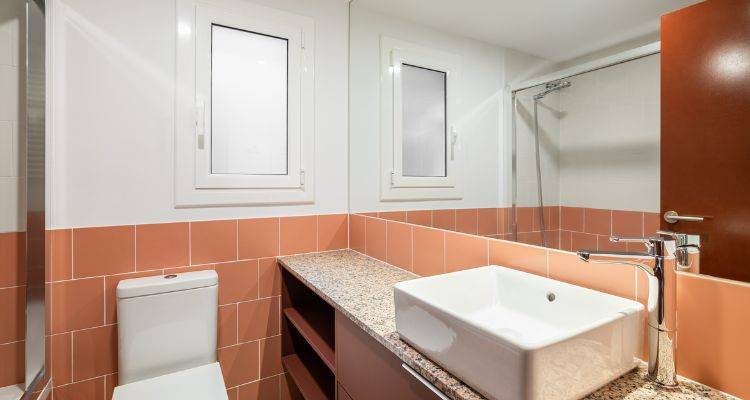
Terracotta tiles bring a very natural look and feel to them, and they add a certain warmth to your bathroom. They are pretty competitively priced, at around £50 per m².
Pros
- ✔ Offers a rustic and Mediterranean aesthetic
- ✔ Naturally slip-resistant
- ✔ Made from natural clay
Cons
- ✖ Not naturally waterproof so will need sealing and maintenance.
- ✖ Limited design options.
- ✖ Can stain easily.
Our previous bathroom tiles developed a lot of problems over the years. What are the best tiles to choose that are easy to maintain/clean, and are durable?
"Polished porcelain tiles would be a good choice of tile, they're very durable and the polish makes them very easy to keep clean."
What's Involved in Retiling a Shower?
Many different aspects of tiling need to be tended to by an experienced professional.
While removing old shower tiles can look like a simple job, if it isn't done correctly, the main section of the wall can be damaged and chipped away, leading to issues further along in the process.
The accuracy and uniformity of the tiles are also a huge tripping point, as each tile must follow the same pattern, both horizontally and vertically.
These are the steps your shower tiling contractor is likely to take to give you an insight into the process of retiling a shower.
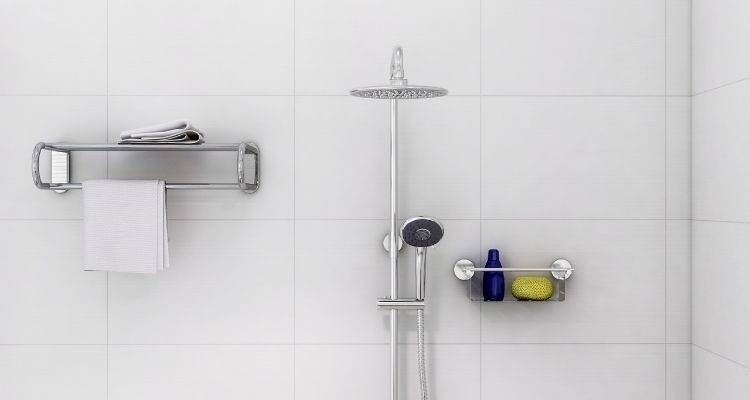
Before the Job Starts
- Remove Shower — Firstly, the tiler will turn the water off at the mains and remove the mounted shower system.
- Protect the Area — The floor will be covered with dust sheets to catch any debris that is removed from the walls.
During the Job
- Remove the Tiles — With a mallet and a chisel, the tiler will remove the wall's existing tiles. This is usually a pretty quick job.
- Surface Prep — After the walls are clear, it's time to prepare them for the application of the new tiles. The wall must be completely smooth as even the smallest bump will affect the final finish.
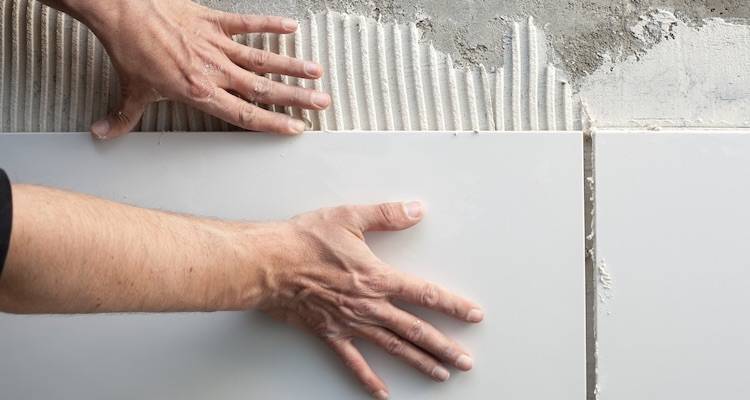
- Apply the New Tiles — The new tiles will now be applied with tile adhesive, and depending on your pattern, some tiles may need cutting to fit the design.
- Grout the Joints — Grout will be added between the tiles to fill the joints and help keep water and dirt out.
After the Job
- Finish Up — The tiles will be wiped down, the dust sheets cleared, and any debris tidied away, and the job will be done!
I'm looking to tile over 20-year-old porcelain tiles in my bathroom. Is it okay to tile over these, or could it create issues?
"I wouldn’t advise doing this. The main reason is, imagine all the extra weight you are putting onto the walls when you don’t know how well the original tiles are stuck to the wall, all you are doing is sticking more weight onto the original tiles."
Checklist: Hiring a Shower Retiler in the UK
It's best to research and compare at least 3 contractors before settling on your chosen trader to ensure you're getting a fair price. Here's what we suggest:
- Do they have experience? Make sure the person you hire is experienced in retiling showers and can show you examples of previous work.
- Are they insured? Look for public liability insurance, professional indemnity insurance, and if applicable, employer's liability insurance.
- What's included? Ask for a written quote with an itemised breakdown of costs and associated jobs, along with their expected timeframes.
- Do they offer a guarantee? Be sure to check if the contractor's work will be covered by any guarantees or warranties.
- Do they have positive reviews? Check their MyJobQuote profile and see what reviews other homeowners have left about their previous work.
FAQs
How Do You Re-Grout Shower Tiles?
If you need to re-grout your shower tiles, follow these instructions. However, it's always recommended to enlist a professional's help.
- Step 1 — Use a grout rake to remove the old grout, being careful not to scratch the tiles. Remove the grout to about half the thickness of the tile.
- Step 2 — Using a trowel, press the new grout into the space left by the old grout, and then use a grout spreader to spread it uniformly across.
- Step 3 — Use a damp sponge to remove any excess grout.
- Step 4 — Use a grout shaper to finish off the joints to give them a professional look.
- Step 5 — Use a soft, clean cloth to polish the grout and tiles once the grout has set.
How Do You Cut a Hole in Shower Tiles to Fit a Shower?
You can buy a diamond hole saw that attaches to the end of a drill, which cuts a perfect hole fit for your shower. Ensure you buy the right size hole saw and check the placement for the shower numerous times. As always, this should be a job carried out by a professional.
Can You Replace a Single Shower Tile?
If just one shower tile has cracked or been damaged, you can change a single tile without disturbing the others. A tiler will use a chisel to chip away at that single tile, and then replace it using the same method as you would for an entire retiling.
Can I Retile a Shower Myself?
Tiling is not the easy job that many people think it to be, and DIY tiling usually ends up being nothing but wasted time, money, and materials. One issue that seems to be a regular problem with DIY tiling is the thickness of grouting between tiles, which can be unsightly, reducing the tiling's structural integrity.
How Long After Retiling Can I Use the Shower?
You need to leave a freshly retiled shower for at least 2 weeks after the grouting is finished before using it, so that the adhesive and grout can set properly. If your tiler recommends a longer waiting time for the specific products they've used, you should follow that guidance instead.