Builders
 Carpenters
 Electricians
 Flooring Specialists
 Gardeners
 Handymen
 Heating Engineers
 Painters & Decorators
 Plasterers & Renderers
 Plumbers
 Roofers
 Tilers
 my
myFitted Wardrobes Cost
At a Glance
- The average fitted wardrobe costs around £2,600.
- Installing built-in wardrobes takes between 1 and 9 days to complete.
- NEW! Use our fitted wardrobe cost calculator to quickly get a price estimate for your fitted wardrobe.
- A complete breakdown of fitted wardrobe prices and what can affect the final cost.
- Typical built-in wardrobe installation timescales and things you'll want to consider.
- How to find a fitted wardrobe installer near you using MyJobQuote.
Get free estimates
Are you a trade? Get more work today!
£2,600
Table of Contents
Fitted Wardrobe Cost Calculator
How Much Do Fitted Wardrobes Cost?
The average cost of a fitted wardrobe in the UK is around £2,600, with prices typically ranging between £1,500 and £7,000 depending on the size, style, and material you choose. Installation can take anywhere from 1 to 9 days, from straightforward builds completed in a day to larger, more detailed designs. For a personalised figure, try our fitted wardrobe price calculator above.
What fitted wardrobe feature do you consider most important?
Making the most of internal storage
0 votes - 0%0% of votes
Integrated lighting
0 votes - 0%0% of votes
Design, style and layout
0 votes - 0%0% of votes
Quality of build and materials
0 votes - 0%0% of votes

0 votes
See results
Hide results
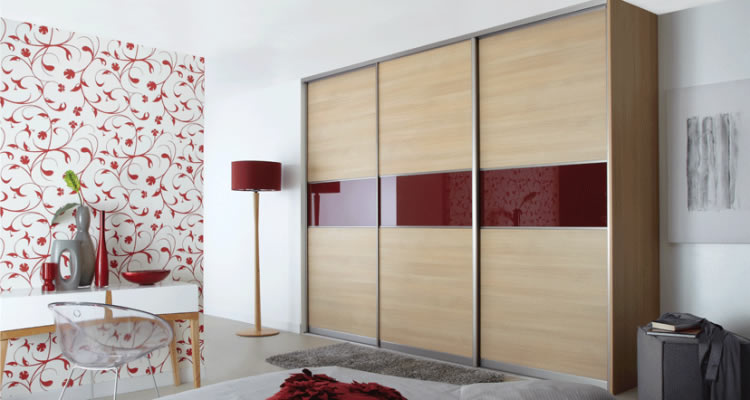
The exact cost depends on the size and style of the cabinet and the room it's being installed in. Designers are always introducing new door styles and finishes, and mirrored sliding doors, for example, tend to cost more than traditional handled doors. Adding features like spotlights, shelving, drawers, or a TV unit will also push the price up.
I'm finding it hard to plan out my wardrobes. Can I ask a carpenter to help with the design of fitted wardrobes before building them?
"Absolutely ask a carpenter about design. One of the services we offer is using our interior designer to help get the most out of these spaces."
Fitted Wardrobes Prices
Fitted wardrobe prices are affected by a number of factors, but perhaps the most important are the size and features of your built-in wardrobes.
Our table below looks at fitted wardrobe prices by size and what's included:
| Job Description | Install Time | Total Cost |
|---|---|---|
| Sliding Doors with No Features | 3 to 4 Days | £2,000 |
| Sliding Doors with Shelves and Rails | 4 to 5 Days | £2,350 |
| 2 Door with No Features | 1 to 2 Days | £1,100 |
| 2 Door with Shelves and Rails | 2 to 3 Days | £1,400 |
| 3 Door with No Features | 2 to 4 Days | £1,800 |
| 3 Door with Shelves and Rails | 2 to 4 Days | £2,100 |
| 4 Door with No Features | 6 to 8 Days | £2,500 |
| 4 Door with Shelves and Rails | 6 to 8 Days | £2,800 |
| 6 Door with No Features | 6 to 8 Days | £3,200 |
| 6 Door with Shelves and Rails | 7 to 9 Days | £3,500 |
Want a custom price?
Post your job
Labour Cost of Fitted Wardrobes Installation
Labour typically accounts for around 30 to 40% of the total installation cost, depending on the size and complexity of the wardrobe. Here's what labour alone costs for each job type:
| Job Description | Labour Cost |
|---|---|
| Sliding Doors with No Features | £600 |
| Sliding Doors with Shelves and Rails | £750 |
| 2 Door with No Features | £300 |
| 2 Door with Shelves and Rails | £400 |
| 3 Door with No Features | £600 |
| 3 Door with Shelves and Rails | £700 |
| 4 Door with No Features | £900 |
| 4 Door with Shelves and Rails | £1,000 |
| 6 Door with No Features | £1,200 |
| 6 Door with Shelves and Rails | £1,300 |
Want a custom price?
Post your job
What Impacts the Cost of Fitted Wardrobes?
There is quite a stark contrast in price depending on the wardrobe's size and whether you want to incorporate any internal features (like shelving, rails, and lighting) in your fitted wardrobe.
Several different factors can affect your fitted wardrobe installation's overall pricing, from location to ease of access and many others. So, we're going to break down the main factors and what you can expect from them.
Type or Size of Wardrobe
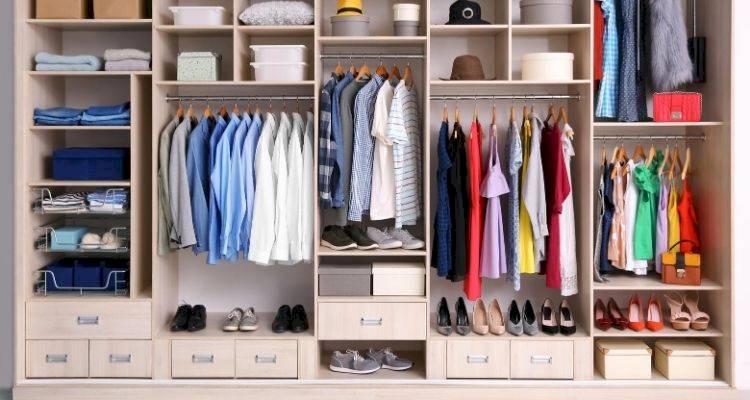
The cost of your wardrobe installation depends heavily on the quality of materials and level of customisation, with popular choices including mirrors, leather padding, and laminate. Unless you have cabinetry experience, a professional is usually worth hiring to get a polished, high-quality fit.
| Wardrobe Specification | Standard Installation | With Added Extras (Lighting, Mirrors, Drawers, etc.) |
|---|---|---|
| Budget | £1,000–£1,800 | £1,500–£2,200 |
| Mid-Range | £2,000–£3,500 | £2,800–£4,500 |
| Luxury / Bespoke | £4,000–£6,000 | £5,000–£8,000+ |
Want a custom price?
Post your job
- Budget — Simple fitted wardrobes, cheaper materials, and basic storage.
- Mid-Range — Better quality materials and design with customised interiors.
- Luxury / Bespoke — Fully-custom design, high-end materials, and premium finish.
Bespoke vs Modular vs DIY-Store Systems
The way your wardrobes are designed, supplied, and installed has a significant impact on the final cost. Broadly, fitted wardrobes fall into 3 categories: bespoke fitted wardrobes, modular wardrobes, and DIY-store systems.
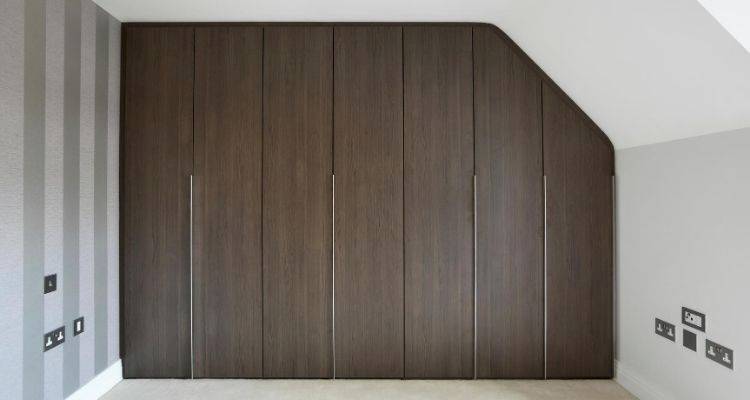
- Bespoke Fitted Wardrobes — Bespoke fitted wardrobes are designed to fit your room exactly, working well in awkward spaces such as sloped ceilings, awkward corners, or across multiple walls. However, the extra design time, precision cutting, and higher labour time typically increase the total cost.
- Modular Wardrobes — Modular wardrobes use standard-sized wardrobe units that are combined and adjusted to suit the space. In some cases, modular wardrobes can save money compared to a fully custom built solution, but if extensive filler panels or adjustments are required, the overall price can rise and approach the cost of bespoke fitted furniture options.
- DIY-Store Systems — DIY-store systems, including IKEA wardrobes, are often chosen for their upfront affordability and clear pricing. However, once labour time and extra materials are included, the final price may be higher than expected, particularly in smaller spaces or rooms with uneven walls.
How much can I expect it to cost to install a 2.6m wide x 2.3m high wardrobe with sliding doors?
"Depends on the model, but normally a good joiner will charge about £20 to £25 per hour. In my area, it would cost you around £20 per hour."
Room/Wardrobe Layout
As well as size, materials, and features, another big factor in determining the cost of your built-in wardrobe installation will be the layout of your room and how you want your wardrobes to fit into it.
In most cases, wardrobes will be fitted against a flat wall. But if you want your wardrobes to fit under eaves, around room corners, or against curved walls and around features like chimney breasts, expect the additional work to be reflected in the cost.
Ease of Access
This can have an impact on getting the materials into the room, as well as being able to manoeuvre around the area to go ahead with installing a new fitted wardrobe. While some construction work may be done before arriving at the property, if there are access issues, this can potentially reduce the amount of work that can be done off-site.
Likewise, it may change the design or the overall process of how to go ahead with the work, all of which takes time and can potentially impact the overall cost.
Location in the UK
The most common cost-affecting factor for trades, in general, is the location of your home. If you live in a popular city like Manchester or London, you will pay an inflated price compared to other, quieter places in the country.
This is down to the cost of living in those areas, and the price increases are pretty much spread across all services in these areas.
How much roughly would it cost to build a wardrobe in a bedroom about 4ft across by 8ft height?
"With all materials and fittings you will be looking at around £1,000 to £1,500."
Ask a Trade
Got a question that only a tradesperson can answer? We have thousands of trades ready to answer any question you may have.
Ask your question

Fitted Wardrobe Cost By Material
Let's take a closer look at how different materials can impact the price of fitted wardrobes.
| Material | Average Cost |
|---|---|
| uPVC | £1,100–£2,500 |
| Pine | £1,500–£3,500 |
| MDF | £1,200–£3,000 |
| Mirrored | £1,800–£4,000 |
| Oak | £2,500–£5,000 |
Want a custom price?
Post your job
uPVC Fitted Wardrobe Cost
uPVC fitted wardrobes are popular with homeowners looking for a budget-friendly option. Costing between £1,100 and £2,500 per fitted wardrobe, uPVC can overhaul your bedroom's storage solutions, being both affordable and low-maintenance when compared to real wood fitted wardrobes.
This material is also moisture-resistant, making it a good choice for children's bedrooms where spills and accidents might happen. However, uPVC can sometimes look cheap due to its finish, and it might not suit every person's aesthetic.
Oak Fitted Wardrobe Cost
Moving onto real wood wardrobes, oak is a premium material favoured by many homeowners wanting to achieve a natural, rustic look. Priced at £2,500 to £5,000 depending on the exact size and features, oak is a great choice for people looking for a long-term investment with long-lasting qualities.
However, the appeal comes at a higher price point than uPVC or other types of wood, making it a considered purchase. As fitted wardrobes generally can't be moved from house to house, it's something to bear in mind as you won't be able to take it with you to a new property.
Pine Fitted Wardrobe Cost
Pine is a great option for homeowners wanting an affordable alternative to expensive wood, costing £1,500 to £3,500, making it considerably cheaper than oak. The lower price does come with a caveat, though. Pine isn't as hardwearing as oak and can be prone to denting and scratching as it is a softer wood.
With that being said, pine does have its attributes, and it can be easily painted or stained to match your home's interior colour scheme. It is also far more lightweight than oak, making it easier to assemble.
MDF Fitted Wardrobe Cost
MDF is even more affordable than pine, costing between £1,200 and £3,000. It can also be painted like pine, with a smooth surface that requires no preparation.
If you're looking for a premium appearance, MDF isn't going to be your first choice, but if you want something budget-friendly to solve a storage problem quickly, MDF can be a great option.
Mirrored Fitted Wardrobe Cost
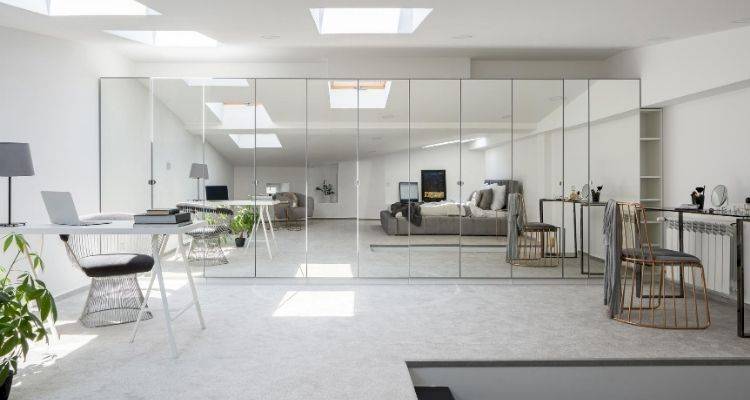
Mirrored fitted wardrobes offer practicality in their design while helping to bounce light around your bedroom. Costing between £1,800 and £4,000 depending on the number of panels and precise size, opting for a mirrored surface can enhance your living space and lean into a modern aesthetic.
However, mirrors are prone to smudging and showing up fingermarks, so can be less suitable for children's rooms. They can also break more easily than other fitted wardrobe material types, and can have a trickier installation process.
Additional Fitted Wardrobe Costs
Waste Removal Cost
A hidden cost of fitted wardrobe installation, especially if a homeowner is replacing an existing wardrobe, is the cost of waste removal.
The best course of action is usually to hire a skip while the work is being completed. The average cost of skip hire is about £220, but it can be more or less depending on the amount of waste you're going to need to dispose of.
Electrician Cost
If you plan to add integrated lighting or sockets to your built-in wardrobe, you will need an electrician at an additional cost. The hourly rate is around £30 to £40 in most parts of the UK, rising to £40 to £60 per hour in the London area.
Wall Preparation Cost
Before your built-in wardrobes can be fitted, the walls need to be level. Any uneven or damaged sections will need to be repaired beforehand, as these can affect how well the wardrobe sits against the wall. Minor plaster repairs typically cost between £100 and £300.
Wardrobe Add-Ons Cost
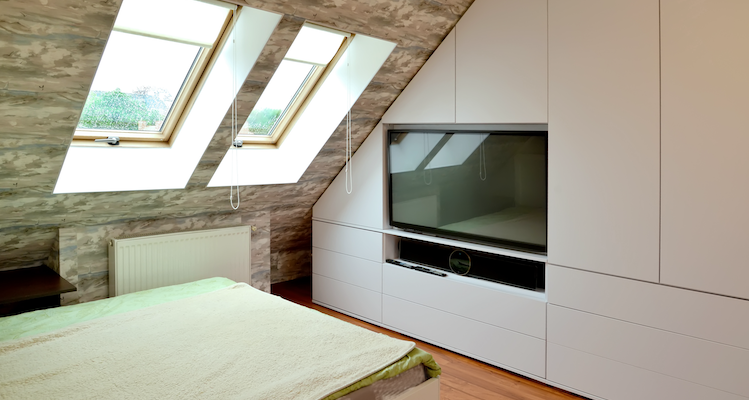
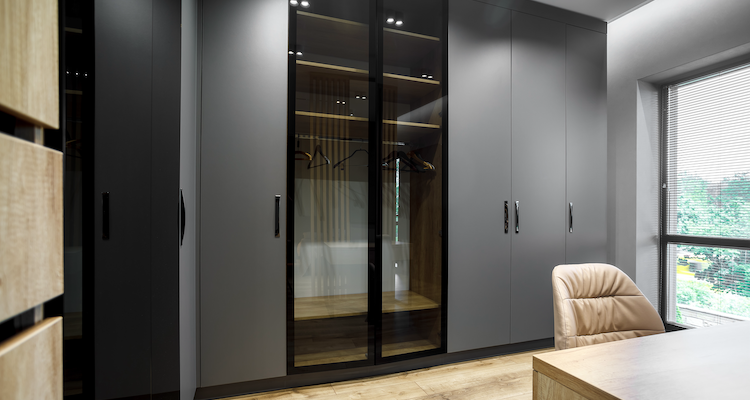
Add-ons typically cost £20 to £800 depending on the feature, with internal LED lighting, soft-close hardware, mirrored doors, and built-in shelving being the most common. Long-hang sections (a single rail for full-length garments) use fewer internal components than a double-hang layout, which can help keep costs down. A built-in TV stand unit is another popular option, though it's worth checking there's enough ventilation and support for any electronics.
| Add-On | Typical Cost |
|---|---|
| Internal LED Lighting | £100–£300 per wardrobe |
| Soft-Close Drawers and Door Hinges | £20–£50 per door or drawer |
| Mirrored or Glass Doors | £250–£800 per door |
| Built-In Shelving | £100–£500 |
Want a custom price?
Post your job
Delivery Cost
There may be extra delivery charges for a bespoke wardrobe or modular system, as panels are made to measure and manufactured off-site before being transported to your home. For larger orders or a more complex bespoke wardrobe, delivery can significantly increase the total price.
Removal of Old Wardrobe Cost
If you need your old wardrobe removed before the new one goes in, this typically costs £100 to £300 and often doesn't include waste disposal. Tradespeople commonly quote around £180 to £230 for removal plus £40 to £80 for disposal, so ask for one combined price to avoid extra costs.
Additional Costs After Removing a Fitted Wardrobe
Once a fitted wardrobe has been removed, the exposed walls, ceilings, and floors may not be in a finished condition. It's likely that further work will be required before the space can be redecorated or fitted with new furniture.
- Replastering or Wall Repairs — Fixings, screw holes, or adhesive marks can leave walls requiring minor patch repairs or full plastering. You can find out more in our plaster repair guide.
- Redecorating — Walls may need repainting once the wardrobe is removed. The average cost for painting a bedroom is around £400 for a 12m² room.
- Flooring Repairs — Some fitted wardrobes are installed over existing flooring. You may need to repair or replace sections of carpet, laminate, or flooring.
- Electrical Work — If the wardrobe contained integrated lighting or sockets, you may need a qualified electrician to safely cap or relocate wiring.
Built-In Wardrobes Cost by Type
We've put together a pros and cons list of the most popular fitted wardrobe options to help you choose the wardrobe that best suits your needs.
Sliding Mirror Fitted Wardrobe Cost
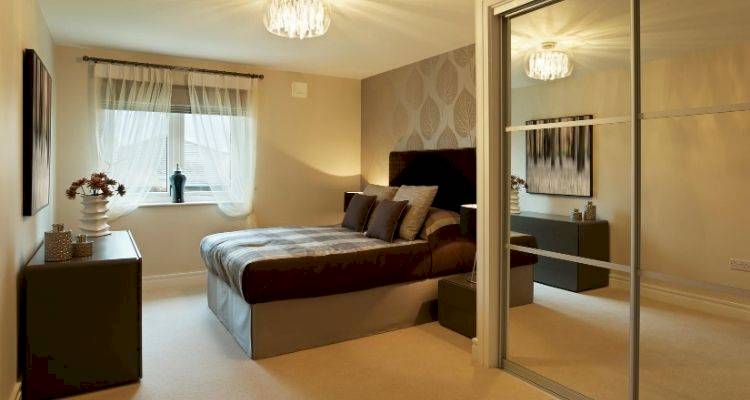
These are probably the most popular options with fitted wardrobes. They really add a classy look to whatever room they are installed in, and certainly make the room look like a larger space. Sliding mirror fitted wardrobes typically start from around £2,000.
Pros
- ✔ Mirrored wardrobes can make the room look and feel much bigger.
- ✔ Mirrored wardrobes are sleek, modern, and will remain at their best if looked after properly.
- ✔ Sliding doors help maximise all the space available in the room, without the need to account for opening doors.
Cons
- ✖ Mirrored wardrobes can become dirty if they're not cleaned very often.
- ✖ Sliding doors can be difficult to reattach if they are knocked out of their sliding module.
Corner Fitted Wardrobe Cost
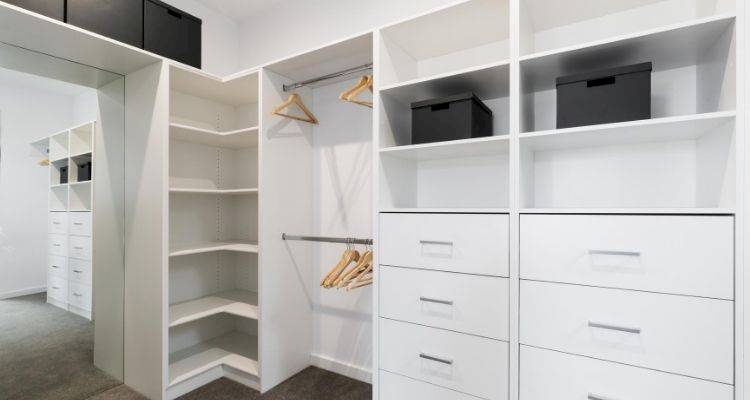
Corner wardrobes sit snugly in the corner of the room and work with either a handled door or very smart but expensive sliding doors in which the door overlaps the other side of the wardrobe. They tend to cost more than other styles of built-in wardrobes due to the additional complexity of their build.
While these types of wardrobes are relatively rare, they are an excellent choice for those with limited space, as corners are often written off as lost space.
Pros
- ✔ Corner wardrobes make use of space that is often overlooked and ignored.
- ✔ Corner wardrobes often have a large surface area of space inside, which can be used for larger items like boxes or small units.
Cons
- ✖ Corner wardrobes can be a little tricky to install, making them a little more expensive than other options.
- ✖ Limited to few door options.
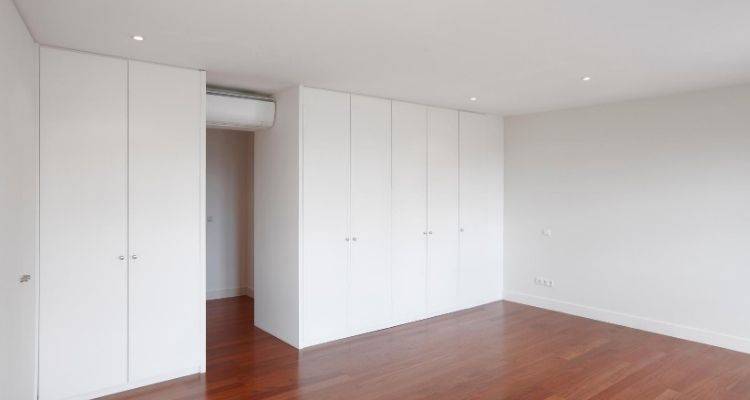
Gloss Fitted Wardrobe Cost
This type of wardrobe has become more popular in recent years due to the lightweight, inexpensive materials and sleek look they provide. The wardrobe doors, either sliding or handled, are covered in glossy plastic.
Gloss fitted wardrobes are a good choice if you're looking to save money.
Pros
- ✔ Inexpensive when compared to other fitted wardrobe options.
- ✔ Very customisable, even after installation, it's pretty easy to remove the glossy covering to change to a different colour.
- ✔ Some reflection without using the more expensive mirror.
Cons
- ✖ Can sometimes look a little cheaper than other options.
- ✖ Budget options can start to show their age after multiple cleans.
What's Involved in Installing Fitted Wardrobes?
A significant aspect of getting fitted wardrobes right is to ensure that they are installed and prepared to absolute precision. Fitted wardrobes are often very heavy, so if you were to tackle this as a DIY job, you could really do with a few pairs of spare hands to help out.
If you'd rather avoid measurement mistakes and heavy lifting, comparing a few fitted wardrobe quotes can help you find the right installer for your budget.
Here's an overview of what you can expect when you hire a professional to install your fitted wardrobes:
Before the Job
- Reviewing the Space — The installer will review the space where you want your fitted wardrobe to be installed, making marks and notes as to where everything will be while measuring the area to ensure everything has been checked and double-checked for accuracy.
- Preparing the Materials — The next step will vary depending on whether you have bought the materials pre-cut and measured or whether the installer is working with the raw materials at the time of fitting. Either way, the materials will be prepared and ready to be installed.
During the Job
- Building the Frame — The frame of the wardrobe will be built. This sturdy frame will act as the bones of the cabinet and will be fixed to the wall and ceiling to provide the shape and structure of the fitted wardrobe.
- Fixing to the Floor — The frame will be firmly fixed to the floor as well. This can be tricky if you have any flooring other than wooden.
- Attaching the Panels — Once the frame is in place and sturdy, the other panels (made up of whichever material you have chosen) will be attached to the frame. From here, the wardrobe will begin to take shape and start to look like what you had envisioned for your room.
- Adding the Doors — Doors, whether sliding or handled, will be added next. Sometimes sliding doors will be added at an earlier stage, depending on where the sliding fixture is placed on the wardrobes.
- Adding Internal Features — Any internal features will be added and completed before the job is finished.
After the Job
- Final Checks and Finishing Touches — Once your wardrobes have been fitted, the installer will check all the fittings are tight and secure and everything lines up correctly, so the final wardrobes match your original design and specification.
- Clean-Up and Review — Your wardrobes and the work area are given a final clean so they're ready to use, and you are provided with any warranties or other documentation.
How complex is it to arrange and install a packaged fitted wardrobe? As an average DIYer, how long might it take me to complete this work?
"Flat packs are not always easy to put together, wardrobes can generally require 2 people to install and require angle rules and adjustment tools to align correctly, which is why professional tradesmen are asked to support customers with their assembly."
Checklist: Hiring Contractors to Install Fitted Wardrobes in the UK
When hiring any wardrobe fitter to fit a built-in wardrobe, there are some considerations to take note of first:
- Are they a member of the Guild of Master Craftsmen? Membership indicates a tradesperson has been independently vetted for quality and craftsmanship.
- Do they have the right experience? Check they have plenty of experience with the specific style of fitted wardrobes you're after, whether that's bespoke wardrobes, sliding doors, or modular fitted furniture. If your built-in wardrobes include integrated lighting, electrical work must be carried out by a qualified electrician.
- Are they covered by the right insurance? Most reputable companies and tradespeople will have at least public liability insurance. While not a legal requirement, it protects against personal injury and accidental damage.
- Do they offer a warranty? Some fitted wardrobe companies offer warranties of up to 10 years on materials and workmanship. Always ask what is covered and for how long before work starts.
- Is waste removal included in the cost? Check the quote in advance and ask for an itemised version if it's not already clear. This will help ensure there are no unexpected costs or leftover jobs once the installation is completed.
- Have you seen examples of their work? Check their MyJobQuote profile, to see examples of their wardrobe fitting work.
- Do they have positive reviews? Check their online presence for reviews from past customers, such as on MyJobQuote.
FAQs
What Is the Cheapest Type of Fitted Wardrobe?
Gloss fitted wardrobes are generally the most affordable option, thanks to their lightweight, inexpensive materials. Choosing budget materials like uPVC or MDF over pine, mirrored glass, or oak will also help keep costs down, with uPVC starting from around £1,100.
What Are the Benefits of a Fitted Wardrobe?
Fitted wardrobes are custom-designed to fit your space perfectly. With freestanding wardrobes, it can be hard to find one that fits flush to the walls and ceiling without leaving gaps or compromising potential storage solutions. They can help to save space in smaller bedrooms and be fitted with mirrored doors to help give the impression of a larger and brighter room. A built-in wardrobe can also add value to your home and contribute to a complete room transformation.
How Much Space Do I Need for a Fitted Wardrobe?
As fitted wardrobes are customisable to the area you have available, they can potentially be installed within any sized room, as they are designed to make the most of your available space. Even if a smaller room may not be as practical, there are often alternative storage options available.
Can You Place Electrics Inside a Fitted Wardrobe?
Yes. If you need electrical sockets or ports in your fitted wardrobe for any reason, a qualified electrician will be able to install these either in the space before it's fitted, or once the cabinet has been installed, providing they are able to do so safely and in line with building regulations.
Do Fitted Wardrobes Require Regular Maintenance?
If you have sliding doors, you may want to lubricate them periodically to keep them running smoothly. However, apart from that, there isn't much maintenance needed, apart from regular cleaning to remove dust and marks from the doors and mirrors.
Are Fitted Wardrobes Suitable for Listed Properties?
Yes, they are suitable for older buildings such as listed properties and can be designed to fit the nature of the existing interior. However, for listed properties, installing a fitted wardrobe will often require consent from the local authorities as there are usually restrictions on what work can be carried out. This is especially the case if the new installation is likely to drastically change the appearance of the room.
Can I Install Fitted Wardrobes Myself?
While it is possible to install fitted wardrobes yourself, we would generally advise using a licensed and experienced professional for a job of this scale. Even a small miscalculation can affect the entire installation and lead to costly mistakes.
However, if you intend to attempt it yourself, do some research and follow the guides to the letter. It may also be beneficial to try something similar on a small scale to see if you find it trickier or easier than expected. That should give you a good indication as to whether you'll be able to complete a larger job successfully.
If you attempt this as a DIY job, ensure you have all the tools and materials to hand, ensure you use safety precautions when cutting materials and wear gloves throughout the installation to protect your hands from any slips or traps.