Builders
 Carpenters
 Electricians
 Flooring Specialists
 Gardeners
 Handymen
 Heating Engineers
 Painters & Decorators
 Plasterers & Renderers
 Plumbers
 Roofers
 Tilers
 my
myDouble-Storey Extension Cost
At a Glance
- The average two-storey extension costs £60,000 in the UK.
- Double-storey extensions take up to 14 weeks for builders to complete.
- NEW! A double-storey extension cost calculator, which gives you a quick and no-hassle way to get an idea of what this type of job will cost you.
- A breakdown of what you can expect to be quoted for different types of two-storey extensions in 2026 (includes double-storey extension cost per m²).
- Expert advice about extensions from builders on MyJobQuote.
- How to find and hire a local builder to add an extension to your home.
Get free estimates
Are you a trade? Get more work today!
Extension Cost Calculator
£60,000
Table of Contents
- How Much Does a Double-Storey Extension Cost?
- Two-Storey Extension Price List
- Labour Cost of a Two-Storey Extension
- Factors That Impact Double-Storey Extension Costs
- Double Extension Cost Breakdown
- Types of Double-Storey Extension
- Is My House Suitable for a Double-Storey Extension?
- Choosing Between a Double-Storey Extension or Moving House
- What's Involved in Building a Double-Storey Extension?
- Double-Storey House Extensions: What to Watch Out For
- Checklist: Hiring Contractors for a Double-Storey Extension in the UK
- FAQs
How Much Does a Double-Storey Extension Cost?
Looking into how much a double-storey extension costs in the UK?
The typical cost of building a two-storey extension starts at around £32,000, but can easily run as high as £90,000. The increase in cost depends mostly on the size of the extension, but will also increase if you are planning to use some of the space as a kitchen or bathroom.
Double-storey house extension costs per square metre are between £1,000 and £1,900. This is for your basic building materials including foundations, walls, roofing, plumbing, electrics, and finishing.
Once you've roughly calculated your two-storey extension cost, you'll need to add between £5,000 and £15,000 for an average-sized fitted kitchen, and a further £4,500 to £9,000 for a standard family bathroom.
A two-storey extension will not only add valuable space, but it is a more cost-effective solution than moving house and cheaper per square metre than a single-storey extension. If both storeys in an extension are the same size, then a double-storey extension will cost around 50% to 75% more than a single-storey extension.
I have a 3 x 4 m conservatory with three full brick walls and a dwarf wall across the front (3m). My house is built on a raft, is it possible to add a raft to the current building and then convert it to a two-storey to match the back of the house?
"It can be done, but you would need an RSJ beam put in and built up from that. You would need a structural engineer to do the calculations for it. I would say to build the new first-floor walls from timber frames to keep the weight down on the raft."
Two-Storey Extension Price List
The cost of a double-storey extension will depend on multiple factors. This includes:
- Type of double-storey extension (e.g., side return, wrap-around, rear).
- Finish and specification.
- Your location in the UK.
The illustration below shows the difference in costs based on your extension size and the specification of finish that you choose:
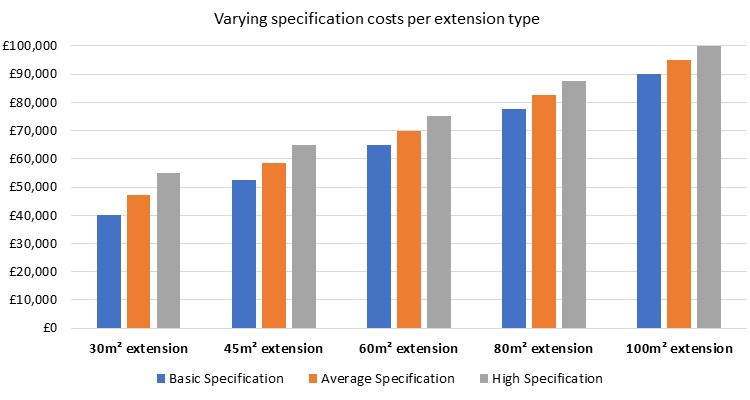
The table below shows average costs for extensions in the UK, including the average price per m² and what you can expect to pay (additional to the base average) if you are adding a kitchen or bathroom to your home.
| Expense | Basic Specification | Average | High Specification |
|---|---|---|---|
| Small double-storey extension (20m² total) | £32,000 | £35,000 | £38,000 |
| Medium double-storey extension (40m² total) | £52,000 | £56,000 | £60,000 |
| Large double-storey extension (70m² total) | £75,000 | £82,000 | £90,000 |
| Cost per m² (up to 20m²) | £1,600 | £1,750 | £1,900 |
| Cost per m² (over 20m²) | £1,300 | £1,400 | £1,500 |
| Fitted kitchen (add-on) | £8,000 | £10,000 | £15,000 |
| Bathroom (add-on) | £4,500 | £7,000 | £9,000 |
Want a custom price?
Post your job
Converting Single-Storey Extension to Double Cost
If you already have a single-storey extension and want to build above it, costs usually start from £1,200 to £1,800 per m², with a typical total cost of £20,000 to £30,000 for an average-sized extension. Costs for building more than one storey vary depending on whether the existing foundations and walls can support a second storey.
What is your main reason for a double-storey extension?
Creating additional living space
3 votes - 33%33% of votes
Adding extra bedrooms, bathrooms, etc
6 votes - 67%67% of votes
Making the property larger without needing to move
0 votes - 0%0% of votes
To increase the value of your property
0 votes - 0%0% of votes

9 votes
See results
Hide results
In many cases, structural strengthening is needed when changing a single-storey to a double-storey extension, so converting an existing extension can sometimes cost as much as building a new multi-storey extension from scratch.
Labour Cost of a Two-Storey Extension
Labour for a 40m² double-storey extension will cost £34,000 on average.
Below are the rough charges for 1 day's labour by the various work types.
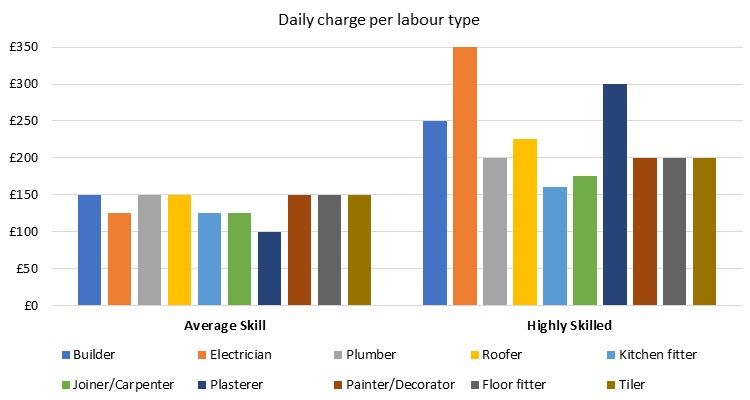
Labour makes up a significant part of the total cost of a two-storey extension, as there are many trades involved and most will be on site for at least a week.
| Extension Size | Estimated Labour Cost | Typical Build Time |
|---|---|---|
| 20m² double-storey extension | £21,000 | 6 to 8 weeks |
| 40m² double-storey extension | £34,000 | 9 to 11 weeks |
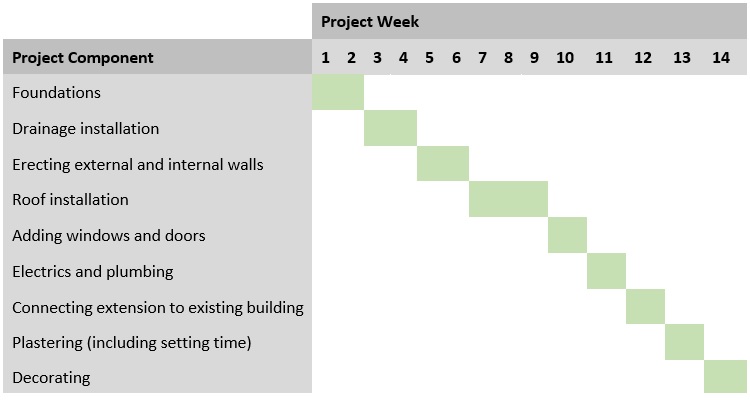
| 70m² double-storey extension | £49,000 | 12 to 14 weeks |
Want a custom price?
Post your job
The build time is contingent on the efficiency of labour, weather conditions, and scheduling of multiple work types simultaneously. You should also factor in extra time for complex additions and a larger extension size.
Here is an estimate of labour costs by trade, and how long each will be on site for a typical extension build:
| Trade | Typical Labour Cost | Typical Time Required |
|---|---|---|
| Bricklayers / structural build | £14,000–£22,000 | 4 to 6 weeks |
| Roofers | £4,000–£7,000 | 1 to 2 weeks |
| Plumbers & electricians | £3,500–£6,000 | 1 to 2 weeks |
| Plastering | £2,500–£4,500 | 1 week |
| Joinery / finishing work | £2,000–£4,000 | 1 week |
Want a custom price?
Post your job
Brickwork and structural work usually make up the largest share of labour costs, while roofing, plastering, and electrical work are completed in shorter stages later in the extension project.
What costs do you incur for house extension work?
"Around £850 per square metre for labour only or £1,550 per square metre with all structured materials included."
If you need to get planning permission, go to an architect, or gain a Party Wall agreement, you will need to add the relevant time before the building work begins.
Extension Labour Rates by Region
The average house extension cost varies considerably across the UK. Builder day rates, material delivery costs, and site access all vary by location, so where you live has a real impact on your final price.
London commands the highest labour rates in the country, while the South East (including Surrey, Kent, and Essex) tends to follow close behind.
Costs in the Midlands, the North of England, and Scotland generally sit closer to the UK average, while Wales and Northern Ireland are often slightly cheaper than the national average.
| Region | Typical Cost vs UK Average |
|---|---|
| Greater London | 20% to 40% above average |
| South East (e.g. Surrey, Kent, Essex) | 10% to 25% above average |
| South West (e.g. Dorset, Gloucestershire) | 5% to 15% above average |
| Midlands (incl. West Midlands) | Around the UK average |
| North of England (incl. Yorkshire, North West) | 5% to 10% below average |
| Scotland | Around the UK average, though city centres like Glasgow and Edinburgh can run higher |
| Wales | 10% to 15% below average |
| Northern Ireland | Typically below the UK average |
Want a custom price?
Post your job
In general, is it better to consult with a local authority building inspector or an independent one when you're designing and building a big house extension?
"We would recommend independent inspectors, as if the local authority advises incorrectly there is no action that can be taken against them whereas if independent inspectors advise incorrectly you can take action against them."
Factors That Impact Double-Storey Extension Costs
There's no one-size-fits-all answer to how much a double-storey extension costs to build.
The quote you're given will depend on:
- Size — The single biggest cost driver is the size of the extension. Although costs per m² decrease as size increases, larger builds need more labour and materials.
- Location — Labour rates vary considerably across the UK. The typical double-storey extension cost in London can be 20% to 40% higher than elsewhere in the country.
- Groundwork — If the area the extension will be built on already has structures, utilities, or trees on it, these will all need to be cleared before construction begins. The soil type can also impact costs as foundation requirements will be different, and sometimes more expensive.
- Extension Purpose — If you're creating a simple living space, costs will be lower than if you're adding a full kitchen and bathroom. Creating a home gym, games room, or office will also require a bigger budget for furnishings and equipment.
- Style — There are a few different configurations for an extension, with the average double-storey side extension cost being much lower than wrap-around styles.
- Specifications — The quality of the materials you choose can impact costs. Consider more budget-friendly finishes to keep costs down.
Double Extension Cost Breakdown
To help you to work out a reasonably accurate overall cost for your extension, here's an overview of how your costs will be distributed.
- Labour — 40% to 45%.
- Materials — 35% to 40%.
- VAT — 15% to 17%.
- Professional Fees — 8% to 12% (architect and structural engineer fees, party wall surveyors).
- Planning and Admin — 1% to 2% (council application fees, building control inspection).
You should always round up any potential costs, and add around 10% as a buffer. Otherwise, any unexpected costs can blow your initial budget.
- Planning — Budget around £13,000. This will cover house surveys, architect hire fees, full plan creation, and overall project management.
- Initial Building Work — Budget around £19,000. This concerns foundations, timber framing, roofing, and exterior finishing.
- Secondary Building Work — Budget around £5,300. Broadly, this will cover your double glazing fees, external door, and landscaping (where necessary).
- Interior Finishing — Budget around £18,000. Depending on your chosen specifications, this cost will include things like your new kitchen, bathroom installation, electrician day fee, and plastering costs.
Want to see those costs broken down line-by-line?
| Expense | Average Cost |
|---|---|
| Foundations | £6,000 |
| Timber Framing | £5,000 |
| Rendered Brick Exterior | £3,500 |
| Roofing (standard shaped roof and tiles) | £4,500 |
| Windows (based on 4 double-glazed uPVC windows) | £2,400 |
| Doors (one external door) | £1,100 |
| Landscaping (an average-sized patio) | £1,800 |
| Electrics (standard electrician day rate) | £230 |
| Plastering (internal of average-sized double-storey extension) | £700 |
Want a custom price?
Post your job
What can I do to keep architect costs down when planning an extension?
"It might be a good idea to look for a smaller, newly founded practice driven by expanding their business; their overheads should be more modest than other, more established practices.
Consequently, you might expect a lower fee whilst professionalism and quality are not compromised."
Consequently, you might expect a lower fee whilst professionalism and quality are not compromised."
Planning Permission, Building Regulations & Party Wall Costs for Double-Storey Extensions
These are three separate costs and considerations. Not all extensions require planning permission or party wall considerations, but building regulations compliance is almost always required.
The costs of each of these are around:
- Planning Permission — £548 in England, £371 in Scotland, and £585 in Wales.
- Building Regulations — Full plans cost around £180, and inspections are £200 to £550.
- Party Wall — If a surveyor is needed to settle a party wall dispute, expect to pay £90 to £450 per hour depending on where you live.
The house I've bought already has planning permission for a double-storey extension. There's a few little changes I'd like to make to the plans. Do I need to get the plans updated and resubmitted before building starts?
"You would generally get away with internal changes or alterations. However, you’d be better off getting planning or seeking clarification for any external changes so as not get into problems with the council.
So seek clarification or planning before building starts as if spotted by an inspector once building commences, you run the risk of having to pull down any alterations not in line with what has already been approved."
So seek clarification or planning before building starts as if spotted by an inspector once building commences, you run the risk of having to pull down any alterations not in line with what has already been approved."
Types of Double-Storey Extension
There are several options when it comes to your new extension. Let's look at the most common double-storey configurations:
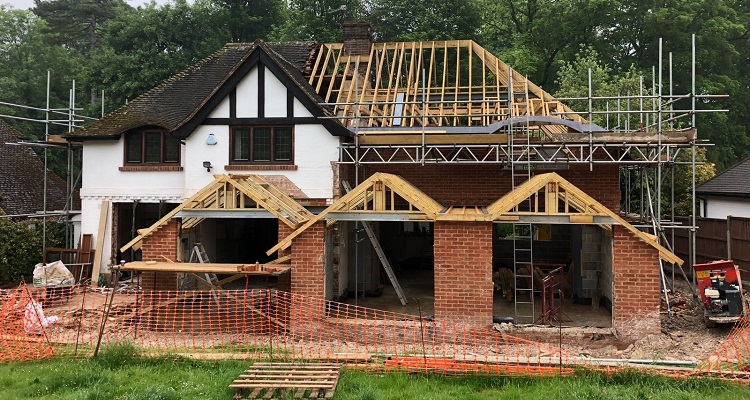
Double-Storey Side Extension Cost
Best for — Detached or semi-detached homes looking to widen living space without losing the garden.
Typical cost — £35,000 to £45,000
This type of extension is built at the side of the property without jeopardising the garden area. This extension can be implemented on a detached or semi-detached property.
Pros
- ✔ Preserves garden space.
- ✔ Makes use of the unused side area.
Cons
- ✖ Not suitable for terraced houses.
- ✖ May require Party Wall agreement with neighbours.
Double-Storey Rear Extension Cost
Best for — Adding more kitchen, dining, and bedroom space while extending into the garden.
Typical cost — £40,000 to £50,000
This extends the rear of a property, usually by extending into garden space. This type of extension is a good choice for semi-detached and detached properties. A terraced house that has enough back garden space could also have a double-storey rear extension.
Pros
- ✔ Suitable for most property types.
- ✔ Great for open-plan kitchen diners with bedrooms above.
Cons
- ✖ Reduces garden space.
- ✖ May affect light to neighbouring properties.
Double-Storey Wrap-Around Extension Cost
Best for — Maximising space with a combination of side and rear extension.
Typical cost — £70,000 to £90,000
This type of extension is a mixture of a double-storey side extension and a rear extension. If the main reason for you wanting an extension is extra space, then a wrap-around extension can add a lot of space to a property and is the best solution. It's achievable for both detached and semi-detached properties.
Pros
- ✔ Creates the most additional living space.
- ✔ Offers flexibility for room layouts.
Cons
- ✖ Most expensive type of double-storey extension.
- ✖ More complex build.
Double-Storey Flat Roof Extension Cost
Best for — Modern properties or a contemporary look at a lower cost.
Typical cost — £45,000 to £55,000
A double-storey flat roof extension features a horizontal roof rather than a traditional pitched design. This type of extension has become increasingly popular in recent years due to improvements in building materials and waterproofing technology.
Pros
- ✔ More affordable than pitched roof extensions.
- ✔ Quicker to build.
Cons
- ✖ May not be permitted in conservation areas or on listed buildings.
- ✖ Requires proper drainage to prevent water pooling.
Double-Storey Front Extension Cost
Best for — Adding kerb appeal, entrance space, and extra bedrooms at the front of the property.
Typical cost — £45,000 to £60,000
This type of two-storey extension is most probably the least common. The reason for this is that a front extension has the most impact on the look of a property, and it always needs planning permission in England.
Pros
- ✔ Ideal for adding a porch, hallway, or front bedroom.
- ✔ Doesn't reduce garden space.
Cons
- ✖ Always needs planning permission (in England).
- ✖ Can affect light coming into the neighbour's house.
Ask a Trade
Got a question that only a tradesperson can answer? We have thousands of trades ready to answer any question you may have.
Ask your question

Is My House Suitable for a Double-Storey Extension?
How do you know if your existing house is suitable for the type of extension you have in mind?
Generally speaking, the following properties are good contenders for double-storey extensions:
- Detached Houses — Homes with lots of original floor space (and space surrounding the property itself) can offer lots of development options.
- Semi-Detached Houses — Rear or side extensions are good options, but you'll have to make sure the attached property doesn't have issues with the proposed build, as well as other neighbouring properties.
- Some Terraced Houses — If there's ample space to the back of the terrace, you can potentially look to have a rear double-storey extension built to increase your footprint.
For balance, here are the properties that may find it harder to achieve a full double-storey extension:
- Period Properties, Listed Buildings, and Houses with Restrictive Planning Options — You'll likely have fewer options and encounter pushback from the council's planning department. Listed buildings also need listed building consent before any work begins.
- Houses on Narrow Plots — You're unlikely to gain planning permission if your house is already very close to neighbouring houses, or if there's limited garden space, making an extension tricky.
Choosing Between a Double-Storey Extension or Moving House
Sometimes even the most straightforward rear extensions on paper can turn into headaches, and it's wise to remember that development isn't your only option if you're after more living space, especially if you've calculated a minimal uptick on your overall property value after the build.
In scenarios where you're struggling to get planning permission, would rather not have the upheaval of construction, or simply can't afford the extension build cost, moving house to gain that extra space can be the best option.
If you find yourself seeking out any of the following, it might be best to consider looking for a different property:
- You want to completely change the layout of your home and want significantly more space, but find yourself limited by your plot or planning conditions.
- You'd rather not wait for a lengthy build process, and need the extra space immediately.
- You have calculated the "ceiling value" of your property, and judge that adding an extension won't give you adequate property value in return.
- You've simply outgrown your current house and want to try out a new location.
What's Involved in Building a Double-Storey Extension?
Below is the standard process of a double-storey extension build.
Before the Project Starts
- Permission Check — Before any construction begins, you'll need to check whether you need planning permission, what building regulations you need to comply with, and you'll need to tell your neighbours about work on or near a shared wall or boundary. An architect or builder can check what planning permission and building regulations are needed, but you are responsible for getting any required permission.
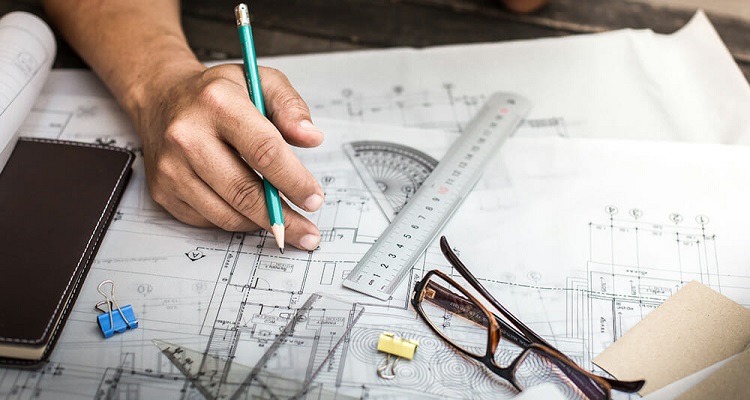
- Designing the Extension and Sign-Off — Using an architect (or structural engineer), plans will be made ready for planning and Building Regulations approval. At this stage, the builders will finalise their plans for the foundations, incorporating the recommendations by the structural engineer and Building Inspector, and also taking into account any pipes, drainage, etc.
- Logistics Planning — All supplies will be ordered and delivered, and your builder will ensure rights of way are adhered to, as well as providing the necessary insurance.
During the Project Build
- Groundworks and Foundations — The ground conditions will be assessed, accounting for drains/services, and foundations will start to be laid.
- Building the External Structure — External walls will be built, attaching to the existing building where necessary, along with the floors and roof. Windows and doors will be added, and the extension will be weatherproofed.
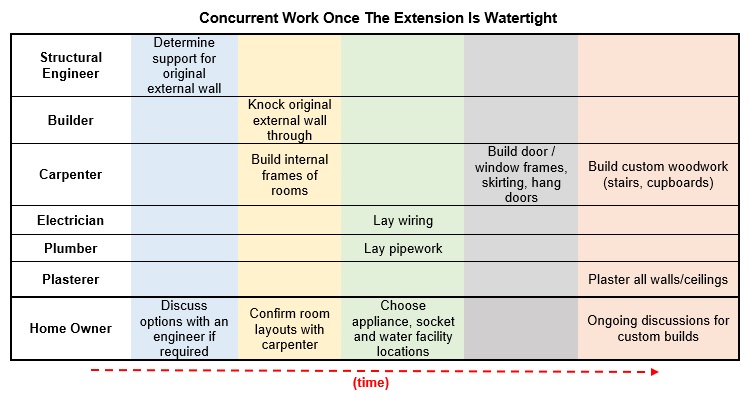
- Structural Opening and Internal Framing — The original external wall will be knocked through into the extension, and a structural engineer will determine what support will be required to reinforce the exposed structure. A carpenter/joiner will build the internal frame of the rooms.
- First-Fix and Plastering — Electrics and plumbing will be installed, with the area being plastered once the services are fitted.
- Second-Fix and Other Installations — Internal components (doors, skirting boards, radiators, kitchens/bathrooms, etc.) will be installed, alongside other permanent fixtures.
After the Project Build
- Decorating and Finishes — Your internal finishes can now be added, like tiles, painting/wallpaper, and flooring.
- Final Inspection and Sign-Off — Building Control will carry out a final inspection and hand over a completion certificate. Snags will be addressed, and the site will be cleared.
Ready to get a quote?
You can get multiple free quotes from local extension builders using MyJobQuote, with no obligation to go ahead.
Still unsure?
Try our two-storey extension cost calculator above to get an instant, accurate estimate for your project.
Double-Storey House Extensions: What to Watch Out For
With a job as big as a house extension, issues can come at a significant cost.
Existing Structure Considerations
Be grounded in the options in line with your property as it currently stands. This is especially important in older properties where drainage and foundation issues may be of concern.
Do your homework on what's possible within the limitations of your budget and existing property, making sure any plans match in style and function to your original structure and existing rooms.
Unexpected Costs
No matter how far in advance your final costs are set, unexpected costs can always arise somewhere along the timeline.
If issues come up during the work, such as finding unexpected ground conditions or realising you need alterations or structural changes, you should be confident that you've set aside a contingency budget to cover these additional costs.
While some things can come out of the blue, no matter how well-planned a job is, a good way to mitigate hefty extra fees is to ensure all your preparation work is completed diligently before any work starts.
Remember Your Neighbours
Two-storey extensions are harder to get approval for compared to single-storey extensions. Single-storey builds often fall under Permitted Development, while double-storey projects will almost always need householder planning permission.
As the height increases, so will the risk that your neighbours will be impacted by the build. Whether it's windows that look onto or into their property, or structures that could cast their property in shadow, you'll have to consider what your building proposal will mean for your neighbours when planning.
Your architect will be able to advise on this, but your Local Planning Authority will give the final word on planning rules.
Checklist: Hiring Contractors for a Double-Storey Extension in the UK
Before you hire a double-storey extension builder, here are some things you should consider:
- Are they qualified? Check that they can provide proof of relevant qualifications, including certification for electricians and, where applicable, Gas Safe engineers.
- Do they have insurance? Ask whether they have liability insurance. Liability insurance would protect you if anything were to go wrong while the work is happening.
- Are they experienced? Ask if they have ever completed a double-storey extension, and if they have experience working with Building Control and structural engineers.
- Do they offer any guarantees? If any problems arise in the future, check that you'll be covered by a guarantee. Find out what's included and for how long.
- Have you been given an itemised quote? Ask for a detailed two-storey extension cost breakdown to ensure that there are no hidden fees.
- Do they have examples of similar work? Check their previous work by reviewing the photos on their MyJobQuote profile.
- Do they have positive reviews? Take a look at what other homeowners are saying about their work by checking their MyJobQuote reviews.
FAQs
Can I Build a Double-Storey Extension Myself?
In short, no, you'll definitely need to hire relevant tradespeople for certain tasks during the double-storey extension build. You can complete some jobs DIY, like painting and decorating, and by doing odd jobs, you can save some money.
How Can I Reduce the Cost of Building My Double-Storey Extension?
Keep the design simple to save on specialist or skilled workers, build time, materials, and architect time, while staying in keeping with your property.
Is a Single, Double, or Three-Storey Extension Best?
The best option depends on how much extra space you need and your budget. A single-storey extension is usually cheaper and simpler, while a double-storey gives you extra space upstairs and downstairs without taking up more garden space.
Although a double-storey costs more overall, the cost per m² is often lower than building two separate extensions. Three-storey extensions are less common and usually only practical on larger properties, as planning and structural requirements are much stricter.
Will Building a Double-Storey Extension Cause Me Any Problems?
With detailed plans, an experienced project manager, and competent labourers, issues should be minor, though ground conditions, weather, and materials can still cause problems that teams can work around. Talk to neighbours early about noise, disruption, access, and deliveries and keep them informed.
Should I Move Out While Extending?
If builders need access to most rooms, moving out for a few months helps sanity and timescales, and some companies will not work in an occupied house. A caravan in the garden is a popular option, while a hotel or short-term let is quieter and more comfortable but more expensive. Always factor in temporary accommodation costs.
Which Direction Should I Extend My House?
The simplest option is extending to the rear, but you'll need enough back garden space. If not, a two-storey side extension may be right for you. Consider where your current rooms sit within the house and what you want to add, as this will determine the best direction to extend.
Is £50K Enough for an Extension?
£50,000 is enough for a small, basic specification extension, but if you want to add a kitchen or bathroom, choose higher-quality fittings, or build an extension larger than 20m², you will almost certainly need a bigger budget.
What Is the Most Expensive Part of a House Extension?
Structural work and foundations are generally the most expensive parts of building a house extension. It's vital to hire trusted tradespeople for these aspects of building the extension to ensure it is structurally sound and durable.
Is It Cheaper to Extend or Move?
Usually extending is cheaper. There are many fees associated with moving house, including estate agent fees, Stamp Duty Land Tax (England and Northern Ireland only), Land and Buildings Transaction Tax (Scotland only), Land Transaction Tax (Wales only), legal fees, house surveys, and more.
What Are the Benefits of a Double-Storey Extension?
The main benefits of a double-storey extension are increased property value, improved floorplan and functionality, and less loss of garden space than a single-storey extension with the same overall m² size. Overall, they offer better value for money compared to single-storey extensions as they use the same foundations and roof structure to make double the amount of floor space.
Will a Double-Storey Extension Increase My Property's Value?
The value of your house will almost certainly increase as more living space is a draw to buyers. 2025 data from Nationwide found that adding a large double bedroom and a bathroom to a three-bed, one-bath house could increase its value by up to 24%. However, the sale price depends on neighbourhood appeal and local values.