Builders
 Carpenters
 Electricians
 Flooring Specialists
 Gardeners
 Handymen
 Heating Engineers
 Painters & Decorators
 Plasterers & Renderers
 Plumbers
 Roofers
 Tilers
 my
myConservatory Cost
At a Glance
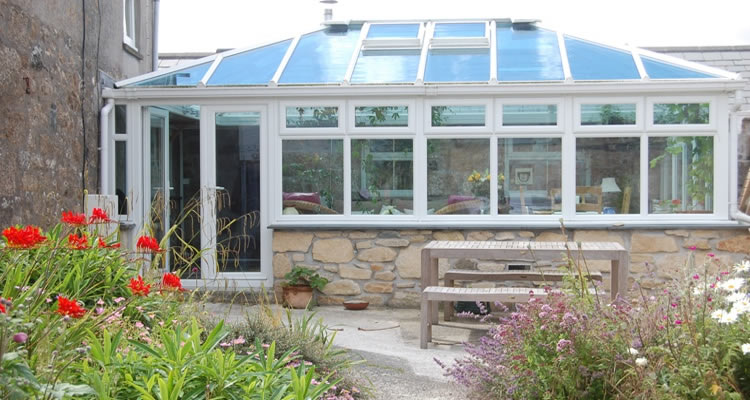
- The average uPVC conservatory extension costs £15,000 in the UK.
- It takes approximately 3 to 6 weeks to complete the build.
- Although for a fully fitted conservatory, allow an additional 6 weeks.
- NEW! Our conservatory cost calculator, which gives you an estimate of conservatory prices in your circumstances.
- How long it takes to fit a new conservatory and what's involved.
- How to find builders for your conservatory extension with MyJobQuote
Get free estimates
Are you a trade? Get more work today!
£15,000
Table of Contents
- How Much to Build a Conservatory?
- Labour Cost of Conservatory Extension
- Factors That Impact Conservatory Costs
- What's Involved in Building a New Conservatory?
- Types of Conservatories
- Kitchen Conservatory Cost
- Bespoke Conservatory Extensions
- Planning Permission for a Conservatory Extension
- Building Regulations for a Conservatory Extension
- How to Keep Conservatory Costs Down
- Checklist: Hiring a Conservatory Installer
- FAQs
New Conservatory Cost Calculator
How Much to Build a Conservatory?
Looking to find out how much a conservatory costs in the UK?
In 2026, the average conservatory cost for a standard uPVC conservatory is around £15,000 (not including fixtures and fittings). However, should you choose a more premium material, such as timber, then expect initial costs to be much higher.
Other factors that impact the cost of a conservatory extension include any groundworks and laying the foundation, as well as the size and location, overall design and any additional finishing touches.
What is your main reason for having a conservatory extension?
Creating additional living space
7 votes - 78%78% of votes
Increase the amount of natural light
0 votes - 0%0% of votes
Enhance the appearance of your property
1 votes - 11%11% of votes
To increase the value of your property
1 votes - 11%11% of votes

9 votes
See results
Hide results
Ready to get a quote for a new conservatory price?
MyJobQuote has a range of builders that specialise in building conservatory extension, who are ready to provide you with a free, no obligation quote!
Conservatory Extension Prices
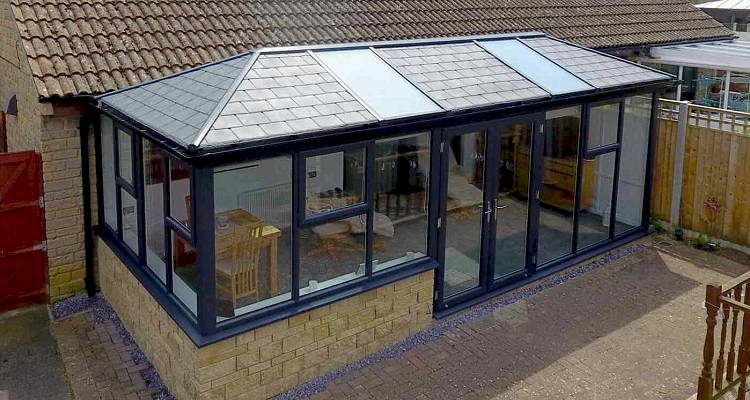
Here are the average starting prices for different conservatory extension designs:
| Design type | Minimum price |
|---|---|
| Lean-to | £7,500 |
| Victorian / Edwardian / Georgian / Elizabethan / Regency | £8,500 |
| Loggia / T-shape / P-shape / B-shape / U-shape | £15,000 |
Want a custom price?
Post your job
Conservatory Extension Costs per m²
Let's take a closer look at the cost per m² for those different types of conservatories (structural costs only, excluding any foundation and groundwork preparation):
| Type of Conservatory | Material | Cost per m² |
|---|---|---|
| Lean-to Conservatory | Polycarbonate with dwarf wall | £1,000 per m² |
| Lean-to Conservatory | Glass fully glazed | £970 per m² |
| Edwardian Conservatory | Polycarbonate with dwarf wall | £875 per m² |
| Edwardian Conservatory | Glass fully glazed | £812 per m² |
| P-Shaped Conservatory | Polycarbonate | £875 per m² |
| P-Shaped Conservatory | Glass fully glazed | £837 per m² |
| Victorian Conservatory | Glass with dwarf wall | £1,050 per m² |
Want a custom price?
Post your job
Conservatory prices per m² tend to be higher for smaller designs, as fixed costs are similar regardless of size.
I have an old conservatory on a 3.2m x 2.8m base, but I need a new one at 3.2m x 3.5m. It will be built on a typical 600mm brick wall, with one corner section bricked up (no windows) to accommodate a toilet. Any idea of the installation costs?
"From what you have mentioned, it will cost between £10,000 and £13,000."
Supply Cost of Conservatory Extension
The below are some material-only estimates based on an area of around 6m² to 18m², to provide you with a rough guide. For any bespoke designs and fittings, you will have to contact a tradesmen directly to request a quote.
| Type | Estimated Cost |
|---|---|
| Lean-to fully glazed | £3,400 – £4,600 |
| Edwardian with dwarf wall | £2,900 – £5,300 |
| Victorian with dwarf wall | £3,300 – £5,800 |
Want a custom price?
Post your job
Are my foundations deep enough for a conservatory?
"Ask a building inspector. They should check the foundations before you order the concrete."
Labour Cost of Conservatory Extension
Labour costs for a conservatory vary by experience, qualifications, time on site, and location (with labour rates in London and the South East higher than the national average). Hiring a company to carry out the building work will usually also include a project manager who coordinates the workforce and how the job planned out and the timeline involved.
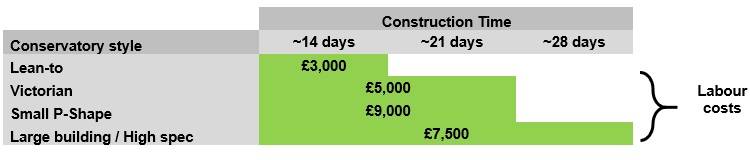
Take a look at the below to help determine the labour costs and approximately how long the construction process will take.
| Tradesmen | Cost per Day | Typical Duration |
|---|---|---|
| Labourer | £50 to £60 | 2-4 days |
| General Builder | £100 to £150 | 3-5 days |
| Window Installer | £125 to £150 | 2-3 days |
| Plasterer | £140 to £160 | 1-2 days |
| Painter and Decorator | £150 to £200 | 2-3 days |
| Electrician | £125 to £200 | 1-2 days |
| Bricklayer | £180 to £250 | 2-4 days |
Want a custom price?
Post your job
How long might it take to have a 20 to 25 square metre conservatory constructed?
"It very much depends on the groundwork and structural alterations required. 4 to 6 weeks would be a fair estimate."
Factors That Impact Conservatory Costs
Here are the main factors that impact conservatory extension building costs:
- Groundwork and Foundations - Having a site survey is recommended as the base for your framework is crucial for the longevity of your conservatory. The ground will need excavation to determine foundation depth, after which you can choose a flat or raised base, whereby the material may vary depending on the local ground condition.
- Building the Frame - Most conservatory frames are uPVC, wood, or aluminium. uPVC is cost-effective, low-maintenance, and comes in various designs. Hardwood frames are pricier but offer a cosy, rustic feel, while aluminium allows thinner frames and larger windows, making it the most expensive option.
- Types of Conservatory Glass - Glass is the stronger and more energy efficient option, whereas polycarbonate costs less to install. It also provides built-in UV protection, and is flexible and lightweight. Also consider uPVC windows costs as double glazing can help reduce heat loss and provide improved insulation, creating a more energy efficient option.
- Dwarf Wall - A dwarf wall links the conservatory to your existing property and compared to fully glazed walls, can moderate temperature, reducing the need for heating or ventilation. There's also less cleaning involved, as there isn't any glass installed at a lower level, although this can also restrict your view of the outdoors.
- Roofing Style - The type of roof will impact the price, with the cost varying between styles. Lean-to conservatories normally have a flat roof, whereas most other designs are gable fronted or hip styled, although other variations are also available. If you're upgrading an existing roof, then conservatory roof replacement costs are also likely to increase should any additional structural work be required.
- Conservatory Flooring - Vinyl flooring costs around £300 and is easy to clean. The cost of laying carpet is cheaper (£400) but potentially less durable, while solid oak flooring offers a luxurious feel at a higher cost (£1,300).
- Conservatory Insulation - Premium options include insulated metal or tiled roofs with glazed panels, while budget choices involve secondary glazing, reflective laminates, or heavy curtains (though these may cause condensation).
- Control Temperature - These include sun-absorbing/reflective glass, improved ventilation, ceiling fans or blinds, installing underfloor heating, or for a temporary solution you can simply use portable heaters and standalone fans.
Is it possible to put a tiled or solid roof on my uPVC conservatory?
"Yes, this is possible. A solid roof will fully insulate your conservatory, making it a useable space all year round."
What's Involved in Building a New Conservatory?
Building a conservatory extension is a complex task that often involves preparing groundwork and foundations, as well as drainage pipes and structural considerations that are far beyond the capabilities of most DIY projects.
That's why we'd recommend hiring tradesmen who are already professionals in this type of building work. It's also best practice to request three quotes from separate companies used to building conservatories, which you can do so via MyJobQuote without any obligation to go ahead.
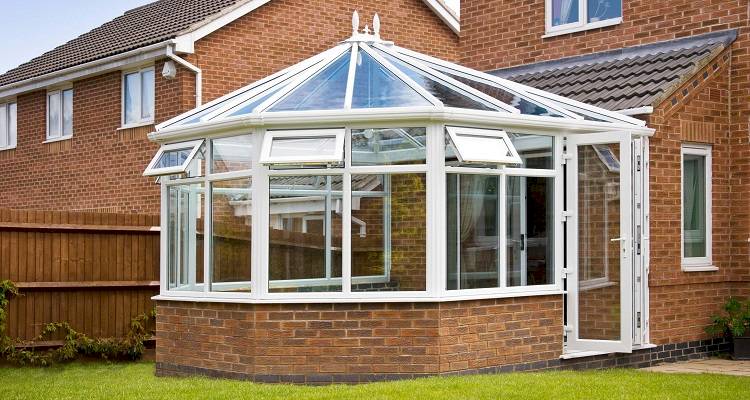
Below we take a look at the basic steps required in order to build a conservatory extension, although in reality, the process is much more complicated:
Before the Job Starts
- Preparing the Foundation — Lay a solid foundation using either foundation blocks or concrete. Cover it with a weed-suppressing membrane to maintain a neat finish and prevent plant damage.
During the Job
- Installing the Base — Place base sections into position, bolt them together, and attach them to the house. Insert floor insulation sheets and install the fixed floor on top.
- Attaching the Walls and Frames — Bolt the walls into position, fix them to the base, then fix the frames together and attach them to your house wall. Attach a skirt to the base, adding extra support if the ground slopes.
- Assembling the Roof — Assemble the roof and fix it in place.
- Installing Glass and Features — Install the glass panels, decorative cresting/finials, gutters, and downpipes. Add any internal trims to complete the conservatory.
After the Job
- Final Checks — Ensure all parts are secure, aligned, and fully watertight. Confirm that all finishes and trims are correctly fitted.
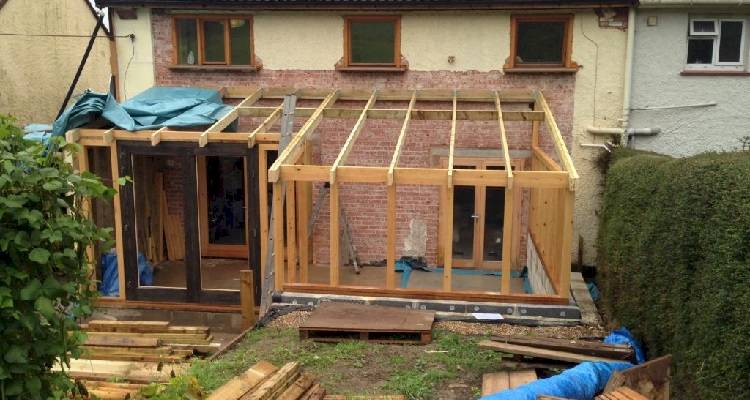
My conservatory is in good condition but looks a bit dated. Are there any small changes I can make to modernise it without replacing the whole thing?
"Hi, depending upon the current specifications you can always upgrade a polycarbonate roof with a glass roof or if you already have a glass roof then you can upgrade to a solid warm roof to reduce heat loss and make a room that’s usable all year round."
Types of Conservatories
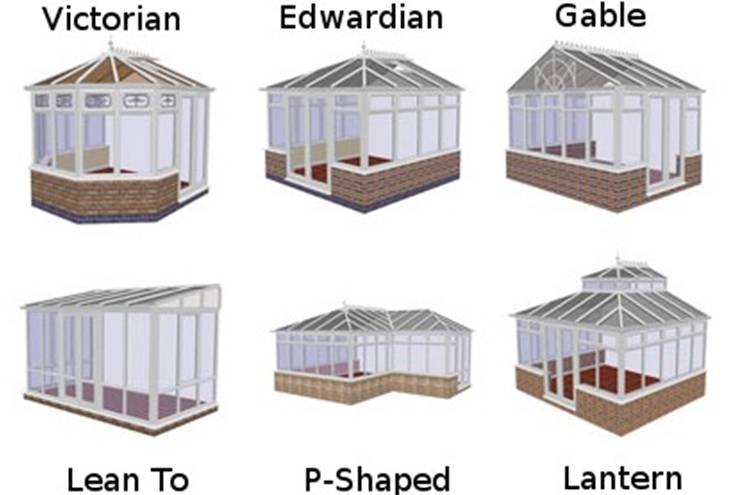
Traditionally a conservatory extension is a glass-walled room with a glass roof (rather than tiled) to allow for plenty of natural light. Typically attached to a house for growing plants or to create a relaxing living space, the cost of a conservatory can vary depending on the individual shape and style chosen.
Lean-to
Best for: Bungalows and modern properties.
Typical cost: From £6,500
A lean-to conservatory is usually square or rectangular, and the longest side runs along an existing wall of your house. The roof attaches to the existing property wall, angling down to meet the front of the conservatory.
Pros
- ✔ Most affordable type
- ✔ Suits most properties
- ✔ Quicker to build
Cons
- ✖ Less distinctive design
- ✖ Reduced height at front
- ✖ Not suited to period properties
The below prices are based on a fully-fitted lean-to conservatory extension between 7m² to 10m²:
| Lean-to Design | Estimated Cost |
|---|---|
| Polycarbonate w/dwarf wall | £7,500 – £9,500 |
| Glass w/dwarf wall | £8,000 – £10,000 |
| Polycarbonate fully glazed | £6,500 – £8,000 |
| Glass fully glazed | £7,000 – £8,500 |
Want a custom price?
Post your job
Dwarf walls improve your conservatory insulation and add privacy, offering the construction a "sturdier" feel - but it does come at a higher cost.
Edwardian
Best for: Most property types.
Typical cost: From £8,250
An Edwardian conservatory has flat walls and is a very simple and symmetrical design, often square or rectangular. It makes full use of the available floor space and can be built to any size, as it has a pitched roof rather than one limited by the projection from the house.
Pros
- ✔ Maximises floor space
- ✔ Flexible sizing options
- ✔ Suits most properties
Cons
- ✖ Less distinctive design
Here are some conservatory prices for an Edwardian conservatory design, based around 12m² to 16m² in size:
| Edwardian Design | Estimated Cost |
|---|---|
| Polycarbonate w/dwarf wall | £9,500 – £14,250 |
| Glass w/dwarf wall | £10,000 – £15,250 |
| Polycarbonate fully glazed | £8,250 – £12,250 |
| Glass fully glazed | £8,750 – £13,250 |
Want a custom price?
Post your job
A small 12m² Edwardian conservatory extension costs between £8,250 to £10,000 depending on it being fully glazed or built using polycarbonate.
Victorian
Best for: Traditional and period properties.
Typical cost: From £9,450
A Victorian conservatory has a steeply pitched roof, often with highly decorative finials at the peak of the roof and crestings along the ridge.
Pros
- ✔ Suits traditional style homes
- ✔ Impressive decorative detailing
Cons
- ✖ Not suited to modern homes
- ✖ More complex roof structure
| Victorian Design | Estimated Cost |
|---|---|
| 3m x 3m (9m²) | £9,450 |
| 4m x 3m (12m²) | £12,600 |
Want a custom price?
Post your job
Gable
Best for: Period and traditional properties.
Typical cost: From £10,800
A gable conservatory has a vertical roof at the front, with the ridge running front to back and the sloping sides left and right. Its Georgian influence perfectly suits a period property.
Pros
- ✔ Elegant and bold design
- ✔ More natural light at front
Cons
- ✖ Not suited to modern homes
| Gable Design | Estimated Cost |
|---|---|
| 4m x 3m (12m²) | £10,800 – £12,000 |
| 4m x 4m (16m²) | £14,400 – £16,000 |
Want a custom price?
Post your job
P-Shape
Best for: Larger properties needing two spaces.
Typical cost: From £13,250
A P-shape conservatory is a combination of a lean-to plus either an Edwardian or Victorian-style design at one end, forming the loop of the 'P'. It effectively creates two separate rooms, and you can make each room as big or as small as you like.
Pros
- ✔ Creates two separate rooms
- ✔ Flexible room sizes
- ✔ Lots of space
Cons
- ✖ One of the pricier options
- ✖ Requires more garden space
Let's take a look at P-shaped conservatory extensions costs in the table below, these prices are based on a 15m² to 20m² build:
| P-Shape Design | Estimated Cost |
|---|---|
| Polycarbonate | £13,250 – £16,500 |
| Glass | £13,375 – £15,750 |
Want a custom price?
Post your job
T-Shape
Best for: Larger properties.
Typical cost: From £12,750
The T-Shape conservatory works best on a larger property and has three sections, the central one of which projects out in front of the others. The T-shape conservatory can be built based on a Victorian, Gable or Edwardian style conservatory, with the central projection adding further space.
Pros
- ✔ Three spacious sections
- ✔ Flexible style options
- ✔ Lots of additional space
Cons
- ✖ Requires a larger property
- ✖ One of the pricier options
| T-Shape Design | Estimated Cost |
|---|---|
| 5m x 3m (15m²) | £12,750 – £13,500 |
| 5m x 4m (20m²) | £17,000 – £18,000 |
Want a custom price?
Post your job
Lantern
Best for: Larger homes and premium builds.
Typical cost: From £20,000
A roof lantern conservatory has a two-tiered 'wedding cake' roof, creating extra height, and the extra windows allow you to add more ventilation. This is more often used as a roof lantern for an orangery or a pool house, but can suit larger house conservatories.
Pros
- ✔ Extra height
- ✔ Natural ventilation
Cons
- ✖ Complex roof structure
| Lantern Design | Estimated Cost |
|---|---|
| 5m x 4m (20m²) | £20,000 – £21,500 |
| 6m x 4m (24m²) | £24,000 – £25,500 |
Want a custom price?
Post your job
How much would it cost to build a second-hand conservatory? My garden is paved and it would need a base to be built. It's around 3.5 metre by 2 metre, and is a lean-to conservatory.
"A builder would have to look at the site and discuss the style with you before giving any conservatory prices (i.e height of walls, the finish of walls in and out, blocks or facebricks, flooring, heating etc.).
Regarding the conservatory, a few problems with a used one could be the age of the glass (sealed units could start breaking down) and the frames could start discolouring. Nothing would be guaranteed as far as the frames and mechanisms go.
I would charge £1,200 for installation once the base has been done."
Regarding the conservatory, a few problems with a used one could be the age of the glass (sealed units could start breaking down) and the frames could start discolouring. Nothing would be guaranteed as far as the frames and mechanisms go.
I would charge £1,200 for installation once the base has been done."
Kitchen Conservatory Cost
When you remodel a kitchen into a kitchen conservatory, you can create an area of natural light. This can make the kitchen more inviting for social gatherings with additional space and can improve the overall practicality.
For an average-sized kitchen-friendly conservatory, expect to spend between £12,000 and £20,000 on the build itself. The overall price will also depend on factors such as plumbing and electrics, as well as adding ventilation, heating, lighting, flooring, units, and purchasing your appliances.
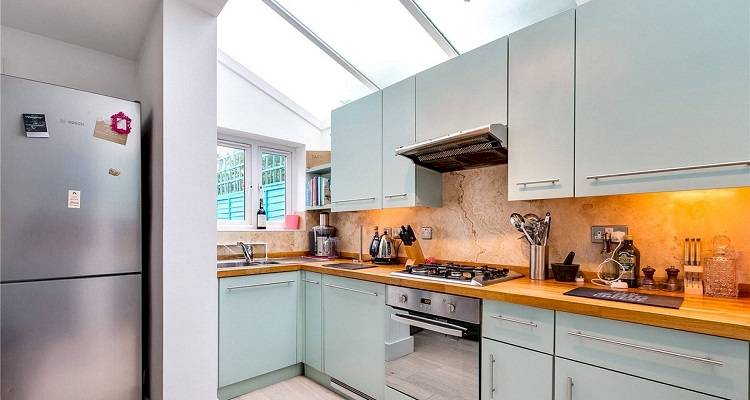
In general, a kitchen conservatory is cheaper to build than a single-story extension while still offering many of the advantages of a standard conservatory. However, it's worth recognising that a traditional bricks-and-mortar extension provides better insulation and often requires less maintenance, potentially making it a greater long-term investment.
How do I maximise security for a conservatory?
"Make sure to lock the doors and windows every night, maybe look at getting an alarm sensor linked to your home alarm in the conservatory, and possibly blinds so people can’t sneak a look in if they get into the garden."
Ask a Trade
Got a question that only a tradesperson can answer? We have thousands of trades ready to answer any question you may have.
Ask your question

Bespoke Conservatory Extensions
Conservatory prices when designing a fully bespoke extension vary depending on the individual requirements, with customers often choosing to instead adapt an existing design.
P-, T- and L- shape conservatories are the most common to have personalised, often involving adapting the size and shape accordingly. However, other bespoke options can include changing the conservatory roof (such as having a solid roof rather than including a skylight), or the decision between double or triple glazing.
Other options may be making cutbacks purely to help save money, or spending extra to improve upon the original design in order to allow more natural light or create the ideal living space.
Ahead of having a conservatory built in my garden, can an architect get planning permission approval?
"Under Permitted development rights for householders – Technical Guidance – 2019 in most cases you do not need to seek planning permission to extend your home within certain parameters and limitations."
Planning Permission for a Conservatory Extension
As a general rule, conservatory extensions fall under Permitted Development rights and as such you may not need planning permission. However, if the conservatory covers more than 50% of the land around your home (or there has been any extension work carried out previously) then restrictions may apply.
If you live in a listed building or conservation area or any part of your conservatory is due to face a public road/walkway, then you will need to check with your local planning authority first you may require planning permission in these instances.
If you discover you need to apply for permission, the application fee is usually around £258, although this may vary between regions.
How large can a conservatory be before planning permission is necessary? Does it vary for height, length, or width, or is it based on area alone?
"The possible size of your conservatory depends on the size of the property that you're extending. To build without planning permission, a conservatory can't be any bigger than 50% of the area around the original house (including sheds and outbuildings)."
Building Regulations for a Conservatory Extension
If your conservatory is less than 30m² and remains separated from the main property by external-quality walls and doors, and has independent heating, it may be exempt from certain building regulations approval. However, any reputable builder should still follow structural guidelines to ensure the conservatory is safe and secure.
In the event you are removing external doors or walls as part of the build, or alter any drainage or electrical systems, those elements may still require Building Regulations approval.
Should you require any further advice, it's best to contact the building department within your local council.
How to Keep Conservatory Costs Down
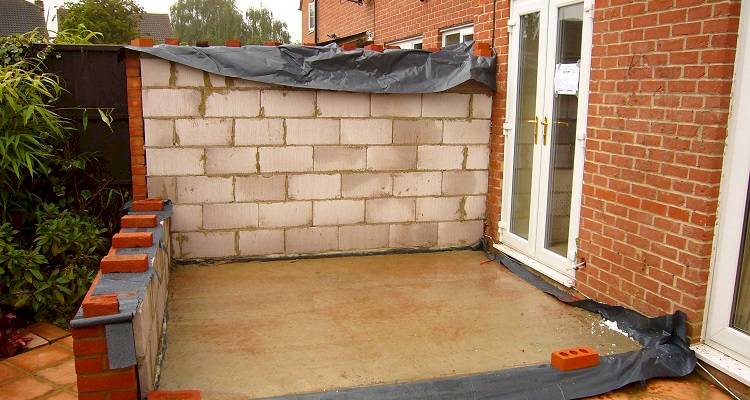
While conservatory prices can prove expensive, it is still possible to save money on the final cost by reviewing the following ideas:
- Choose a lean to house extension - Lean to conservatories are often the most cost-effective choice, with straightforward designs and materials helping to bring down the overall cost.
- Look for second hand options - Consider a second-hand conservatory that someone has taken apart with the view to sell on, this can potentially save you a lot of time during the construction process.
- Purchase a prefabricated kit - While the initial outlay may be expensive, a prefabricated kit (especially if already part-built) can save you significant money on labour fees.
- Define the purpose - Having an end use in mind will help you budget accordingly and without the need to make any further adjustments at a later date.
- Minimal structural changes - More extensive building work such as a P-shaped design tend to require additional structural amends, whereas a lean to conservatories tend to require far less.
- Receive multiple quotes - This isn't just about getting the best price, it can also be used as negotiation as your conservatory installer may also be able to suggest ways to reduce the cost.
- Choose double glazing - It may be more expensive initially, but when it comes to and energy efficient extension and creating a comfortable living space, it will save you money in the long run.
- Prepare in advance - Clear the site area, removing plants or old paving slabs and make the area easily accessible so your conservatory installer can get started upon arrival.
We have a conservatory with tiled floors and a polycarbonate roof. Can we convert that into an extension, that could also house a small wet room/toilet?
"It depends on the depth of your original conservatory footings. You would need to get an invoice with building control, and an architect to draw up plans for the builder and to assess the planning permission which you would have to submit to your local council for approval."
Checklist: Hiring a Conservatory Installer
Consider the following key points before going ahead and hiring a conservatory installer:
- Do they have the relevant industry-related qualifications? Check whether they have the relevant industry-related qualifications or training, as well as the right hands-on experience to install a conservatory extension.
- Can they provide references from previous customers? Get references from previous customers and ask to see previous work, or if you've received a recommendation from someone you know, ask if you can take a look at the work they've had carried out to help you make an informed decision.
- Are they members of the Double Glazing and Conservatory Ombudsman Scheme? Membership provides extra protection, as companies are vetted on a continual basis to ensure professional standards.
- Have you requested multiple quotes? With the help of MyJobQuote find at least three companies who can provide a quote so you can compare pricing and ensures you’re paying a fair rate for the work.
- Have you received a written quote? This should be provided free of charge and clearly outline materials, labour, and any additional building costs. It's also the best way to ensure you understand everything that is covered in the price.
- What are their warranty and guarantee policies? Confirm how long the warranty lasts, what it covers, and how claims are handled. You should also check with your own insurance company if you need any advice for once the extension is completed.
- Do they offer a deposit guarantee and insurance? This protects your money in case something goes wrong during the project and although liability insurance isn't a legal requirement, it covers in the event of injury or accidental damage.
FAQs
Can I Install a Conservatory Myself?
In theory, with the right experience, it is possible to install a conservatory extension yourself and save on labour costs. Especially as some companies produce prefabricated kits that come with full instructions designed with a DIY build in mind. However, even then it is only recommended if you have full confidence in your own abilities and are fully capable of taking on the work. You should also ensure you speak to a structural engineer for some professional advice before getting started.
What Are the Benefits of a New Conservatory?
A conservatory allows you to enjoy your outdoor area, even in bad weather. On warm days, the open doors provide a seamless link between indoor and outdoor spaces. However, if you plan to extend your kitchen into the conservatory, consult with a specialist first about any plumbing and electrical work that may be required.
Does Installing a Conservatory Increase Property Value?
On the whole, yes. A well-built, fully watertight conservatory that adheres to all planning and building regulations could add up to 5% to a house’s value. It can also make your home more appealing to potential buyers, as it provides a weather-protected view into the outside space.
How Does a Conservatory Compare to a Single Storey Extension?
A conservatory is a more cost-effective addition designed to maximise sunlight and outside views. However, a house extension involves expanding your home with significant structural work to create a solid build that can help create additional living space that can match your existing home.
How Much Does It Cost To Dismantle a Conservatory?
Removing a conservatory can cost anywhere from £800 to £2,000 (or potentially more). However, if you handle the dismantling yourself, you will still need around £75 to £300 for skip hire, or more if you hire a contractor to take it apart and dispose of any waste on your behalf.
What Is the Difference Between a Conservatory and a Garden Room?
A traditional conservatory is made from glass roof and walls or clear roof with uPVC walls designed to let in plenty of natural light. Whereas a garden room is a solid, insulated structure with a tiled roof, offering year-round comfort for living and entertaining.
Which Is Cheaper, an Orangery or a Conservatory?
A conservatory is typically cheaper than an orangery. The average conservatory extension cost is around £15,000, compared to around £22,000 for an orangery, due to its more substantial brickwork and insulated roof.