Builders
 Carpenters
 Electricians
 Flooring Specialists
 Gardeners
 Handymen
 Heating Engineers
 Painters & Decorators
 Plasterers & Renderers
 Plumbers
 Roofers
 Tilers
 my
myOven Repair Cost
At a Glance
- The average oven repair cost in the UK is around £120, depending on the type of fault and the oven type.
- Most oven repairs take between 1 and 3 hours to complete.
- Average oven repair costs in the UK, including both electric and gas oven repair costs, and what affects the price you're quoted.
- The most common oven issues and the types of repairs involved.
- Whether your oven is worth repairing or whether a replacement makes more sense.
- How to find and hire appliance repair engineers near you using MyJobQuote.
Get free estimates
Are you a trade? Get more work today!
If your oven has stopped heating properly or won't turn on at all, you're probably wondering how much it's going to cost to fix.
In this guide, we break down the average cost of oven repairs in the UK, what affects the price, and when it makes more sense to repair rather than replace.
Ovens are one of the hardest-working appliances in any home, so when they go wrong, it can quickly disrupt daily life and mealtimes.
The good news is that many common faults can be repaired quickly and affordably by a qualified electrician or appliance repair specialist, especially if the appliance is relatively new or the issue is minor.
Below, you'll find typical repair costs, the most common oven problems, and what to expect when hiring a professional.
£120
Table of Contents
- How Much Is Oven Repair?
- Oven Repair Labour Costs and Timescales
- Supply Costs for Oven Repair
- Additional Costs to Consider
- Cost Factors for Oven Repair
- Building Regulations Related to Oven Repair
- Types of Oven Repairs
- Alternative Types of Oven Solutions
- Checklist: Hiring an Oven Repair Specialist in the UK
- Removing Ovens: Considerations and Costs
- FAQs
How Much Is Oven Repair?
The average cost of an oven repair in the UK is around £120. However, the actual price can vary depending on the type of fault.
Simple issues such as replacing the door seal or fitting a new bulb may cost around £30 to £60, whereas more complex repairs such as fixing electrical or control panel faults may be significantly more expensive, costing around £100 to £200+. If you have an electric model, our electric oven repair costs guide covers pricing in more detail.
Built-in ovens are much harder to access, so this will add additional labour time to the job. Gas ovens also tend to be more expensive to repair as the work will need to be carried out by a Gas Safe-registered engineer, which will increase the labour costs.
Those based in and around the London area can expect to pay more for labour than those in the North or other parts of the UK.
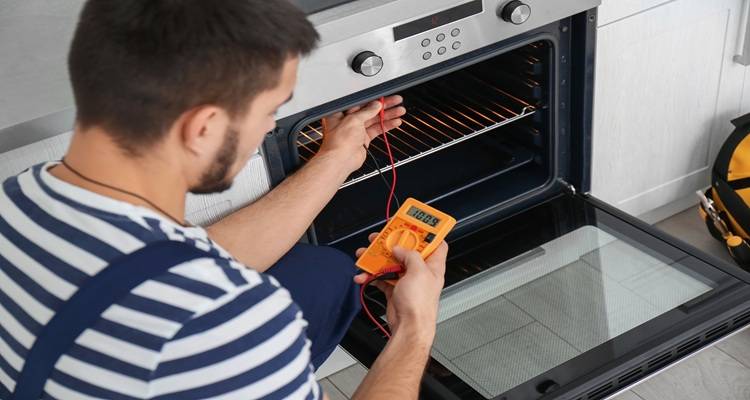
Oven Repair Prices
Below is a table outlining common oven faults, the typical appliance repair required, and the average cost that you can expect to pay:
| Oven Issue | Typical Repair | Average Cost |
|---|---|---|
| The door doesn't close properly | Replace hinges or seal | £50–£140 |
| Fan not working | Replace the fan motor | £80–£200 |
| Oven overheating | Control or sensor repair | £150–£250 |
| Control panel failure | Circuit or control board replacement | £180–£300+ |
| Broken thermostat | Replace thermostat | £100–£200 |
| Interior light not working | Bulb or wiring repair | £30–£80 |
Want a custom price?
Post your job
Oven Repair Labour Costs and Timescales
Most appliance repair specialists charge an hourly rate for oven repairs, though some may quote a fixed price depending on the job. The national average labour rate sits between £40 and £80 per hour, with an average of around £60 per hour.
Labour rates vary depending on your location. Those based in London and the South East can expect to pay around 30% more than those in the North or other parts of the UK.
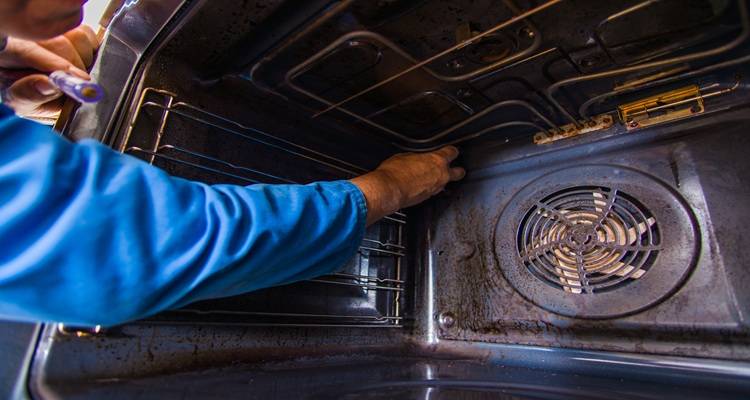
Gas oven repairs must be carried out by a Gas Safe-registered engineer, which typically increases the labour costs compared to electric oven repairs. Built-in ovens also take longer to access than freestanding models, adding to the overall time on the job.
Most tradespeople will also charge a call-out fee. For Monday to Friday callouts, this typically ranges from £80 to £150 and usually covers the first hour, including any initial diagnostics. For weekend or out-of-hours visits, expect to pay between £150 and £200. Always check whether the call-out fee is included in your quote before booking.
| Repair Type | Typical Duration | Average Labour Cost |
|---|---|---|
| Door seal or bulb replacement | Up to 1 hour | £35–£100 |
| Heating element replacement | 1 to 2 hours | £60–£130 |
| Thermostat replacement | 1 to 2 hours | £50–£100 |
| Fan motor replacement | 1 to 2 hours | £40–£100 |
| Control panel or circuit board repair | 2 to 3 hours | £80–£120+ |
Want a custom price?
Post your job
Supply Costs for Oven Repair
Many oven repairs require replacement parts. The exact cost depends on the brand, model, and whether you choose original or aftermarket components.
| Part | Average Cost |
|---|---|
| Heating element | £20–£100 |
| Thermostat | £30–£100 |
| Fan motor | £40–£120 |
| Door seal | £15–£40 |
| Control panel or circuit board | £100–£250+ |
Want a custom price?
Post your job
Below is a breakdown of the most common replacement parts and what you can expect to pay:
Heating Elements
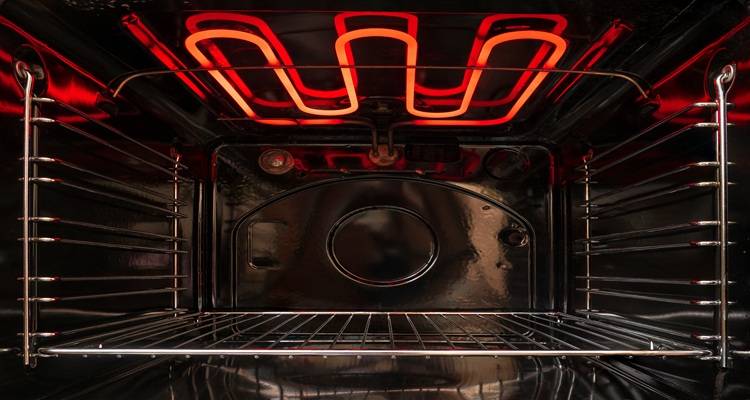
Heating elements are one of the most commonly replaced components in an oven repair. Prices typically range from £20 to £100, depending on the oven type and brand. Fan oven elements will usually cost more than conventional ones. For more detail, see our guide to cooker element replacement costs.
Thermostats
A faulty oven thermostat can cause uneven cooking or overheating. Replacement thermostats usually cost around £30 to £100. Premium brands are typically on the higher end of the range.
Fans
Fans help to circulate heat evenly around the oven. A replacement fan motor usually costs around £40 to £120, excluding labour costs.
Door Seals
The seal on your oven door plays an important role in maintaining cooking efficiency. Door seals are relatively cheap compared to other replacement parts, and you can usually get one for around £15 to £40.
Control Elements
Control panels and circuit boards are typically the most expensive components. Prices range from around £100 to £250+. Using manufacturer-approved parts will help to ensure compatibility and reliability, but they can increase the overall costs. Aftermarket parts are often cheaper, but the quality can vary.
Additional Costs to Consider
While many oven faults are straightforward to fix, there are a few extra costs that could increase the final price.
Electrical Repairs
Sometimes the issue isn't the oven itself but the power supply. Faulty sockets, damaged wiring, or older circuits may need attention before the appliance can be safely repaired. In some cases, this could lead to wider electrical work.
Related guides:
New Oven Installation
If the repair cost is close to the price of a new appliance, you may want to compare it with the cost of replacement and installation.
See:
Getting multiple quotes from local electricians can help you understand the full cost upfront and decide whether repair or replacement offers better value.
Ask a Trade
Got a question that only a tradesperson can answer? We have thousands of trades ready to answer any question you may have.
Ask your question

Cost Factors for Oven Repair
When budgeting for an oven repair, there are several factors that could affect the price you're quoted.
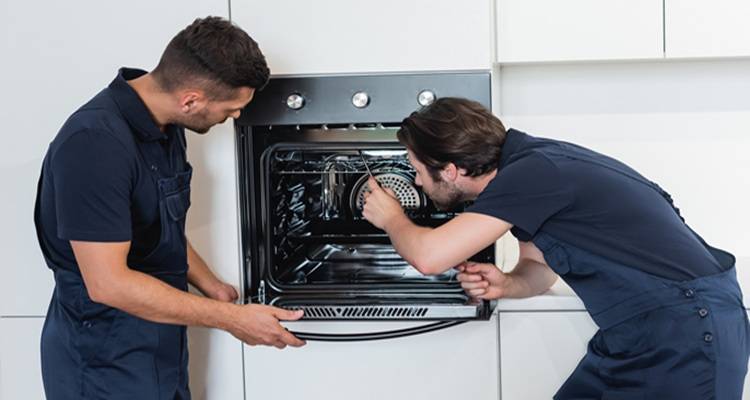
- Brand — Premium brands will often require special or more expensive parts, which can increase the supply costs.
- Age of the Oven — Older ovens may require discontinued parts, which can increase both the time and expense involved.
- Severity of the Issue — Minor faults are much faster and cheaper to fix than control board or wiring failures.
- Oven Type — Built-in ovens typically cost more to repair than freestanding models due to the additional labour involved in accessing them. Range cookers and premium integrated models can also carry higher labour rates and more expensive parts than standard single ovens.
- Urgency — Emergency or same-day callouts will typically cost more than a standard booking.
- Your Location — Those based in and around the London area can expect to pay more for labour than those in the North or other parts of the UK.
- Parts Availability — If parts are difficult to source or have been discontinued, this could significantly increase the overall repair costs.
- Warranty — If your oven is still under a manufacturer warranty, the repair may be covered at no cost. Always check before booking a tradesperson.
Building Regulations Related to Oven Repair
Building Regulations do not apply to the oven repair itself, however Part P applies if the job reaches the wiring, such as running a new cooker circuit. Gas oven work falls under gas safety law. All electrical repairs should only be carried out by a qualified electrician or appliance engineer.
Gas ovens must only be repaired by a Gas Safe-registered engineer. This will ensure compliance, safety, and legal protection.
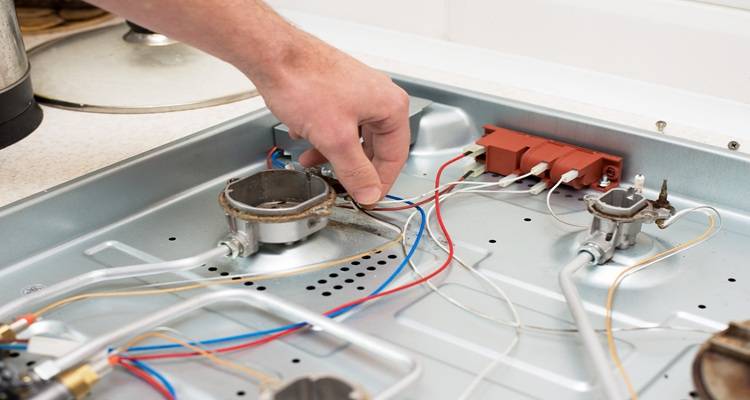
Failure to use qualified professionals could void any warranties that you have and may even invalidate your home insurance.
Types of Oven Repairs
Below is a breakdown of the most common types of oven repairs and what each typically involves:
Replacing the Heating Element
The heating element is responsible for generating heat inside the oven. When this fails, the oven may stop heating entirely or cook food unevenly.
The repair process involves isolating the power supply, removing the rear panel or internal casing, disconnecting the faulty element, and fitting a new compatible replacement.
Once installed, the engineer will test the oven to make sure it is heating properly and reaching the correct temperature. This type of work can usually be completed within 1 to 2 hours.
Fixing a Faulty Thermostat
The oven thermostat regulates temperature. When this fails, the oven could overheat, underheat, or switch itself off unexpectedly. Diagnosing this fault usually involves testing with specialist equipment to confirm the failure.
If the thermostat is at fault, the specialist will switch the oven off at the mains, locate the thermostat, and remove the oven door for better access before removing the top and back panels and unclipping the capillary tube.
They will then remove the fixing bracket and the thermostat itself, taking note of how it was wired so the new one can be rewired in the same way.
Once the new thermostat is in place, everything is reassembled and tested to confirm it is functioning correctly.
Repairing or Replacing Door Hinges and Seals
If the oven door isn't closing or sealing properly, this can cause food to take longer to cook or result in uneven cooking. It could also prevent the oven from reaching the desired temperature. You may need to replace the door hinges or the door seal depending on the issue.
If the hinges are at fault, turn off the oven at the mains and remove the door. Remove the screws from the door to access the hinges. Place the new hinges where the old ones were, screw them in place, and reattach the door, opening and closing it a few times to check the seal.
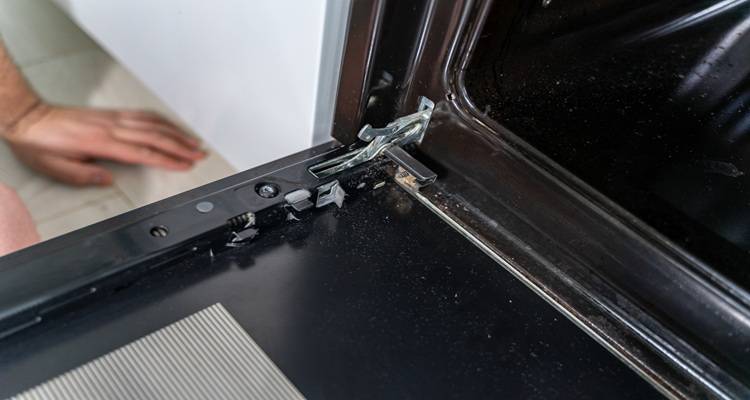
If the door seal needs replacing, remove the door and release the seal from the hooks in each corner. Fit the new seal in the same way, ensuring it is lined up correctly before fitting the hooks and stretching it into place. Both jobs should take no longer than an hour to complete.
Replacing Control Knobs or Control Panels
Control knobs can usually be pulled away from the control panel directly. If they are difficult to remove, a blunt object can be used to lever them off carefully. The new knob should sit flat on the control shaft before being pushed into place.
Replacing the control panel itself is more involved. Disconnect the oven from the mains first, then remove the top panel, which is usually held in place with 4 screws. This gives access to the back of the control panel. Remove the knobs, then the screws holding the individual controls in place, and detach the fascia panel.
Remove any protective film from the new panel, attach it, and fasten it in place with screws before reassembling in reverse order. Replacing the control board is more complex and will take around 1 to 2 hours to complete.
Repairing and Replacing the Oven Fan
If the oven fan doesn't work, warm air won't be able to circulate properly. Unplug the oven first, then remove the backplate from inside the oven.
The backplate is usually held in with several screws. In some cases, the fan oven element may show visual signs of failure such as being split, broken, or burnt. In other cases, a broken fan isn't always obvious.
In most cases, you will just need to unscrew the old fan motor, disconnect the wires, and screw in the new fan. Make sure to note the wiring order before disconnecting so you know how to reattach the wires correctly. It will usually take around 1 to 2 hours to replace the fan motor.
Alternative Types of Oven Solutions
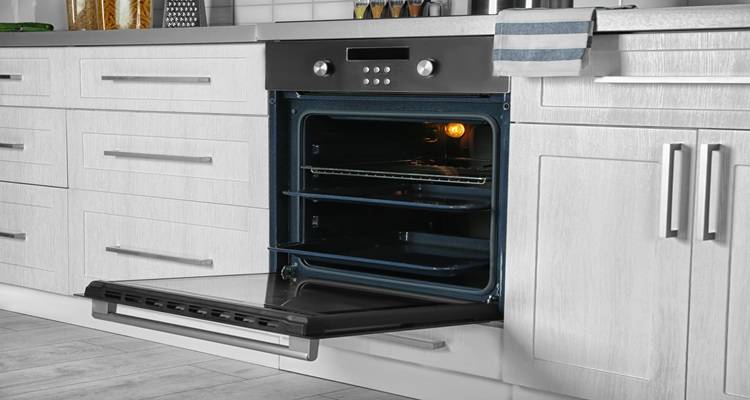
In some cases, you may prefer to explore a different route instead of repairing the oven. Some options include:
- Replacing the oven entirely.
- Buying a refurbished or second-hand oven.
- Attempting a DIY fix for minor issues (for example, replacing a fuse or bulb).
- Regular servicing to prevent breakdowns.
Replacing the Oven Entirely
Pros
- ✔ A brand-new oven will work perfectly.
- ✔ A new oven will last longer.
- ✔ It saves you the hassle of incorrect repairs.
Cons
- ✖ A brand-new oven is often more expensive.
- ✖ You may have to wait to get it installed.
- ✖ You will need to think about disposing of the old oven.
Buying a Refurbished or Second-Hand Oven
Pros
- ✔ You won't have to worry about getting the oven repaired.
- ✔ You will usually be able to get the oven quickly.
- ✔ Lower cost than a brand-new oven.
Cons
- ✖ A refurbished or second-hand oven may not last as long as a new one.
- ✖ You will need to think about disposing of the old oven.
DIY Fixing Minor Issues
Pros
- ✔ You can save some money with DIY fixes.
- ✔ Many DIY fixes are fairly quick and easy to complete.
Cons
- ✖ If the work is completed incorrectly, it may cost more money.
- ✖ DIY repairs often won't last as long as professional repairs.
Regular Servicing
Pros
- ✔ Will ensure the oven is functioning correctly.
- ✔ Helps to extend the lifespan of the oven.
- ✔ Detects minor faults early before they become a bigger problem.
Cons
- ✖ Added cost
Checklist: Hiring an Oven Repair Specialist in the UK
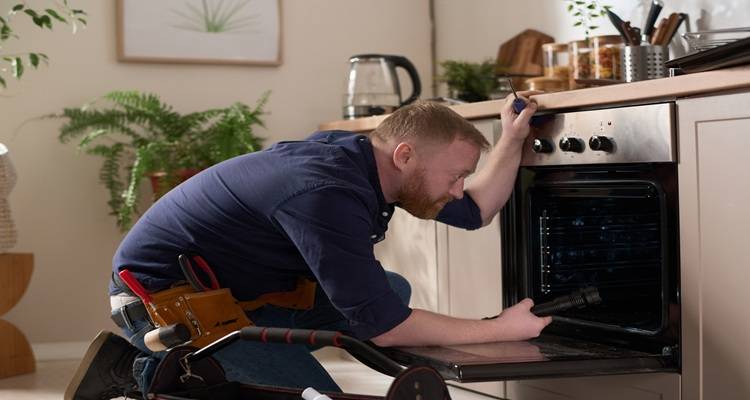
Before you hire a professional oven repair specialist, there are a few things worth checking. Take a look at the list below:
- Check their qualifications — For gas oven repairs, always confirm the engineer is Gas Safe registered. For electrical faults, look for membership of a competent person scheme such as NICEIC, BESCA, Blue Flame Certification, NAPIT, or OFTEC if the fault is on the oven's fixed wiring.
- Confirm their experience — Make sure the specialist has experience with your specific oven type, whether that's a built-in electric model, a gas range cooker, or a freestanding appliance.
- Read their reviews — Check the feedback they've received from other homeowners on MyJobQuote who've hired them for similar appliance repairs.
- Get a clear quote — Ask for an itemised breakdown of parts and labour before any work begins, and confirm exactly what is and isn't included.
- Ask about warranties — A reputable specialist should offer a guarantee on both parts and labour. Always clarify how long this covers you for.
- Check if your warranty covers it — If your oven is relatively new, check with the manufacturer first — the repair may already be covered at no cost to you.
Removing Ovens: Considerations and Costs
If your oven is beyond repair, removing it to make way for a new one typically costs between £40 and £120, depending on the type of oven and the complexity of the job.
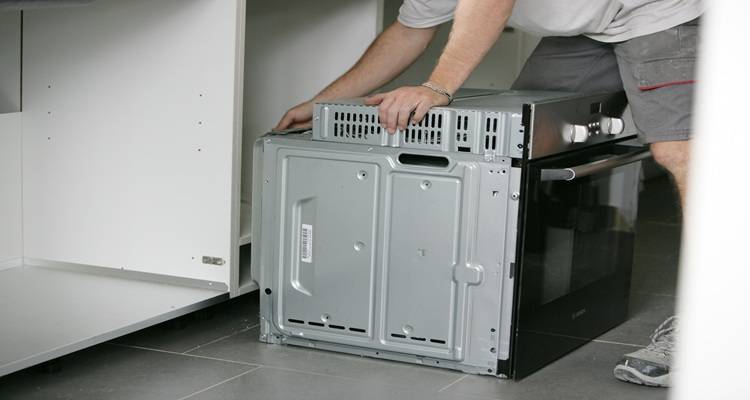
Freestanding ovens are the most straightforward to remove. Built-in ovens are secured inside kitchen units and may require partial dismantling of cabinetry, which adds to the labour time and cost. Gas ovens must be disconnected by a Gas Safe-registered engineer, and electric ovens that are hardwired rather than plugged in will require an electrician.
Prices may increase if access is difficult, if additional trades are required, or if you are based in London or the South East. Ovens are heavy and awkward to move, so professional removal is recommended to avoid the risk of injury or damage to flooring and cabinetry.
FAQs
Is It Better to Repair or Replace a Broken Oven?
In most cases, repairing your oven will be cheaper than buying a new one. However, if the repair cost exceeds 50% of the price of a comparable new oven, replacement is likely the more cost-effective option.
If your oven is experiencing repeated faults or is an older appliance with discontinued parts, a replacement may make more sense in the long term.
Do Oven Repair Engineers Charge a Call-Out Fee?
Yes, in most cases engineers will charge a call-out fee, even if no repair is completed. Check whether or not this is included in your quote.
Can I Fix My Oven Myself?
Minor tasks such as replacing the oven bulb or the control knobs are generally safe to carry out yourself. However, anything beyond basic tasks should be left to a qualified professional. DIY repairs can void your manufacturer warranty, invalidate your home insurance, and create serious safety risks.
Electrical faults should be handled by a qualified electrician. Any work on a gas oven must be carried out by a competent person. An unqualified homeowner is not usually considered competent, although it is not strictly illegal to work on your own gas oven. In any case, the Health and Safety Executive (HSE) advises using a Gas Safe-registered engineer.
What Are the Most Common Oven Issues?
The most common oven problems are faults with the heating element, a faulty oven thermostat, broken door seals, and fan motor issues. These are also among the most straightforward and cost-effective repairs to carry out.
Can an Oven Thermostat Be Repaired?
In most cases, a faulty oven thermostat will need to be replaced rather than repaired, as the internal components are not serviceable. Thermostat replacement typically costs between £75 and £150, including parts and labour.
A faulty thermostat usually causes the oven to overheat, underheat, or switch off unexpectedly. If you notice any of these signs, it's worth getting a diagnosis from a qualified appliance repair specialist before assuming the worst.
How Long Does a Landlord Have to Repair an Oven?
There is no fixed legal timeframe, but landlords are required to carry out repairs within a reasonable amount of time. If the landlord supplied the oven, the duty to repair it comes from the tenancy agreement. In Scotland, landlords are obligated to repair appliances they provided, including ovens.
If the repair is urgent (for example, if the oven poses a safety risk), your landlord should act more quickly. Tenants should report the fault in writing to create a clear record, and if the landlord fails to act, you may be able to contact your local council's environmental health team.
How Do I Know if My Oven Is Beyond Repair?
Your oven is likely beyond repair if the cost of fixing it exceeds 50% of the price of a comparable new model, or if it has suffered repeated breakdowns over a short period of time.
Other signs that replacement may be the better option include discontinued parts that are difficult or impossible to source, significant structural damage, or an appliance that is more than 10 to 15 years old. A qualified appliance repair specialist can diagnose the fault and advise you on whether repair or replacement makes more sense for your situation.