Builders
 Carpenters
 Electricians
 Flooring Specialists
 Gardeners
 Handymen
 Heating Engineers
 Painters & Decorators
 Plasterers & Renderers
 Plumbers
 Roofers
 Tilers
 my
myStructural Engineer Costs
At a Glance
- The average structural engineer costs around £450 per day.
- The duration of the job will vary depending on what's required.
- The cost of structural engineer work, as well as extra fees you might need to budget for.
- How long different types of structural engineering jobs take to complete, and an overview of what types of work a structural engineer can help with.
- How to find a local structural engineer on MyJobQuote.
Get free estimates
Are you a trade? Get more work today!

£450
Table of Contents
- How Much Does a Structural Engineer Cost?
- Structural Engineer Costs by Job Type
- What Do Structural Engineer Fees Cover?
- Additional Costs of a Structural Engineer
- Factors That Impact Structural Engineer Quotes
- Timescales for Structural Engineer Work
- Structural Engineer Building Regulations and Planning Permission
- Do I Need an Architect or Structural Engineer?
- Checklist: Hiring a Structural Engineer
- FAQs
How Much Does a Structural Engineer Cost?
Structural engineers usually charge either an hourly rate, a daily rate, or a fixed fee for a particular job, and the total you pay will depend on how much design and site work is involved.
On average, common UK household jobs that require a structural engineer cost between £300 and £500.
Structural engineer costs for different types of projects will obviously vary, depending on what's required and how long it takes. As a rough estimate, here are some average structural engineer costs for common jobs:
- Basic Structural Engineer Inspection or Single-Issue Assessment — £200 to £500
- Structural Engineer Report with Recommendations — £500 to £1,500+
- RSJ or Load-Bearing Wall Calculations — £300 to £900
- Loft or Extension Structural Design — £400 to £2,000+
Structural Engineer Cost per Hour or Day
For smaller domestic projects, many structural engineers charge an hourly rate, which is often around £75 to £125 per hour, with higher rates in London and the South East or for more complex work.
On larger jobs it is more common to work to a day rate, which is typically around £400 to £600 per day.
Structural Engineer Prices
Most household projects are priced on a fixed fee, based on the size and complexity of the job, so it helps to look at typical ranges for the most common types of work.
| Type of structural engineer job | Average engineer fee |
|---|---|
| RSJ calculations | £450–£900 |
| Structural engineer inspection | £200–£600 |
| Structural engineer report | £500–£1,500+ |
| Building an extension (structural design only) | £400–£2,000 |
| Loft conversion calculations | £600–£1,800 |
| Removing a chimney breast | £100–£500 |
| Checking roof for solar panels | £300–£500 |
| Modifying doors and windows | £150–£500 |
| Removing an internal load-bearing wall | £300–£500 |
| Full structural design for a new house | £2,000–£5,000 |
Want a custom price?
Post your job
The figures in this table are based on real jobs carried out by tradespeople registered on MyJobQuote and typical structural engineer fees, but your exact cost will depend on your property and the complexity of the work.
Use these ranges to set a rough budget, then compare a few quotes from local engineers to find a price that feels fair for your specific project.
How Much Does an Inspection or Structural Engineer Report Cost?
Your first contact with a structural engineer will likely be for a one-off inspection and basic report on a specific issue, for example, cracks in a wall, a sagging roof, or checking whether a wall is load-bearing.
For a straightforward domestic inspection and short structural engineer report on a single issue, you can often expect to pay somewhere between £300 and £500, which usually covers the site visit, basic checks and a summary of the engineer's findings and recommendations.
More detailed structural reports, for example where there are widespread cracks, suspected subsidence, or several areas of concern to investigate, will cost more because they take longer on site and require a more in-depth structural engineer report. These can easily run from £500 to £1,500 or more, depending on the size of the property and the complexity of the problem.
These fees are for the engineer's professional time only and do not include the cost of any remedial work, such as repairing cracks, improving drainage, or underpinning a house if the foundations are found to be inadequate.
Could someone give me an indication as to how much a structural engineer would cost? I have an old bungalow and want to do some extensive restoration work.
"This depends primarily on the location of your site; however, a brief site visit and visual assessment would typically cost between £150.00 and £250.00 +VAT in London with a follow up written report costing an additional £125.00 +VAT per hour if required.
A site visit for the design of single beam over an opening (together with the necessary bearing checks) would typically cost in the region of £395.00 +VAT but can be more depending on your end supports required.
A standard conversion for a loft would typically cost from £750.00 + VAT with larger lofts costing more depending on your drawing requirements."
A site visit for the design of single beam over an opening (together with the necessary bearing checks) would typically cost in the region of £395.00 +VAT but can be more depending on your end supports required.
A standard conversion for a loft would typically cost from £750.00 + VAT with larger lofts costing more depending on your drawing requirements."
How Much Do Structural Engineer Drawings Cost?
Structural drawings typically cost around £150 to £500 for simple domestic drawings, but larger project drawings can cost up to £1,500. Simple beam drawings may be included in your initial quote, but standalone structural drawings or more detailed drawings for loft conversions or extensions usually cost extra.
And what's the cost of structural engineer RSJ calculations?
For removing a load-bearing wall, a structural engineer usually charges £300 to £500 for straightforward inspection and calculations. Where a rolled-steel joist (RSJ) is needed, more detailed calculations and drawings often increase the fee to £450 to £900. The separate cost of supplying and installing the steel beam often adds £1,500 to £2,500.
Structural Engineer Costs by Job Type
The type of job you're hiring a structural engineer for will affect the overall cost significantly. Take a look below at the typical jobs structural engineers handle, and the costs you can expect for each.
Structural Engineer Costs for an Extension
For house extensions and garage conversions, structural engineer fees usually range from £400 to £2,000 depending on size and complexity. This usually covers checking the existing structure and providing calculations for foundations, beams, walls, and roof elements.
Structural Engineer Costs for Removing a Chimney Breast
For chimney breast removal, fees usually range from £100 to £500. The engineer checks how the remaining chimney will be supported and provides calculations for steel beams or other structural support where needed.
How can I reduce the cost of removing a chimney breast?
"The cheapest way would be just to remove the breast. Put in RSJs to prop the breast above with acrows first make sure everything is done correctly. You will have to involve a structural engineer and calculations from him. Taking down the whole chimney would be more expensive."
Cost of a Structural Engineer for a Loft Conversion
For a loft conversion, fees usually range from £600 to £1,800. The structural engineer will inspect the existing roof and ceiling structure, measure the spans and loads, and review the proposed layout with any dormer additions or roof changes.
Structural Engineer Costs for Fitting Solar Panels
If you want to install solar panels, a structural engineer will typically assess the roof structure and coverings to confirm it can support the extra weight of the panels and the forces from wind uplift, for a fee of around £150 to £500.

Structural Engineer Costs for Doors and Windows
Structural engineer fees for new openings for windows or doors usually range from £150 to £500, depending on whether a simple lintel is needed or a larger structural opening is being created. This usually covers checking whether the wall is load-bearing and providing calculations for the correct lintel or steel support.
Structural Engineer Costs for Building a New House
For building a new house, structural engineer fees usually range from £2,000 to £5,000 depending on the size and complexity of the design. This covers structural calculations and drawings for foundations, walls, floors, beams, and roof elements, usually prepared alongside your architect's plans.
Structural Engineer Costs for Internal Walls
If you are removing internal walls to create a more open-plan layout, a structural engineer will first confirm which walls are load-bearing and which are simply partitions (expect to pay £300 to £500).
For the removal of any indoor walls that impact the infrastructure of a building, they will design the rolled-steel joists or other supports that take over the load, and set out how these should be supported on new or existing foundations.
Structural Engineer Costs for Cracks and Movement
If you notice cracks in walls, sloping floors, or doors and windows that start to stick, a structural engineer inspection can help identify whether there is a structural problem such as subsidence, inadequate foundations, or overloaded beams. This type of inspection and structural engineer report usually costs around £300 to £1,500+.
Is it a structural engineer that I need to tell me whether a wall has been removed correctly?
"If it is/was a load-bearing wall, then yes. Some may say no, but I would always recommend this is done so you don’t have problems later on. If it was not load-bearing, then no."
What Do Structural Engineer Fees Cover?
A structural engineer's hourly/daily rates typically include:
- Initial site visit and inspection.
- Basic structural calculations.
- Standard drawings for straightforward domestic work.
- A short written summary or report where required.
But always double check with your chosen structural engineer so you are clear about what you're paying for.
The following services usually require an additional fee:
- Additional site visits.
- Revised drawings (if designs change).
- Detailed structural reports.
- Liaising with architects, building control, or other trades.
Additional Costs of a Structural Engineer
In many cases, your structural engineer's fee is only one part of the overall budget. Their report or calculations may also highlight extra work that needs doing, such as underpinning, new foundations, or installing steel beams, along with legal costs like party wall surveyors and building control fees.
What is your main reason for hiring a structural engineer?What is your main reason for hiring a structural engineer?
Building an extension or renovation work
1 votes - 17%17% of votes
Removing a load-bearing wall
0 votes - 0%0% of votes
Structural issues (cracks, subsidence etc)
3 votes - 50%50% of votes
New building project
1 votes - 17%17% of votes
Property Survey/Report
1 votes - 17%17% of votes

6 votes
See results
Hide results
The sections below outline the most common types of work a structural engineer helps with, as well as the additional structural and legal costs that often sit alongside their fees.
| Additional cost | Typical price range |
|---|---|
| Minor remedial structural work | £300–£1,000 |
| Installing an RSJ | £1,500–£2,500 |
| Underpinning a house | £4,800–£36,500 |
| New foundations | £4,000–£12,000 |
| Party wall surveyor | £700–£1,500 |
| Structural reinforcement | £60–£100 per beam + materials |
| Extra consultations or revisions | £90–£120 per hour |
Want a custom price?
Post your job
Additional Structural Work
If a structural engineer identifies problems during a renovation or inspection, you may need extra remedial work before the project can continue or be approved by Building Control.
Minor corrective work, such as adding extra support, replacing a lintel, or strengthening part of a floor, often costs around £300 to £1,000. More substantial work, such as rebuilding sections of wall, correcting unsupported openings, or upgrading structural elements during a larger renovation, can rise to £2,000 to £5,000 or more.
If structural work has already been completed incorrectly, additional opening-up work, revised calculations, or remedial construction may also be needed before the work can be signed off. In some cases, work that does not meet current regulations may need to be corrected before Building Control approval is granted, which can add significant extra cost later on.
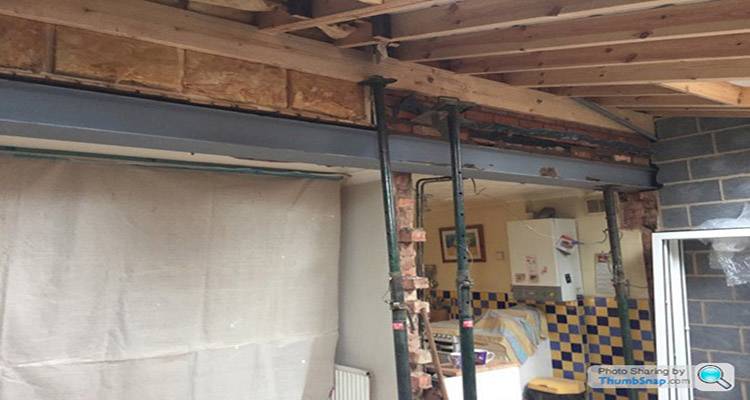
Installing an RSJ
If removing any load-bearing walls, you may have hired a structural engineer to map out where the rolled-steel joist should be placed.
Typically to install an RSJ costs between £1,500 and £2,500.
Underpinning a House
One of the most important duties of a structural engineer is checking the ground conditions and existing foundations to ensure they can support any new changes. If the structural engineer report shows evidence of inadequate foundations, you may have to pay to underpin your house.
The cost of underpinning a house in the UK can range from £4,800 to underpin a single wall in a terrace home with resin injector and up to £36,500 to underpin a detached house with a mini-piling method.
Foundations
If there are any additional issues with your foundations that are identified in a structural engineer report, then you may need to install new foundations to provide stability.
The cost of foundations ranges from £4,000 to £12,000 depending on the type of foundations you need, although this may be lower if you decide to DIY.
Party Wall Surveyor
In the event the work you wish to carry out involves a shared wall, this may require surveyor costs of around £700 to £1,500 should your neighbour refuse to agree to your intended work, or not reply to your notice informing them of your plans.
However, if the agreement is for something relatively simple, then a party wall surveyor has the potential of being considerably less.
On average, what does a party wall surveyor charge per hour? And how long does their work usually take for that matter?
"As with most things, it would depend on the complexity of the survey, however there are some companies that can provide you with some estimates for their work if you send images to them. I've seen it range from £50 - £700 in some cases."
Reinforcement
Reinforcement, or retrofitting, involves strengthening an existing structure if beams or flooring isn't of a suitable standard.
This is sometimes charged per beam, at a labour cost of around £60 to £100, not including materials.
Additional Consultations and Revisions
Additional meetings or the drawing of revisions with the structural engineer can also come at an additional cost, around £90 to £120 per hour, depending on the company and individual circumstances.
Ask a Trade
Got a question that only a tradesperson can answer? We have thousands of trades ready to answer any question you may have.
Ask your question

Factors That Impact Structural Engineer Quotes
The cost of hiring a structural engineer is affected by several factors, including the type of job, where your property is, how easy it is to access, how experienced the engineer is, and how quickly you need the work done.
Type of Job
Fees for structural engineering services are usually charged at an hourly or daily rate, but most domestic projects are quoted as a fixed fee based on how much design work and how many site visits are needed.
Smaller jobs, such as checking a single load-bearing wall, advising on a chimney breast removal, or modifying one or two openings for doors and windows, often fall at the lower end of the price ranges in the table above.
Larger or more complex projects, such as fully transforming a loft space, house extensions, or the structural design for a new build, cost more because they need more calculations, drawings, and coordination with your architect and builder.
If you are unsure how a structural engineer will price your project, it is worth giving as much detail as you can when you first ask for quotes, including any drawings, photos, and planning information you already have.

Location of Property
Where you live has a big impact on price, because structural engineers in London and the South East typically charge higher hourly and daily rates than those in other parts of the UK.
Structural engineers in large cities will also usually cost more than those in small towns and rural areas, and you may also pay more if the engineer has to travel a long way to site, which is why it often makes sense to use a local structural engineer where possible.
For example, if you live in Liverpool, Sheffield, or Leeds, structural engineer costs will be around or slightly above the national average, while smaller cities and towns like York, Newark, and Bridgnorth could benefit from lower engineer costs.
Our table below has more details on how your location may affect structural engineer costs:
| Location type | Typical hourly rate | Typical day rate |
|---|---|---|
| London and South East | £90–£150 | £500–£700 |
| Major UK cities (for example Manchester, Liverpool, Leeds, Sheffield, Nottingham, Birmingham, and Aberdeen) | £75–£130 | £450–£600 |
| Smaller cities and large towns (for example York, Newark, and Bridgnorth) | £65–£115 | £400–£550 |
| Rural and remote areas | £60–£100 | £350–£500 |
Want a custom price?
Post your job
These regional figures are guide prices only, but they show how much structural engineer rates can vary and why it pays to compare a few local quotes.
Ease of Access
Structural engineers may put their prices up if there is restricted access to a property. For instance, if a roof survey is conducted on a steep roof, they may charge extra, as it will take longer to inspect.
Third-Party Consultation
If the structural engineer needs to liaise with architects, builders, or local authorities, this may take additional time and could be billed separately for each case.
Qualifications and Experience
Professionals who carry a membership designation from either the Member of the Institution of Civil Engineers (MICE) or a Member of the Institution of Structural Engineers (MIStructE) will potentially charge higher fees.
There are also legally protected titles awarded by the Engineering Council such as Chartered Engineer (CEng), Incorporated Engineer (IEng), and Engineering Technician (EngTech). Structural engineers who hold one of these titles may also charge higher fees than those who don't.
Urgency of the Job
In some cases you may need a structural engineer to attend a job with more urgency than others, even to the extent of a same-day visit if it's an emergency.
As with many tradesmen, a last-minute turnaround or visit outside of normal working hours can come at a minimum charge or additional fee.
You can quickly and easily get free, no-obligation quotes from structural engineers near you using MyJobQuote. You don't need to be ready to start work before having a chat with a local tradesperson.
Timescales for Structural Engineer Work
Structural engineers usually charge by the hour, day, or fixed job fee, so the time needed for site visits, calculations, and drawings directly affects the overall cost.
Simple domestic jobs, such as checking a load-bearing wall or carrying out a basic roof survey, can often be inspected within a few hours, with calculations usually issued within a few working days.
Larger projects, such as loft conversions, extensions, or new-build structural design, often involve more calculations, drawings, and revisions, so the full process can take several days or longer depending on complexity and coordination with builders, architects, or Building Control.
The table below shows typical on-site timescales for common structural engineering jobs.
| Job Description | Average Engineer Site Time |
|---|---|
| Building an extension | 3 hours to 1 day |
| Removing chimney breast | 2 hours to 1 day |
| Loft conversions | 2 hours to 1 day |
| Fitting solar panels | 1 to 2 hours |
| Modifying doors and windows | 3 hours to 1 day |
| Building a house | 7 to 10 days |
| Removing internal walls | 3 to 5 hours |
Want a custom price?
Post your job
If you are working to a deadline, ask how quickly the engineer can attend and when calculations or drawings are likely to be ready. Providing photos, existing drawings, and planning details upfront can help reduce delays and make quoting more accurate.
Structural Engineer Building Regulations and Planning Permission
As well as paying for a structural engineer, many projects also involve separate approval costs for building regulations and, in some cases, planning permission.
Building Control fees for domestic structural work typically cost around £200 to £500, depending on the size of the project and your local authority. This usually applies to work such as removing a load-bearing wall, fitting an RSJ, loft conversions, and extensions, where structural calculations must be submitted for approval.
Planning permission costs £528 for standard householder applications in England, although many smaller projects may fall within permitted development and not require a full application.

A structural engineer does not submit planning applications, but they often provide the calculations and drawings needed for Building Control when structural changes are involved.
This is why structural engineer fees are often separate from approval costs. Even where planning permission is not needed, Building Control may still require structural calculations before work can be signed off.
If work is carried out without the correct approvals, you may face delays, extra inspection costs, or remedial work later if the structure cannot be shown to meet current standards.
What plans do I need for a dormer conversion for the loft? Truss roof, built in 2013, 3 bed semi detached, permitted development. I think an architect may be a bit overkill for what I am trying to achieve. I was thinking building regulation plans or can I just do a building notice? I assume I will also need a structural engineer to do the calcs.
"You will need plans for building control which show all the structural requirements including a possible engineers report to validate the adequacy of any steel beams. If your property is in a conservation area you may also require architectural plans for planning submission."
Do I Need an Architect or Structural Engineer?
A structural engineer is someone who specialises in the strength and stability of buildings. They check whether structural changes can be carried out safely and provide the calculations, drawings, and reports needed for Building Control approval.
Architects focus on layout, design, and how a space will look and function. For a house extension, drawings from an architect cost around £3,000 to £5,000 on average. A structural engineer focuses on whether their design will work safely, using calculations for beams, supports, foundations, and other load-bearing elements.
For many projects, both are needed: the architect develops the design, while the structural engineer provides the structural details required for building work and approval.
As a guide, you usually speak to an architect first for design and planning, and bring in a structural engineer when work affects walls, roofs, foundations, or any part of the building's structure.
Our table gives you an idea of which professionals are usually involved in various projects, but it is always worth checking your individual project's requirements.
| Project | Architect usually used? | Structural engineer needed? |
|---|---|---|
| Remove a load-bearing wall | No | Yes |
| Install an RSJ | No | Yes |
| Chimney breast removal | No | Yes |
| New door or window opening in a load-bearing wall | No | Yes |
| Structural inspection or report | No | Yes |
| Investigate cracks or subsidence | No | Yes |
| Roof assessment for solar panels | No | Yes |
| Foundation design or assessment | No | Yes |
| House extension | Yes | Yes |
| Loft conversion | Yes | Yes |
| Garage conversion | Yes | Check |
| New build house | Yes | Yes |
| Major internal remodelling | Yes | Check |
| Planning drawings | Yes | No |
| Building regulations calculations | No | Yes |
Want a custom price?
Post your job
Do we need an architect or structural engineer for a new extension?
"An architect is going to be absolutely necessary to ensure you have detailed plans for the intended extension, and you will need a builder to follow these plans to complete the work.
A structural engineer MAY be needed, but only if you will be removing anything from the existing building in the process (i.e. if you are removing a supporting wall, then the structural engineer would be required to ensure this can be done safely and securely).
If the extension is very simple, then you may not need a structural engineer and only require the architect and builder(s)."
A structural engineer MAY be needed, but only if you will be removing anything from the existing building in the process (i.e. if you are removing a supporting wall, then the structural engineer would be required to ensure this can be done safely and securely).
If the extension is very simple, then you may not need a structural engineer and only require the architect and builder(s)."
Checklist: Hiring a Structural Engineer
Hiring a structural engineer is different from hiring a builder or other trade. You are paying for professional design advice, calculations, and liability, not just manual labour, so it is important to choose the right person for your project.
- Do they have the right qualifications? Ask about their degree, and whether they are a member of a recognised professional body such as the Institution of Structural Engineers (IStructE) or the Institution of Civil Engineers (ICE).
- Do they have chartered status? For more complex or higher risk projects, homeowners may want a chartered engineer, but for many straightforward domestic jobs an experienced non-chartered engineer who works under a chartered supervisor can still be suitable.
- Do they have experience with similar jobs? Check they have worked on similar projects to yours and ask when the most recent work was carried out. Also ensure the work is in relation to residential properties and not within a commercial or industrial environment.
- Are they fully insured? Check that they hold current Professional Indemnity Insurance and ask for confirmation of the cover level if you are planning a major project. Likewise with Public Liability Insurance, as this not only protects the worker but is also there for the homeowner's benefit too.
- What is included with the quote? Ask whether the quote covers the initial site visit, structural calculations, drawings, responding to building control queries, visits throughout the project, and any revisions if your architect's plans change.
- Do they have plenty of local knowledge? It helps if they are familiar with the area and the homeowner's local building control requirements and have worked on similar properties in close proximity to your property.
- Have you seen reviews of previous work? Ask to see sample drawings or reports from previous jobs and look at their MyJobQuote profile for reviews or recommendations from architects, builders, or past clients.
- Have timescales been agreed? Before you commit, confirm how quickly they can visit, when you can expect the calculations and drawings, and how they prefer to communicate during the project. It is also important, especially with complex projects, that any contingency plans are in place in the event of any unexpected delays.
Can a competent builder or building team put in a steel support without the need for a structural engineer?
"Building control will want a structural engineer to provide drawings, calculations, and design. It's not just the steel, it's also the padstone sizes. He will back his design with his indemnity insurance. So you will need a structural engineer depending on the complexity of the project depends on his costs. Allow £400 to £1,200 for a domestic project."
FAQs
What Are Structural Engineer Calculations?
Structural engineer calculations are the technical figures and specifications that show how structural work should be carried out safely. They usually include load calculations, beam sizes, support details, and measurements for elements such as joists, lintels, or foundations.
These calculations are often required by Building Control before work such as removing a load-bearing wall, fitting an RSJ, or building an extension can be approved.
Can a Structural Engineer Draw up Plans?
A structural engineer can provide structural drawings and calculations showing how beams, supports, foundations, or other structural elements should be built. However, full layout plans for a house extension, loft conversion, or new build are usually prepared by an architect.
Can a Structural Engineer Design a House?
A structural engineer helps design the structural framework of a house, including foundations, floors, walls, beams, and roof supports. However, the overall layout, appearance, and use of space are usually designed by an architect, who then works with the engineer to make sure the design can be built safely.
Can I Get Calculations for Work Already Done?
If building work was completed without sign-off, a structural engineer inspection will check what's there and produce calculations after the fact. You might need these if Building Control or a solicitor asks for proof that the work is safe.
What's the Difference Between a Structural Survey and a Structural Inspection?
A building survey looks at the overall condition of a property and is done by a chartered surveyor. A structural engineer inspection focuses only on structural concerns, such as cracks, movement, or any other related damage.
Do I Legally Need a Structural Engineer?
A structural engineer is not legally required for every building project, but you will usually need structural calculations for work that affects load-bearing elements, such as removing walls, fitting steel beams, loft conversions, or extensions. In most cases, Building Control will ask for these calculations before approving the work.
Do Structural Engineers Give Free Quotes?
Many structural engineers will provide a free quote once they understand the type of work involved, often based on photos, drawings, or a brief description of the job. However, a site visit, inspection, or written advice is usually charged separately.