Builders
 Carpenters
 Electricians
 Flooring Specialists
 Gardeners
 Handymen
 Heating Engineers
 Painters & Decorators
 Plasterers & Renderers
 Plumbers
 Roofers
 Tilers
 my
myBrick Driveway Cost
At a Glance
- The average cost of a brick driveway is around £5,750.
- A typical driveway is laid in 2 to 7 days.
- Brick driveway costs in 2026 by driveway size, brick type, and laying pattern.
- What the groundwork and drainage add to your quote.
- How to find a local driveway installer using MyJobQuote.
Get free estimates
Are you a trade? Get more work today!
Most homeowners pay between £1,800 and £10,500 for a brick driveway, depending on the size of the area, the bricks chosen, and how much groundwork the site needs.
In this guide, we'll look at brick driveway costs, what can affect the final price, and what to expect when hiring a driveway installer.
£5,750
Table of Contents
- How Much Does a Brick Driveway Cost?
- Labour Cost of a Brick Driveway
- Supply Cost of a Brick Driveway
- Additional Brick Driveway Costs
- What Impacts the Cost of a Brick Driveway?
- Building Regulations Related to a Brick Driveway
- Types of Brick Driveway
- Cost of Alternative Types of Driveway
- Checklist: Hiring Contractors to Build a Brick Driveway in the UK
- Removing a Brick Driveway
- FAQs
How Much Does a Brick Driveway Cost?
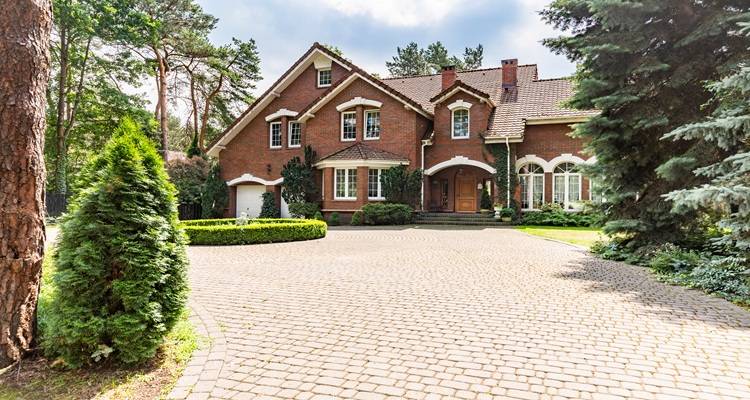
The average cost of a brick driveway in the UK is £5,750, or roughly £90 to £130 per square metre including labour and materials.
What type of brick are you considering for your driveway?
Clay brick pavers
2 votes - 33%33% of votes
Concrete brick pavers
2 votes - 33%33% of votes
Tumbled bricks
1 votes - 17%17% of votes
Block-style pavers
1 votes - 17%17% of votes

6 votes
See results
Hide results
Clay pavers cost noticeably more than concrete blocks, and a herringbone or circular pattern needs far more cutting than a straight running bond, so both push the labour up. Ground conditions decide the rest, because clay soil or a high water table means digging deeper and laying a heavier sub-base before a single brick goes down.
Brick Driveway Prices
The brick driveway installation costs below all include preparation, excavation to the correct depth, edge restraints, drainage, weed membrane, a compacted sub-base, sand bedding, laying the bricks, and applying kiln-dried sand to the joints.
| Size/Job | Average cost |
|---|---|
| Small (20m²) | £1,800–£2,600 |
| Medium (50m²) | £4,500–£6,500 |
| Large (80m²) | £7,200–£10,500 |
| Replacing an existing driveway with brick (50m²) | £5,000–£7,500 |
The table below covers the individual elements of a brick driveway, along with the smaller jobs you might need on one that is already down.
| Brick driveway job | What's included | Average cost |
|---|---|---|
| Standard brick pavers | Brick supply only | £40–£85 per m² |
| Premium or decorative brick pavers | Brick supply only | £50–£140 per m² |
| Excavation and sub-base preparation | Removal and disposal of the existing surface and soil, supply and install of MOT type 1 to a depth of 150mm | £45–£55 per m² |
| Brick driveway repairs | Fixing sunken areas, repointing and replacing spalling bricks | £150–£1,700 |
| Lifting and relaying sections | Removing uneven bricks, repairing the sub-base and sand bed, then relaying and compacting | £20–£45 per m² |
| Sealing a brick driveway | Cleaning, re-sanding the joints, applying sealer, and curing | £5–£15 per m² |
| Edging a brick driveway | Marking out, excavation, concrete bedding, laying, levelling, and haunching | £30–£75 per linear metre |
Want a custom price?
Post your job
Labour Cost of a Brick Driveway
To homeowners, the two most important aspects of a new driveway installation are usually the cost and the time it takes to complete. Let's take a look at the labour cost and timeframes for a brick driveway project.
Labour Costs
The labour costs of a driveway installation make up 30–50% of the overall project price. While labour rates vary across the country, the average cost is approximately £150 to £200 per worker per day. Labourers and apprentices typically cost less.
Driveway contractors generally charge labour by the square metre with average costs of £60 to £120 per m² for brick driveways.
Timescales
Factors which affect the timescale of the project include:
- Driveway size
- Amount of excavation and groundwork needed
- Chosen laying pattern including cuts and mitres
- Inclusion of drainage, such as channels or a soakaway
Laying a brick driveway is a skilled job, and there are many different patterns to choose from.
The complexity of the design greatly affects how long the project takes, as planning, levelling, cuts, and falls need to be considered at every stage of the installation. This attention to detail is necessary to get a good finish, but it does increase labour costs and timescales.
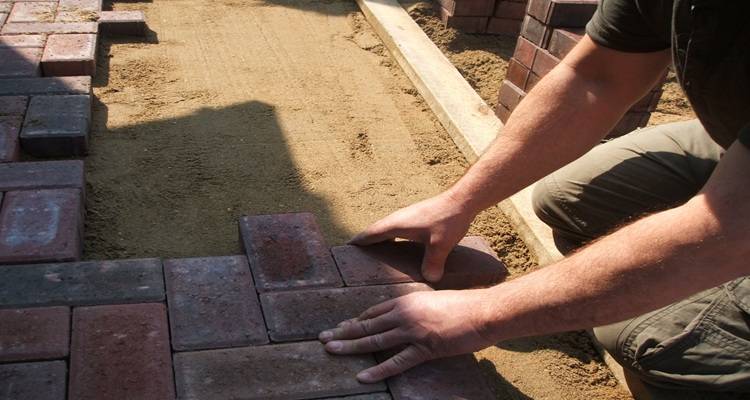
A small driveway can be completed in 2 to 3 days, while medium-sized areas can take 3 to 5 days. Larger projects or more complex designs can take up to 7 days or longer. Bad weather and long curing times for surrounding works can delay completion.
Supply Cost of a Brick Driveway
If you're pricing up materials separately, or checking what a contractor has allowed for, these are the going rates for everything that goes into a brick driveway.
| Material | What it's for | Supply cost |
|---|---|---|
| Brick pavers | The driveway surface itself, in clay or concrete | £30–£125 per m² |
| Sub-base aggregate (MOT type 1) | The compacted layer that carries the vehicle load | £50–£100 per cubic metre, or £30–£60 per tonne loose |
| Sharp sand | The bedding layer the bricks sit on | £40–£65 per 800kg bag |
| Kiln-dried jointing sand | Swept into the joints to lock the bricks together | £5–£8 per 25kg bag |
| Weed-inhibiting jointing sand | The same job, with additives that slow weed growth | £14–£17 per 20kg bag |
| Polymeric jointing compound | Sand and polymer mix that sets but still flexes | £20–£28 per 20kg bag |
| Concrete edging restraints | Stops the driveway spreading sideways | £4–£15 per linear metre |
| Steel or aluminium edging | The same job in a slimmer profile | £10–£30 per linear metre |
| Weed-control membrane | Keeps sub-base and soil from mixing, suppresses weeds | £40–£60 per 50 metre roll |
| Channel drainage | Carries surface water off the driveway | £12–£15 per metre plastic, £15–£40 galvanised steel |
| Soakaway crate | Where the channel drains discharge to | £60–£85 each |
| Driveway sealant | Barrier against staining, moisture, and UV fading | £150–£170 per 25-litre tin, £30–£50 for 5 litres |
Want a custom price?
Post your job
Aggregate and sand are sold by weight, so quantities scale with both the area and the depth of excavation. A bulk bag of MOT type 1 covers roughly 5 square metres at 100mm, and loose loads work out cheaper once the driveway gets large.
Jointing is the part people underestimate. Standard kiln-dried sand is cheapest, weed-inhibiting sand costs about double, and polymeric compound costs more again but holds the joints far better on a sloping drive.
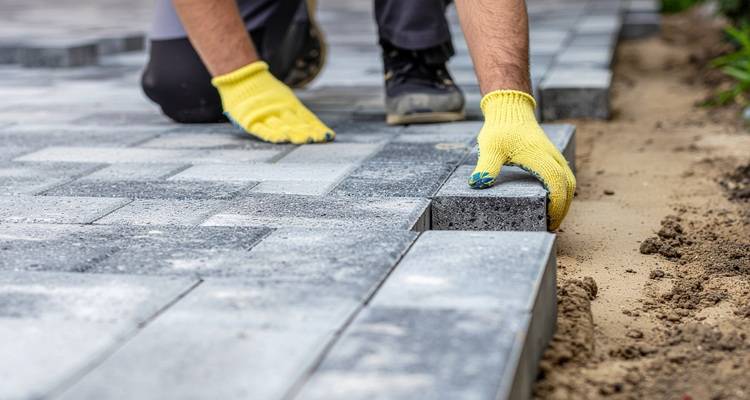
Additional Brick Driveway Costs
In addition to the basic materials and work involved in creating a brick driveway, there are some extra costs to be considered. Not all will apply to every project, but they are useful to know, just in case.
- Excavation — £15 to £30 per square metre to a depth of 150mm to 250mm, varying with location, site access, depth, and soil type.
- Site clearance — removing the extracted soil or previous surface may need a grab lorry, at £170 to £420 per load depending on whether it holds 9, 14 or 16 tonnes.
- Skip hire — smaller installations may only need a skip, and skip hire runs from about £120 a week for a 6-yard skip to £450 for a 14-yard skip.
- Steps — adding outdoor steps costs around £500 to £1,500, or £80 to £220 per square metre for brick steps that match the driveway.
- Gates — driveway gates cost £600 to £6,000 depending on the material and where you live, and electric gates sit at the higher end.
- Threshold adjustments — a new entrance usually needs a dropped kerb, and with the council fee on top the total is roughly £1,000 to £3,000.
- Sealing — cleaning and sealing together cost between £150 and £600, depending on the sealant, the area, and regional labour rates.
- Repairing nearby paths or walls — damage to paths or garden walls during installation costs £150 to more than £1,000 to put right.
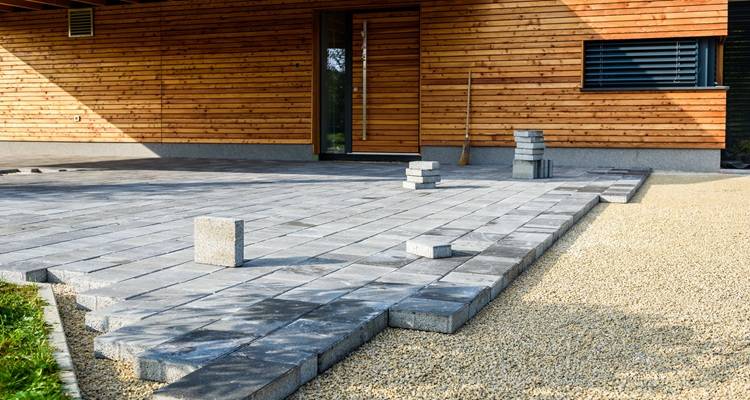
No two driveway installations are ever the same, and there are many variables to take into account. An existing driveway may need to be removed first, or the ground levels may need significant work before installation. All of this adds to the cost, which is why it's important to get several written, detailed quotes before choosing a contractor.
What Impacts the Cost of a Brick Driveway?
There are many cost factors when laying a brick driveway, and while some are obvious, others may not be if you've never had a driveway installed before.
- Driveway size — the area sets how much material, excavation and labour the job needs, so it is the clearest single cost driver.
- Type of brick — quality, texture, and colour vary widely, and supply-only prices run from £54 to £120 per square metre depending on what you pick.
- Laying pattern — herringbone, running bond, basket weave, and stack bond are the four common choices, and intricate patterns with lots of cuts take longer and cost more.
- Ground conditions — an uneven surface, a high water table, or clay soil calls for deeper excavation, specialised drainage and a stronger sub-base.
- Depth of excavation — standard depths run between 175mm and 300mm, with soft or clay-heavy soils needing more.
- Sub-base requirements — MOT type 1 aggregate is usually laid 100mm to 150mm deep in two separately compacted layers.
- Drainage — channel drains or a soakaway keep water off the surface, protect the sub-base from erosion, and meet sustainable drainage system (SuDS) requirements.
- Edging — concrete, steel, aluminium, or heavy-duty plastic restraints stop the driveway spreading, and costs rise with the length needed.
- Site access — narrow gates or sloping ground stop machinery getting in, so manual labour takes its place, raising cost and stretching the timescale.
- Waste disposal — this can account for around 20% of the final cost, and soil swells by roughly a quarter once dug out, so clay soils generate more waste than sandy ones.
- Property location — London and the southeast are typically 15% to 25% more expensive, while parking restrictions and permits push urban costs higher still.
- Contractor experience — an experienced installer costs more, but an inadequate sub-base, missing drainage, or inferior materials cost far more to put right later.
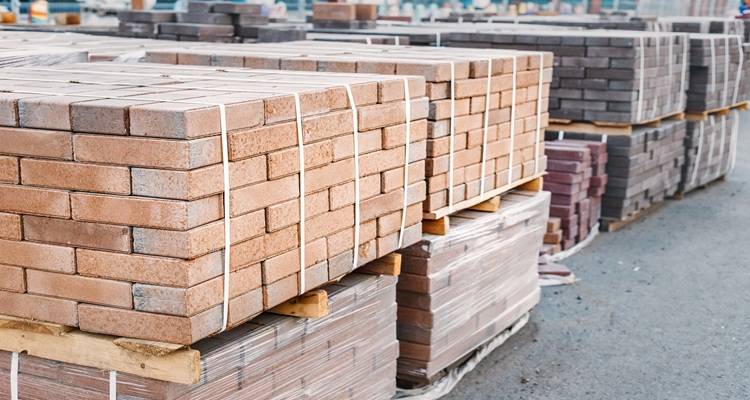
Getting several detailed quotes gives you a realistic idea of what laying a brick driveway should cost, and helps you spot a low quote that is cutting corners on materials or skipping part of the process.
Building Regulations Related to a Brick Driveway
Most driveways don't require Building Regulation approval. However, some aspects of the installation do need to comply with and meet certain standards for drainage and access.
- Drainage — Approved Document H covers drainage and waste disposal. Rainwater must not collect near the property and should discharge into a soakaway or surface water drain.
- Permeable surfaces — SuDS rules mean any driveway over 5 square metres should use a permeable surface. With non-permeable materials, runoff must go to a soakaway, border, or lawn inside your own boundary.
- Planning permission — most driveways fall under permitted development. You may need permission if the driveway is over 5 square metres, uses non-permeable materials and has no proper SuDS drainage, or if you are creating a brand new entrance from the road.
- Altering access — creating a new entrance or dropping the kerb needs local authority permission, and under Approved Document M the change must not make access to your home worse than before.
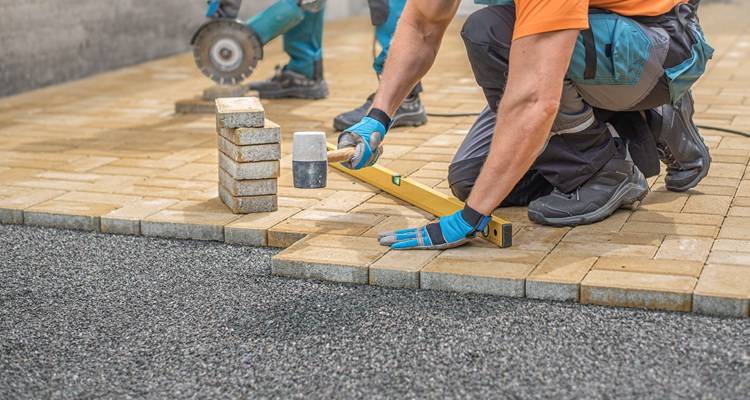
In addition, any alterations must not make access to your home less satisfactory than before. This includes creating steps where there were none previously, as per Approved Document M of the Building Regulations.
Types of Brick Driveway
There are several types of brick driveways, with the term mainly referring to the shape of the individual blocks rather than the material they're made from. While there are clay pavers, traditionally associated with brick driveways, the term can also cover other materials.
Block-Style Brick Pavers
These are typically made of clay or concrete and are designed to be durable as well as decorative. While they look like bricks, they have the thickness of a block, which provides a long-lasting driveway surface.
Block-style brick pavers come in a variety of colours and textures, making them suitable for modern and traditional homes. The cost of clay brick pavers is higher than for concrete options. Our guide to block paving driveways covers how these blocks are laid.
Clay Bricks
Clay bricks or pavers are a kiln-fired, high-density material for driveways. Pavers differ from building bricks in the way that they are made. The manufacturing process makes them very strong, able to handle extreme weather and tolerate heavy loads.
As their colour comes from the clay they're made from, it doesn't fade, so they maintain their looks long term. Clay is also a sustainable and low-maintenance material. Clay pavers cost around £55 to £70 per square metre.
Concrete Bricks
Concrete block pavers are designed to be hard-wearing and durable, offering a range of colours, textures, and sizes for every type of driveway. They provide stability even under heavy loads and daily traffic and are easy to maintain.
The ability of concrete driveway blocks to mimic clay bricks makes them a popular choice for many homeowners. Concrete bricks are budget-friendly at around £20 to £50 per square metre.
Tumbled Bricks
For homeowners who want a rustic or aged look, tumbled bricks provide the right aesthetic. They feature softer edges due to mechanical tumbling and mimic weathered stones or cobbles.
Tumbled blocks are durable and versatile, giving both traditional and modern homes an elegant touch. Prices range from around £35 to £60 per square metre.
Laying Patterns
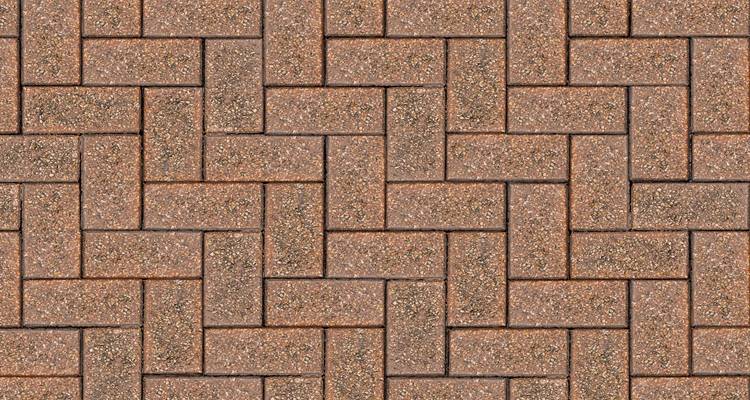
The pattern of your brick driveway is not just a way of making it pretty to look at. It also provides stability to the bricks and prevents movement. The strongest pattern is herringbone, which solidly interlocks the bricks and is ideal for high-traffic driveways.
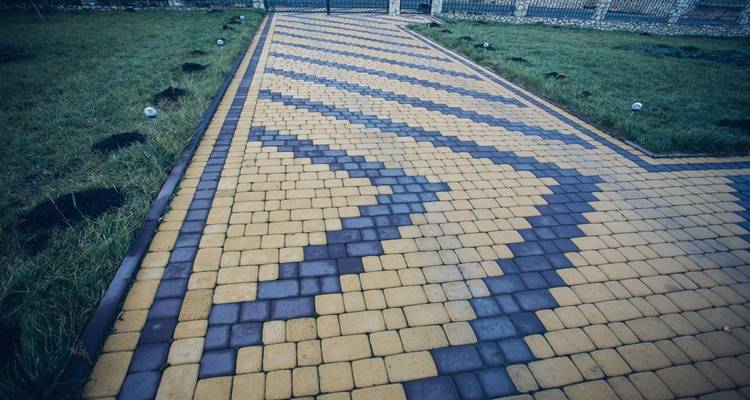
Other choices are basket weave, stretcher, running bond, and stack bond. Circular and radial designs are often popular for smaller driveways and parking areas. Remember, the more complex the pattern, the higher your costs are going to be for labour and materials.
Decorative Finishes
As well as choosing the pattern for your brick driveway, there are also other ways to give it a decorative finish. Contrasting borders using different-sized blocks or colours is a commonly used method of making it a feature of your home rather than just a functional space.
Metal edging can be used for a contemporary feel, or adding small areas of gravel for a mixed material look breaks up large expanses of bricks. Adding decorative touches to your brick driveway will affect your budget.
Cost of Alternative Types of Driveway
If you like the look of a brick driveway for your home but are considering other options, check out the alternatives. Our new driveway cost guide compares every surface side by side.
Block Paving Cost
Block paving has the advantage of mimicking bricks while often being made of concrete. These blocks provide the look of a natural material while having the durability of a manufactured one. The lifespan of block paving is around 20 to 30 years, as long as it's properly installed.
Maintenance is mostly concerned with weed removal, regular sweeping, and treating oil stains as soon as they appear. Overall, the cost of block paving is £90 to £130 per square metre, including materials and labour.
Resin-Bound Gravel Cost
Resin-bound gravel offers a neat, clean look for your driveway and has the added bonus of being permeable. It comes in a variety of colours to match any property aesthetic.
Lifespan for a resin driveway is 15 to 25 years, depending on quality and professional installation. With regular cleaning and maintenance, this lifespan can be significantly extended. The overall price for this type of driveway is £50 to £140 per square metre.
Tarmac Cost
Tarmac, also called asphalt, is a budget-friendly option costing around £45 to £80 per square metre. It has a smooth, uniform appearance and comes in black, grey, red, blue, or green. Lifespan is typically short, at 12 to 20 years, as it is very prone to weather damage.
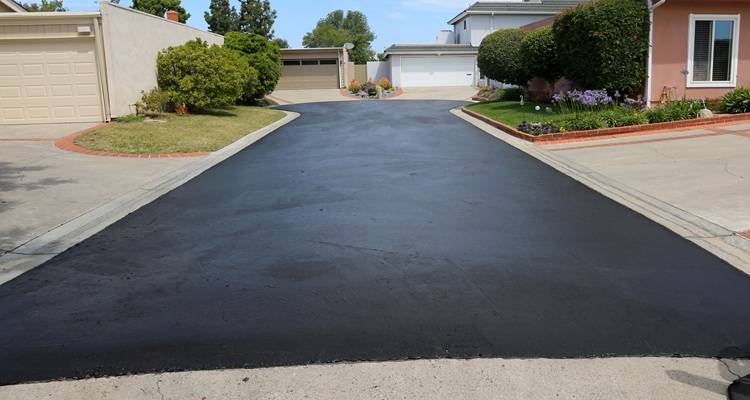
For maintenance, regular sweeping or the use of a leaf blower to remove debris is less harsh than using a pressure washer. Cleaning can be done with a low-pressure hose, and repairs are commonly carried out using cold-lay tarmac.
Concrete Cost
No longer a drab grey slab with no significant features, today you can have coloured, textured, or stamped concrete for your driveway. It's a strong material lasting 20 to 40 years, but it can be prone to freeze-thaw cycle cracking.
Maintenance includes sweeping or using a leaf blower for debris removal and a pressure wash once a year. Cracks should be repaired promptly, and sealing a concrete driveway helps to prevent frost damage. Oil stains should be cleaned as soon as they appear.
The cost of a concrete driveway depends on the type you use (smooth or stamped, plain or coloured). Prices range from £40 to £150 per square metre.
Cobblestone Cost
Cobblestone driveways offer a rustic and charming aesthetic for your property. Characterised by small, uneven stones, this driveway material lasts for more than 50 years when properly installed and maintained.
Brushing with a stiff broom helps to keep the cobblestone clean, and a low-pressure wash once a year to remove moss and algae lifts its appearance. The cost of a cobblestone driveway is around £70 to £130 per square metre.
Standard Gravel Cost
Gravel has a lot of advantages as a driveway material. It can look high-end, acts as a security feature, and is relatively cheap, costing around £30 to £70 per square metre.
However, maintenance can be difficult. Gravel tends to migrate, moving around and needing to be regularly raked to prevent low spots. It's tricky to weed and needs regular top-ups, usually every 2 to 3 years, but its functional lifespan is well over 30 years.
Ask a Trade
Got a question that only a tradesperson can answer? We have thousands of trades ready to answer any question you may have.
Ask your question

Checklist: Hiring Contractors to Build a Brick Driveway in the UK
Put these questions to any installer before you accept a quote:
- What depth of sub-base are they laying? Ask how deep the MOT type 1 goes and how many layers it will be compacted in. This is what stops the driveway sinking, and it is the easiest thing for a cheap quote to skimp on.
- Will the drainage meet SuDS requirements? Surface water is a Building Regulation issue, so ask whether channel drains or a soakaway are planned and whether the runoff stays inside your boundary.
- Are excavation and waste removal included? Both are expensive and both are commonly left out of a low quote. Confirm the figure covers digging out and taking the spoil away.
- How much brick driveway experience do they have? Laying bricks to a level finish with the right falls is a skilled job, so look for someone who has done the pattern you want rather than block paving alone.
- What guarantee do they offer? Ask for a workmanship guarantee of 5 years or more, check whether sub-base and drainage failure are covered, and ask whether it transfers if you sell the property.
- How has their older work held up? A driveway only shows its quality after a few winters, so look for MyJobQuote reviews left by homeowners whose drives went down 2 or 3 years ago.
Removing a Brick Driveway
Taking out an old brick driveway is reasonably straightforward, but it is nevertheless a labour-intensive job.
Lifting Bricks
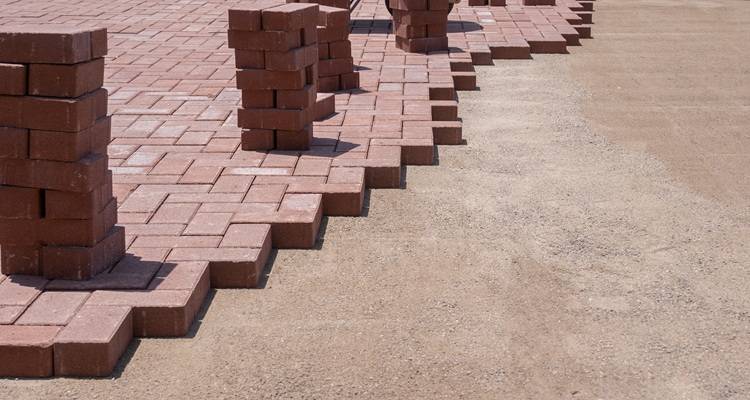
The difficulty of lifting out the bricks depends on whether they are set in sand or mortar. Sand-set bricks can be removed by blasting the jointing sand with a pressure washer and lifting them out.
Bricks set in mortar need more work. The mortar can be broken up with a hammer and cold chisel, an SDS drill or an angle grinder. Usually, once the first brick is out, the process becomes easier. If you intend to replace the bricks, more care is needed when removing them.
Removing Old Sand and Sub-Base
Depending on the size of the area, the sand can be removed manually with shovels or with a mini-digger. The compacted aggregate or sub-base will be harder to extract and may require a breaker to loosen the material sufficiently to remove it.
Re-Using Materials
To save on costs, you may reuse some materials, such as the sub-base and the old bricks. Make sure that you have enough aggregate to provide a strong foundation, typically at least 150mm. This needs to be re-compacted into two separate layers of 75mm.
If you're reusing the bricks, make sure they're strong enough, remove any old mortar, and consider sealing them to increase their lifespan. Where bricks are clearly not suitable for reuse as a driveway material, they can be recycled for use on a garden path or border.
Brick Driveway Removal Costs
The cost to remove an old brick driveway depends on the size of the area, regional labour rates, and how much waste is removed. Access can increase costs if there is no room for machinery, as this increases labour needs. Skip or grab lorry hire may be necessary depending on the volume of materials removed.
When Is Removal Necessary?
If the foundations of the driveway have failed, it will need to be removed. Similarly, drainage problems can lead to the collapse of the edging, which affects the integrity of the whole driveway. Deterioration of the bricks, such as spalling due to long-term weather exposure, is another reason for removing a brick driveway.
FAQs
Is a Brick Driveway Cheaper Than Block Paving?
No, it is dearer. On a supply-only basis clay pavers cost between £55 and £70 per square metre, while concrete block paving costs between £20 and £50 per square metre.
What Is an Interlocking Brick Driveway?
Shaped pavers that grip each other along their edges, so the surface spreads vehicle weight across the whole driveway instead of relying on mortar. It costs the same to install as any other brick driveway, since the difference is the pattern rather than the material.
How Long Does a Brick Driveway Last?
20 to 30 years, provided it was laid on a robust sub-base with proper drainage. Regular cleaning and maintenance help to prolong its functional life.
Does a Brick Driveway Need Sealing?
Not strictly, but it helps. Sealing protects the bricks from fading, oil spills, and moss, and it makes the surface easier to clean.
Can I Lay a Brick Driveway Myself?
Possible, but rarely worth it. The sub-base and drainage do most of the work, and getting either wrong tends to show up as sinking bricks or standing water within a couple of years.
Can Bricks Be Lifted and Relaid if the Driveway Sinks?
Yes, if the bricks are intact. They can be lifted and relaid on a new sub-base with a fresh bed of sand. Geotextile fabric may be placed beneath the aggregate to stop it mixing with the soil below.
Does a Brick Driveway Add Value to a Property?
Yes, mostly through kerb appeal. Parking considerations are high on the list of priorities for most home buyers.