Builders
 Carpenters
 Electricians
 Flooring Specialists
 Gardeners
 Handymen
 Heating Engineers
 Painters & Decorators
 Plasterers & Renderers
 Plumbers
 Roofers
 Tilers
 my
myDriveway Gate Installation Cost
At a Glance
- The average cost of fitting driveway gates in the UK is around £700, rising to £10,000 or more for automated systems.
- Installing a driveway gate usually takes 1 to 2 days.
- A full cost of fitting driveway gates breakdown, based on gate type, material, and automation features.
- How long installation takes, and an overview of what the work involves.
- How to find and hire a driveway gate installer using MyJobQuote.
Get free estimates
Are you a trade? Get more work today!
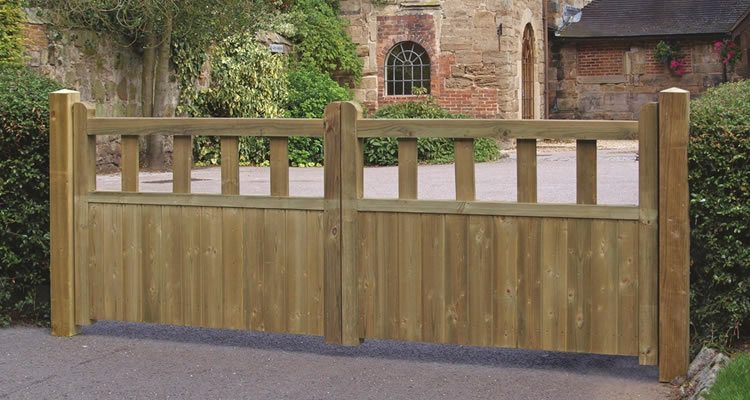
How much would you be willing to pay to have a timber bi-fold driveway gate installed, like the one above?
£500 to £750
393 votes - 43%43% of votes
£750 to £1000
215 votes - 23%23% of votes
£1000 to £1500
126 votes - 14%14% of votes
£1500 to £2000
92 votes - 10%10% of votes
£2000+
92 votes - 10%10% of votes

918 votes
See results
Hide results
£700
Table of Contents
- How Much Does Driveway Gate Installation Cost?
- Driveway Gate Prices (Supply Only)
- Labour Cost of Driveway Gate Installation
- Factors That Impact Driveway Gate Installation Costs
- Additional Costs of Installing a Driveway Gate
- What's Involved in Installing a Driveway Gate?
- Benefits of a Driveway Gate
- Choosing a Driveway Gate
- Checklist: Hiring a Local Driveway Gate Installer in the UK
- FAQs
How Much Does Driveway Gate Installation Cost?
First, let's explore the overall cost estimates for having different types of driveway gates installed. While most ordinary drive gates cost about £700 to install, the prices can rise significantly to as much as £10,000 for more advanced gate systems. The following prices that we explore in this section include both the labour and supply costs.
An ordinary sliding gate will likely cost between £800 and £1,550 installed, a bi-fold timber gate between £1,500 and £3,100, a bi-fold metal gate between £540 and £840, and a farm gate between £570 and £800. Automated or electric driveway gates cost between £5,800 and £10,500 to install.
What types of driveway gates are suitable for different driveway types, sizes, designs, etc.? How can I tell what will suit mine?
"For free-standing gates, either timber or iron works well. You can fix them to posts or brick pillars, though this will increase the cost. If you're looking at electric gates, the price and style options increase significantly."
Driveway Gates Installation Prices
The table below shows the total installed cost (materials and labour combined) for common driveway gate sizes:
| Type of Gate | Size (W x H) | Total Installed Cost |
|---|---|---|
| Sliding Gate | 6ft x 5ft | £800–£950 |
| Sliding Gate | 8ft x 5ft | £870–£1,050 |
| Sliding Gate | 10ft x 5ft | £920–£1,200 |
| Sliding Gate | 15ft x 3ft | £1,200–£1,550 |
| Bi-Fold Timber Gate | 6ft x 5ft | £1,500–£2,000 |
| Bi-Fold Timber Gate | 8ft x 5ft | £1,800–£2,200 |
| Bi-Fold Timber Gate | 10ft x 5ft | £2,000–£2,700 |
| Bi-Fold Timber Gate | 15ft x 3ft | £2,200–£3,100 |
| Bi-Fold Metal Gate | 7.5ft | £540–£740 |
| Bi-Fold Metal Gate | 11.5ft | £660–£840 |
| Farm Gate | 4ft x 4ft | £570–£730 |
| Farm Gate | 12ft x 4ft | £620–£800 |
High-end and automated gates cost considerably more, mainly due to the price of materials, motors and controls:
| Type of Gate | Total Installed Cost |
|---|---|
| Single Leaf Swing Gate | £7,000–£9,000 |
| Double Leaf Swing Gate | £8,000–£10,500 |
| Tracked Sliding Gate | £8,000–£10,500 |
| Automated Swing Traffic Barrier | £7,500–£10,000 |
| Hardwood Timber Electric Gate | £5,800–£8,300 |
| Custom Metal Electric Swing Gate | £6,500–£9,000 |
Want a custom price?
Post your job
Driveway Gate Prices (Supply Only)
Material costs vary significantly by gate type and size. The table below shows typical supply-only costs, before labour:
| Type of Gate | Size | Material Cost |
|---|---|---|
| Sliding Gate | 6ft wide | £450–£500 |
| Sliding Gate | 8ft wide | £530–£650 |
| Sliding Gate | 10ft wide | £600–£800 |
| Sliding Gate | 15ft wide | £900–£1,200 |
| Bi-Fold Timber Gate | 6ft wide | £1,200–£1,600 |
| Bi-Fold Timber Gate | 8ft wide | £1,200–£1,800 |
| Bi-Fold Timber Gate | 10ft wide | £1,800–£2,300 |
| Bi-Fold Timber Gate | 15ft wide | £2,000–£3,000 |
| Bi-Fold Metal Gate | 2 to 3 metres wide | £250–£450 |
| Bi-Fold Metal Gate | 3.5 metres wide | £360–£440 |
| Farm Gate | 1.2m x 1.2m | £270–£330 |
| Farm Gate | 3m x 1.2m | £300–£360 |
| Farm Gate | 3.6m x 1.2m | £320–£400 |
| Automated or Electric Gate | Standard driveway width | £5,000–£9,000 |
Want a custom price?
Post your job
Sizing has the biggest impact on material cost within each gate type, so it's worth getting your driveway measured accurately before ordering.
We're looking for the best driveway gate solution for a driveway that's 159 inches long and 4 feet high. What would you recommend?
"3 hinges for the weight and a small wheel will sort that"
Labour Cost of Driveway Gate Installation
Labour costs are already included in the installation prices above. On average, professional installers charge a day rate of around £150 to £250, depending on experience and location.
- Preparing the Area — Typically takes a few hours, depending on the scale of the job.
- Installing the Gate — The main fitting work can take 1 to 2 days.
- Site Clean-up — Tends to take an hour or less.
Timescales can vary depending on the condition of your driveway, the complexity of the job and the weather. Labour costs may be higher or lower depending on where you live and which installer you hire.
Are driveway pavers also driveway gate installers or can the two professions be mutually exclusive?
"If they are qualified to do both then it's ok. It depends on who is doing it, they could have both trades on the same contract."
Ask a Trade
Got a question that only a tradesperson can answer? We have thousands of trades ready to answer any question you may have.
Ask your question

Factors That Impact Driveway Gate Installation Costs
In the following subsections, we'll look at different cost affecting factors such as the size and material of the gate.
Location of Property
Firstly, where you are situated is essential for the cost of the job. This is primarily because professionals/companies charge different rates depending on where in the country you live.
So, if you live in London or the southeast, you can expect to pay a higher price than the national average, while in places like the north of England, labour rates are generally cheaper than the UK as a whole.
Ease of Access
Another important cost factor is how accessible your home is. If it's difficult for contractors to reach the area that you'd like to have gated, then the job could take longer, and hence the cost will end up higher.
Size of Gate
The width and height of the gate make up the most essential price components for having a driveway gate installed. Needless to say, the smaller the gate, the cheaper the materials will be and vice versa.
Of course, in having a small gate fitted, it will take less time than having a larger gate installed, and thus this too will affect the total price. So, the size of the gate is a doubly important cost factor.
Type of Gate
The cost of having a bi-fold, sliding or electronic gate installed will come with its own price tag based on both the material and labour costs.
Electronic or automated gates are among the most costly to purchase, and generally, they're more time-consuming to install. On the other hand, sliding driveway gates are among the cheapest.
Material of Gate
The actual materials used to make the gate are also important, whether it be timber, metal, or another option.
Additional Costs of Installing a Driveway Gate
When you receive the quote for installing your new driveway gates, depending on how you want your finished gates to look and operate, there could be some additional costs you need to factor in.
You should always check that everything you want is included in your quote, but here are some of the things you might also need to budget for.
Gate Automation System Cost
If you want the ability to open your gates automatically, you'll need to get electric gates installed. With a gate automation kit installed, your gates can be opened using a key fob, a connected intercom system, or even a smartphone app.
Upgrading to electric driveway gates can provide great security and convenience, but it will come at a cost. Adding electric automation to your driveway gates could increase the costs by £500 to £2,000.
Electrical Supply Installation Cost
If you do opt for electric gates, you'll need a qualified electrician to install the cabling from your home's electricity supply to the gates.
As well as the cost of the electrician, you may also need additional groundworks to create the trench to install and protect the electric cables.
Depending on the distance between your house and the new gates, and how difficult it is to lay the cabling, this could add £300 to £800 to the cost.
Gate Pillars or Posts Cost
Your new driveway gates will require strong support posts or pillars to make sure they operate correctly and last for years.
Steel gate posts should be enough for standard powder coated metal, wrought iron, timber, or aluminium gates, but heavier metal or electric gates may need brick or stone pillars for support.
New gate posts should cost between £250 and £400, but brick or stone pillars could cost £800 to £2,000, depending on the materials and design.
Groundworks or Driveway Preparation Cost
To make sure your driveway gates open and close properly, you may need some groundworks to prepare the area where your gates will be installed.
This might include levelling uneven or sloping ground, or installing concrete pads for the gate posts. Depending on what's required, this could cost £100 to £500.
Intercom or Access Control Systems Cost
Intercoms and remote controls are typically installed with electric gates, and some homeowners opt for them to enhance security and convenience.
Depending on the features you choose, additional costs for a basic intercom could be around £200 to £400, while high-end video and smartphone solutions could go up to £2,000.
Removing an Existing Gate Cost
If you're replacing an old driveway gate, your quote might not include removal and disposal of the existing one. On average, expect to pay between £80 and £300 for this, depending on the gate's size, material and whether it's manual or automated.
| Type of Gate Removal | Removal Cost |
|---|---|
| Basic wooden or small gate | £80–£120 |
| Large manual gate | £120–£200 |
| Automated or electric gate | £150–£300 |
Want a custom price?
Post your job
Automated gates may need extra work to safely disconnect power lines, sensors and motors, especially where the automation is linked to a home security or smart system. If your quote excludes waste disposal, this typically adds another £30 to £60.
Maintenance and Weather Protection Cost
Ongoing maintenance isn't usually included in your installation quote, but it protects your investment. Wooden gates typically need restaining or repainting every 1 to 2 years, costing around £50 to £150 depending on size. A quick pressure wash beforehand can also help treatments last longer.
Properties in coastal or exposed areas may need extra rust-proofing or more frequent treatments for metal gates, while automated gates in colder regions may need added protection for motors and sensors against frost. Budgeting an extra £50 to £200 a year for upkeep can help avoid larger repair costs later on.
If there's a fault with the electrics or a power cut, how do I get in and out of my driveway if my gates are automated? Is it safe to open them without power?
"It depends on the mechanism, but most motors have a manual override. Switch off the power, release any kind of brake and try to rotate the driving motor. Be careful if you forcefully drive a motor it can damage gears or brake mechanism."
What's Involved in Installing a Driveway Gate?
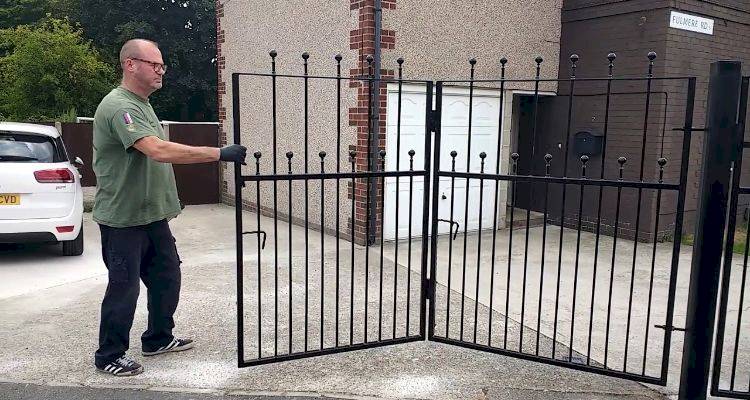
When you use MyJobQuote to get fast, free, no obligation quotes from experienced driveway gate installers near you, here's how you can expect the process to look.
If you already have posts or pillars in place and just need a new gate hung, this is usually a smaller job. See our cost of hanging a gate guide for pricing.
Before the Job
- Site Inspection and Planning — Your installer checks ground conditions, takes accurate measurements, and agrees the gate type, position and posts or pillars with you.
- Preparing the Area — The site is cleared so the team can work safely and access all the materials they need.
During the Job
- Installing Posts or Pillars — Holes are dug and posts secured with concrete, or concrete pads are poured for pillars.
- Hanging the Gate — Hinges are fitted and aligned, then the gate is hung and adjusted so it opens smoothly and safely.
- Fitting Hardware and Automation — Latches, bolts and locks are fitted, and for electric gates, a qualified electrician installs and connects the motor and sensors.
After the Job
- Testing and Adjustments — The installer checks the gate operates smoothly and safely, including any electric controls.
- Clean-Up and Handover — The site is cleared of debris, and you'll receive any relevant warranties and maintenance advice.
Benefits of a Driveway Gate
- Kerb Appeal — A gate can improve how your property looks from the street.
- Security — Gates can make it difficult for intruders to access your property or see whether it's occupied.
- Increased Home Value — A driveway gate can add around 5% to 10% to the value of your home.
- Privacy — A gate reduces street visibility and unwanted callers.
- Convenience — Automatic or electronic gates let you open your driveway without leaving the car.
Choosing a Driveway Gate
So, you've decided that the aforementioned benefits make a driveway gate right for you. Now, you're ready to start the process of getting everything in place, but you're not yet sure what type of gate you'd like to choose.
In this section, we'll take a look at several types based on design and material, including a pros and cons list for each.
Sliding Driveway Gate
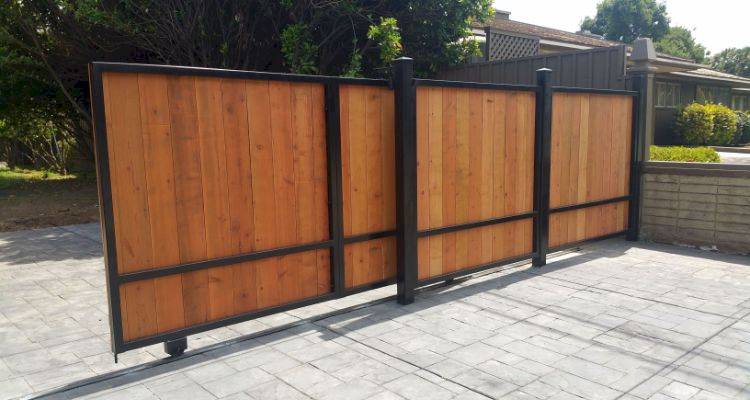
As the name conveys, this type of gate simply slides right across. It moves along a V-track with rollers. The name of this track comes from the fact that the tracks have an upside-down and slightly raised V shape that fits into a groove in the wheels of the track. A sliding driveway gate can be manual or automated.
Sliding gates are the preferred option for driveways that slope upward.
Pros
- ✔ Not very expensive if manual.
- ✔ Easy to use.
- ✔ Not affected by the wind when opening.
- ✔ Very well suited to wide opening spaces.
- ✔ Perfect for uneven surfaces or slopes.
Cons
- ✖ May be louder than a swing gate.
- ✖ Enough space is required on at least one side of the gate.
- ✖ Requires quite a bit of frequent maintenance.
Swinging Driveway Gate
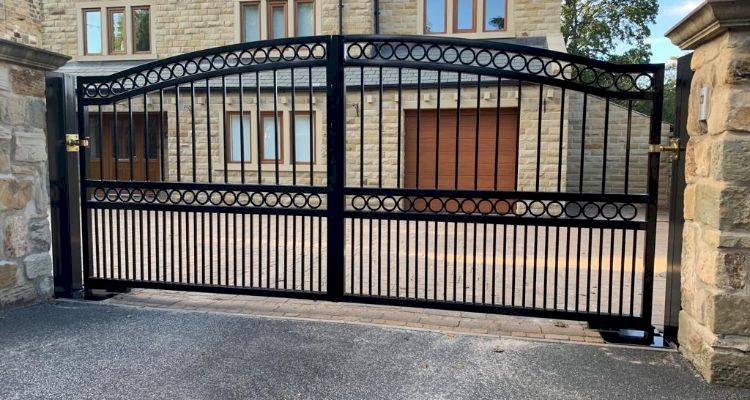
The most common type of driveway gate is that which swings open in two separate halves. Each half of the gate meets in the middle, where they can be locked together in place.
As with the previous example, this type of gate can also be either automatic or manual. Beyond that, a swinging gate is generally quiet. However, it is susceptible to sudden gusts of wind.
Pros
- ✔ Less expensive unless it is automatic
- ✔ Low maintenance
- ✔ Great for narrow openings
- ✔ Quieter than a sliding gate
Cons
- ✖ Not as secure as a sliding gate.
- ✖ More space needed within the driveway as it will open inwards.
- ✖ The wind can affect them.
Bi-Fold Driveway Gate
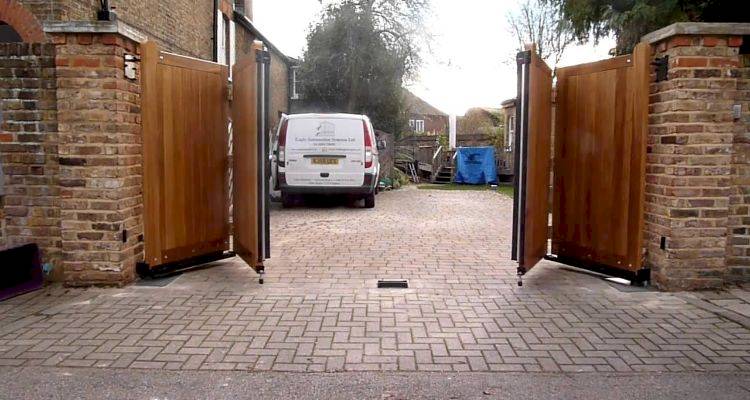
With each half of this gate folding, it is a fantastic option for saving on space. Upon swinging open, each side folds in half in the centre.
This type of driveway gate can effectively halve the area needed compared with an equivalent ordinary swinging gate of the same size.
Pros
- ✔ Saves space
- ✔ Open faster
- ✔ A trackless system is an option
Cons
- ✖ Complex installation
- ✖ More expensive than an ordinary swinging gate
- ✖ Issues can arise with the tracked system used with bi-folds
Farm Driveway Gate
Whether it's timber or metal, a gate at the front of a farm is a great way to increase security and keep livestock in. There are many options available, including manual or automated farm gates.
Pros
- ✔ Increase security
- ✔ Help enclose your land
Cons
- ✖ Not particularly cheap if electronic or automatic.
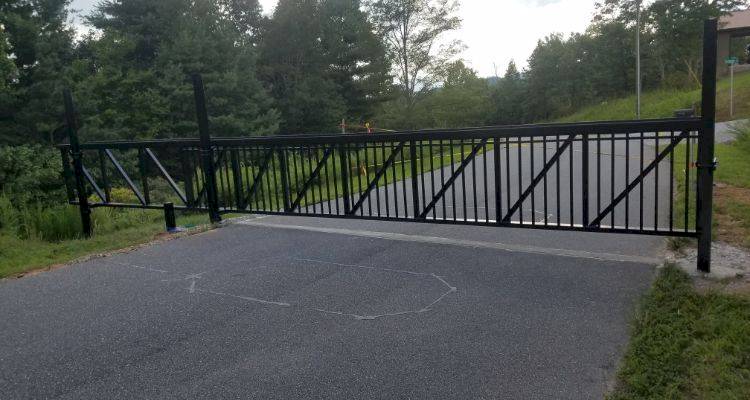
Commercial Driveway Gate
For a commercial building, you'll likely need a larger and more secure gate than would be used for an average driveway. As a result, it will likely be on the more costly end.
There are commercial gates for a range of budgets, terrains and traffic requirements. Security is generally the main objective of commercial gates.
Pros
- ✔ High level of security.
- ✔ Often automatic or electronic.
- ✔ Options for a range of needs and preferences.
Cons
- ✖ Expensive
Electric Driveway Gate
With an electric or automatic gate, your gate can open or close via an electric mechanism. Whether it is opened remotely, with a fob or via intercom, the automated element of this type of gate makes it easy to open.
As a result, you'll not only have more convenience, but you could also avoid having to get out of your car to open the gate in wet or windy weather. They are also durable and can add more to a property than a regular driveway gate likely would.
Automatic gate installations do, however, require professional installation as they must include safety edge sensors and comply with building regulations, BS EN 12453.
Pros
- ✔ High level of security
- ✔ Easily accessed
- ✔ Durable
- ✔ Privacy
- ✔ Can add even more to home value
Cons
- ✖ Expensive
- ✖ Will stop working in a power outage
- ✖ Risk of electrocution
- ✖ Not suitable for DIY construction
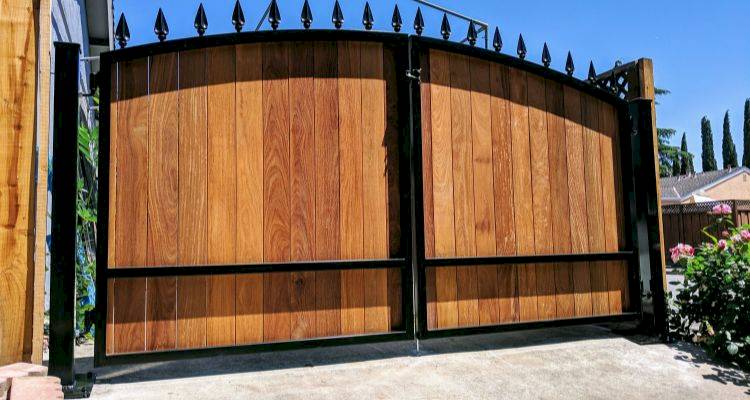
Timber Driveway Gate
Many driveway gates are made of wood. Specifically, hardwoods like oak, teak or softwoods, including cedar and Scandinavian redwood, are commonly used.
In most cases, softwood is used. Timber gates can provide a traditional aesthetic, and if you wish to paint them, their colours can stand out more easily.
Pros
- ✔ Provides a traditional look.
- ✔ Adds character and charm.
- ✔ Can be painted or stained.
Cons
- ✖ Erodes faster than metal.
- ✖ Can split, twist or warp if the gate is not fitted right.
Metal Driveway Gate
The stronger of the two options based on materials is metallic driveway gates, including wrought iron. With a metal gate, you get a more stark appearance and less privacy. On the other hand, they arguably fit better with modern homes from a visual standpoint. Metal driveway gates are also very sturdy, long-lasting and require minimal maintenance.
Pros
- ✔ Durable and strong
- ✔ Low maintenance
- ✔ Fit modern properties well
Cons
- ✖ Provide less privacy.
- ✖ Do not offer the same traditional look as timber gates.
Checklist: Hiring a Local Driveway Gate Installer in the UK
- Get multiple quotes. Ask at least 3 installers to quote so you can compare pricing and services in your area.
- Request an itemised quote. Check exactly what's included, such as removal of your old gate, groundworks and waste disposal.
- Check previous work. Look at online portfolios, reviews and photos of past jobs before hiring.
- Confirm electrical qualifications. For electric gates, make sure your installer is qualified to carry out Part P electrical work.
- Check liability insurance. Confirm your installer holds the correct insurance to protect you both if something goes wrong.
- Ask about warranties. Find out what guarantees are included for both parts and labour.
FAQs
How Do I Maintain Wooden Gates?
Make sure to clean your gates regularly and keep them free from surface dirt. Regularly check for cracks or signs of rot and repair them as soon as a problem is spotted. Restaining or painting should also be carried out every 1 to 2 years.
Which Is Better, Wooden or Metal Gates?
Wood is beneficial since it is now better engineered than it was before, and its levels of durability are no longer so far behind that of a metal gate. However, a metallic gate is probably the best since it is most suited to a modern property.
What Is the Most Affordable Type of Driveway Gate?
Manual swinging gates provide the lowest cost of driveway gates. Choosing basic materials such as steel or softwood will also help your money go further.
Is Planning Permission Needed for a Driveway Gate?
Planning permission may be needed if your gate exceeds 1m in height and opens out onto a public highway, or is 2m elsewhere on your property.
Can Driveway Gates Be Installed on Any Type of Drive?
The majority of drive surfaces, such as concrete, resin, gravel, tarmac, and block paving, should be perfectly fine for installing driveway gates. The ground just needs to be stable enough to support the posts or pillars, and the style of gate should suit the ground slope and space available, or you may need additional groundworks.
Can I Install a Driveway Gate Myself?
While confident DIYers may be able to install a simple, non-automated gate themselves, automated gates are best left to professionals to ensure safe and reliable operation.