Builders
 Carpenters
 Electricians
 Flooring Specialists
 Gardeners
 Handymen
 Heating Engineers
 Painters & Decorators
 Plasterers & Renderers
 Plumbers
 Roofers
 Tilers
 my
myHeated Towel Rail Installation Cost
At a Glance
- The average cost to install a heated towel rail is around £430.
- Most jobs take 1 day to complete.
- Heated towel rail installation costs in 2026 by size, type, and material.
- How long the job takes and what's typically involved.
- How to find a local plumber using MyJobQuote.
Get free estimates
Are you a trade? Get more work today!
£430
Table of Contents
- How Much Does It Cost to Install a Heated Towel Rail?
- Additional Heated Towel Rail Installation Costs
- How Much Does a Heated Towel Rail Cost to Run?
- Cost to Replace a Radiator with a Towel Rail
- Things to Consider with Heated Towel Rail Installations
- Installing a Heated Towel Rail Yourself
- Checklist: Towel Radiator Installations in the UK
- FAQs
How Much Does It Cost to Install a Heated Towel Rail?
Everyone loves having a warm towel, especially on colder days. With warm towels, you stay warm for longer after a hot bath or shower, but to keep your towels warm you need a heated towel rail. Planning a bigger bathroom refresh at the same time? It can help to find out the cost of fitting a new shower while you're comparing prices.
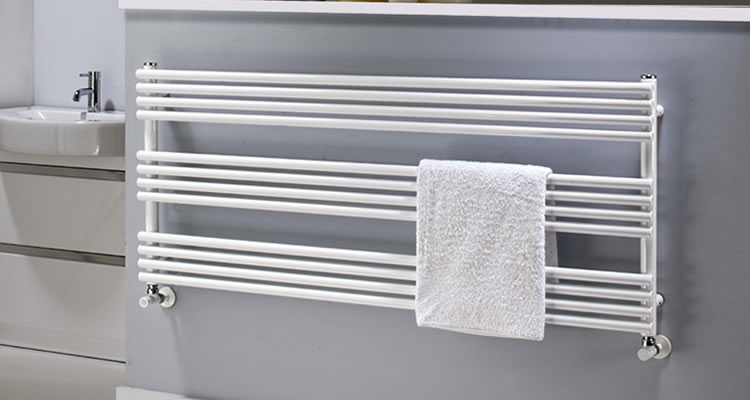
A heated towel rail, also called a towel radiator, is a popular bathroom accessory in which the rails heat up to keep your towels warm.
They are available in a wide variety of styles, and the electrical type can be hardwired or simply use a power cord which needs to be plugged into an electrical socket.
To fit an electrically heated towel rail in a bathroom you will need a qualified electrician. To fit a towel rail which is connected to your central heating system you should use a qualified plumber.
Is there a timer switch available for a shower room towel rail?
"Yes, this is possible to install. It would depend on the way your radiator is currently powered and where the cable is coming from, etc. These two factors will affect the ease and possibility of the job. But, definitely, thermostatic timers are available to install."
Heated Towel Rail Installation Prices
| Job Description | Duration | Material Cost | Labour Cost |
|---|---|---|---|
| Electric towel rail installation | 1 day | £220 | £200 |
| Plumbed-in towel radiator installation | 1 day | £250 | £200 |
Want a custom price?
Post your job
Additional Heated Towel Rail Installation Costs
If you're having a heated towel rail fitted as part of a larger bathroom renovation, you might want to consider some of these jobs at the same time:
New Bathroom Tiles Cost
If your bathroom tiles have seen better days and are cracked or falling off, the time might have come to replace them. Replacing bathroom tiles costs £750 depending on the size of your bathroom and the tile you choose, with ceramic and porcelain bathroom tiles carrying the highest costs.
Underfloor Heating Cost
You may want to continue improving your bathroom's heating by adding underfloor heating, and if you're taking up your tiling, it's the best time to install this as you won't disturb your existing tiles. Underfloor heating costs around £800 for an average-sized bathroom.
Regrouting Bathroom Tiles Cost
Perhaps your existing bathroom tiles aren't in bad condition but just need a freshen-up. A cost-effective way of doing this is by regrouting them to remove any hard-to-remove dirt and grime.
The cost of regrouting bathroom tiles is around £250, and takes between 1 and 2 days to complete depending on the size of your bathroom.
Bathroom Extractor Fan Cost
If you're improving warmth in the bathroom, it's worth thinking about ventilation, too. A good extractor helps clear steam and keeps mould at bay. The cost of fitting a bathroom extractor fan will depend on the model you choose and how tricky the wiring and ducting are. That being said, it's a common add-on when updating bathrooms.
How Much Does a Heated Towel Rail Cost to Run?
Running costs depend on whether your rail is electric or plumbed into your central heating system, and how long you use it each day.
Electric towel rails typically range from 100W to 600W. To work out the cost per hour, the formula is: (watts ÷ 1,000) × electricity rate. Based on Ofgem's April 2026 price cap rate of 24.67p per kWh, a 100W rail costs roughly 2.5p per hour to run. Used for 2 hours a day, that works out to less than £20 a year.
A plumbed towel rail runs as part of your central heating, so it doesn't add to your electricity bill. Its cost forms part of your overall heating spend, making it the more economical choice when your boiler is already running.
Fitting a timer or thermostatic control to either type helps keep running costs down. You only heat the rail when you actually need it.
Electric Heated Towel Rail Running Cost by Wattage
| Wattage | Cost Per Hour | Cost Per Day (2 hrs) | Approximate Annual Cost |
|---|---|---|---|
| 100W | 2.5p | 4.9p | Around £18 |
| 200W | 4.9p | 9.9p | Around £35 |
| 300W | 7.4p | 14.8p | Around £55 |
| 400W | 9.9p | 19.7p | Around £70 |
| 600W | 14.8p | 29.6p | Around £110 |
Want a custom price?
Post your job
Figures are based on Ofgem's April 2026 price cap rate of 24.67p per kWh and 2 hours of daily use. Your actual costs will vary depending on your energy tariff, usage habits, and whether your rail has a thermostat.
Cost to Replace a Radiator with a Towel Rail
Replacing an existing radiator with a towel radiator is one of the more straightforward installation jobs. If you choose a towel rail with a similar width to your current radiator, the pipework connections will line up and no new piping is needed, keeping labour costs down.
For a straight like-for-like swap, expect to pay around £200 in labour on top of the cost of the rail itself. If new pipework is needed, or the towel radiator is a different size, costs will be higher. If you're thinking about upgrading more than one heater, it's worth checking the cost of radiator installation for comparison.
Things to Consider with Heated Towel Rail Installations
Hardwired electrical towel rails can easily be hung on any wall, but on a stud wall, you should try and locate it so that at least two of the supports can be fixed into the wall studs.
Of course, this is not a problem if you have concrete walls. Although you can buy electrically heated towel rails with a power cord that plugs into a standard socket, normal three-pin sockets aren't usually allowed within reach of a bath or shower. In most UK bathrooms the room is too small to meet that distance rule, so plug-in models are generally better suited to other rooms, not inside the main bathroom.
It's also important to fit your towel rail a safe distance from any water source. Bathroom electrics are split into zones (0, 1, and 2), and anything electric has to be installed in the correct zone with the right IP rating, so your electrician will advise on the safest position.
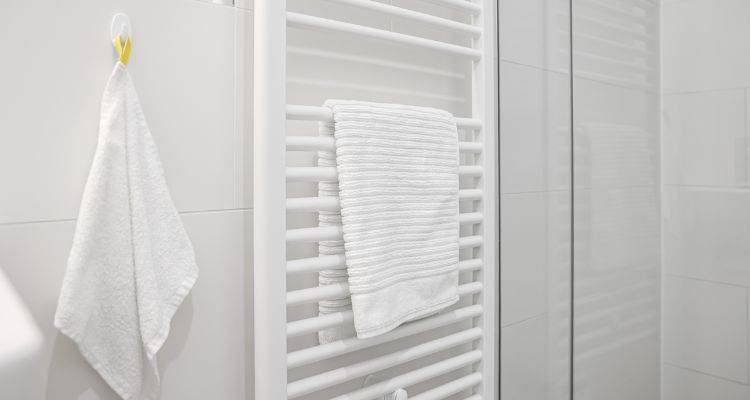
In many homes a heated towel rail is either wired on its own fused spur or on a suitable dedicated circuit, depending on the load and layout. Either way, a qualified electrician should handle the wiring so it's protected correctly and properly signed off.
Hardwired towel rails look neater as the wires are hidden, but they are more expensive to install. Many heated towel rails are made from stainless steel or chrome-plated steel, both of which cope well with steam and damp towels when they're looked after properly. The only disadvantage of hardwired towel rails is the cost of hiring an electrician.
Installing a Heated Towel Rail Yourself
Most bathrooms in the UK already have a radiator connected to the central heating system. If you choose a towel rail with the same width as the existing radiator, replacing it is a straightforward job.
Just remember to turn off the heating system and isolate the radiator using isolation valves before you disconnect any pipework. Once the pipework is disconnected, remove the radiator from the wall and connect the new one.
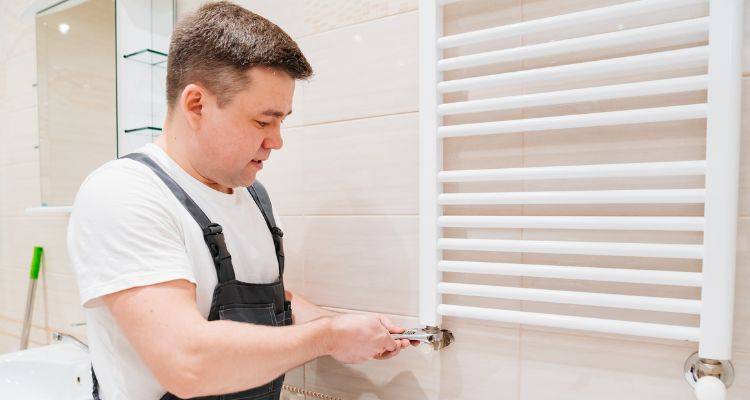
If the isolation valves work properly, there's usually no need to drain the whole central heating system or lift any floorboards when you're swapping like-for-like. If you're not comfortable with plumbing work, hire a local plumber to do this job for you.
If you're fitting an electric towel rail in England or Wales, the work needs to comply with building regulations, specifically Part P, as bathrooms are designated as special locations under electrical wiring regulations. The safest route is to use a qualified electrician who can ensure the installation is properly signed off.
I'm looking to replace the electric radiators in my flat (two with a more modern version, one with a towel rail). I'm just wondering if it is a difficult/timely job for an electrician to do?
"As long as the power rating of the current radiators are similar, it's a straightforward job. I would be looking to see if the fused switch is placed outside the bathroom, and the protective device is correctly selected (the circuit breaker)."
Checklist: Towel Radiator Installations in the UK
Before you get someone in, double-check a couple of things first. Here's what to ask before agreeing to get them to do the work:
- Are they suitably qualified? You'll want a plumber who knows what they're doing and, ideally, one who's registered with a recognised trade body. It just means the job's more likely to be done safely and to a good standard.
- Can they carry out the electrics, too? Some towel rails run off your heating. Others are electric. If yours needs hardwiring, you'll also need an electrician — or a plumber who's qualified for both. Worth checking early on.
- What's included in the price? Always ask for a full breakdown so you're not hit with extras later. The quote should cover parts, labour, and things like wall fittings, pipe tweaks, or getting rid of your old radiator.
- Does the system need draining? For plumbed towel rails, the system may need draining and refilling but only if the valves won't shut off fully. Make sure that's part of their quote. Last thing you want is someone packing up halfway through.
- Have they done this kind of job before? Fitting a towel rail in a tight bathroom or tiled wall takes an incredibly precise hand. Look for someone who's done similar installs and can show you photos or reviews.
- Do they have insurance? Public liability insurance isn't compulsory, but it's a massive plus. If something goes wrong, you'll both be covered — and that's one less thing to worry about.
- Do they offer any kind of guarantee? An honest, reputable plumber will. Ask how long their work's covered for and if the towel rail or parts have a manufacturer's warranty too.
Ask a Trade
Got a question that only a tradesperson can answer? We have thousands of trades ready to answer any question you may have.
Ask your question

FAQs
What Are Dual Fuel Heated Towel Rails?
A dual fuel heated towel rail can run on both your central heating system and mains electricity. In winter, your dual fuel towel rail runs off the central heating. In summer, when the boiler is off, you switch to the electric element, so you get warm towels all year round. Dual fuel towel rails tend to cost more to install than single-source options, but the flexibility makes them a practical choice for year-round use.
Do Heated Towel Rails Use a Lot of Electricity?
Not usually. A typical 100W electric towel rail costs around 2.5p per hour to run, based on Ofgem's April 2026 price cap rate of 24.67p per kWh. Even a larger 400W rail costs under 10p per hour. Using a timer or thermostatic control reduces consumption further, as the rail only runs when you need it.
How Long Do Heated Towel Rails Take to Heat Up?
How long it takes depends quite a bit on how big or small it is and the type. Another big factor in the time it takes to warm up is whether it's electric or plumbed in. Electric ones warm up a little faster, while central-heating versions take about the same time as your radiators.
Why Isn't My Heated Towel Rail Getting Hot?
The most common culprits are trapped air or a closed valve. If yours is part of your central heating, try bleeding it first. If it's electric, double-check the fuse or timer. Still not warming up? Get a plumber or electrician to take a look.
Do You Need a Plumber to Install a Heated Towel Rail?
It depends on the type. For a plumbed towel rail connected to your central heating system, you'll need a qualified plumber. For an electric towel rail, you'll need a qualified electrician. Some tradespeople are qualified to handle both, so it's worth asking when you get quotes.
Do You Need an Electrician to Install a Heated Towel Rail?
Yes, if you're installing an electric towel rail. In Wales, any electrical work in the bathroom must be signed off, and in England any work involving adding a new circuit or adding wiring near the bath or shower needs to be signed off. For a plumbed towel rail, a plumber is sufficient unless additional electrical work is needed.
How Much Would a Plumber Charge to Fit a Heated Towel Rail?
For a straightforward like-for-like swap, expect to pay around £200 in labour. Plumbers typically charge between £30 and £60 per hour, and most towel rail installations take half a day to a full day depending on complexity. If new pipework is needed or the job involves additional work, costs will be higher.
Are Heated Towel Rails as Good as Radiators?
For smaller bathrooms, a heated towel rail can provide enough warmth to supplement or replace a standard radiator. In larger bathrooms, a towel rail may not generate sufficient heat on its own, in which case an additional radiator or underfloor heating may be needed. The main advantage of a towel rail is the dual function, heating the room while keeping towels warm and dry.