Builders
 Carpenters
 Electricians
 Flooring Specialists
 Gardeners
 Handymen
 Heating Engineers
 Painters & Decorators
 Plasterers & Renderers
 Plumbers
 Roofers
 Tilers
 my
myMicrowave Repair Cost
At a Glance
- The average cost to repair a microwave is between £30 and £120.
- Most microwave repairs take 1 to 2 hours, though simple fixes can be done in as little as 15 minutes.
- A clear breakdown of microwave repair costs and the key factors that influence the price.
- An explanation of common microwave faults and what they typically cost to fix.
- The additional costs to budget for, from callout fees to replacement parts.
- How to find a local microwave repair engineer near you using MyJobQuote.
Get free estimates
Are you a trade? Get more work today!
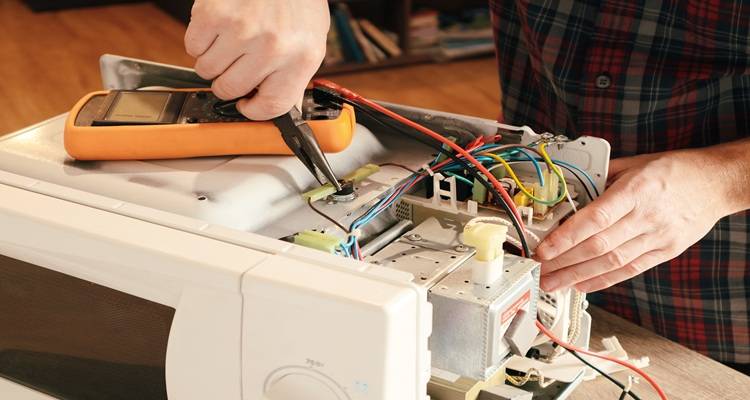
Repairing a microwave is usually worth it. As one of the hardest-working household appliances in the kitchen, it's normal for a microwave to develop faults over time, and for most newer, high-end, or built-in models, getting it fixed works out cheaper and more sustainable than buying a replacement. What you'll pay depends on the fault, the age of your microwave, and the cost of any replacement parts.
Keen to find out how much it costs to repair a microwave before you start asking for quotes? Here's everything you need to know about microwave repair costs, including typical price ranges and timescales for the most common repairs.
£75
Table of Contents
How Much Is Microwave Repair?
The average cost to repair a microwave is between £30 and £120. Where your repair falls within this range depends on the type of fault, the parts needed, and how accessible the microwave is. We cover each of these factors and how they affect the overall repair cost further down.
Microwave Repair Prices
Here are the typical repair costs and timescales for common microwave faults:
| Type of Repair | Typical Cost Range | Duration |
|---|---|---|
| Door switch or latch | £30–£65 | 15 minutes to 1 hour |
| Turntable motor | £55–£120 | 30 minutes to 1 hour |
| Fuse | £25–£75 | 15 to 30 minutes |
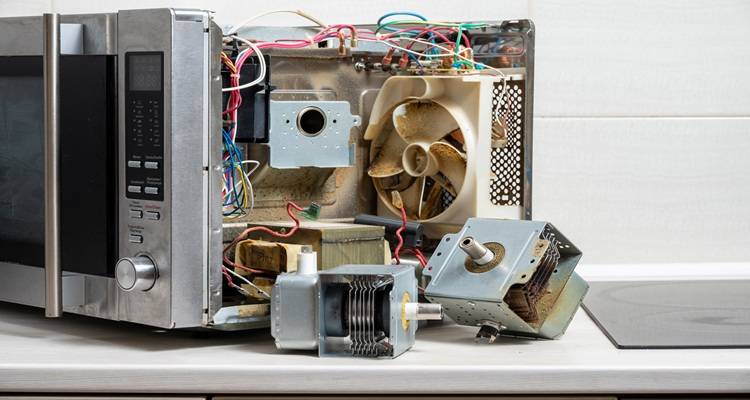
| Magnetron | £70–£250 | 30 minutes to 2 hours |
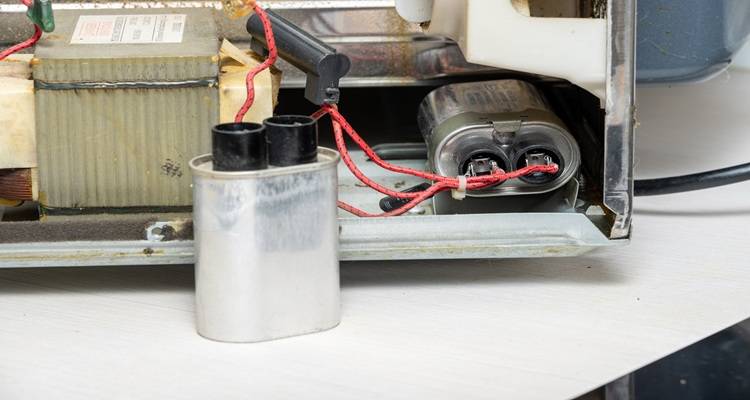
| Capacitor | £30–£110 | 30 minutes to 1 hour |
| Diode | £30–£100 | 15 to 30 minutes |
| Transformer | £100–£250 | 1 to 2 hours |
| Control panel | £55–£400 | 30 minutes to 2 hours |
Want a custom price?
Post your job
Simple faults like a blown fuse or a broken door latch sit at the lower end of this range and are usually quick to fix. More complex microwave repairs, such as replacing a magnetron or transformer, cost more in both parts and labour. If your microwave is built-in, you may also pay extra for the additional time needed to access the appliance.
What is the main issue with your microwave?
Not heating food
7 votes - 50%50% of votes
Turntable not rotating
1 votes - 7%7% of votes
Sparks inside
1 votes - 7%7% of votes
Buzzing or unusual noises
2 votes - 14%14% of votes
Control panel not working
3 votes - 21%21% of votes

14 votes
See results
Hide results
To put these repair costs into perspective, replacing a control panel module on a freestanding microwave may cost as little as £55. But the same repair on an integrated model can cost between £120 and £400, depending on the parts needed. For high-end combination microwaves, it's still often cheaper to repair than to pay between £500 and £2,500 for a replacement.
Labour Costs and Timescales for Microwave Repair
How Long Does a Microwave Repair Take?
Most microwave repairs take 1 to 2 hours to complete. However, timescales can increase if the microwave repair is more technical, requires extensive diagnostics, or more than one component needs replacing.
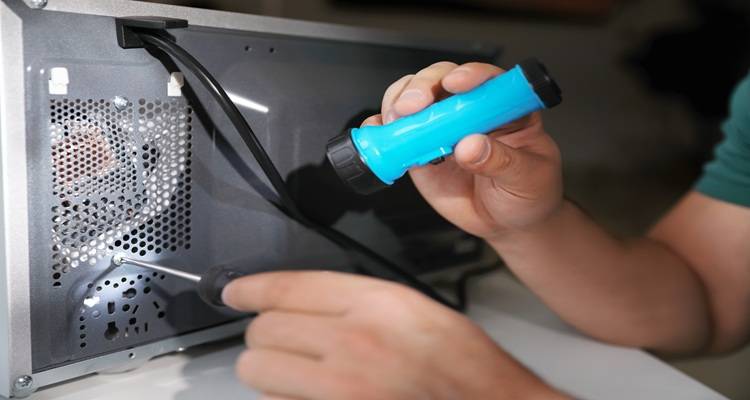
Built-in microwaves can also take longer, as the appliance may need to be partially disassembled or disconnected before the engineer can access the fault. In some cases, a handyman may be needed to help with access. If replacement parts aren't readily available and need to be ordered from the manufacturer, this can add further delay.
Labour Costs
Appliance repair engineers typically charge a callout fee between £35 and £60, which covers the first 30 to 60 minutes of their time. If the repair takes longer, expect an hourly rate between £20 and £80. Independent engineers tend to charge at the lower end, while specialists in London are likely to charge nearer the top.
Microwave Repair Supply Costs
Replacement parts for microwaves can cost as little as £2 for a standard, low-voltage fuse, but can go much higher if you need to buy a specific part from the manufacturer, such as a magnetron or transformer. Parts that are hard to get hold of or need to be ordered can also cost more.
Sometimes, compatible parts can be sourced for a slightly lower cost. But it's essential that all the specifications, such as the voltage, current and terminal connectors, match those of the original component.
Here are the typical supply costs for individual replacement parts:
| Replacement Part | Supply Only Cost |
|---|---|
| Door switch or latch | £5–£15 |
| Turntable motor | £10–£60 |
| Fuse | £2–£35 |
| Magnetron | £35–£150 |
| Capacitor | £15–£65 |
| Diode | £5–£55 |
| Transformer | £85–£150 |
| Control panel module | £10–£350 |
Want a custom price?
Post your job
Although you can buy some replacement parts quite cheaply, you should think twice before trying to fit them yourself if the job involves opening up the casing.
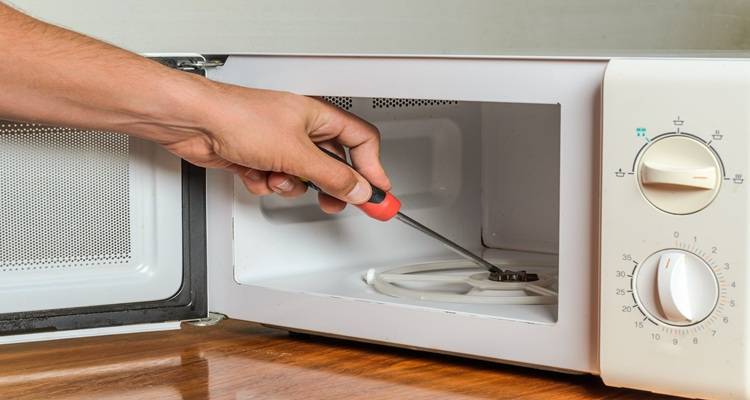
It's possible to get an electric shock from your microwave, even if it's unplugged. Microwave energy escapes from the microwave when the casing is off, so manufacturers recommend only trained repair technicians should carry out repairs inside the casing.
Additional Costs
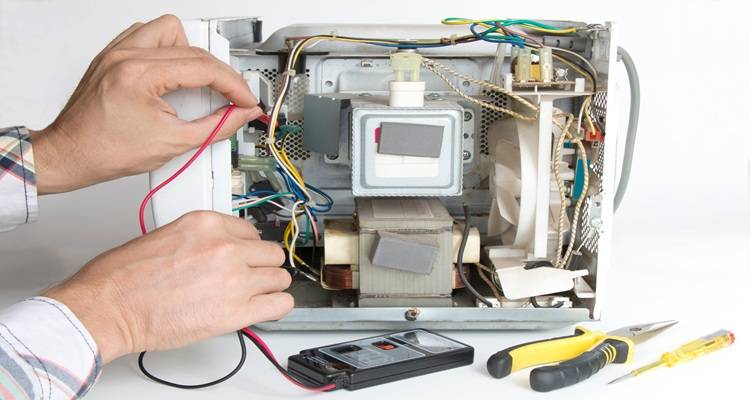
Aside from the cost to replace a faulty part, such as a turntable motor, what else might you need to factor into the total repair cost? Here's what to budget for when getting your microwave repaired:
- Callout Fee — This is typically a flat fee between £35 and £60. The fee usually covers diagnostics and the first 30 minutes or hour of the engineer's time, but you should always check this beforehand.
- Emergency Callouts — Need your microwave repairing asap? Out-of-hours repairs can incur a callout fee between £60 and £120.
- Additional Travel Charges — If you live in a particularly remote area, your engineer may charge you a fee for their mileage.
- Tracing Spare Parts — It takes time to search for and order spare parts. So, you may need to pay a small fee to cover labour and delivery charges.
- Disposal — Removing an irreparable microwave or disposing of old parts may cost an extra £20 to £30 through a registered waste disposal service (check that they are on the register of waste carriers), or you can take it to your local recycling centre for free. There's also the option to take it back to the shop you bought your new microwave from — retailers must offer a take-back service. For built-in models, you may also need an electrician to disconnect and a handyman or kitchen fitter to remove it safely.
- Professional Clean — If you think your microwave could benefit from a deep clean, to help prolong its lifespan further, this may cost between £30 and £50.
Cost Factors for Microwave Repair
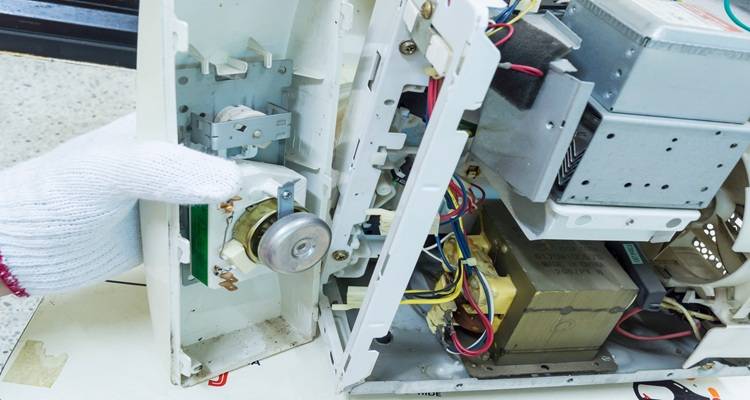
You'll now be aware that there are multiple factors that can affect your microwave repair cost. So, it's worth bearing in mind the following:
Type and Brand of Microwave
Whether or not your microwave is quick and easy to repair can depend on the type you have. For instance, some integrated models need to be disconnected and removed from their housing first, which may require a kitchen fitter to avoid damaging surrounding units.
Furthermore, some cheap models are poorly designed with casings and panels that are hard to open. This makes it trickier to access the faulty part.
The Age of Your Microwave
It can be hard to source parts for old and obsolete microwave models. Older models are often in a more delicate condition, so more care may be needed during the repair. Microwave repairs on older models can also cost more in labour if parts, such as rusty connectors, need to be cleaned up before they can be inspected or repaired.
The Type of Repair and Parts Needed
Complex repairs, such as diagnosing a printed circuit board (PCB) fault or repairing a faulty transformer, typically take longer and need pricier parts than a simple fuse change or latch repair. This means you'll pay more in labour and material costs. The same is also true if your microwave has more than one fault and needs more than one replacement part.
Your Location
Those living in London and the South East will find that callout fees and hourly rates are higher. In addition, those in remote areas, such as the Scottish Highlands, may incur a higher charge to cover the extra mileage.
Types of Microwave Repairs
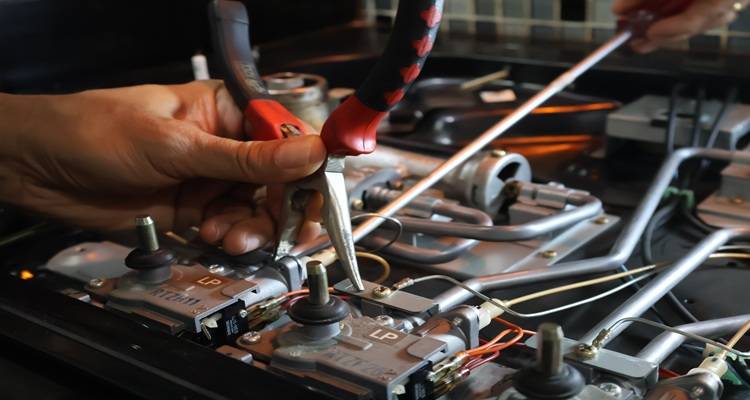
Numerous faults can affect microwaves. To help you understand more about microwave repairs, here's a list of common microwave problems you might encounter and how they're typically fixed:
- Microwave Is On but Not Heating Food — This is most likely to be a magnetron, capacitor or diode failure. To fix this, the technician will diagnose which part is faulty and replace it.
- The Turntable Is Not Rotating — It could be as simple as a roller guide issue. The roller guide sits underneath the glass plate and is easy to replace. However, the problem typically lies with the turntable motor. This can stop working after a while due to wear and tear. A technician will usually replace this rather than try to repair it, as it's quicker and more cost-effective.
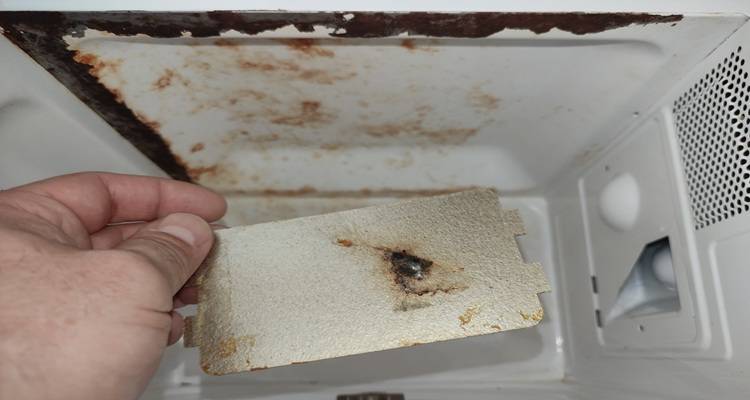
- You Can See Sparks — A common reason for sparking inside your microwave is damage to the waveguide cover. This is usually quick and easy to replace. However, electrical faults can also cause sparks and arcing, so a few electrical tests may be required to fix your appliance.
- You Can Hear Buzzing — Buzzing noises could signal a number of issues. It may be a loose component, such as a motor, or a sign that the magnetron or high-voltage diode is faulty. Because of this, it's most likely that the repair engineer or technician will run some diagnostic tests to find the exact cause of the issue.
- There's a Burning Smell and Buzzing Noises — If you can hear buzzing noises and smell burning, or your microwave has tripped a fuse or circuit breaker, this issue is more likely to be a transformer fault. It's possible to repair a transformer, but it's usually more feasible to replace it.
- Control Panel Not Working — If the digital display isn't lit up or the buttons or control knobs don't appear to work, there could be a loose connection or burnt-out component inside the module. Or moisture may have found its way inside the panel. Often, it's easier and more cost-effective to replace this module than try to find and repair the fault.
Should You Repair or Replace Your Microwave?
Deciding whether to repair or replace a microwave comes down to its age, the repair cost, and how well it still performs. As a general rule, a repair makes sense for newer or higher-end models, while replacement is often the smarter choice for older or budget microwaves.
When it's worth repairing your microwave:
- It's a Newer Model — If your microwave is only a few years old, a microwave repair is usually the more economical choice and gets you plenty more use out of it.
- It's High-End or Built-In — Premium combination ovens and integrated microwaves are expensive to replace, so fixing the fault is often far cheaper.
- The Fault Is Minor or Common — Issues like a blown fuse, a faulty door switch, or a worn turntable motor are quick and inexpensive to put right.
- It Still Meets Your Needs — If the microwave is energy efficient and does everything you want, there's little reason to part with it.
- The Repair Costs Less Than a Replacement — When the repair cost is well below the price of a new microwave, repairing makes financial sense.
When replacement is the better option:
- It's Old or Obsolete — Parts get harder to source as a microwave ages, and other components are more likely to fail soon after a repair.
- It's a Budget Model — A basic microwave can cost more to repair than to replace with a new microwave outright.
- The Fault Is Major or Recurring — Expensive faults such as a failed magnetron or transformer rarely justify the cost on a cheaper unit.
- The Repair Quote Nears the Replacement Price — If fixing it costs almost as much as a new microwave, you're usually better off replacing.
- You Want Better Performance — Upgrading to a multifunctional combination microwave that can grill, roast, and bake may be worth the extra outlay.
Checklist: Hiring a Microwave Repair Engineer
Consider these key points before hiring someone to fix your microwave:
- Are they qualified? – Look for a tradesperson who has trained in repairing microwaves and other kitchen appliances, particularly training from your microwave's manufacturer.
- Do they have microwave experience? – Ask whether they've worked on microwaves similar to yours, particularly if you have a built-in or combination model.
- Do they have public liability insurance? – This protects you if something goes wrong during the repair.
- Have you got a clear, written quote? – Make sure it includes the callout fee, labour, and any replacement parts so there are no surprises.
- What are the expected timescales? – Ask how long the repair should take and whether any parts need to be ordered in advance.
- Is there a guarantee? – Check whether the repair work and any replacement parts come with a warranty or guarantee, and how long it lasts.
- Do they have positive reviews? – Look at what other homeowners on MyJobQuote have said about their work.
Ask a Trade
Got a question that only a tradesperson can answer? We have thousands of trades ready to answer any question you may have.
Ask your question

FAQs
Can I Fix a Microwave Myself?
It depends on the fault. Simple issues such as a broken turntable roller guide or a loose door handle can be fixed without specialist tools. However, microwaves contain a high-voltage capacitor that can hold a dangerous electrical charge even after the appliance is unplugged.
For any repair that involves removing the casing or accessing internal components, it's strongly recommended that you hire a qualified repair engineer.
How Long Should a Microwave Last?
The average lifespan of a microwave is 8 to 10 years with regular use. Higher-end models from reputable brands tend to last longer, while budget microwaves may start to develop faults sooner. How often you use it and how well it's maintained also play a role.
Are There Any Building Regulations for Microwave Repair?
Microwave repairs don't usually fall under building regulations. However, if the fault turns out to be with your kitchen's electrical circuit rather than the microwave itself, any wiring work should be carried out by an electrician, ideally one registered with a competent person scheme.
If you have an integrated microwave, it's also worth ensuring it has been professionally fitted with the correct ventilation and is properly secured within the kitchen unit.
Does My Microwave Warranty Cover Repairs?
It depends on the terms of your warranty. Most manufacturer warranties cover defects and component failures for 1 to 2 years from the date of purchase. However, damage caused by misuse or general wear and tear may not be covered. Check with the manufacturer before booking a repair, as using an unauthorised engineer could void the warranty.
Is It Safe to Use a Microwave After It Has Been Repaired?
Yes, provided the repair has been carried out by a qualified engineer using the correct replacement parts. A professional will test the microwave after the repair to make sure it's working safely. If you notice any unusual behaviour afterwards, such as sparking or a burning smell, stop using it and contact your engineer.
Can a Sparking Microwave Be Repaired?
In most cases, yes. Sparking is often caused by a damaged waveguide cover, which is a straightforward and inexpensive fix. However, sparking can also be a sign of an electrical fault, so it's important to stop using the microwave and have it inspected by a professional before using it again.
Can I Get an Emergency Microwave Repair?
Yes, some microwave repair companies offer out-of-hours and emergency callouts, though you can expect to pay a higher callout fee of around £60 to £120. If your microwave has stopped working and you need it fixed urgently, check whether local engineers offer same-day or next-day appointments before agreeing to an emergency rate.
Why Is My Microwave Not Heating Food?
The most common cause is a faulty magnetron, which generates the heat inside your microwave. A failed diode, capacitor, or blown thermal fuse can also be to blame. These components carry a dangerous electrical charge, so it's best to have a repair engineer diagnose and fix the fault.