Builders
 Carpenters
 Electricians
 Flooring Specialists
 Gardeners
 Handymen
 Heating Engineers
 Painters & Decorators
 Plasterers & Renderers
 Plumbers
 Roofers
 Tilers
 my
myBifold Door Installation Cost
At a Glance
- The average cost of bifold door installation is around £3,000.
- Installing bifold doors typically takes 1 to 2 days to complete.
- Bifold door installation costs in 2026 by material and size.
- How long the process takes and what's usually involved.
- How to find a local bifold door installer using MyJobQuote.
Get free estimates
Are you a trade? Get more work today!
£3,000
Table of Contents
- Bifold Doors Price: Supply and Fit
- Bifold Door Installation Cost by Material
- Labour Cost to Install Bifold Doors
- Factors That Impact Bifold Door Installation Costs
- Additional Costs to Install Bifold Doors
- What's Involved in Installing a Bifold Door?
- Bifold Door Alternatives
- Benefits of Bifold Doors
- Checklist: Hiring a Bifold Door Installer in the UK
- FAQs
Bifold Doors Price: Supply and Fit
The cost to install bifold doors in the UK is around £3,000 for a standard supply and fit. However, quotes usually range from £1,950 to £7,200, depending on the door material you choose, the opening size, and the number of door panels.
Labour costs, glazing options (e.g., double or triple glazing), and any structural work can also have an impact on the final price.
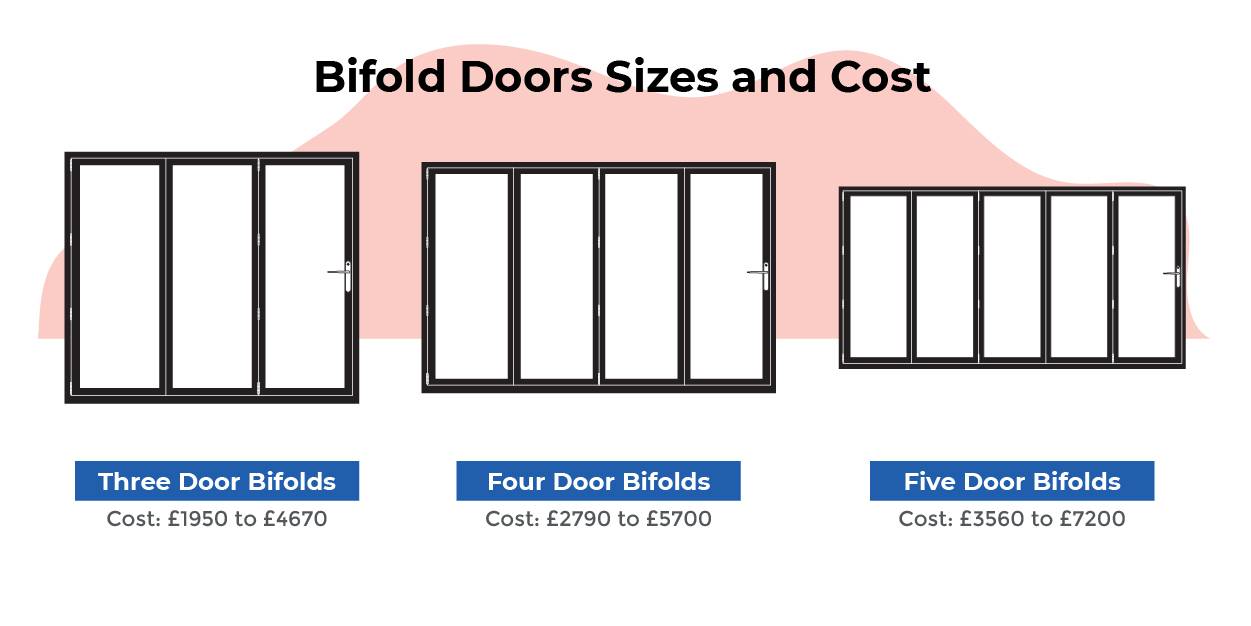
How Much Do Bifold Doors Cost to Install?
| Door Set Size | Typical Supply and Fit Cost | Typical Installation Time |
|---|---|---|
| 3-panel (1.8m to 2.4m opening) | £1,950–£4,700 | 1 day |
| 4-panel (2.7m to 3.5m opening) | £2,800–£5,700 | 1 to 2 days |
| 5-panel (3.6m to 5m opening) | £3,550–£7,200 | 2 days |
Want a custom price?
Post your job
These prices assume installation into an existing opening. If the opening needs to be widened, or if structural support such as a lintel is required, the final price may increase.
Ready to get a quote?
We have a catalogue of door fitters near you who are ready to give you a quote to install bifold doors in your home!
Bifold Door Installation Cost by Material
To help you choose the right bifold doors for your home, here is a breakdown of the different types of bifold doors, along with the costs and key considerations of each.
uPVC Bifold Door Cost
uPVC bifold doors are a low-budget option which cost around £1,950 to £4,250 to install. uPVC stands for unplasticised polyvinyl chloride, which is a type of hard and resistant plastic.
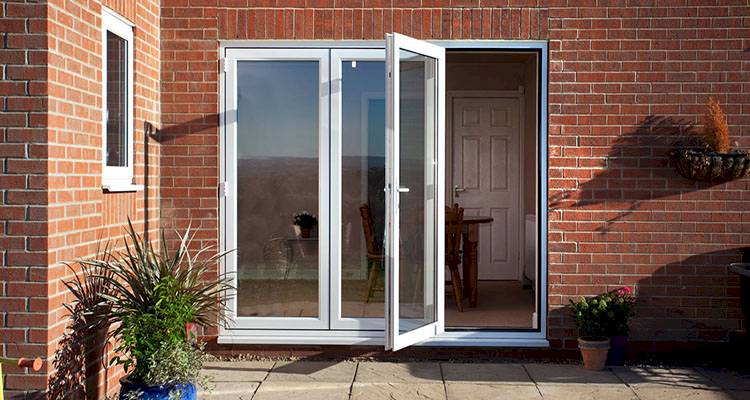
This type of bifold door is commonly chosen by homeowners who want a more affordable installation. However, uPVC frames tend to be thicker than aluminium or timber, which can slightly reduce the glass area.
uPVC Bifold Doors: £1,950 to £4,250 (Supply and Fit)
- Best For: Lower budgets, and homeowners who want low maintenance.
- Maintenance — Usually just cleaning the glass, tracks, and seals.
- Energy Efficiency — Energy efficiency performance will be determined by quality and U-value or Window Energy Rating (WER) band of the complete door set you choose.
- Durability — Can vary depending on the quality of the doors and the installation.
- Things to Note — Wider frames can reduce glass area, and colour options are often more limited.
| No. of Doors | Supply Only Cost | Total Cost |
|---|---|---|
| 3 (1.79m to 2.4m) | £1,350–£2,200 | £1,950–£2,800 |
| 4 (3m to 3.5m) | £2,000–£2,700 | £2,800–£3,500 |
| 5 (3.6m to 4m) | £2,550–£3,250 | £3,550–£4,250 |
Want a custom price?
Post your job
Timber Bifold Door Cost
Timber bifold doors can be made up of various types of wood including solid timber, hardwood, and engineered wood, although the latter is the most popular option.
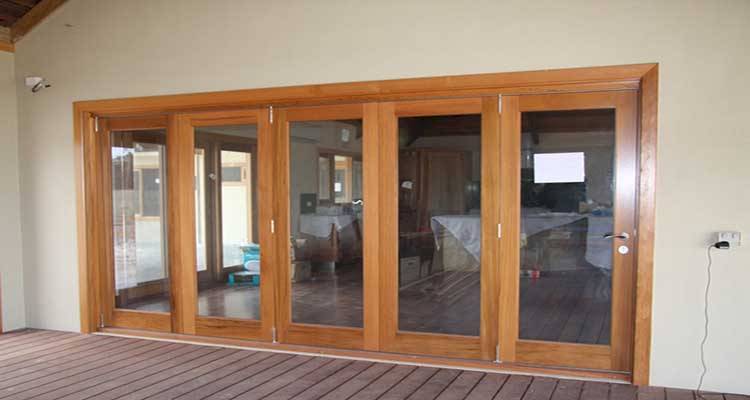
Engineered timber is a robust and long-lasting material, which makes it a popular choice for bifold doors. Timber frames can also provide a natural appearance that suits traditional homes.
Timber Bifold Doors: £2,000 to £4,200 (Supply and Fit)
- Best For: Traditional properties, or if you want a natural timber finish.
- Maintenance — Regular painting, staining, or varnishing.
- Energy Efficiency — Depends on the quality of the complete door set, so check the U-value or WER band of your chosen doors.
- Durability — Long lasting when kept protected from moisture.
- Things to Note — Engineered timber and hardwood usually cost more, but tend to last longer.
| No. of Doors | Supply Only Cost | Total Cost |
|---|---|---|
| 3 (1.8m to 2.4m) | £1,400–£2,200 | £2,000–£2,800 |
| 4 (2.7m to 3m) | £2,250–£2,650 | £3,050–£3,450 |
| 5 (3.6m to 4m) | £2,700–£3,200 | £3,700–£4,200 |
Want a custom price?
Post your job
Aluminium Bifold Door Cost
Aluminium bifold doors are a durable option, but durability does depend on the quality and suitability of the finish/coating. They typically feature a thermal break made from a less conductive material, which helps reduce heat transfer through the frame.
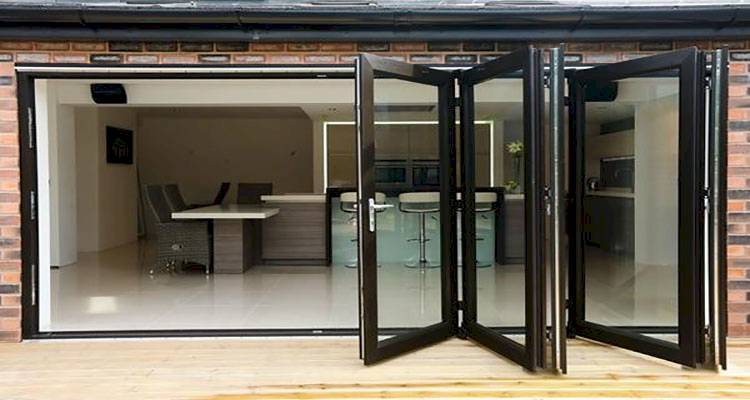
Because aluminium is strong, manufacturers can create slimmer frames with larger glass panels. This can allow more natural light into the property and is often preferred for modern homes.
Aluminium Bifold Doors: £3,150 to £7,200 (Supply and Fit)
- Best For: Larger openings, modern homes, and slim sightlines.
- Maintenance — Low maintenance, usually just cleaning.
- Energy Efficiency — The U-value or WER band of your chosen complete door set will determine its energy efficiency.
- Durability — A robust, durable option when a suitable, high-quality finish/coating is applied.
- Things to Note — Higher upfront cost than uPVC and many timber options.
| No. of Doors | Supply Only Cost | Total Cost |
|---|---|---|
| 3 (2.1m to 3.5m) | £2,550–£4,050 | £3,150–£4,650 |
| 4 (3.6m to 4m) | £3,500–£4,900 | £4,300–£5,700 |
| 5 (4.2m to 5m) | £4,250–£6,200 | £5,250–£7,200 |
Want a custom price?
Post your job
Bifold Door Cost Calculator
Labour Cost to Install Bifold Doors
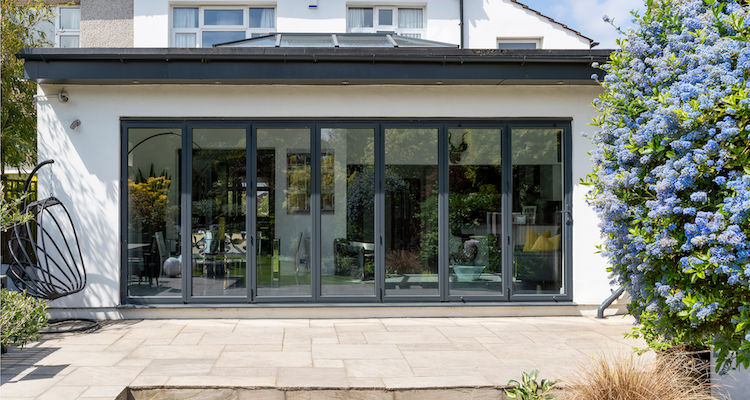
So, how much does the average bifold door installation cost in the UK?
The average labour cost to install bifold doors depends on the size of the door system and number of panels. Larger bifold door systems with more panels may take longer to install and therefore cost more, as you can see from the table below.
| Door Set Size | Typical Labour Cost | Typical Installation Time |
|---|---|---|
| 3-panel | £600 | 1 day |
| 4-panel | £800 | 1 to 2 days |
| 5-panel | £1,000 | 2 days |
Want a custom price?
Post your job
I’m looking at having bifold doors installed on the patio and have a price for supply only, but I would like a price for installation, please.
"Usually around £700, but it would depend on the size and location."
You may also need to hire a structural engineer to assess whether the wall where the doors will be installed is strong enough to support the opening. Structural engineers normally charge around £50 to £90 per hour.
The overall installation cost and time required will depend on the extent of the work. For example, if a new opening needs to be created or widened, the job may take an additional day and increase labour costs. Difficult access or working in confined spaces may also increase the price.
Factors That Impact Bifold Door Installation Costs
Several factors can affect the total cost to install bifold doors. The main factors include the door material, the size of the opening, the number of panels, and the location of your property.
- Bifold Door Material — One of the most important elements you need to consider when having new bifold doors installed is the type of bifold you want. There are three main types (timber, aluminium, and uPVC), which all have different qualities and vary in price. If you have a low budget in mind, you may want to opt for uPVC, with timber another option for those who prefer a natural finish. For a more premium, contemporary-looking, and robust installation, you may want to consider aluminium bifold doors.
- Door Size — Another important cost-affecting factor is the door size, as there are multiple options available that fit different budgets. For example, smaller, cheaper sizes are usually around 1.79m to 2.4m wide, while medium-sized bifold doors will be between 2.7m and 3.5m. Larger bifold door systems will generally be more expensive, so expect to pay higher prices for doors which range from 3.6m to 5m.
- Property Location — Where you live is also a contributing factor to the overall installation price, as the rates set by tradesmen will vary depending on the location. For instance, joiners in London charge around 20% to 40% more than tradespeople in other parts of the UK.
- Accessibility — Another important aspect that will affect the cost is the level of access to the area where the doors will be installed. If this area is hard to reach due to a wall being in the way or uneven ground, then you may end up paying for additional modifications.
- Number of Panels — The more panels in your bifold system, the more expensive it is likely to be, as you will have more frames and need more hinges and fitting time to make sure all the panels are aligned and on track. For example, depending on the material and the opening size, adding another panel could increase costs by 20% to 35%.
- Type of Glazing — Many external bifold systems will come with double glazing as standard, but if you opt for triple glazing or other upgrades to improve security, noise reduction, or thermal efficiency, these will add to the cost. Depending on the supplier and the specification, upgrading from double to triple-glazed bifold doors could cost you 15% to 25% more.
- Installation Challenges — Some bifold doors can be very large, so installations with restricted access or difficult ground conditions may mean additional labour and equipment are required for a safe installation, which will make it more expensive. Hiring a small crane for the day could add £250 to £500 to the total costs of your bifold door installation, for example.
What options, other than a roof lantern or skylights, do I have to make my kitchen extension really light and airy?
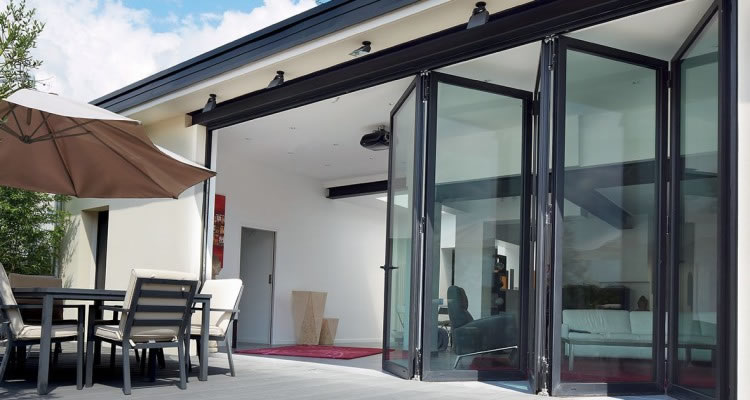
"A good idea to make an extension or any space light and airy is to introduce a set of bifold doors from finish floor level to ceiling. Expanding the width of the extension when open gives you a great visual of your garden space, leaving the interior feeling part of that."
Additional Costs to Install Bifold Doors
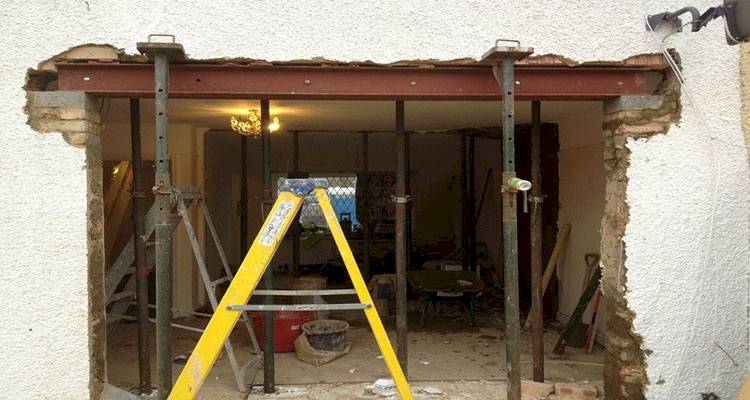
There are additional costs you should keep in mind when getting a price for installing bifold doors:
- Structural Work — If you require a new opening or need to widen it, a lintel beam may be necessary, along with some tidying up of the opening. This can have an impact on the labour cost and installation time. If you are unsure whether you will need structural changes, ask a tradesperson to inspect the opening before you order new doors.
- Removing Existing Bifold Doors — If you are replacing existing doors, you may need to budget for removal and waste disposal. To hire a professional to remove your bifold doors, you should expect to pay around £160 to £220 per day. If you plan to remove them yourself, you will have to consider the cost of waste disposal, which typically ranges from £70 to £120.
- Internal vs External Doors — External bifold doors typically cost more than internal doors due to the need for weatherproofing, insulation, and security.
Do frameless bifold doors have any extra requirements than normal bifolds? And how energy efficient and weatherproof are they?
"No, the energy efficiency comes mainly from the glass not the frame. Although, the frames will have a foam insert to help reduce heat loss.
They're waterproof, but I wouldn't use them, for example, on a coastal property in direct wind. All systems are tested and need to meet minimum requirements."
They're waterproof, but I wouldn't use them, for example, on a coastal property in direct wind. All systems are tested and need to meet minimum requirements."
What's Involved in Installing a Bifold Door?
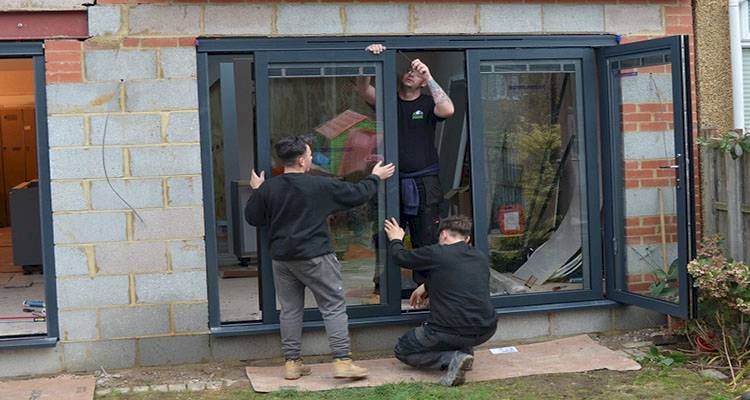
Installing bifold doors is a popular way to enhance the enjoyment of your home. It can be a significant investment, and to make sure you get the professional-looking results you're expecting, installation is something best left to experienced installers.
To help you understand the process of hiring a professional tradesman to install bifold doors, here is a step-by-step breakdown of what the job entails.
Before the Job Starts
- Initial Survey, Measurements & Quote — Your installer will assess the current opening and site access before taking accurate measurements for the manufacture of your bifold doors. They will confirm the specification of your bifold doors with you, and everything that is included in their quote.
- Checking the Structure — If you are creating a new opening for your bifold door installation, they will ensure that the structure where they are being fitted is sound, and a structural engineer may need to be involved if structural changes or additional support are required.
- Planning Permission & Building Regulations — Depending on your property, where you live, and your bifold door installation, any required planning permission or listed building consent will need to be obtained, and any conservation area restrictions met, before installation can begin. Building Regulations compliance can be certified after the work is complete, either by the competent person scheme installer self-certifying the installation, or an approved building control body signing off the work.
During the Job
- Preparing the Opening — Any existing doors will be removed, if required, and the opening is prepared to the correct width and specification, with any agreed structural or remedial work carried out before installation of the new system begins.
- Preparing the Door Sill — Once the structure has been deemed sound, the door sill can then be attached. If yours does not come pre-assembled, then the tradesman will assemble it and secure it to the base of the opening ready for the frame.
- Assembling & Fixing the Frame — After the sill has been assembled, the door installer will then start to fit the frame in place, checking it is securely fixed, level, and square, and ready for the doors to be installed.
- Mounting the Bifold Doors — Once they are happy that everything is in the right place, they will mount the doors onto the frame and hinges. The correct hinges and pivots are installed, the doors are mounted and checked to make sure they are aligned, and the required hardware is fitted to the doors.
After the Job
- Final Checks & Handover — Once installation is complete, checks are carried out to make sure the panels are aligned, the doors open and close properly, and all locks, seals, and weatherproofing are working correctly.
- Approvals & Sign-Off — Any required Building Regulations sign-off or other certification is completed, and any maintenance guidance and warranty paperwork is provided.
- Waste Removal — The area is cleared of any packaging or installation waste, and the old doors are removed to be disposed of if this was required and included in the quote, ready for you to enjoy your new bifold doors.
Ask a Trade
Got a question that only a tradesperson can answer? We have thousands of trades ready to answer any question you may have.
Ask your question

Bifold Door Alternatives
If you feel as though bifold doors are not the best option for you, then there are various other patio door types to choose from, including:
Sliding Doors Cost
Sliding patio doors are categorised by the horizontal sliding function, with some featuring a disappearing effect behind a wall when slid open. The average cost of sliding patio doors is normally around £500 to £1,500.
The main advantage of sliding doors is that they let in the most light and offer the best views due to the amount of glass on show.
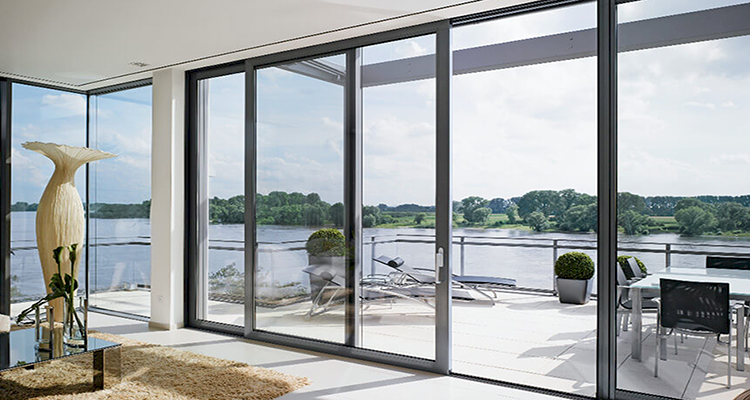
Sliding doors can be hard to install and usually require specialist equipment if fitted on the first floor or above. Also, if installed in an existing opening, they will not open completely.
French Doors Cost
French doors offer a traditional style door system which opens outwards on a hinge. The average cost of French door installation is between £900 and £1,950.
One of the benefits of choosing French doors is that they can be customised to suit both traditional and contemporary properties. They also help to boost kerb appeal as they tend to make homes look bigger and also increase natural light.
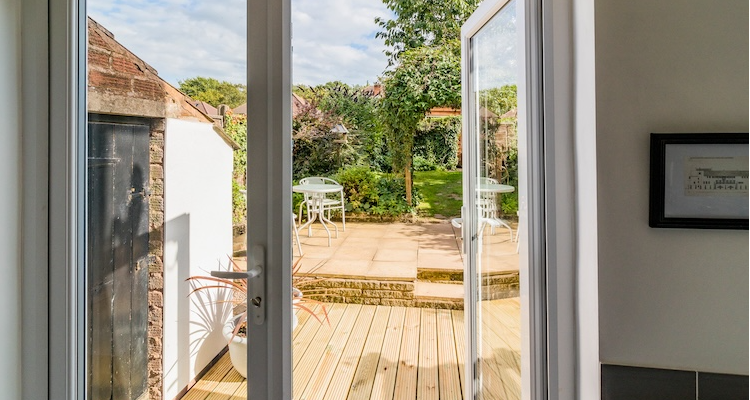
A downside of opting for French doors is that they require a significant amount of space for the doors to open, so if you have limited room outside, then French doors may not be the best option. Their energy efficiency will depend on the U-value or WER band of the door set you choose, so it's worth checking this against other options.
Do bifold doors require planning permission? When would they and when might they not need approval? Does it depend on their size, etc?
"If the bi-fold doors are replacing an original door, then no permission is required. If you are to knock down a wall to put in a bifold door then a structural survey would be required before works."
Benefits of Bifold Doors
Fitting bifold doors to a conservatory extension is a great way to enhance the aesthetics of your property and offer a variety of benefits, whether they're open or closed, as outlined below:
- Improves energy efficiency, especially when upgrading to double- or triple-glazed doors.
- May increase your property value with an attractive and functional design.
- Seamlessly blends your indoor and outdoor living spaces and provides better airflow and ventilation for the home.
- Opens your home to more natural light, even during the winter months.
- Maximises usable space, even with smaller rooms, and adds a larger, more practical entrance.
- Can offer upgraded security features for added peace of mind.
By matching your bifold doors to the style of your property, from black aluminium for a modern look to wood for a more classic look, you are guaranteed to love this upgrade option.
What is your biggest concern when planning to install bifold doors?
Security or additional security features
0 votes - 0%0% of votes
Energy efficiency
1 votes - 100%100% of votes
Providing adequate light and ventilation
0 votes - 0%0% of votes
Style and appearance
0 votes - 0%0% of votes
Cost of installation
0 votes - 0%0% of votes

1 votes
See results
Hide results
Checklist: Hiring a Bifold Door Installer in the UK
Before hiring someone to fit your bifold doors, you should consider the following checklist:
- Do they have the necessary qualifications? Check if they are registered with an appropriate competent person scheme, or have a relevant qualification, such as a Level 2 NVQ Diploma in Fenestration Installation.
- Do they have sufficient experience? Make sure they have at least 5 years' experience installing bifold doors.
- Can they provide evidence of previous work? Request photographic examples or a portfolio of recent installations.
- Do they have the right insurance coverage? Verify that they have both public and employers' liability insurance.
- Do they offer a warranty for their work? Any reputable tradesman should offer a warranty, ensuring peace of mind in case of any issues.
- Do they provide a detailed, written quote? Ensure the quote covers all costs, including labour, materials, waste, and any additional fees.
- How will they advise you of any delays? In the event of a delay, it's important to understand the process and if you're liable for any extra costs.
- Have you seen positive reviews? Check the likes of MyJobQuote for any feedback on the company and their work.
FAQs
Can I Install a Bifold Door Myself?
Bifold doors are not a typical DIY project as they are far more complex than traditional sliding doors, and require some careful planning and calculations, which may also result in additional structural support being required. In some cases, the wall can be prepared by a professional builder, although the door should still be fitted by a professional to avoid any potential damage and incorrect installation.
Will My Bifold Door Installation Need Structural Support?
If your bifold doors are being fitted into an existing opening, this may already have the necessary support. A new or wider opening will probably need to have a suitable lintel or rolled steel joist installed to support the wall above the opening. It may be advisable to hire a structural engineer to advise on what support will be necessary for your bifold installation.
Can Bifold Doors Be Used on a First Floor?
Yes, but there are extra factors to consider that may affect the overall cost. If the property isn't already suitable, then structural work may be needed. Where first-floor doors open onto a drop, then guarding will be required. This is commonly achieved by adding a Juliet balcony or balcony with a suitable barrier.
Do Bifold Doors Need Planning Permission or Building Regulations Approval?
If you are installing bifold doors in an existing opening, then typically you do not need to apply for planning permission, but the new doors will still need to comply with Building Regulations. This can be done by either using an installer registered with a competent person scheme who can self-certify, or an approved building control body that checks compliance and signs off the installation.
If you need a brand new opening or plan to widen the opening to accommodate your bifold doors, you may need to submit a planning permission application, and installing doors of a similar appearance may also require planning permission if an Article 4 Direction has restricted the nationally set permitted development rights.
Additional consent may also be required if you live in a listed building or your property is located in a conservation area, National Park, Area of Outstanding Natural Beauty, or the Broads. Where you do need to apply for planning permission, in England the application fee is around £550.
Will Bifold Doors Increase My Heating Costs?
Modern bifold doors are designed with having good insulation in mind, so if you're replacing old doors or windows, they can actually make your home more energy-efficient which may help lower your bills instead.
What Maintenance Do Bifold Doors Require?
While generally considered as low-maintenance, it's important to periodically wash the windows and clean the tracks to help keep the hinges well-lubricated. It's also advisable to check the seals a couple of times a year, ensuring they are secure and waterproof. As for timber doors, they should be repainted and restained every 2 to 5 years and regularly inspected for unwanted rot or moisture damage.
How Long Do Bifold Doors Last?
Lifespans for bifold doors will depend on the quality of the installation, the maintenance, and the level of exposure. Timber door durability will depend on the wood used and any treatments, and aluminium durability depends on the finish and coating. Ask your supplier or installer about the applicable guarantees for the doors you choose.