Builders
 Carpenters
 Electricians
 Flooring Specialists
 Gardeners
 Handymen
 Heating Engineers
 Painters & Decorators
 Plasterers & Renderers
 Plumbers
 Roofers
 Tilers
 my
myPalm Tree Removal Cost
At a Glance
- The average cost to remove a palm tree is between £250 and £650.
- Most palm tree removal jobs take around 2 to 5 hours.
- A breakdown of the cost of palm tree removal, depending on its height, trunk diameter, and how accessible it is.
- How long the work is likely to take and the extra costs you may need to budget for.
- How to find a local tree surgeon using MyJobQuote.
Get free estimates
Are you a trade? Get more work today!
Palm trees have been popular in the UK since Victorian times and have enjoyed occasional resurgence in the late 20th and early 21st century. With milder winters, many species of palm trees can survive in our climate, and they offer a distinct tropical and exotic look that other species don't provide.
However, over time, palm trees grow quite tall, which makes them less manageable and more prone to weather damage and disease. Roots from the tree can spread and cause damage to fences, patios, and paths.
Palm tree removal is typically done by qualified tree surgeons with specialist equipment, particularly for tall specimens. As with other tree felling costs, the cost of palm tree removal depends on its height, trunk thickness, plant health, and access to the garden. If waste removal or stump grinding is required, this adds to the overall cost.
£450
Table of Contents
How Much Is Palm Tree Removal?
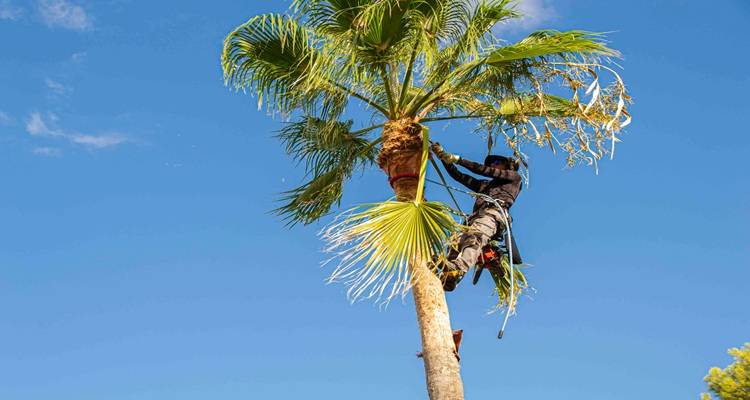
The average palm tree removal cost is between £250 and £650, depending on its size, accessibility, and the exact method of clearing the tree.
As you can see, the price that you pay is influenced by the height of the tree, but also by the thickness of the trunk and how complex the removal is going to be. A very tall palm tree in an urban garden is a lot trickier to cut down than a medium-sized tree in a large, rural environment.
Which palm tree removal method are you considering?
Straight felling
0 votes - 0%0% of votes
Sectional dismantling
2 votes - 40%40% of votes
Mechanical removal
2 votes - 40%40% of votes
I'm not sure yet
1 votes - 20%20% of votes

5 votes
See results
Hide results
Palm Tree Removal Prices
Assessing the cost and timescale of removing a palm tree depends on numerous factors, not least of which is the size of the tree. The height, thickness, and location of the palm tree all contribute to how much you pay for its removal.
| Tree Size | Average cost | Estimated duration |
|---|---|---|
| Small (2 to 3m) | £150–£250 | 1 to 2 hours |
| Medium (3 to 5m) | £250–£450 | 2 to 3 hours |
| Large (5 to 6m) | £450–£750 | 3 to 5 hours |
| Very tall (6m+) | £750–£1,200+ | 1 day |
| Stump grinding | £450–£600 | 1 day |
Want a custom price?
Post your job
Labour Costs and Timescales
Labour is usually the biggest part of the overall palm tree removal cost. Most tree surgeons will work in teams of three people for safety and efficiency, so this price may rise according to how many people are needed for your palm tree removal.
| Tree Size | Duration | Labour Cost |
|---|---|---|
| Small (2 to 3m) | 1 to 2 hours | £45–£90 |
| Medium (3 to 5m) | 2 to 3 hours | £90–£135 |
| Large (5 to 6m) | 3 to 5 hours | £135–£225 |
| Very tall (6m+) | 1 day | £375+ |
Want a custom price?
Post your job
Supply Costs
The tools and equipment used by professional tree surgeons are quite different from those used by most people in their gardens. The focus of most of the items is the safety of the arborist and the proper felling of the tree.
Chainsaws
Chainsaws come in a variety of sizes, brands, and power options. For arborists, however, there are specialist chainsaws specifically designed for in-tree work. These chainsaws feature top rather than rear handles, excellent power-to-weight ratio, safety features such as lanyard attachment points and are lightweight and compact for ease of use.
Battery-powered chainsaws are becoming more popular with arborists as they are quieter, have low vibrations and zero emissions, making them perfect for residential areas and urban settings.
Climbing Ropes and Harnesses
An important part of tree surgeons' equipment is their climbing gear, consisting of ropes, harnesses, carabiners, and pulleys.
It's essential for arborists to be able to work safely in the canopy, or, as with a palm tree removal, to be securely attached to the trunk while dismantling the tree. The equipment allows the tree surgeon the freedom to move around the tree while remaining safe and secure.
Safety Helmets and Protective Clothing
Safety helmets and protective clothing are vital for tree surgeons. A chainsaw helmet with a visor and ear protection is typically worn to protect against high-speed debris and loud operating noise.
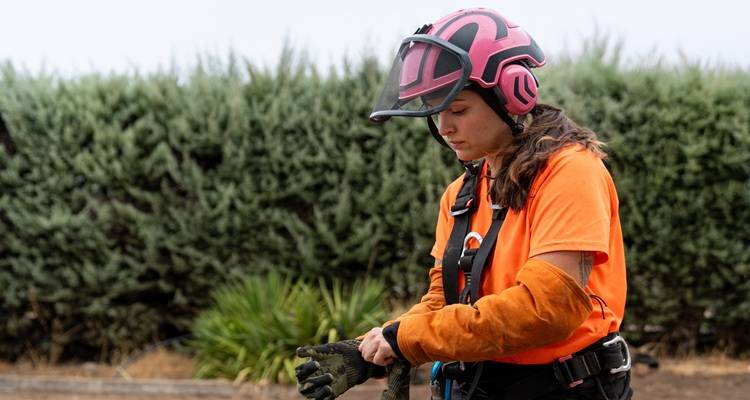
Arborists working in the tree must wear chainsaw trousers with all-round leg protection, chainsaw boots, and protective gloves. High-visibility clothing is also recommended.
Rigging Equipment for Controlled Branch Removal
To safely remove branches and trunk sections, tree surgeons use specialised rigging equipment comprising high-strength ropes, pulley blocks, friction devices, slings, and carabiners.
This equipment is specifically designed to withstand heavy loads and offers the operator-controlled lowering of the palm tree's trunk sections.
Wood Chippers for Disposing of Palm Fronds
Palm fronds take a long time to decompose, so if you're considering putting them on your compost heap, shredding them first is advisable. The easiest and quickest way to do this is with a wood chipper.
A drum-style or heavy-duty chipper is best for palm fronds due to their fibrous nature, as they can quickly clog up disc-style machines.
Stump Grinders
A stump grinder uses a vertically-mounted metal cutting disc with sharp teeth to chew through tree stumps. The disc spins at high speeds and is powered by a robust motor, reducing the stump to a pile of shredded mulch.
You can hire a walk-behind stump grinder for DIY use or a larger, tracked grinder with an operator for heavy-duty work.
Cutting down palm trees is very rarely a suitable job for homeowners. The way a palm tree grows means that most of its energy goes into making it taller, as there are no branches. As a result, it can become very tall and unmanageable. In these cases, a professional with specialist equipment and proper safety training is needed to take it out.
On the other hand, removing a 2 to 3-metre-tall palm tree is possible as a DIY task using basic garden tools.
Additional Costs
You may need to budget for extra services when removing a palm tree, especially if stump grinding, waste disposal, access equipment, or garden clean-up are not included in your original quote.
| Additional Cost | Average Cost |
|---|---|
| Stump grinding | £150–£200 |
| Waste disposal | £50–£150 |
| Garden clean-up | £100–£200 |
| Cutting trunk into logs | £50–£100 |
| Tree health inspection | £150–£450 |
| Cherry picker hire | £300 |
| Mobile crane hire | £700 |
Want a custom price?
Post your job
- Stump Grinding or Stump Removal — This may be needed if you want the stump removed below ground level so the area can be replanted or landscaped. Stump grinding is not typically included in the removal of a palm tree unless you request it.
- Waste Removal and Disposal — Most professional tree surgeons or landscapers will offer waste removal of palm fronds, trunk sections, green waste, and other garden waste as part of their services. However, when you request a quote, it's important to check if this is included or whether you need to budget for separate garden waste removal costs at around £200.
- Garden Clean-up After Removal — Cutting down a palm tree will undoubtedly leave some debris or track marks on your garden. Getting the garden cleaned up after the tree removal is considered an extra and will be charged separately by most tree surgeons or landscapers.
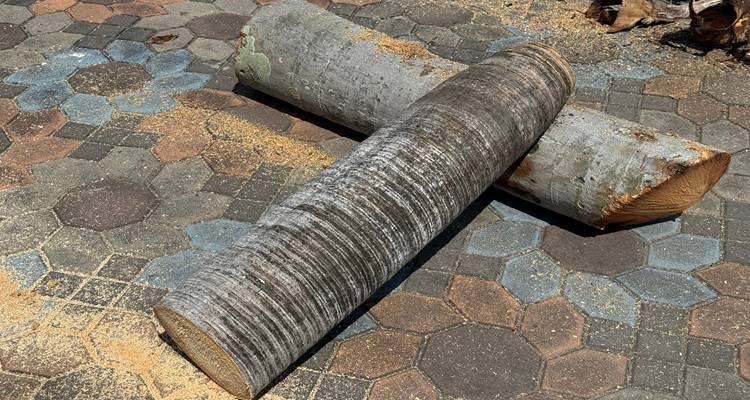
- Cutting the Trunk into Logs — If you want to keep the palm tree trunk for garden use, you may need to pay extra for it to be cut into manageable sections. Palm wood is not useful as firewood, but the logs can be hollowed out and used ornamentally in the garden.
- Tree Health Inspection — It may be that you're not sure about the condition of your palm tree and want to have it assessed before making a decision. An arborist inspection can help confirm whether the palm tree is diseased, unsafe or worth removing.
- Cherry Picker or Crane Hire — Very tall palm trees or trees close to buildings may need specialist access equipment, which can increase the overall cost.
Cost Factors for Palm Tree Removal
No two palm tree removal projects will be the same, but there are common factors which influence the cost. Knowing what's involved allows you to budget accordingly and removes any uncertainty.
Height of the Palm Tree
As palm trees don't have branches, their energy goes into growing the trunk. You may end up with a tree in excess of 12 metres, although it can take 20 to 50 years to reach this height. The taller the tree, the more work is needed to remove it, increasing your costs.
Trunk Diameter
Similarly, the trunk diameter adds to how much you'll pay for removal. A thick trunk means heavier sections of palm wood, which need to be cut, handled, and removed carefully. This can increase labour time, especially if the tree is being dismantled in sections rather than felled in one piece.
Access to the Tree
Difficult access invariably adds to your costs as more work needs to be done manually, such as bringing in equipment or removing the waste. If you can improve access, perhaps by removing fence panels, it may reduce your costs. For difficult-to-reach areas, it may be necessary to hire a cherry picker to access the palm tree, and this too adds to your budget.
Location Near Buildings or Fences
Any tree that is located close to fences, sheds, greenhouses, power lines, or other structures needs to be carefully removed. Protecting the surroundings means slower and often manual extraction, pushing up the price of removal. If the palm tree is close to power lines, specialist help may be needed.
Whether the Tree Must Be Removed in Sections
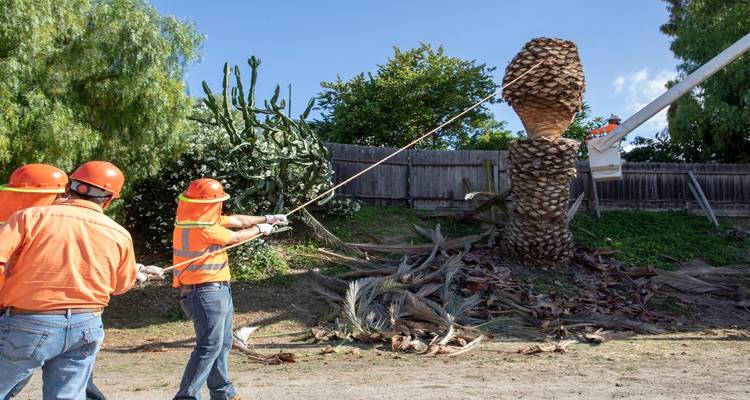
The palm's location, such as in an urban garden or without a clear space for felling in one piece, means that the tree has to be removed in sections. This is a labour-intensive and slower process than simply cutting down the entire tree, and adds to the cost of removal.
If the tree is near any roads, public footpaths, or neighbouring properties, it also requires extra care and possibly traffic management measures. These added safety requirements can increase both the labour costs and the overall price of the job.
Waste Disposal Requirements
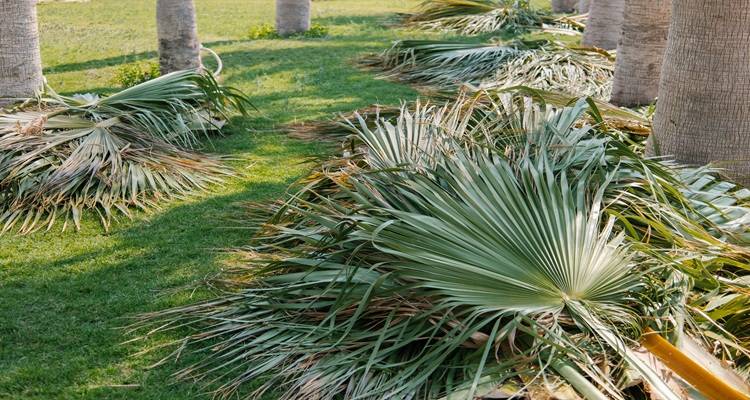
Palm fronds and even the trunk are not particularly compost-friendly, so most people have the waste removed and disposed of, which is an extra cost. Exactly how much you pay will depend on the volume of waste and your location.
Stump Removal Requirements
After the palm tree has been cut down, the stump and roots may remain in the ground. Stump grinding or full stump removal is not typically included in the quote for palm tree removal unless you ask for it, so it can increase the total cost of the job.
Stump grinding is a popular option because it removes the stump below ground level and leaves the area looking tidier. Full stump removal may be needed if you want to remove more of the root system, replant the area, lay turf, install paving, or carry out other landscaping work.
Regional Labour Rates
Labour rates for most trades vary across the different regions of the UK. London and the southeast are generally more expensive than other areas, such as the north of England.
If your palm tree is in close proximity to overhead power lines or other structures, it's important to seek professional help to remove it. While the location of the tree will increase the overall price of removal, safety is paramount.
Types of Palm Tree Removal
There are three ways of safely removing a palm tree: straight felling, sectional dismantling, and mechanical removal.
Straight Felling
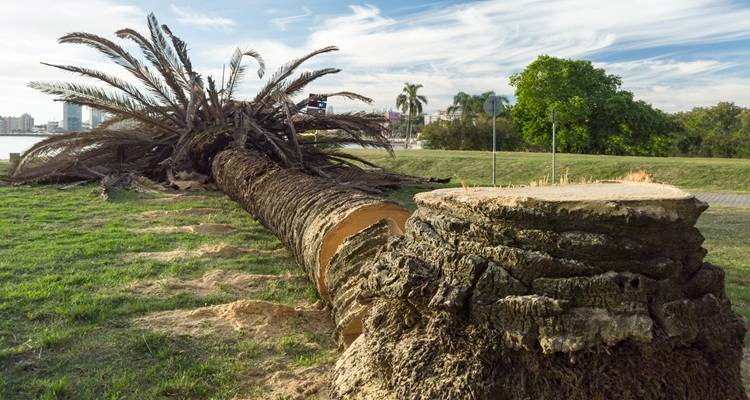
Straight felling can only be done when there is enough open space for the tree to land safely and there are no nearby structures or obstacles. The palm is cut at the base and falls in one piece.
Pros
- ✔ Fastest way to remove a palm tree.
- ✔ Cheaper than sectional dismantling.
- ✔ Less labour required.
- ✔ Ideal for open spaces.
Cons
- ✖ Limited to large, open gardens.
- ✖ High risk of damage if the tree falls incorrectly.
- ✖ The weight of a falling object can damage the ground or surrounding plants.
Sectional Dismantling
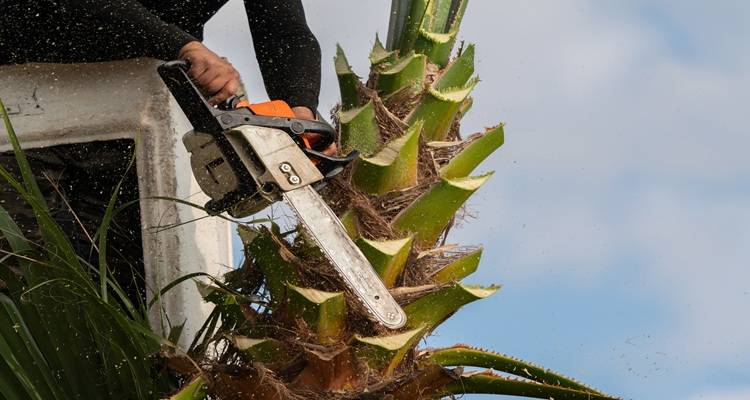
As the name implies, sectional dismantling involves an arborist cutting the palm down piece by piece. The tree surgeon climbs the tree using a safety harness and personal protective equipment (PPE). They secure a section with ropes, rigging, and pulleys, cut through the trunk, and with help from the ground, lower each severed section carefully.
Pros
- ✔ Safest way to remove a palm tree in confined spaces or close to structures.
- ✔ Very controlled process.
- ✔ Reduces damage on the ground to turf or other plants.
- ✔ Best for weakened or diseased trees which can fall unpredictably during felling.
Cons
- ✖ Time-consuming
- ✖ More expensive than straight felling
- ✖ Requires specialist climbing skills
- ✖ Sections can be heavy
Sectional dismantling is used in small gardens and urban locations where a straight fell is impossible. It's also used when the tree is close to power lines. Costs for this method can be 50% to 100% more expensive than straight felling, and prices can be between £1,000 and £2,500.
Mechanical Removal
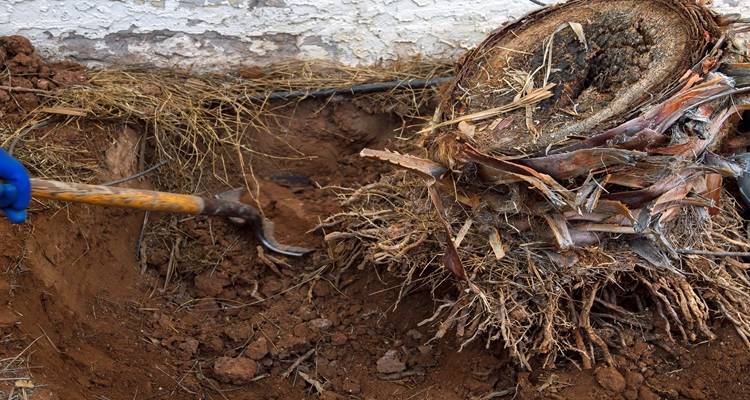
A grapple saw can be used to mechanically remove a palm tree. This powerful machine combines a hydraulic chainsaw with a mechanical grabber. The operator can grab the tree trunk, cut it, and pick it up, all in one motion. It makes felling trees very safe as it can be done from a distance and from the safety of a vehicle's cab.
Pros
- ✔ Very fast and efficient method.
- ✔ Safe and removes the need for anyone to climb the tree.
- ✔ Reduced labour requirements.
- ✔ Maximum control over the tree's removal.
- ✔ Minimises any damage to the surroundings.
Cons
- ✖ Requires open space and good access.
- ✖ Needs a qualified operator, which adds to costs.
The cost of hiring a grapple saw is between £1,000 and £3,000 per day, including the machine, operator, and an assistant. Prices will vary depending on your location and the complexity of the work.
Overall, the method of palm tree removal that you choose will affect the final cost and timescale of the job.
Alternative Options to Palm Tree Removal
There are potentially alternatives to removing a palm tree, such as pruning, removing dead fronds, reducing the crown or, for smaller palms, relocation.
Palm Tree Pruning
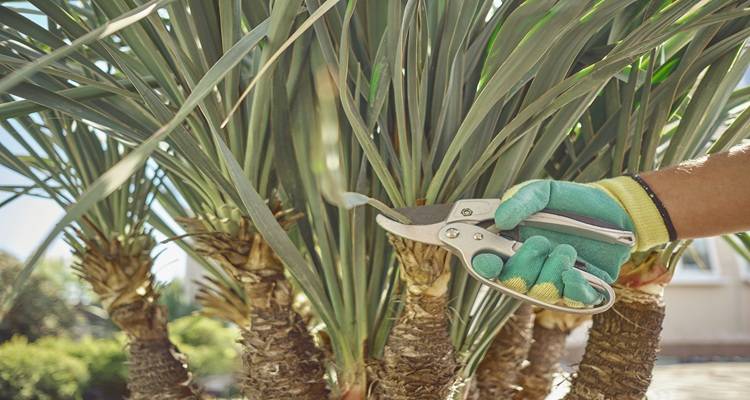
Pruning a palm tree should be restricted to removing brown fronds and seed or flower pods. Taking out any green fronds can weaken the palm as they are responsible for nutrient production. Over-pruning can kill a palm tree, so concentrate on downward hanging dead fronds that are around the 9 and 3 o'clock positions.
Removing Dead Fronds
As mentioned, dead, damaged and brown fronds should be removed from a palm tree. You can also remove the seed and flower pods. The fronds should be cut a couple of inches away from the trunk with clean, sharp loppers or a pruning saw. They're quite tough, and you should wear gloves to protect your hands.
Crown Reduction
True palms cannot be reduced at the crown, as this is their only growth point and cutting it will kill your palm. However, some palm-like plants, such as cordyline, can be reduced to control their height and spread. Make sure you know what type of plant you have before attempting any crown reduction.
Tree Relocation
Transplanting a palm tree is relatively easy due to its root ball, as opposed to taproot or lateral roots. The best time to relocate a palm tree is late spring or early summer. So if the palm is in an undesirable location, you can move it rather than cutting it down.
Ask a Trade
Got a question that only a tradesperson can answer? We have thousands of trades ready to answer any question you may have.
Ask your question

Hiring Contractors Checklist for Palm Tree Removal
Removing a palm tree is a big undertaking, especially for tall specimens or in a confined space. Below are some of the things you should ask before hiring a contractor for palm tree removal.
- Have you received more than one quote? It is recommended that you get at least 3 quotes for palm tree removal so you can compare prices, services, and what is included.
- Do they have verified qualifications? Tree surgeons who are accredited will typically display the Arboricultural Association Approved Contractor logo on their paperwork and website. You can also check whether they hold an International Society of Arboriculture (ISA) credential on their website.
- Are they experienced with palm tree removal? Palm trees can be tall, heavy and difficult to dismantle safely, so look for a contractor who has handled similar jobs before.
- Do they have public liability insurance? This is important in case nearby fences, sheds, patios, driveways, neighbouring gardens, or buildings are damaged during the work.
- Will they check whether the tree is protected? If the palm tree is covered by a Tree Preservation Order (TPO) or is in a conservation area, you may need notice or consent from your local council before removal work starts.
- Which removal method will they use? Ask whether the palm tree can be felled in one piece or whether it needs to be dismantled in sections, as this can affect the total cost.
- Is waste removal included? Palm tree removal can create bulky fronds, trunk sections, and garden waste, so it's best to confirm whether disposal, chipping, or trunk cutting is included.
- Will stump grinding or stump removal cost extra? Removing the palm tree does not always include removing the stump, so ask whether this is included or priced as an add-on.
Removing Palm Tree Stumps
When a palm tree is cut down, you will be left with a stump in the ground. Some people are happy to live with it, but if you prefer to remove it, there are a few options open to you. You can compare typical tree stump removal prices before deciding whether to include this in your quote.
Stump Grinding
The fastest and most efficient method of removing a palm tree stump is to use a stump grinder. It will chew through the stump below ground level, and you can then replant the area however you want. If you are redesigning the space afterwards, it may also be worth budgeting for wider landscaping costs which cost around £505 on average.
Full Stump Removal
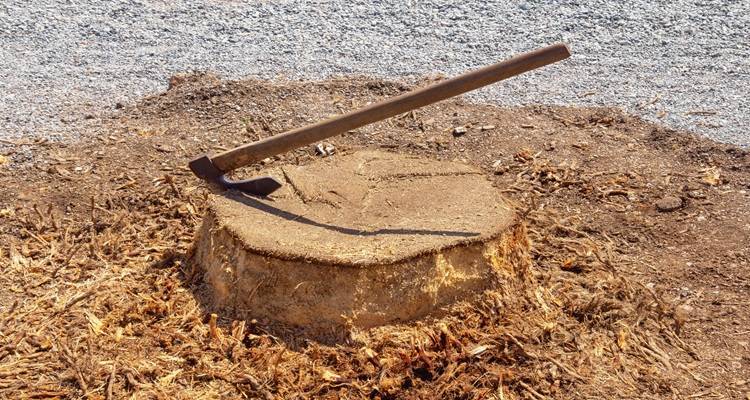
It's also possible to have the stump completely removed through excavation by a mini-digger. Remember that once the root ball is out, there will be a large void which will need to be backfilled with soil.
Chemical Stump Treatments
If you want to try chemical removal, always choose a stump killer sold for home garden use, and apply it following the instructions provided. Household substances are not always legal or safe to use. Holes are drilled into the stump in a grid pattern, and the chemicals are applied, allowing them to spread rapidly through the wood.
FAQs
Do I Need Permission to Remove a Palm Tree?
You usually don't need permission to remove a palm tree unless it is covered by a Tree Preservation Order (TPO). If a TPO is in place, you must get approval from your local council before arranging the work, as unauthorised tree removal can lead to fines and extra costs.
Can I Remove a Palm Tree in a Conservation Area?
If your property is in a conservation area, palm trees with a trunk diameter of more than 75mm are automatically protected. You will usually need to give your local council at least 6 weeks' notice before arranging removal, which may affect how quickly the work can be booked, so it is worth checking before getting quotes.
What Is the Cheapest Way to Remove a Palm Tree?
The cheapest option is usually straight felling, but this is only possible if there is enough open space for the palm tree to fall safely. You may also reduce costs by keeping the trunk sections, clearing small debris yourself, or comparing quotes from different local tree surgeons.
Can I Remove a Palm Tree Myself?
A small palm tree of around 2 to 3 metres may be suitable for DIY removal if you have the right tools and can work safely. Taller palm trees should usually be removed by a professional, as mistakes can lead to injury, property damage, or higher repair costs.
Is Pruning Cheaper Than Removing a Palm Tree?
Pruning is usually cheaper than full palm tree removal if the tree is healthy and only has dead fronds or seed pods that need removing. However, pruning will not reduce the height of a true palm tree, so removal may still be needed if the tree has become unsafe or too large.
What Time of Year Is Cheapest to Remove a Palm Tree?
While the time of year doesn't affect the palm tree itself, the cost of removing it will be lower in the winter as the demand for tree surgeons is reduced at this time of year. Costs can be 15% to 25% lower when compared to summer rates.
Can the Council Remove a Palm Tree for Free?
The council will usually only remove a tree for free if it is on council-owned land. If the palm tree is on your private property, you will normally need to pay for removal yourself. The council may deal with a dangerous tree on your behalf, but if it is on your property they may charge you for the service.