Builders
 Carpenters
 Electricians
 Flooring Specialists
 Gardeners
 Handymen
 Heating Engineers
 Painters & Decorators
 Plasterers & Renderers
 Plumbers
 Roofers
 Tilers
 my
myTree Removal Cost
At a Glance
- The average cost of removing a tree is £500.
- Tree removal will usually take between 1 and 2 days.
- NEW! Check out our tree removal cost calculator, which will give you a quick, precise estimate of the cost of tree removal.
- Tree removal prices for different types of trees.
- How long it will take a tree surgeon to remove a tree, and the cost factors involved, such as tree stump removal costs.
- How to find a local tree surgeon using MyJobQuote.
Get free estimates
Are you a trade? Get more work today!
Looking to find out how much the average tree removal costs in the UK?
The cost of tree removal relies heavily on the size of the tree and can be anywhere between £150 and £4,800, with the average tree felling cost being £500.
Would you like to find out the cost of cutting down a tree, exactly?
Then look no further, as this complete guide will provide you with everything you need to know, such as how much tree surgeons charge in different areas of the UK, what impacts how long it takes to cut down a tree, and more.
Ready for a quote?
We have a range of tree surgeons ready to offer you a free tree removal quote!
So, why not take a look below for more information?
Tree Felling Cost Calculator
£500
Table of Contents
- How Much to Cut a Tree Down?
- Why Remove a Tree?
- Tree Felling Cost by Tree Type
- Tree Surgeon Cost
- What Impacts Tree Removal Costs?
- Additional Tree Removal Costs
- How to Reduce the Cost of Felling a Tree
- Tree Removal Timescales
- What's Involved in Felling a Tree?
- Building Regulations and Planning Permission for Tree Felling
- Checklist: Hiring a Tree Surgeon to Remove a Tree in the UK
- FAQs
How Much to Cut a Tree Down?
Whether you're looking to cut down a tree, have one felled by a professional, or simply want to understand tree cutting costs before getting quotes, this guide covers everything you need to know.
What type of tree removal do you require?
English Oak
14 votes - 8%8% of votes
Sycamore
20 votes - 11%11% of votes
Silver Birch
17 votes - 10%10% of votes
Fruit Tree (apple, pear, cherry, etc)
28 votes - 16%16% of votes
Hardwood (Beech, Ash, Chestnut)
8 votes - 4%4% of votes
Conifer/Pine
72 votes - 40%40% of votes
Palm/Other
19 votes - 11%11% of votes

178 votes
See results
Hide results
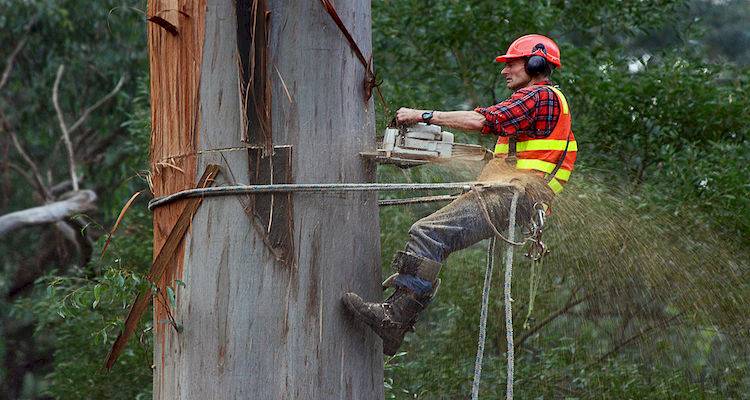
The cost of cutting down a tree (sometimes called tree felling or tree removal) can vary significantly depending on the height, diameter, and species of the tree.
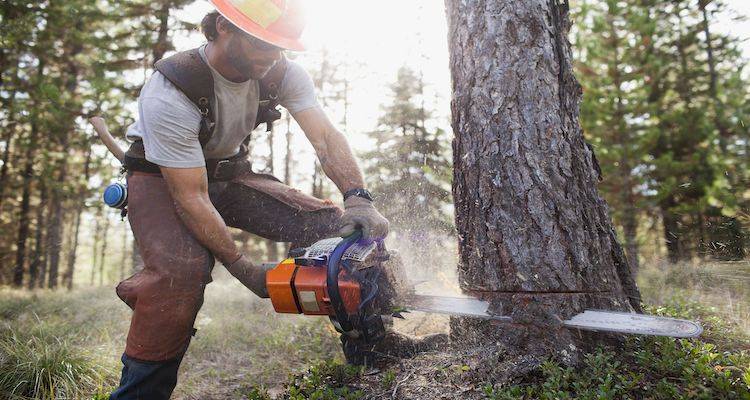
The ease of access to the tree also plays a big part in the job's overall cost. The more difficult it is to get to, the longer the job will take, which will increase the cost.
I have a tree in my front garden that needs removing. It overhangs a footpath, so do I need any permits or insurance before getting it removed?
"You will only need permission to remove a tree if it’s in a conservation area and has a TPO (tree preservation order)."
Tree Cutting Prices
As we've mentioned, the cost of tree removal can vary greatly depending mostly on the size of the tree and the ease of access to the tree.
The table below highlights the average cost of tree removal for different tree sizes:
| Tree Removal Work | Average Cost |
|---|---|
| Small tree felling (less than 25ft) | £150–£350 |
| Medium tree felling (25 to 50ft) | £400–£700 |
| Large tree felling (50 to 75ft) | £650–£1,200 |
| Extra-large tree felling (over 75ft) | £1,200–£4,800+ |
Want a custom price?
Post your job
Cost of Removing Multiple Trees
Having several trees removed at once usually works out cheaper per tree than booking separate visits, because the tree surgeon only sets up, travels, and clears the waste once. A team charging £400 to £700 per day can often fell several small or medium trees in a single day, so grouping the work together is normally the most cost-effective approach. It's worth asking for one quote covering the whole job rather than pricing each tree on its own.
Emergency Tree Removal Cost
If a tree has come down in a storm, is leaning dangerously, or is blocking access, you may need it removed urgently. Emergency and out-of-hours call-outs cost more than planned work, as the job is often more complex and has to be fitted in at short notice. A fallen or unstable tree can also be trickier and riskier to deal with, which adds to the labour time. If the tree has damaged your property, it's worth checking whether your home insurance will cover part of the cost.
Why Remove a Tree?
Tree removal isn't always the right answer, so it's worth being clear on why you're considering it. Common reasons to remove a tree include:
- The tree is dead, dying, or diseased and poses a safety risk.
- It has structural damage or is leaning after storm damage.
- Its roots are threatening drains, patios, or your home's foundations.
- It's blocking too much light or outgrowing the space.
- It's obstructing or overhanging a building, road, or boundary.
In many cases, though, a less drastic option will do. If the tree is healthy, consider whether crown reduction, pruning, or thinning would solve the problem while keeping the tree. These options are usually cheaper and less disruptive than full removal. If you're unsure, an arborist can advise whether removal is genuinely necessary.
Tree Felling Cost by Tree Type
Let's take a closer look at some estimated tree removal costs based on the species of tree:
| Tree Species | Average Cost of Removal |
|---|---|
| English Oak Tree | £2,800–£4,800 |
| Common Beech Tree | £1,200–£2,500 |
| Ash Tree | £600–£1,500 |
| Horse Chestnut Tree | £800–£2,000 |
| Sycamore Tree | £900–£3,400 |
| Conifer Tree | £250–£1,500 |
| Pine Tree | £400–£1,500 |
| Holly Tree | £250–£650 |
| Palm Tree | £250–£650 |
Want a custom price?
Post your job
English Oak Tree Removal Cost
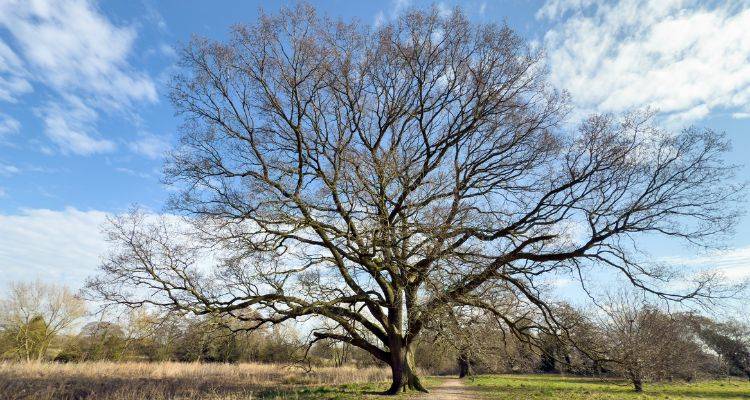
- Cost — around £2,800 to £4,800.
- How to Identify — large, lobed leaves with smooth edges and easily recognised acorns. Usually found in well-drained, sunny soils and can reach around 40m.
- Removal Considerations — oaks are large, dense hardwoods, so felling is labour-intensive and often at the top of the price range. Mature oaks may also be protected by a TPO, so check before any work.
Common Beech Tree Removal Cost
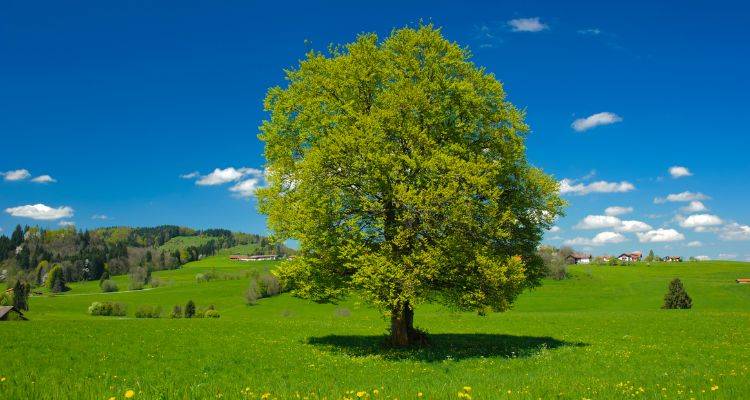
- Cost — around £1,200 to £2,500.
- How to Identify — oval leaves with wavy edges, thin grey bark, and seeds held in green, prickly cases. Common in southern and central England, growing to around 40m.
- Removal Considerations — beech are tall, broad hardwoods that can live for centuries, so mature specimens are a substantial job. Their wide canopy often means careful dismantling near buildings.
Ash Tree Removal Cost
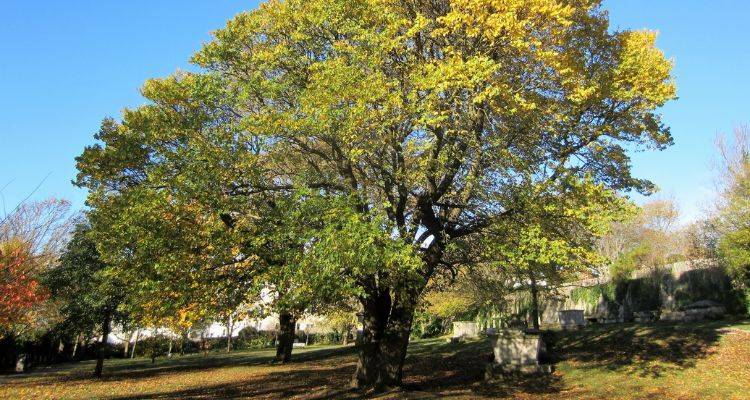
- Cost — around £600 to £1,500.
- How to Identify — leaves made up of 3 to 6 pairs of small, serrated leaflets, plus distinctive large black buds in winter. Common across the UK in deep, well-drained soils.
- Removal Considerations — many ash trees are affected by ash dieback disease, which makes the wood brittle and more dangerous to fell, so professional removal is strongly advised.
Horse Chestnut Tree Removal Cost
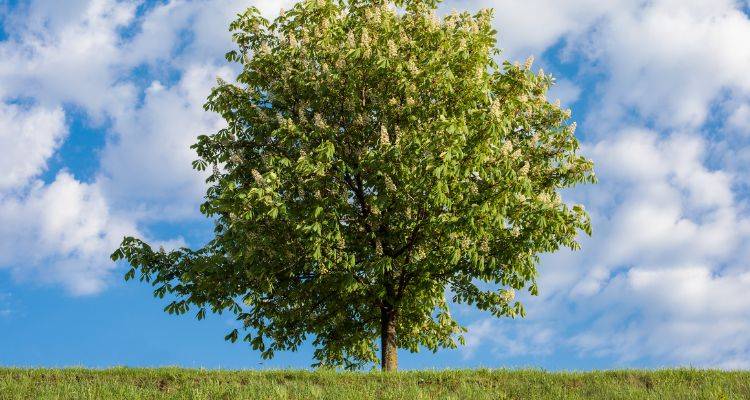
- Cost — around £800 to £2,000.
- How to Identify — large, palmate leaves with 5 to 7 leaflets, white flower clusters in spring, and conkers in green, spiky cases. Often reaches around 40m.
- Removal Considerations — a large, spreading canopy and heavy limbs mean sections usually have to be lowered carefully, especially in gardens or near paths.
Sycamore Tree Removal Cost
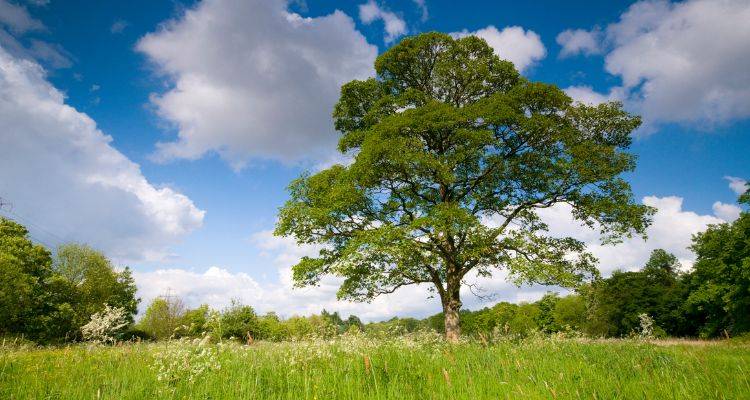
- Cost — around £900 to £3,400.
- How to Identify — palmate leaves on red stalks, scaly bark, and winged "helicopter" seeds. A fast-spreading tree that grows in most soils and reaches around 35m.
- Removal Considerations — sycamores grow quickly and seed prolifically, so removal is often chosen to stop them spreading across a garden.
Conifer Tree Removal Cost
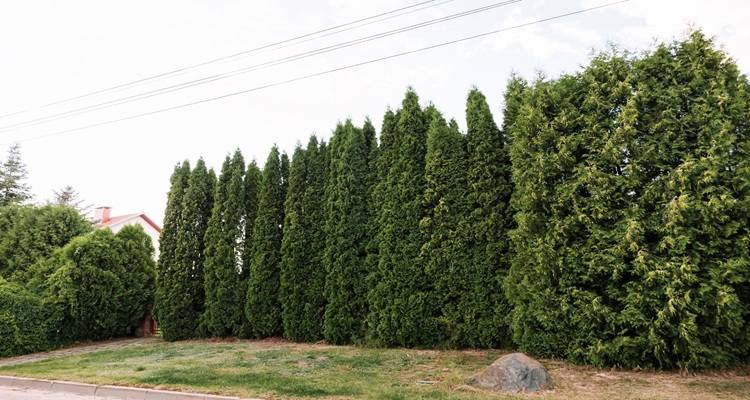
- Cost — typically £250 to £1,500, depending on height and condition.
- How to Identify — evergreens with needle or scale-like foliage, among the most common trees in UK gardens and often planted as Leylandii hedging.
- Removal Considerations — conifers tend to have shallower roots than species like oak, which can make removal more straightforward, though large or overgrown Leylandii are still a big job where access is limited. See our conifer tree removal cost guide for more information.
Pine Tree Removal Cost
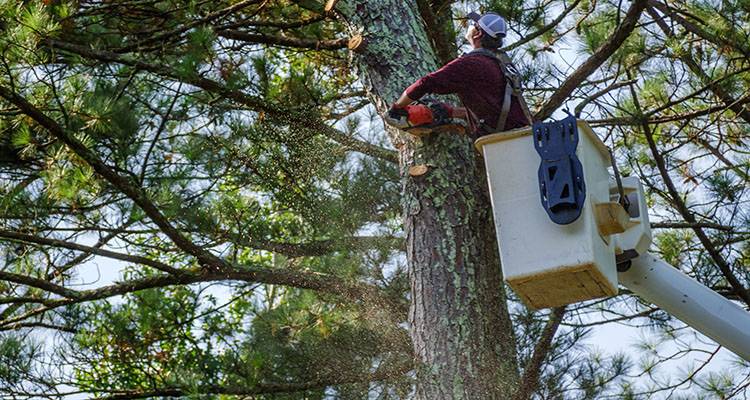
- Cost — typically £400 to £1,500, depending on height and access.
- How to Identify — tall evergreens with long needle-like foliage and cones, common in UK gardens and parks.
- Removal Considerations — pines can reach significant heights and have deep, spreading roots, which adds to the complexity. See our pine tree removal cost guide for more about the costs and considerations of pine tree removal.
Holly Tree Removal Cost
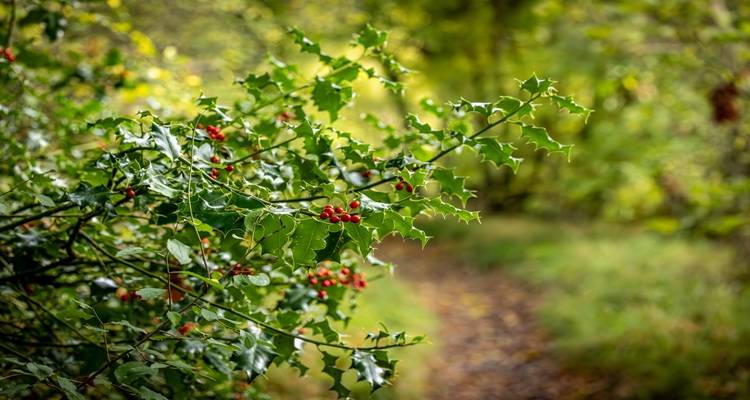
- Cost — typically £250 to £650.
- How to Identify — dense evergreen with glossy, spiky leaves and red berries, common in gardens and hedgerows.
- Removal Considerations — smaller hollies are relatively easy to remove, but mature specimens are dense and slow to cut, taking more time and effort. Our holly tree removal cost guide covers the job in more detail.
Palm Tree Removal Cost
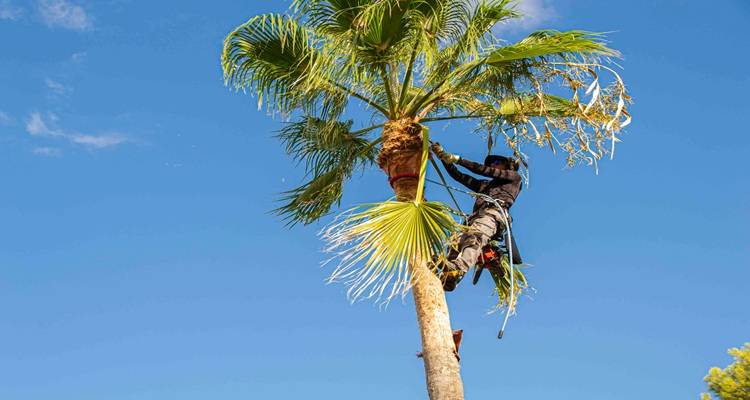
- Cost — typically £250 to £650, depending on height and access.
- How to Identify — distinctive fan or feather-shaped fronds on a fibrous, single trunk, mostly found in milder southern gardens.
- Removal Considerations — the fibrous trunk structure means palms are handled differently to typical hardwoods, so it can be more specialist work. Visit our palm tree removal cost guide for more information if you have a palm tree that may need removing.
Tree Surgeon Cost
How much a tree surgeon charges depends on the type of tree, the difficulty and access of the job, and where you are in the UK. Here are the main tree surgeon costs to budget for:
- Day Rate — a qualified tree surgeon typically charges £200 to £350 per day, which works out at an hourly rate of roughly £25 to £45.
- With a Team — most tree surgeons work with one or two labourers, so for a full crew you can expect to pay around £400 to £700 per day.
- London and Cities — rates are higher in London and other busy areas, usually £50 to £100 per day more.
- Minimum Call-Out — some set a minimum charge of around £150 to £250 to make a small job worthwhile, though most removals cost more than this anyway.
What Impacts Tree Removal Costs?
There are several factors that could affect the overall cost of removing a tree.
Below is a list of all the main cost factors that impact the quotes that you'll receive from tree surgeons:
- Size of the Tree — Larger trees will take much longer to work on than smaller trees, so you can expect larger trees to cost more. The longer the job takes, the more you will have to pay for labour.
- Type of Tree — Species matters as well as size. Dense hardwoods like oak are heavier and slower to cut than softer species, and trees with deep or wide-spreading roots are harder to deal with if the stump and roots also need removing.
- Ease of Access — If the tree is difficult to access, this may require extra work, and the job will likely take much longer to complete. With this in mind, trees that are more difficult to access will end up costing more overall to remove.
- Proximity to Buildings and Obstacles — A tree close to your home, a neighbour's property, fences, or power lines can't simply be felled in one piece. It has to be dismantled in sections, which takes longer and adds to the cost.
- Difficulty of the Job — Your tree surgeon may come across some obstacles, such as roots in difficult places or stubborn tree sections that are much harder to remove. The more difficult the job is to complete, the longer it will take and, therefore, the more it will cost overall.
- Condition of the Tree — Decaying or diseased trees can be harder and more expensive to remove than healthy ones. Weak branches may fall unpredictably during felling, requiring additional care and safety measures. If the tree is diseased, specialist disposal may also be necessary to prevent the spread of infection to nearby trees.
- Location in the UK — Those based in London can expect to pay around £50 to £100 more per day for a tree surgeon's time than those located in other parts of the UK.
Ask a Trade
Got a question that only a tradesperson can answer? We have thousands of trades ready to answer any question you may have.
Ask your question

Additional Tree Removal Costs
You may need to think about several additional costs when it comes to tree removal:
Tree Stump Removal Cost
Stump grinding is the most common method of tree stump removal, and it involves using a machine to grind the stump down. It doesn't remove the roots, which are left to decay over time. That said, some species can resprout from their roots, and continued underground growth may affect drains or foundations if it isn't dealt with. The cost of tree stump grinding is between £60 and £400.
Where roots are damaging drains, patios, or foundations, root removal may be needed as a separate job. The cost of tree root removal depends on the root system and access.
You don't always have to remove the stump, though, as some homeowners keep them as garden features to save on the extra cost.
Garden Waste Removal Cost
Many tree surgeons include garden waste removal in the total price, but not always, so it's worth clarifying when you get a quote. Where it's charged separately, expect it to be between £90 and £500, depending on how much waste the job generates.
Tree Survey Cost
For a tree close to a building or boundary, it may be worth commissioning an arboricultural survey. An arborist can assess whether removal is necessary, flag any risk to nearby structures, and confirm whether the tree is protected by a TPO.
The average cost of a tree survey is between £300 and £600, and one may also be needed if you're extending your property or building near an existing tree.
Council Applications and Legal Fees
If your tree is subject to a TPO or sits within a conservation area, you'll need to submit a formal application to your local council before any work can take place. This is free, but you have to tell the council 6 weeks before any work on trees in conservation areas, and trees with TPOs need written consent from the council before work can begin.
In England and Wales, cutting down or destroying a protected tree without permission can lead to unlimited fines, so always check your tree's status before hiring a tree surgeon.
Tree Crown Reduction Cost
If full removal isn't necessary, crown reduction is a less disruptive alternative that removes the outer branches to reduce the tree's size and weight. The average cost of tree crown reduction is between £400 and £900, depending on the tree's size and condition.
We have a decaying TPO oak about 7m from a conservatory on clay soil. We've been advised to have it felled, but are concerned about ground heave once the tree is removed. Is this a significant risk?
"It's always best to follow the advice of the professionals. Once the tree is felled and the stump is ground or killed off, the root system will no longer reach for moisture. Any residual moisture would dissipate into the area where the tree was, leaving the risk on the very low end of the scale. It's highly unlikely to cause issues once removed."
How to Reduce the Cost of Felling a Tree
There are a few simple ways to keep tree removal costs down without cutting corners on safety:
- Get Several Quotes — prices vary between contractors, so compare at least three itemised quotes before booking.
- Book in Winter — demand is lower between November and February, which often means more competitive pricing.
- Group Jobs Together — having several trees or other garden work done in one visit spreads the set-up and waste costs.
- Keep the Waste — ask to keep the logs for firewood or handle the waste yourself to save on disposal.
- Improve Access — clearing the area and moving obstacles yourself can reduce the labour time you're charged for.
- Only Remove What You Need To — crown reduction or pruning may solve the problem for less than full removal.
Tree Removal Timescales
If you're a homeowner looking to remove a single average-sized tree, then you should expect a tree removal job to take between 1 and 2 days.
But this can vary significantly depending on:
- The type of tree.
- How large the tree is.
- Whether stump removal, stump grinding, or root removal is required.
- If the work involves diseased or damaged trees.
- Ease of access to the tree that you want to cut down.
The table below will give you a better idea of what to expect:
| Tree Removal Work | Estimated Time |
|---|---|
| Removing a small tree (less than 25ft) | Half a day |
| Removing a medium tree (25 to 50ft) | 1 day |
| Removing a large tree (50 to 75ft) | 2 days |
| Removing an extra-large tree (over 75ft) | 5 days |
Want a custom price?
Post your job
So, while it could take several days to remove a tree that's more than 75ft high (around 22m), it would be a lot quicker (and cheaper) if you're just looking for a tree surgeon to cut down a small tree that's 25ft high (around 8m).
After a tree surgery company is done felling a tree, should there be some sort of mess, or will it be totally clear?
"Depends what you have agreed with them, if they have agreed to take the waste away, normally they will have a chipper flatbed tipper, should be done professionally, if the agreement was just to fell the tree it’s down to the person to clear the mess."
What's Involved in Felling a Tree?
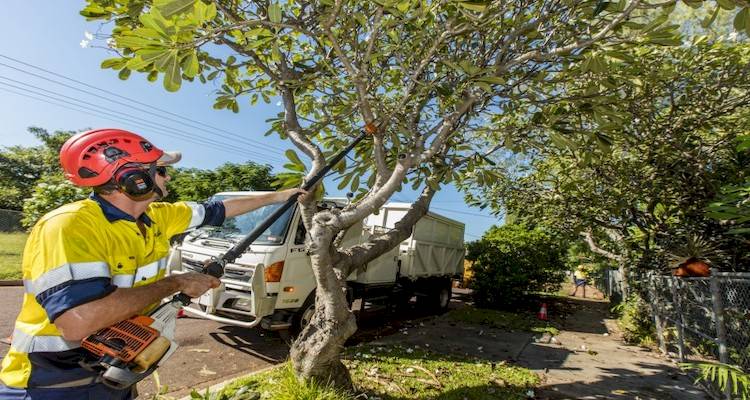
Removing a tree can be extremely dangerous if you don't put in the appropriate planning work. Planning is extremely important for tree removal, as you could risk having the tree fall directly onto your home or a neighbouring property.
For this reason, most homeowners choose to hire a professional tree removal service. With MyJobQuote, you can request several quotes from tree surgeons near you, that are fast, free, and with no obligation to go ahead.
Here is a brief overview of what's involved in professional tree surgery:
Before the Job
- Clearing the Area — Your tree surgeon will start by clearing the surrounding area so that they can easily run in any direction to avoid falling trees.
- Removing Obstacles — They will clear any potential obstacles lying around near the bottom of the tree.
- Planning the Fall — The tree surgeon will then identify the best way for the tree to fall, and plan escape routes in case anything goes wrong. They will have more than one option available if the tree doesn't fall in the desired direction.
- Inspecting the Tree — Before removal begins, they'll thoroughly inspect it to ensure no loose branches will fall during the removal process.
During the Job
- Felling the Tree — They will remove the tree using specialist equipment, with the method depending on the tree's size, access, and job complexity.
- Processing the Timber — The trunk, branches, and debris will be cut into sections. If you like, ask your contractor whether you can keep the logs as firewood.
After the Job
- Waste Removal — Waste disposal of all debris is often included in the total cost, but always clarify this when getting a quote.
- Checking the Area — Once complete, the contractor should check that no damage has been caused to your property or garden.
How much should I expect to pay to have a 30 foot elder tree felled in my rear garden in the West Midlands?
"It all depends on the amount of brush coming off the tree, and the amount and thickness of the logs. Every tree is different, and so is every price."
Building Regulations and Planning Permission for Tree Felling
You may need to seek permission before you carry out any tree removal on your property.
There are two major reasons why this might be necessary:
- If your tree is protected by a Tree Preservation Order (TPO).
- If your home is in a conservation area.
In addition, if the tree is on, or partially on, public land or a public highway, other permissions will need to be sought.
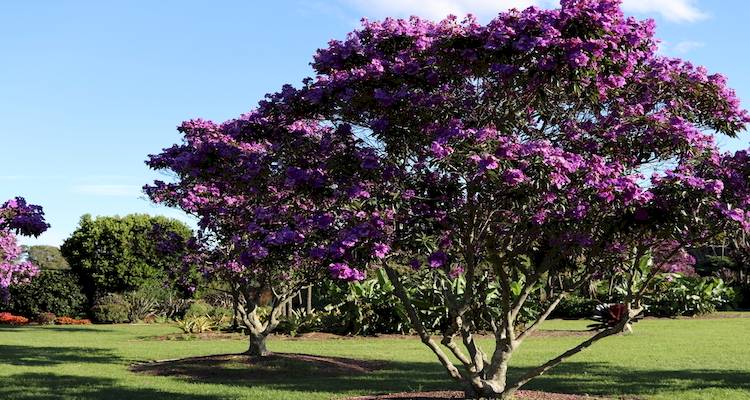
If you're uncertain whether any of these apply to cutting trees down on your property, you should check with your local authority.
When you get quotes from tree surgeons, they will also be able to provide you with more information about whether a particular tree is protected.
Wildlife Protections
Tree removal and pruning cannot take place if there is a risk it will harm an active bird's nest or other species such as dormice or bats. These species are protected year-round, but the main season for birds nesting is from March until the end of August.
Under the Wildlife and Countryside Act 1981 in Great Britain and the Wildlife (Northern Ireland) Order 1985 in Northern Ireland:
- You cannot take, injure, or kill any wild bird from a nest.
- You cannot take, damage, or destroy a wild bird nest, either while it is being built or while it is in use.
- You cannot take or destroy a wild bird egg.
In England and Wales, each offence can result in unlimited fines and up to 6 months in prison, so it's not worth trying to get around them.
If harm to an active bird's nest can't be avoided (for example if the tree poses a risk to public health or safety), a licence is required.
Checklist: Hiring a Tree Surgeon to Remove a Tree in the UK
You will need to consider a few things before hiring someone to fell a tree for you. Below is a list of some of the main things that you should consider when looking for the right contractor for the job:
- Are they an Arboricultural Association Approved Contractor? The Arboricultural Association is the UK's leading trade body for arborists and tree surgeons.
- Do they hold the relevant NPTC qualifications? Qualified tree surgeons should hold City and Guilds NPTC certificates covering chainsaw use and aerial tree work.
- Do they have public liability insurance? Public liability insurance is strongly recommended for tree surgery work, as it protects you if damage is caused to your property, a neighbouring building, or any third party during the tree removal project.
- Will they check if the tree is protected? A professional tree surgeon should confirm whether the tree is subject to a Tree Preservation Order or sits within a conservation area, and advise whether permission is needed from your local council or local planning authority before they can remove the tree.
- Will they provide a cost breakdown? Ask for an itemised quote so you know exactly what is covered, including whether waste disposal, stump grinding, or stump removal is part of the cost.
- Are they experienced with your specific tree removal? Ensure the contractor has handled similar tree removal work before, particularly if it involves difficult access, confined spaces, steep slopes, or proximity to power lines or buildings.
- Do they have positive reviews? Check their MyJobQuote profile to see if they are highly recommended and read feedback from previous tree removal customers.
FAQs
Do You Need a Tree Felling Licence to Cut Down a Tree?
The Forestry Commission grants licences that are required if you are felling a growing tree in England, but trees in a garden are exempt. If you are located in a conservation area or looking to cut down (or trim or top) a tree subject to a TPO, then you must make a 'work to trees' application.
How Much Does It Cost to Prune a Tree?
Tree trimming costs will depend on the size of the tree and how much pruning is required. On average, you can expect the cost to prune a tree to be between £400 and £500.
Can a Neighbour Cut My Tree Without Asking?
If a tree overhangs onto your neighbour's property in the UK, then they are within their rights to cut back to the point of the boundary (but no further). However, they will also have to ask permission from the council to cut a tree if it's in a conservation area or subject to a TPO.
Do I Need to Replace My Tree if It Is Protected?
If it is specified within the conditions of the council's consent (if you needed to request consent) when you apply for the work, you will need to replace the tree once it's been cut down. The council will usually specify the type of tree that needs to be planted, along with its size and location.
You will also need to plant a replacement when removing a dead or dangerous tree that carries a TPO or if a protected tree was cut down without consent or notice.
Will the Council Pay to Remove My Tree?
If the tree is located on your property, then you are responsible for paying for all the costs involved in the removal of a tree by a professional.
Can You Get a Tree Removed for Free?
In most cases, no. If the tree is on your property, you're responsible for the cost of removing it. There are a few exceptions worth checking. If it's threatening power lines, the electricity network operator will usually cut it back or remove it for free. Some tree surgeons may also lower the price if they can keep and sell the timber, or you can offset the cost by keeping the logs for firewood.
Can I Remove a Tree Myself?
There are many risks associated with tree removal. A professional tree surgeon will have all the tools, materials, and skills needed to get rid of a tree quickly and safely. They'll also have the experience to know the kind of things that can go wrong, and if you weigh up the cost of a tree surgeon against the risks of damage to your property and danger to yourself, it's best to trust a professional.
How Much Does It Cost to Remove a Fallen Tree?
The cost of removing a fallen tree is similar to standard tree removal, but can cost more if the storm damage is extensive or if the tree has caused damage to your property. The urgency and complexity of dealing with a fallen tree from storm damage can also result in increased labour costs.
What Is the Cheapest Time of Year to Remove a Tree?
Winter, typically between November and February, is generally the cheapest time to have a tree removed. Demand for tree surgeons tends to be lower during these months, which can lead to more competitive pricing and greater scheduling availability.
Deciduous trees also have no foliage in winter, which can reduce the amount of debris to process and lower overall labour time. Some tree surgeons may offer additional incentives during quieter periods, such as including stump grinding at no extra cost.
Does Home Insurance Cover Tree Removal?
Sometimes. Most buildings insurance policies will cover removing a tree if it has fallen and damaged your property. Routine or preventative removal (taking down a healthy tree because it's too big or blocking light) usually isn't covered, as it counts as garden maintenance. It's always worth checking your policy wording, and telling your insurer before any emergency work where you can.