Builders
 Carpenters
 Electricians
 Flooring Specialists
 Gardeners
 Handymen
 Heating Engineers
 Painters & Decorators
 Plasterers & Renderers
 Plumbers
 Roofers
 Tilers
 my
myLoft Insulation Cost
At a Glance
- The cost to insulate a loft usually falls between £700 and £1,200.
- Most loft insulation jobs take 1 day or less to complete.
- A full breakdown of loft insulation costs in 2026 depending on size and material.
- How long the job takes and what it involves.
- How to find a local loft insulation installer using MyJobQuote.
Get free estimates
Are you a trade? Get more work today!
£950
Table of Contents
- How Much Does Loft Insulation Cost?
- Loft Insulation Installation Cost (Labour Only)
- What Affects Loft Insulation Costs?
- Additional Loft Insulation Costs
- Cost of Topping Up Existing Loft Insulation
- How Much Can Loft Insulation Save on Energy Bills?
- Types of Loft Insulation
- What's Involved in Installing Loft Insulation?
- Spray Foam Insulation
- Can I Insulate a Loft Myself?
- Building Regulations for Loft Insulation
- Can I Get a Grant for Loft Insulation?
- Cost of Removing Old Loft Insulation
- Checklist: Hiring a Loft Insulation Contractor in the UK
- FAQs
How Much Does Loft Insulation Cost?
How much is loft insulation to install in the UK?
In 2026, loft insulation costs between £700 and £1,200 for a typical home.
The cost depends on the size of the loft, the material chosen, and whether the insulation is being installed from scratch or topped up. For a 3-bedroom semi-detached house (the most common type of job), the average attic insulation cost in 2026 is around £950.
What type of loft insulation are you looking to install?
Blanket rolls (mineral wool)
13 votes - 76%76% of votes
Loose-fill
2 votes - 12%12% of votes
Blown or injected fibre
0 votes - 0%0% of votes
Topping up existing insulation
2 votes - 12%12% of votes

17 votes
See results
Hide results
This guide covers loft floor insulation specifically. If you're looking to insulate at roof level instead, see our roof insulation cost guide, or our loft boarding cost guide if you just need storage boarding. If you're doing both jobs together, see our guide to the cost of boarding and insulating a loft.
Loft Insulation Prices by Property Type
The table below shows typical installed costs to insulate a loft to the UK-recommended depth of 270mm using standard mineral wool, by house type:
| Property Type | Typical Cost |
|---|---|
| Flat or 1-bedroom apartment | £200–£500 |
| 2-bedroom terrace | £300–£700 |
| 3-bedroom semi-detached | £500–£1,200 |
| 4-bedroom detached | £900–£1,800 |
| Period property (pre-1919) | £1,200–£2,500 |
Want a custom price?
Post your job
Period properties attract a premium due to non-standard joist depths, breathability requirements, and the additional care needed during installation.
Loft Insulation Prices by Material (Per 15m²)
For 15m² of loft floor, the average supply-and-fit prices by material are set out below. Buying the materials on their own works out cheaper, but most installers quote to supply and fit.
| Type of Insulation | Average Cost (15m²) |
|---|---|
| Blanket (mineral wool rolls) | £400–£600 |
| Loose-fill | £275–£325 |
| Blown (injected) | £400–£500 |
Want a custom price?
Post your job
UK building regulations currently call for a minimum of 270mm of loft insulation. The amount you need comes down to the material you choose and how large the loft is.
Calculate the Cost of Loft Insulation
Want a better idea of how much it costs to insulate a loft?
Try out our loft insulation cost calculator.
You'll just need a few details about the loft you'd like to insulate, such as its size, the type of insulation, and where you are in the UK.
While this calculator is a great starting point, getting quotes from local loft insulation fitters is the best way to understand the total cost of insulating your loft.
Quotes you get through MyJobQuote are free, with no obligation to proceed.
Loft Insulation Installation Cost (Labour Only)
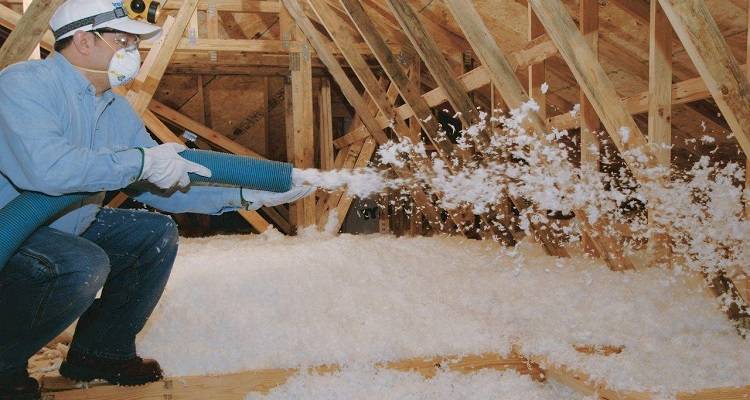
Loft insulation installers typically charge £150 to £250 per day, with higher rates in London and the South East. Most standard jobs are completed within a single day, though the method you choose affects how long it takes.
| Method | Typical Duration | Typical Labour Cost |
|---|---|---|
| Loose-fill or blown (machine-applied) | 1 to 4 hours | Often priced per m² or flat fee |
| Blanket rolls (standard loft) | 1 day | £150–£250 |
| Full installation with boarding | 2 to 3 days | £300–£750 |
Want a custom price?
Post your job
For small insulation-only work, installers often charge per m² or a flat fee instead of a day rate. A minimum charge can apply on very small areas.
What Affects Loft Insulation Costs?
- Property size — A larger loft requires more material and more installation time, increasing the overall cost.
- Material choice — Blanket rolls are the budget default for most lofts. Loose-fill works better where the space is irregular or full of pipework. Blown fibre is quickest in tight, hard-to-reach lofts but needs a machine and a professional.
- Depth and coverage — Reaching the full 270mm and working carefully around tanks, pipework, and cabling both add labour and material to the job.
- Top-up vs. full installation — If existing insulation is in reasonable condition, topping it up to the recommended depth is cheaper than a full replacement.
- Access — A tight hatch, low headroom, or an awkward loft layout all slow the work down and can push the labour cost up.
- Labour charges — Most installers work to a £150 to £250 day rate, though you'll usually pay more in London and the South East.
- Extras — Add-ons such as raised loft legs, a vapour control layer, or eaves vents will push the total cost up.
Additional Loft Insulation Costs
The add-ons below aren't always needed, but any that apply will add to your total. Treat the figures as a rough guide. Your actual quote will depend on access, the loft's layout, and whether any repair work is needed first.
| Item | Typical Cost | Notes |
|---|---|---|
| Loft boarding (raised system) | £80–£100 per m² | For storage access. |
| Loft legs (raised boarding system) | £10–£18 per m² | Required when boarding over insulation. |
| Tank and pipe insulation (lagging) | £60–£180 | Prevents freezing in a colder loft. |
| Vapour control layer or eaves vents | £50–£150 | Manages condensation and airflow. |
| Electrical safety adjustments | £80–£250 | Cable rerouting and downlight guards. |
| Old insulation removal and disposal | £250–£400 | If existing insulation is damp or damaged. |
| Spray foam removal | £40 per m² (average) | If spray foam is present. |
| Pest or damp remediation | £120–£400 | Resolved before new insulation. |
| Small-job minimum or access surcharge | £40–£120 | For very small or awkward jobs. |
Want a custom price?
Post your job
Once a loft is properly insulated, the space above the ceiling runs colder, which increases the risk of pipes and water tanks freezing. Always ask your installer about lagging as part of the same visit.
Cost of Topping Up Existing Loft Insulation
Many UK homes already have some loft insulation but fall short of the recommended 270mm depth. In these cases, topping up the existing layer is usually cheaper than a full replacement and just as effective, provided the existing insulation is dry and undamaged.
A top-up job typically costs between £400 and £900 for a standard semi-detached home, depending on how much material needs to be added and the size of the loft. A professional can assess the existing depth and condition before quoting.
If the existing insulation is damp, compressed, or pest-damaged, full removal and replacement will be needed instead.
How Much Can Loft Insulation Save on Energy Bills?
Insulating an uninsulated loft to the recommended 270mm depth can significantly reduce heating costs. Based on Energy Saving Trust figures for 2026, the estimated annual savings on gas bills are:
| Property Type | Estimated Annual Saving |
|---|---|
| Detached house | Around £355 |
| Semi-detached house | Around £215 |
| Mid-terrace house | Around £145 |
Want a custom price?
Post your job
At these savings rates, loft insulation typically pays for itself within 1 to 3 years. A better energy performance certificate (EPC) rating can also make a property more attractive to buyers and, increasingly, is considered by mortgage lenders offering green mortgage products.
Types of Loft Insulation
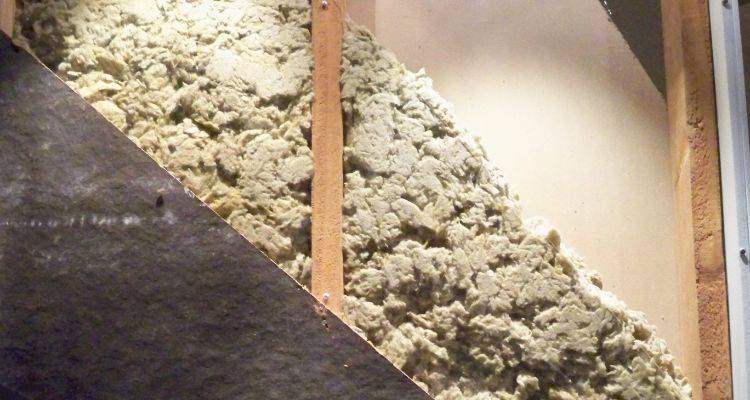
- Blanket rolls — The most common type in UK homes. Made from mineral or glass wool, blanket insulation is laid between joists, with a second layer running across the top. It's widely available, performs well, and is the most accessible option for DIY installation. Costs around £10 per m² for materials.
- Loose-fill — Made from lightweight materials such as cellulose or mineral wool granules, loose-fill is poured between joists. It's well suited to irregular spaces and around pipework, but can shift over time in draughty lofts. Costs around £12 per m² for materials.
- Blown fibre — The same idea as loose-fill, but blown in under pressure with a machine. It reaches awkward corners quickly, but it's strictly a job for a professional.
- Sheet insulation — Rigid PIR boards cut to fit between or under the rafters. A roof-level ('warm loft') approach rather than floor insulation, covered here mainly for completeness.
How deep should loft insulation be, and does the type matter?
"The standard minimum should be 300mm.
Mineral Wool is mostly used in domestic properties.
If the current insulation is very old, it should be removed and disposed of before installing new."
Mineral Wool is mostly used in domestic properties.
If the current insulation is very old, it should be removed and disposed of before installing new."
What's Involved in Installing Loft Insulation?
Before the Job Starts
- Pre-Checks — The installer assesses access, existing insulation depth, ventilation, electrics, and any tanks or pipework that need attention first.
- Preparation — Any damp, leaks, or pest damage must be resolved before new insulation goes down.
During the Job
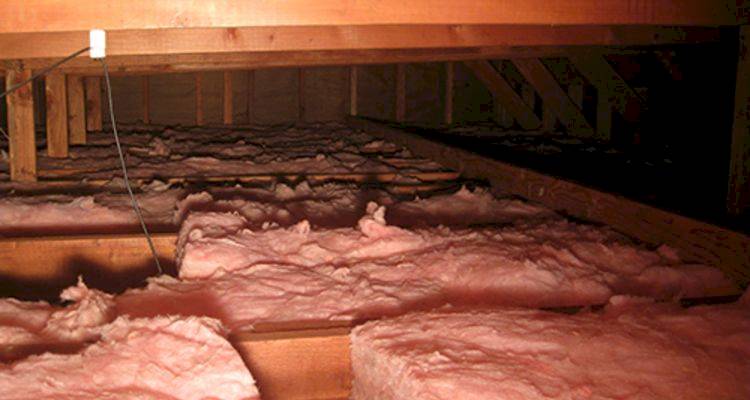
- Installing the Insulation — Insulation is laid between and over the joists to the specified depth, working carefully around any obstructions.
- Maintaining Ventilation — Clear gaps are left at the eaves to maintain airflow. Downlights are guarded or boxed if needed.
- Raised Loft Legs — If boarding will be added over the insulation, loft legs are installed at this stage to protect the insulation's depth.
After the Job
- Safety Checks — The installer confirms ventilation paths are clear, cables and tanks are accessible, and the insulation isn't compressed anywhere.
- Advice — A reputable installer will flag any pipes or tanks that now need lagging, given the loft will run colder once properly insulated.
Spray Foam Insulation
Spray foam is occasionally used in loft spaces, but it carries significant risks that are worth being aware of before proceeding. Many UK mortgage lenders, including major names such as Halifax, Nationwide, and TSB, will not lend on properties where spray foam has been applied directly to roof timbers, as it prevents surveyors from inspecting the timber for rot or moisture damage.
If you're buying or selling a home with spray foam insulation already in place, removal may be necessary to restore the property's mortgageability. The average cost of spray foam removal is around £40 per m², and most jobs take 1 to 3 days to complete. See our full spray foam removal cost guide for a complete breakdown.
Can I Insulate a Loft Myself?
Laying blanket insulation rolls between loft joists is one of the more manageable DIY jobs in a home, provided the loft has reasonable access and there are no complications. However, lofts can be cramped, poorly lit, and dusty. Working in them carries risks if you're not careful.
Blown and loose-fill insulation require specialist equipment and are better left to professionals. Any job involving electrical cables, downlights, or existing damage should also be handled by a qualified installer.
If you do take on the job yourself, wear protective gear (gloves, goggles, and a dust mask), as glass and mineral wool fibres are skin and respiratory irritants. Always leave a clear ventilation gap at the eaves and never compress the insulation.
Should I insulate between the ceiling joists or the roof rafters?
"Insulating between the ceiling joists is the most common method and is generally the easiest and least expensive option.
Insulating between the roof rafters can be a good option if you plan to use your loft space as a living area or if you want to create a warm roof space.
In some cases it may be advisable to do both, depending on your goals and the condition of the roof."
Insulating between the roof rafters can be a good option if you plan to use your loft space as a living area or if you want to create a warm roof space.
In some cases it may be advisable to do both, depending on your goals and the condition of the roof."
DIY Preparation Only
Even if you plan to use a professional installer, you can help reduce costs and save time by preparing the loft in advance:
- Remove or clear any items to make space for the installer so they have easy access to do the job.
- Check for any visible signs of damp, leaks, or damaged timbers and have these resolved first.
- Make sure there's safe access, with a sturdy ladder or hatch.
- Arrange temporary lighting if the space is particularly dark.
Building Regulations for Loft Insulation
For new work, UK building regulations set a minimum loft insulation depth of 270mm. The installer also has to keep clear airflow gaps at the eaves and make sure cables, downlights, and water tanks stay safe and reachable. Where the loft will later be boarded, the boards must sit on raised loft legs so the insulation underneath isn't crushed and ventilation is kept.
Approved Document L sets out the current energy efficiency standards for retrofit work in England. A qualified installer should be familiar with these requirements and able to confirm the work meets them.
Can I Get a Grant for Loft Insulation?
Some households may be eligible for help with insulation costs through government-backed schemes. In 2026, the main funded routes are:
- The Warm Homes Plan — A £13.2 billion government programme designed to deliver energy upgrades to 5 million homes by 2030. Funding is available for households on incomes of £36,000 or less, those in qualifying postcodes, or those in receipt of means-tested benefits. The property must have an EPC rating of D or below.
- Energy Company Obligation (ECO) scheme — Run through Ofgem, ECO obliges the larger energy suppliers to pay for efficiency upgrades for qualifying households. It normally funds the loft insulation install only — not extras like emptying the loft or adding boards.
The simplest way to check eligibility is to contact your energy supplier directly. Grant-funded installations must typically be carried out by a TrustMark-registered or MCS-certified installer.
Cost of Removing Old Loft Insulation
In some cases the old insulation has to come out before anything new goes down. That's usually where it's broken down with age, been spoilt by damp or pests, or been poorly fitted to begin with.
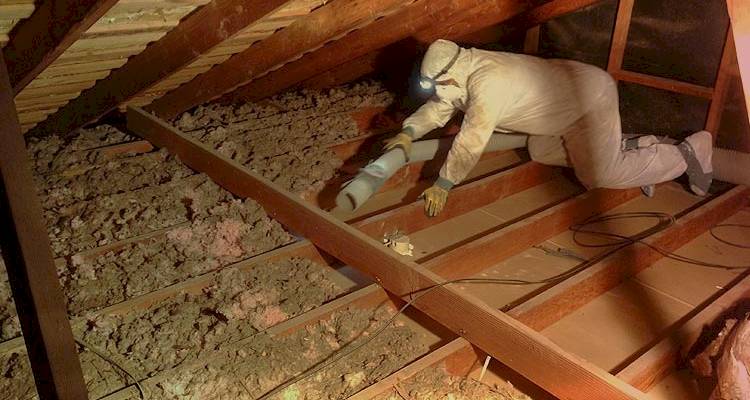
Stripping out and taking away the old material is usually built into the installer's price. Expect to add roughly £250 to £400 to the cost of insulating a loft to cover removal and disposal, with the final figure depending on the size of your loft and how much old material needs clearing.
If spray foam insulation is present, removal is a specialist job that costs significantly more, around £40 per m² on average.
Checklist: Hiring a Loft Insulation Contractor in the UK
A few quick checks before you hire can lower the risk of problems and help you judge which quote is the best value.
- Have you received more than one quote? Aim for at least three so you can compare prices and see what each one includes side by side.
- Do they have the right experience? Ask how many lofts like yours they've insulated and how they'd tackle the job.
- Do they have recent reviews? Check their MyJobQuote profile for recent customer reviews, along with any photos or videos of loft jobs they've completed.
- Does the quote cover everything? Ask each installer whether removing the old insulation, lagging pipes, a vapour control layer, and any electrical safety checks are included, so nothing catches you out later.
- Are they properly accredited? For grant-funded work, installers must be TrustMark-registered or MCS-certified, so it's worth checking before you commit.
Ask a Trade
Got a question that only a tradesperson can answer? We have thousands of trades ready to answer any question you may have.
Ask your question

FAQs
How Long Does Loft Insulation Take to Pay for Itself?
In most cases, loft insulation pays for itself within 1 to 3 years through savings on energy bills. Once this cost has been recovered, the insulation can continue to reduce your bills for the rest of its lifespan, which is usually 40 years or longer.
How Long Does Loft Insulation Last?
When it is kept dry and left undisturbed, loft insulation will typically last for 40 years or more. It may need to be replaced earlier if it has become compressed, affected by damp, damaged, or disturbed by pests.
Can Loft Insulation Cause Damp?
Loft insulation should not cause damp when it is installed correctly. Professional installers maintain ventilation gaps around the eaves so that air can continue to circulate. Damp-related issues may occur if the insulation is compressed, blocks ventilation openings, or has been fitted incorrectly, which is why professional installation is recommended.
What Is the Minimum Thickness for Loft Insulation in the UK?
For mineral wool, UK building regulations set a minimum of 270mm in the loft. That works out to a U-value of around 0.16 W/m²K, the current standard under Approved Document L for retrofit work in England.
Can I Insulate a Loft If I Want to Use It for Storage?
Yes, insulating and boarding a loft are separate jobs but can be done together. If you plan to add boarding over new insulation, loft legs must be used to raise the boards above the insulation so it isn't compressed.
Is It Worth Replacing Old Loft Insulation?
Not always. If existing insulation is dry, undamaged, and simply below the recommended 270mm depth, topping it up is usually cheaper and just as effective as a full replacement. Replacement makes sense where insulation is damp, compressed, damaged by pests, or was incorrectly installed in the first place.
Can I Lay New Insulation Over Old?
Yes, provided the existing insulation is in good condition (dry, uncompressed, and free from damp or pest damage). The new layer is typically laid at a 90-degree angle across the joists on top of the existing material to reach the recommended 270mm total depth. A professional can assess whether your existing insulation is suitable to build on.
Does Loft Insulation Add Value to Your Home?
It can. Insulation improves a home's EPC rating, which can make it more attractive to buyers and is increasingly considered by mortgage lenders offering green mortgage products. It also reduces running costs, which is a practical selling point. Because it's relatively low-cost compared with other home upgrades, the return on investment tends to be strong.