Builders
 Carpenters
 Electricians
 Flooring Specialists
 Gardeners
 Handymen
 Heating Engineers
 Painters & Decorators
 Plasterers & Renderers
 Plumbers
 Roofers
 Tilers
 my
myHeated Driveway Cost
At a Glance
- The average cost of installing a heated driveway is around £15,000.
- Most jobs take 7 to 10 days to complete.
- A breakdown of how much it typically costs to install a heated driveway in the UK.
- What impacts the cost you'll be quoted in 2026.
- How to find a local driveway installer using MyJobQuote.
Get free estimates
Are you a trade? Get more work today!
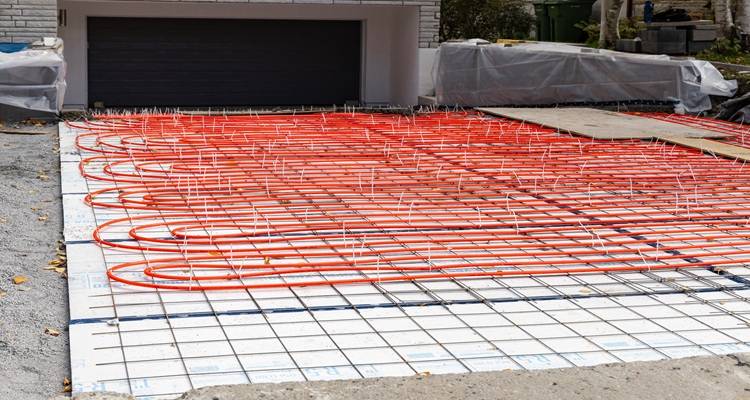
A heated driveway is a practical way to keep your driveway clear, safe and easier to use during icy or snowy weather. These systems work in a similar way to underfloor heating, using either electric heating cables or a hydronic system with heated water and antifreeze running through flexible tubing beneath the surface.
Many homeowners choose heated driveway installation to reduce slip hazards, save time clearing snow and ice, and make winter access to their home much more convenient. Heated driveway costs can vary depending on the type of system, the size of the driveway, the existing surface and whether it's being fitted as part of a brand-new driveway installation or added to an existing one.
£15,000
Table of Contents
- How Much Does a Heated Driveway Cost?
- Cost to Install a Heated Driveway (Labour Only)
- Supply Cost of a Heated Driveway
- Additional Heated Driveway Costs
- What Impacts the Heated Driveway Cost?
- Types of Heated Driveway
- Alternatives to a Heated Driveway
- Checklist: Hiring Contractors to Install a Heated Driveway in the UK
- FAQs
How Much Does a Heated Driveway Cost?
There are multiple factors to be considered when working out the cost of a heated driveway, but the average cost is around £15,000. However, this does not take into consideration, where applicable, removing the existing surface, installing adequate drainage, or upgrading your power supply to support the heating system.
What best describes your heated driveway project?
Electric system with a new driveway
0 votes - 0%0% of votes
Electric system retrofitted to existing driveway
0 votes - 0%0% of votes
Hydronic system with a new driveway
1 votes - 100%100% of votes
Hydronic system retrofitted to existing driveway
0 votes - 0%0% of votes

1 votes
See results
Hide results
Overall, the price of laying a heated driveway is far higher than the cost of a standard driveway due to the extra materials, specialist installation and increased labour required. There is also a major cost difference between laying a heated driveway as a new project and retrofitting one.
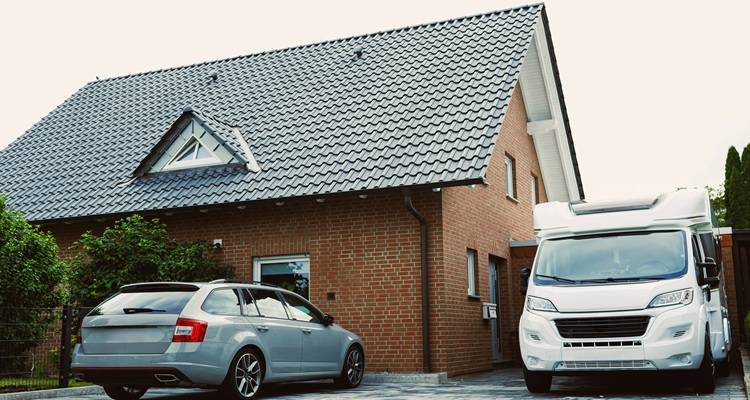
Heated Driveway Price List
The prices below cover a full installation, which includes groundwork and excavation, the heating system, a new surface material, drainage, an electrical upgrade, and labour.
| Size/Job | Cost |
|---|---|
| Small (30m²) | £5,000–£15,000 |
| Medium (60m²) | £8,500–£25,000 |
| Large (90m²) | £15,500–£45,000 |
| Heated driveway retrofit | £160–£325 per m² |
| Heated driveway installed with a new driveway | £120–£300 per m² |
Those totals are made up of several separate elements, and it helps to know what each one contributes before you compare quotes.
| Element of the total | Cost |
|---|---|
| Electric heated driveway system | £3,000–£6,000 |
| Hydronic heated driveway system | £5,000–£10,000 |
| Groundworks and excavation | £50–£125 per m² |
| Electrical connection | £1,800–£3,500 |
| Replacement surface laid over the heating system | £20–£70 per m² |
Want a custom price?
Post your job
Cost to Install a Heated Driveway (Labour Only)
Labour costs to fit a heated driveway form a significant portion of the overall price and require careful budgeting. Typically, the installation requires a number of different trades from start to finish.
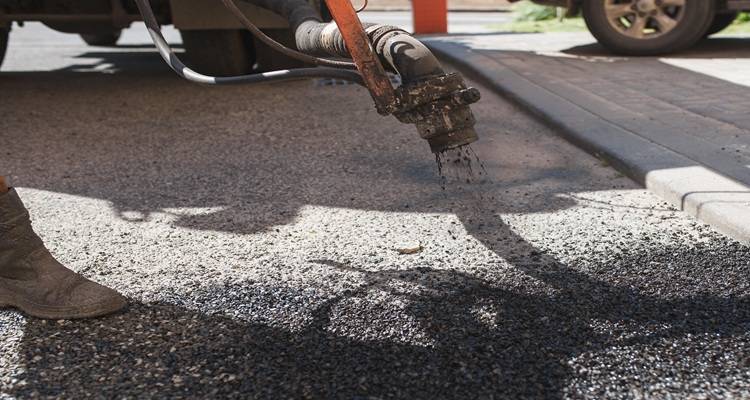
Depending on the chosen system, this can include:
- Groundworkers — for excavation and/or breaking up the existing driveway surface for a retrofit project.
- Electricians or heating engineers — to install the heated driveway system, depending on the type chosen.
- Surface contractors — to carefully lay a new surface material over the heated driveway system.
Most heated driveway installations take 7 to 10 days to complete. A retrofit takes longer than a system laid as part of a brand-new driveway, because the existing surface has to be broken up and removed first.
It's worth bearing in mind that a heated driveway is a far more complex and involved job than laying a normal driveway. As a result, the costs are higher, and the timescales are longer.
Supply Cost of a Heated Driveway
The supply costs for a heated driveway vary depending on the type of system that is installed. Electric heating mats are the most common method for residential properties, while hydronic systems are often fitted in commercial settings, sports facilities or larger homes.

| Component | Supply cost |
|---|---|
| Heating mats and cables | £30–£80 per m² |
| Hydronic pipework | £8–£15 per m² |
| Insulation boards, 50mm | £10–£15 per sheet |
| Insulation boards, 150mm | £60–£70 per sheet |
| Thermostat | £475–£725 |
| Sensors | £160–£515 |
| Manifold | £90–£285 |
| Control unit | £260–£350 |
| Sub-base aggregate, MOT type 1 | £40–£45 per ton |
| Sharp sand | £50–£75 per ton |
Want a custom price?
Post your job
Heating mats are typically around 0.6 metres wide and come in wattages from 100W to 300W per square metre, which determines how fast they heat up. Hydronic pipework is usually PE-Xa, a flexible but robust polyethene pipe, priced at £1 to £2 per linear metre. Extruded polystyrene is the recommended insulation board, as it is moisture-resistant and able to withstand heavy loads. Sharp sand is laid to a depth of between 25mm and 40mm where pavers go over the top of the system.
Surface Materials
The price of the surface material is a major contributing factor to the cost of laying a heated driveway system.
- Concrete — £50–£90 per square metre.
- Block paving — £25–£100 per square metre.
- Resin bound driveway — £40–£80 per square metre.
- Asphalt — £50–£90 per square metre.
- Stone — £60–£150 per square metre.
Cost Variances for Electric and Water-Based Heating Systems
Electric heating systems are the most commonly used in the UK as they are easier to lay, have lower maintenance needs and are simpler to retrofit where necessary. As a result, the installation price of these systems is less than that of a wet system.
The hydronic method requires a heat source, a complex piping system and higher maintenance needs with annual servicing to ensure it remains in optimum condition. All of these requirements add up to a more expensive system. However, running costs tend to be cheaper for hydronic systems than for electric heated driveways due to the rising price of electricity.
Retrofitted or New Driveway Project
Installation costs are lower if fitting a heating system as part of a brand-new driveway project. There is no excavation of the existing driveway, so labour and waste costs should be lower.
Additional Heated Driveway Costs
In addition to the base installation price, there are other costs to budget for:
- Excavation — approximately £85–£145 per cubic metre, depending on whether the work is done manually or by machine and on the soil type.
- Waste removal — a grab lorry costs around £170–£450 depending on the size of the load, while a man and a van costs approximately £60–£90 per hour.
- Skip hire — hiring a skip typically costs £180–£350 per week, plus around £30–£40 for a council permit if it sits on the public highway.
- Drainage work — £40–£150 per linear metre for channel drains and £500 to £2,000 for a soakaway.
- New sub-base installation — MOT type 1 aggregate costs about £44–£54 per bulk bag, which typically holds 850kg to 900kg.
- Upgrading the consumer unit — replacing your consumer unit costs around £350–£750, and a heated driveway adds a significant load to it.
- Electrical testing — an Electrical Installation Condition Report (EICR) costs around £120 for an average-sized home.
- Boiler or plant connection — a mid-range system boiler for a hydronic set-up costs around £1,300–£1,800.
- Smart controls — an app-based control costs between £80 and £120 and allows daily scheduling for more efficient energy use.
- Surface removal — tarmac removal costs around £300–£800, while concrete is more expensive to excavate at £50–£150 per square metre.
- Landscaping repairs — reinstating edging, fencing, lawns, and planting could add between £500 and £2,000.
- Removing the system later — the driveway surface is broken up, the mats or pipework are lifted out and the system is disconnected from the power or heat source by a qualified professional. Costs depend on the surface material, site access and whether a new driveway is being laid in its place.
- Ongoing costs — running costs are around £5 per hour, depending on tariffs, weather, and usage. Electric systems need little maintenance, while hydronic systems need annual servicing.
What Impacts the Heated Driveway Cost?
To help you understand how the different elements of a heated driveway project affect the cost, we've broken them down for you.
- Driveway size — a larger area needs more cabling or pipework, more groundworks and more surface material.
- Heating system type — electric heating is more widely available and cheaper to install, while hydronic systems cost more upfront but less to run.
- Surface material — asphalt is the budget option, block paving and concrete sit mid-range, and resin-bound material, natural stone and imprinted concrete are at the higher end.
- New installation versus retrofit — a retrofit means breaking up and disposing of the existing surface, which adds both labour and waste costs.
- Depth of excavation — the sub-base, insulation, heating system and surface material all have to fit into the excavated space, with the finished surface at the correct height.
- Insulation requirements — insulation forces the heat upward rather than into the ground, which reduces running costs and heating times.
- Electrical or plumbing complexity — curves, right angles and obstacles slow the fitting of cables or pipework and add to the labour bill.
- Drainage — melted snow and ice need diverting away from the surface to prevent refreezing and away from your foundations to prevent damp.
- Ground conditions — compacted soil, sloping ground or a high water table all complicate excavation and preparation.
- Property access — restricted access means manual work replaces machinery, which increases both cost and duration.
- Location in the UK — London and the southeast tend to be the most expensive areas for trades, while the north of England is often more affordable.
- Changing the surface material — swapping tarmac for block pavers, for example, adds the cost of the pavers themselves plus the deeper excavation and sand layer they need.
Types of Heated Driveway
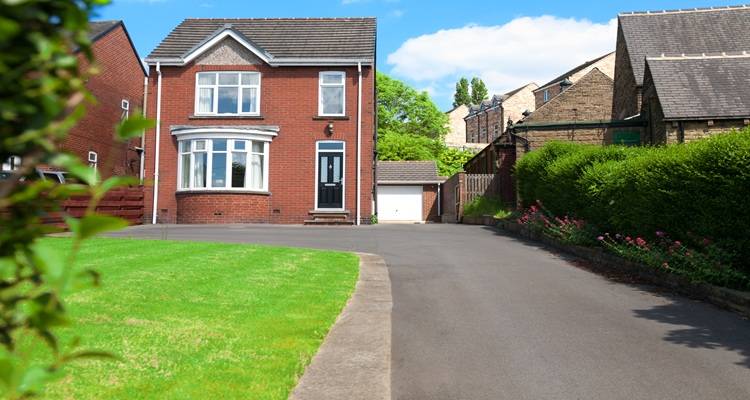
There are two types of heated driveway systems currently available to homeowners in the UK. These are electrically heated systems and hydronic or wet systems.
Electric Heated Driveway
Electric heating systems for driveways work in a similar way to underfloor heating. They comprise rolls or mats of resistive cabling that generate heat when switched on, warming the surface above and melting snow and ice. The mats operate alongside in-ground and above-ground sensors and a thermostat, which detect moisture and freezing temperatures and activate the system.
Electric heating mats suit a range of driveways as they come in various lengths and are relatively easy to install. Initial outlay is lower than for hydronic systems, and they require little maintenance. However, running costs are higher due to electricity prices.
Hydronic Heated Driveway
Hydronic heated driveway systems use a mixture of water and propylene glycol, commonly used as antifreeze, which is heated and circulated through a grid of flexible pipework. The surface above is warmed sufficiently to melt snow and ice. As with electric systems, sensors and a thermostat switch the system on.
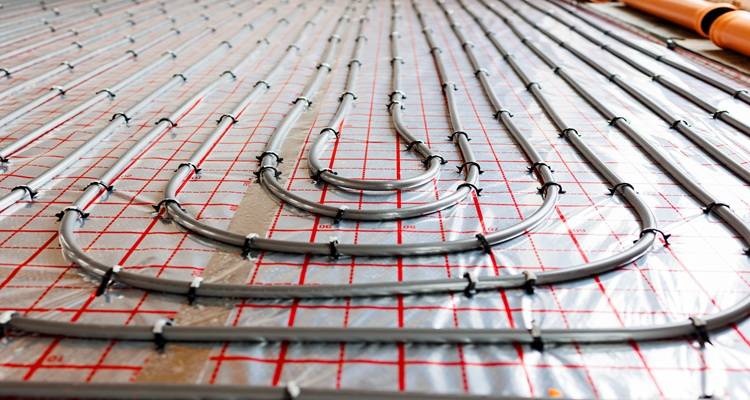
Wet systems are less common in the UK, but they suit larger driveways or newly constructed prestige homes. A heating engineer must connect the system to the heat source, such as a boiler or heat pump. Set-up costs are higher than for electric heating mats and the system needs regular servicing, but running costs are lower. Repairs can be difficult and expensive, as reaching a leak involves digging up part of the driveway.
Alternatives to a Heated Driveway
There are alternatives to embedded heating systems for keeping driveways clear of ice and snow. From tyre track heating to improved drainage, there's a solution for every driveway.
- Partial heating systems — heating only a portion of the driveway, most often the section closest to the house, cuts both the cost and the upheaval.
- Tyre track heating — heating just two tyre tracks gives enough grip for vehicles on long or sloping driveways.
- Portable heating mats — these can be laid down when snow or ice is forecast and rolled away afterwards, which suits small driveways or off-street parking.
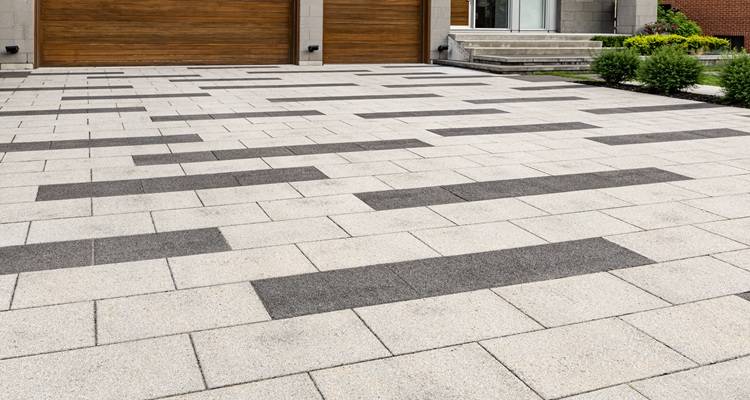
- High-grip materials — resin-bound aggregates, permeable pavers, textured concrete, and exposed aggregate concrete all improve traction.
- Manual snow and ice management — a plastic shovel avoids damaging the surface, and de-icing salt is effective where severe cold is uncommon.
- Improved drainage — clearing pooling water before it freezes prevents much of the ice that forms on a driveway in the first place.
- Winter-resistant surfaces — resin-bound gravel, block paving, and gravel in stability grids all give tyres better traction in icy conditions.
Checklist: Hiring Contractors to Install a Heated Driveway in the UK
Installing a heated driveway is not a DIY job. A professional installation is what makes the system safe, effective and efficient, so it pays to ask the right questions before you commit.
- How many heated driveways have you installed? Plenty of contractors lay standard driveways without ever having fitted a heating system. Ask about previous projects, the problems they ran into and how they solved them.
- Are your electricians registered with NICEIC or NAPIT? Registered electricians can self-certify the fixed electrical work under Part P, which saves you arranging separate Building Control approval.
- Does the quote include excavation and surface reinstatement? These are two of the most expensive parts of the job and they are not always included, so check before you compare one quote against another.
- Who handles the electrical or hydronic connections? Connections should be made by a qualified electrician or heating engineer rather than the groundwork team.
- What warranty covers the system and the workmanship? The cabling may carry a different warranty length from the sensors and control unit, and most warranties depend on the work being done by a qualified professional.
- Can I see your recent reviews? Every tradesperson on MyJobQuote carries verified reviews from previous customers, so you can compare several quotes and read what other homeowners said before you choose.
Ask a Trade
Got a question that only a tradesperson can answer? We have thousands of trades ready to answer any question you may have.
Ask your question

FAQs
Is a Heated Driveway Worth the Cost in the UK?
Rarely, for a standard home. UK winters are not usually cold enough for long enough to earn back a five-figure installation, so a heated driveway tends to be a convenience rather than an investment. It makes more sense on a steep or shaded driveway that ices over regularly, or where someone in the household would struggle with a shovel.
How Much Does It Cost to Run a Heated Driveway?
About £5 per hour for an electric system, depending on your electricity tariff. Hydronic running costs are lower, at roughly £4 to deal with a major snow event, which is why wet systems suit larger driveways despite costing more to install.
Can a Heated Driveway Be Installed Under an Existing Driveway?
Yes, an electric heating system can be retrofitted. The heating mats are laid over the existing surface and covered with a new one, typically asphalt, which is why a retrofit costs £120–£325 per square metre rather than the lower rate for a system laid with a new driveway.
Do Building Regulations Apply to a Heated Driveway?
Yes, several parts do. Part P covers the fixed electrical work, and an electrician registered with NICEIC or NAPIT can self-certify it rather than putting in a separate application. Part J applies where a hydronic system ties into your boiler, and Part L covers the thermostats and sensors. Part M can come into play if the groundworks change access to the property. Your contractor should confirm which apply before work starts.
Do You Need Planning Permission for a Heated Driveway?
Not usually. A heated driveway falls under permitted development provided the surface is permeable, such as resin-bound gravel, block paving, or permeable concrete. If you use a non-permeable material, runoff must be diverted to a soakaway, border or lawn. Driveways over 5 square metres have to meet these drainage rules, while smaller ones do not.
How Long Does a Heated Driveway System Last?
Around 30 years for an electric system, with very little maintenance needed along the way. Hydronic systems last 15 – 25 years because their lifespan is tied to the boiler, although the buried pipework itself can last more than 50 years.