Builders
 Carpenters
 Electricians
 Flooring Specialists
 Gardeners
 Handymen
 Heating Engineers
 Painters & Decorators
 Plasterers & Renderers
 Plumbers
 Roofers
 Tilers
 my
myConcrete Pouring Cost
At a Glance
- The average cost of pouring concrete per m³ is £90.
- A typical project takes roughly 1 to 4 days to complete.
- Concrete costs per m³ for different concrete grades and construction uses.
- What's involved in pouring concrete and typical project timescales.
- How to find local concrete pouring professionals using MyJobQuote.
Get free estimates
Are you a trade? Get more work today!
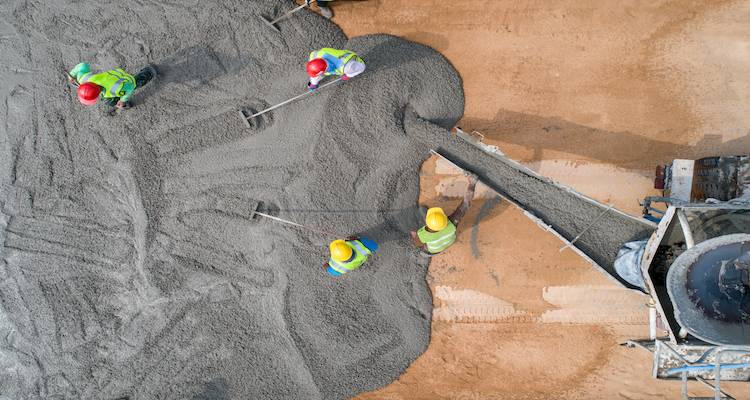
£90 per m³
Table of Contents
- How Much Does Concrete Cost per m³?
- Concrete Pouring Labour Costs and Timescales
- Concrete Supply Costs
- What Impacts Concrete Pouring Costs?
- Additional Costs of Poured Concrete
- Types of Concrete Pouring Jobs & Typical Costs
- How to Lay Concrete
- Can I Pour Concrete Myself?
- Building Regulations and Planning Permission for Pouring Concrete
- Checklist: Hiring Local Concrete Contractors
- FAQs
How Much Does Concrete Cost per m³?
How much does concrete cost?
The cost of laying concrete is calculated per cubic metre (m³) rather than per square metre (m²), so the full depth of the area is accounted for.
However, some concrete pouring costs, such as driveways and polished floors, are typically priced per m², as are ground preparation, membranes, and removal.
So, what is the concrete pouring cost per cubic metre?
Pouring concrete costs between £85 and £100 per m³ for the grades typically used in most domestic projects.
To give an example, the average cost of pouring a concrete driveway ranges between £600 and £8,900. The driveway's size or the concrete's quality is the most critical factor determining the total cost. The cost of concrete pouring increases with driveway size and concrete quality.
Concrete Prices per m³
One of the key factors that affects concrete costs per m³ will be the grade you need for your particular project.
The table below provides a full breakdown of typical concrete costs per m³ for different types of concrete, including the most popular grades C8 to C40.
| Concrete Strength | Uses | Cost Per Cubic Metre (m³) |
|---|---|---|
| C8/C10/C15 | Light domestic projects | £85 – £95 |
| C20 | Standard domestic project | £90 – £100 |
| C25 | Light domestic building | £100 – £105 |
| C30 | Medium domestic buildings | £95 – £110 |
| C35 | Commercial building | £100 – £115 |
| C40 | Heavy commercial building | £100 – £120 |
| Dry screed | Level current concrete | £130 |
| Waterproof concrete | Below groundwork | £190 |
| Self-level concrete | Repairs, levelling or raising current concrete | £200 |
Want a custom price?
Post your job
Concrete Pouring Labour Costs and Timescales
Pouring concrete is best done by a professional because it can be a challenging DIY task. The labour cost for pouring concrete in the UK is around £25 per hour, but can be up to £45 per hour in London and the South East. Day rates average between £220 and £450, as some jobs require a team of two or more workers.
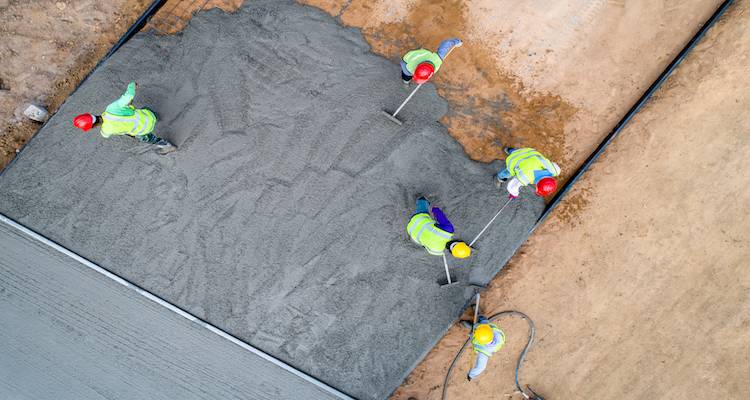
Here are some typical labour costs and timescales for concrete pouring projects. Keep in mind that larger decorative concrete pours such as imprinted concrete driveways usually require a small team, which is why labour costs rise faster than simple single-day rates suggest.
| Concrete Pouring Job | Size | Typical Labour Cost | Typical Timescale |
|---|---|---|---|
| Average labour rate | Per m² | £40 – £50 per m² | Depends on access and finish |
| Plain concrete area | 5.25m² | £220 – £300 | 1 – 2 days |
| Plain concrete driveway | 12m² | £450 – £700 | 2 – 3 days |
| Plain concrete driveway | 25m² | £900 – £1,400 | 3 – 4 days |
| Coloured or imprinted concrete driveway | 60m² | £2,200 – £3,500 | 5 – 6 days |
| Coloured or imprinted concrete driveway | 100m² | £3,500 – £5,500 | 7 – 8 days |
Want a custom price?
Post your job
Concrete Supply Costs
If you want to save money by DIYing a concrete base, you will need several supplies and materials to do the job correctly and safely. You'll need to determine how much concrete you will require for your project, in cubic metres (m³) and buy the correct number of bags of sand, cement, or concrete accordingly.
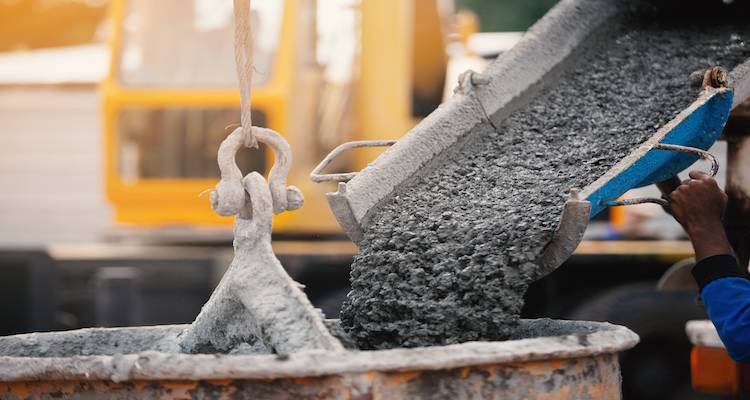
You can use either sand and cement or ready-mixed concrete, but all projects will require timber to support and brace the formwork while your poured concrete sets. To compact the poured concrete you'll need a tamp board, and you'll also need floor bearers to give a temporary working platform while the concrete is poured.
Basic hand tools for concrete pouring projects include a tape measure, pegs, string, spirit level, hammer, spade, set square, earth rammer, and wheelbarrow.
| Supply Item | Typical Cost |
|---|---|
| Sand (bulk bag) | £43 – £88 |
| Cement | £4 – £15 per bag |
| Ready-mixed concrete | £6 – £14 per bag |
| Timber for formwork | £14 – £100 |
| Tamp board | £150 – £300 |
| Floor bearers | £4 – £30 each |
| Cement mixer (buy) | £200 – £350 |
| Cement mixer (hire) | £13 – £20 per day |
| Basic hand tools | £50 – £150 total |
Want a custom price?
Post your job
What Impacts Concrete Pouring Costs?
As well as the type of concrete you need, there are a number of other factors that can affect the final cost of your project. Below are some of the things that can impact how much your concrete pour could cost.
Reinforcement
If you are having foundations or a load-bearing slab poured, your concrete might need reinforcing with steel mesh or rebar. These materials, and the labour required to install them, will add to your overall costs.
Finishing Options
A standard brushed finish will usually be included in the quoted costs for your pour, but if you decide you want a polished, patterned, or coloured finish, the additional materials, labour, and tools will increase the final price.
How much would it cost to just prepare an existing concrete floor (so roughing up and priming) for a traditional sand and cement screed? Area approx eighty square metres.
"You’ll be looking around the £25 per m² mark. Priming should be done just before the screed goes in, obviously allowing to go off first."
Access Challenges
If there are any access challenges for where you want your concrete poured, this can increase the cost. Additional labour to move the concrete into place, or hiring equipment such as a concrete pump, will be an extra charge.
Curing Protection
To ensure the best finish, your concrete needs to cure properly. Any curing compounds, protective coverings, or additional work required during the curing process will add to the final cost.
Location
The cost of materials and labour can differ depending on your location, so where you live can affect your costs. For example, costs are likely to be higher in the South East, particularly in London, than in the rest of the UK.
Weather
Both bad and good weather can affect how concrete is poured and cured. Depending on the conditions when your project starts, cold, hot, or wet weather may complicate the process and result in additional costs.
Additional Costs of Poured Concrete
As well as the factors that can affect the price you are quoted for your concrete pour, there may be other things you need to consider that will be necessary for your project and add to your initial cost.
Below are some of the common additional costs for a concrete pouring project that you should bear in mind.
| Additional Cost Factor | Typical Cost |
|---|---|
| Ground preparation | £30 – £70 per m² |
| Skip hire | £120 – £280 |
| Formwork | £10 – £25 per metre |
| Sub-base installation | £30 – £60 per m³ |
| Damp-proof or weed membrane | £5 – £15 per m² |
| Removing existing surfaces | £20 – £50 per m² |
Want a custom price?
Post your job
Ground Preparation
Before you can even think about pouring your concrete, you need to make sure the ground is properly prepared. This will often mean excavating or digging out the ground, levelling it, and compacting it to provide a solid base. The additional cost of basic ground preparation can be around £30 to £70 per m².
Skip Hire
With some amount of digging out usually necessary for most concreting projects, you might also be looking at the additional cost of waste removal or skip hire to get rid of excavated dirt, rubble, or old surfaces. Expect skip hire to cost an additional £120 to £280.
Formwork
Formwork, or shuttering, is the wooden frame around the area where the concrete will be poured that holds it in place and keeps its shape while it cures. Simple slabs will require simple formwork, which might cost £10 to £25 per metre, but for more complicated shapes, steps, or different levels, expect to pay more.
Sub-Base
Depending on the project, you may also require a sub-base of hardcore, crushed stone, MOT Type 1 or 3, gravel, or sand beneath your concrete pour. Costs to supply and lay your sub-base will be around £30 to £60 per m³, depending on the materials used.
Damp/Weed Membrane
If it's necessary to protect your concrete slab against rising damp or weeds, installing a suitable membrane before the pour will be required. Depending on the type and thickness of weed or damp-proof membrane (DPM) used, they will typically cost £5 to £15 per m².
Removing Existing Surfaces
If your new slab is replacing old concrete, decking, tarmac, paving, or any other surface, this will need to be removed first. Depending on the thickness of the old surface and the ease of access to remove it, you can expect to pay £20 to £50 per m² for removal.
Ask a Trade
Got a question that only a tradesperson can answer? We have thousands of trades ready to answer any question you may have.
Ask your question

Types of Concrete Pouring Jobs & Typical Costs
When it comes to pouring concrete, there are various types of tasks that you should consider. In this section, we will go over the various types of concrete pouring jobs that you should consider.
| Concrete Pouring Job | Typical Cost |
|---|---|
| Concrete driveway | £2,500 – £11,500 |
| Flat concrete driveway (materials only) | £750 – £3,375 |
| Pressed or patterned concrete driveway (materials only) | £55 – £80 per m² |
| New polished concrete floor | £120 – £150 per m² |
| Polishing an existing concrete floor | £50 – £55 per m² |
| Garage concrete floor | £2,000 – £2,500 |
| Bathroom concrete floor | £300 – £400 |
| Concrete slab pouring | £65 – £85 per m³ |
Want a custom price?
Post your job
What project requires you to pour concrete?
New driveway/pathway
3 votes - 27%27% of votes
Patio or garden area
2 votes - 18%18% of votes
Flooring for garage/shed
3 votes - 27%27% of votes
Foundations for building work
3 votes - 27%27% of votes
Repairs to existing concrete
0 votes - 0%0% of votes

11 votes
See results
Hide results
Concrete Driveway Cost
A concrete driveway could cost between £2,500 to £11,500 to install. Several factors influence the cost of building a concrete driveway, including the size of the driveway, the type of concrete used, the ease of access, and whether base preparations or concrete edging are required.
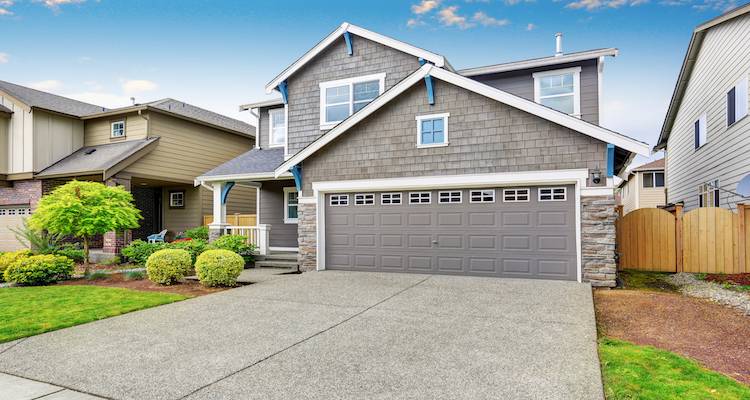
A one-car concrete driveway usually takes one to two days to build, a two-car concrete driveway takes two to three days, and a three-car concrete driveway takes up to four days. If you need concrete foundations or prefer patterned or pressed concrete, the project might take anywhere between 1 to 5 weeks to complete.
Flat concrete driveways are easy to make in design and are typically made of water and a lime-based binder that retains stone clumps together. This driveway can cost as little as £750 for a one-car driveway and £2,250 for a three-car driveway, not including installation.
Flat concrete is made up of the same materials as pressed or patterned concrete. However, it is made by pushing a pattern into wet concrete. A pressed or patterned concrete driveway could cost £55 to £80 per m² excluding labour.
Pros
✔ Increases the value of a home
✔ One-of-a-kind designs
Cons
✖ Expensive
Polished Concrete Floor Cost
Polished concrete floors are frequently misinterpreted as being cold and slick. However, these floors can be polished to make them non-slip and pleasant to walk barefoot. These floors can also cater to underfloor heating in the colder months, creating a lovely, warm feeling.
A new polished concrete floor typically costs between £120 and £150 per m². This is because it will take time to pour, finish, and seal the concrete. However, if you have a concrete floor and want it polished, the price is much lower, around £50 to £55 per m².
Installing a new garage floor can significantly improve the look of your garage. Polished concrete is an excellent choice for garage floors because it is long-lasting and flexible—polished concrete flooring costs between £2,000 and £2,500.
Selecting a polished concrete floor for your restroom is an excellent way to transform the space's appearance completely. The finished bathroom will have a modern or industrial feel and a high-end appearance—a polished concrete bathroom floor costs between £300 and £400.
Pros
✔ Durable
✔ It can be used with underfloor heating
✔ Various design options
Cons
✖ Expensive
I'm looking for tips to make sure our installation of a polished concrete floor in the kitchen goes well. What are the main dos and don'ts?
"Grind with a 150-grit metal-bonded diamond (or finer, if desired). Apply a chemical hardener to densify the concrete. Polish with a 100- or 200-grit resin-bond diamond, or a combination of the two. Polish with a 400-grit resin-bond diamond."
Concrete Slab Cost
Concrete slabs are used in construction as they provide a flat, horizontal surface. The most popular applications include floors, ceilings, or roof decks.
In addition, a concrete slab is used on top of the foundations in many domestic buildings to provide a solid ground floor, as well as for garden structures, such as a concrete shed base. A concrete base typically costs between £75 and £95 per m³ to lay.
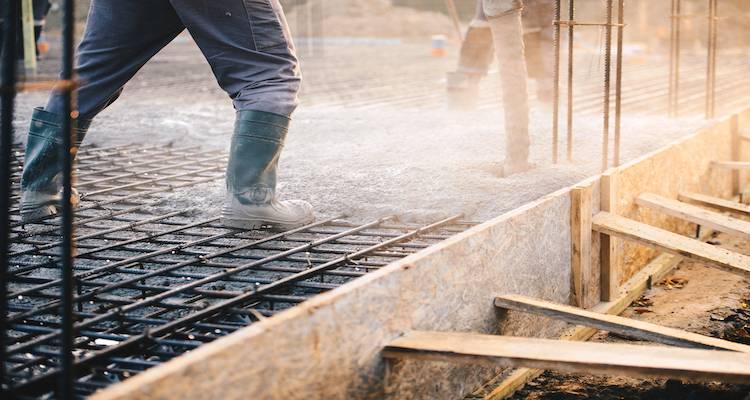
The cost of pouring a concrete slab is usually between £65 and £85 per m³. However, like other types of concrete pouring, the cost of concrete pouring will vary depending on the strength of the concrete used, the size or scale of the project, and where you live in the country.
Pros
✔ Simple to do
✔ Long-lasting
Cons
✖ Raises the floor level
✖ Requires a lot of maintenance
How to Lay Concrete
Getting perfectly finished concrete can take the right materials, equipment, and skill, which is why most homeowners choose to hire a professional for their concrete pouring projects.
To find the right contractor for the job, it's a good idea to get a number of quotes from local professionals.
With MyJobQuote you can get fast, free, no obligation quotes from concrete specialists near you, to help you find the right company for the job.
Here's a look at the process of pouring concrete that a professional contractor will follow.
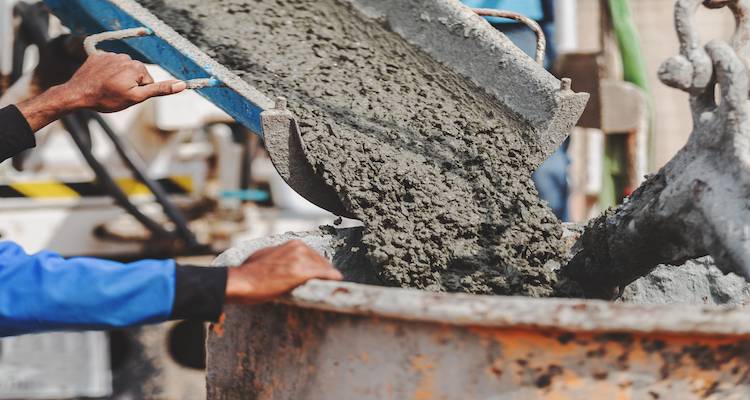
- Preparation — This site will be cleared of grass, trees, old concrete, or other debris then a subbase is applied.
- Formation — Forms are placed along the perimeter of the concrete area and secured with metal or wood stakes.
- Pouring & Positioning — A ready-mix concrete truck may be able to drive directly to the job site and pour directly into the forms. If this is not doable, a concrete pump will transport the concrete to its destination.
- Pre-Finishing — The top of the concrete should then be levelled and compacted. Smaller areas or edges are evened out using hand-held trowels.
- Completion — The surface finish is applied, which can be a simple brushed finish or a more complex patterned or polished finish, depending on your preferences and the type of project.
- Treatment — The concrete can now rest and begin the curing process. Compounding immediately after finishing is recommended because it helps the concrete set evenly and reduces cracks. The entire curing process takes 28 days, and the first week is crucial.
Can I Pour Concrete Myself?
Pouring concrete DIY necessitates far more skill and knowledge than other home projects so it's not usually recommended for DIY beginners. Here are a few common problems homeowners face:
- Not being adequately prepared - Inexperienced DIYers overlook many things, such as failing to use a plate compression machine to pack the soil, not levelling the area adequately, or setting up proper forms - the blocking that enables a smooth, even pour. Pouring concrete property entails several steps.
- Not having the appropriate amount of concrete - Ordering too little concrete can lead to delays and additional costs if you need to order more later. A concrete patio should be at least 10cm thick - thicker if it will be supporting heavy furniture.
- You don't know what kind of concrete you need - Different applications require different types of concrete with varying properties. There are thousands of options available, so choosing the right one can be challenging.
- Failure to create appropriate forms - Improperly constructed forms can result in uneven surfaces or structural issues.
What would the cost be to have a concrete slab laid that is 10 x 13 feet?
"£800 for the concrete base."
Building Regulations and Planning Permission for Pouring Concrete
If you are considering installing a concrete floor for the first time, either as a home improvement project or as part of your job, you must be aware of the applicable Building Regulations:
- Damp-Proof Membranes, Insulation, and Screed — can add £20 to £40 per m² to the overall price.
- Planning Permission Application Fees (impermeable driveway over 5m²) — around £250 to £300.
The requirements for concrete floor construction listed in the Building Regulations are detailed below.
- Permeable Driveways — If a new or replacement driveway uses permeable (or porous) surfacing that allows water to drain through, including gravel, permeable concrete block paving, or porous asphalt, or if rainwater is guided to a lawn or border to drain naturally, you will not need planning permission.
- Impermeable Driveways — If the area to be covered exceeds five square metres, planning permission will be required for traditional, impermeable driveways that do not allow water to run to a permeable area.
- Screed — A layer of screed made of sand and cement is applied over the top of the concrete to ensure a level finish to follow the building regulations. In addition, thermal insulation and a suitable gauge damp-proof membrane (DPM) must be provided. These can be laid on the concrete or over the sand blinding.
- DPM Lapping — The damp-proof path in the external walls and, if applicable, the internal walls all around the floor should be lapped with the DPM. The thickness of the different floor parts will be determined by the ground conditions or the order they have been laid.
- Air Bricks — If the existing building has air bricks, for example, to ventilate existing floor voids, ducting should be installed to allow air to pass through the solid floor and then into the void beneath the existing house. The new wall is then filled with air bricks.
Checklist: Hiring Local Concrete Contractors
If you want to start a project that may require a concrete contractor, hiring the right person for the job is essential. Concrete work often needs careful preparation, accurate levelling, and proper curing, so experience matters.
The following checklist will help you compare contractors and avoid unexpected costs.
- Ask About Similar Previous Jobs - Choose a contractor who has completed similar work, whether that is a driveway, slab, floor, or foundation. Ask to see photos or examples of recent projects.
- Check They Understand Ground Preparation - A good contractor should explain whether excavation, formwork, sub-base installation, or membranes are needed before pouring begins.
- Get at Least 3 Quotes - Compare several quotes from reputable contractors so you can check labour rates, materials, and timescales.
- Request a Written Breakdown - Make sure the quote clearly separates labour, concrete supply, waste removal, and any extra groundwork so there are no hidden costs later.
- Confirm Timescales and Site Clean-Up - Ask how long the work will take, how long the concrete needs before use, and whether waste removal and final clean-up are included.
- Check Insurance and Guarantees - Public liability insurance is important in case of accidental damage, especially for larger driveway or floor projects.
FAQs
When Can You Wet Concrete After Pouring?
The aim is to keep the concrete loaded for the first 28 days. After that, spray the slab with liquid 5-10 times each day, or as often as possible, for the first seven days after installation. The drying process begins immediately after the concrete is poured.
Can You Pour Concrete in the Rain?
Yes, it is possible to pour in the rain, but it is preferable to avoid it. Rain creates difficulties, but it does not always mean that your plans must be abandoned as long as you take appropriate precautions.
Can I Pour Concrete on Top of the Grass?
Concrete should not be poured directly on the grass. When poured over grass, a concrete slab will crack over time due to moisture ingress, a lack of support as the vegetation beneath regresses, and a lack of rigidity, as factors like external weight cause the structure to weaken.
Can I Pour Concrete Over Two Days?
Although concrete hardens quickly after pouring, it is still vulnerable to weight damage during the first four weeks. Therefore, allow at least 24 hours before allowing visits, including pets, on a freshly poured sidewalk or slab, and wait ten days before driving a vehicle on a new driveway.
How Much Does a Concrete Base Cost?
A concrete base typically costs between £75 and £95 per m³ to lay, though this will vary depending on the size and type of concrete used.
Is It Cheaper to Lay Concrete or Slabs?
Poured concrete is generally cheaper for larger areas such as driveways and foundations, as concrete slabs are higher in material and labour costs per m². However, concrete slabs can be cheaper to repair.
What Is the Best Time of Year to Pour Concrete?
Spring and early autumn are the best times for a concrete pour, as mild temperatures allow the concrete to cure properly. Extreme temperatures can make the curing process more challenging and increase the risk of concrete cracking.