Builders
 Carpenters
 Electricians
 Flooring Specialists
 Gardeners
 Handymen
 Heating Engineers
 Painters & Decorators
 Plasterers & Renderers
 Plumbers
 Roofers
 Tilers
 my
myHolly Tree Removal Cost
At a Glance
- The average cost to remove a holly tree is around £300.
- It will take about ½ a day to 1 day for straightforward holly tree removals.
- A breakdown of holly tree removal costs in 2026.
- How long the work will take and what's typically involved.
- How to find a local tree surgeon using MyJobQuote.
Get free estimates
Are you a trade? Get more work today!
Holly trees are commonly found in many gardens, either as shrubs, hedging, or stand-alone trees. While they are popular for their dense foliage, glossy leaves and decorative red berries, they can grow quite large and dense over time, and this can cause problems.
Homeowners may choose to remove the holly tree if it has become too large, blocks light, interferes with nearby structures, or is difficult to maintain. The cost of removing the holly tree will depend on its size, ease of access, and method of removal.
Learn all about the costs of holly tree removal below.
£300
Table of Contents
- How Much Does Holly Tree Removal Cost?
- Holly Tree Removal Labour Costs and Timescales
- Holly Tree Removal Supply Costs
- Factors That Impact Holly Tree Removal Costs
- Additional Holly Tree Removal Costs
- Tree Protection Rules for Holly Tree Removal
- Types of Holly Tree Removal
- Alternative Options to Holly Tree Removal
- Checklist: Hiring Local Tree Surgeons for Holly Tree Removal
- Removing Holly Tree Stumps
- FAQs
How Much Does Holly Tree Removal Cost?
Holly tree removal costs are typically between £250 and £600. The cost of removing a holly tree depends largely on the size of the tree, access to the garden, and the complexity of the work.
Which holly tree removal method are you considering?
Straight felling
3 votes - 43%43% of votes
Sectional dismantling
4 votes - 57%57% of votes
Mechanical removal
0 votes - 0%0% of votes

7 votes
See results
Hide results
This cost can also increase if you want the stump ground down once the tree is removed. While grinding down the stump adds to the overall cost, it provides a clear area for replanting and removes an unsightly obstacle from your garden.
Holly Tree Removal Prices
The table below shows the typical costs for removing a holly tree based on the size of the tree:
| Holly Tree Size | Average Price Range | Estimated Time |
|---|---|---|
| Small (under 3m) | £100–£200 | 1 to 2 hours |
| Medium (3m to 6m) | £200–£350 | 3 to 4 hours |
| Large (over 6m to 9m) | £350–£500 | ½ to 1 day |
| Very large (over 9m) | £500–£600 | 1 to 1½ days |
Want a custom price?
Post your job
Holly Tree Removal Labour Costs and Timescales
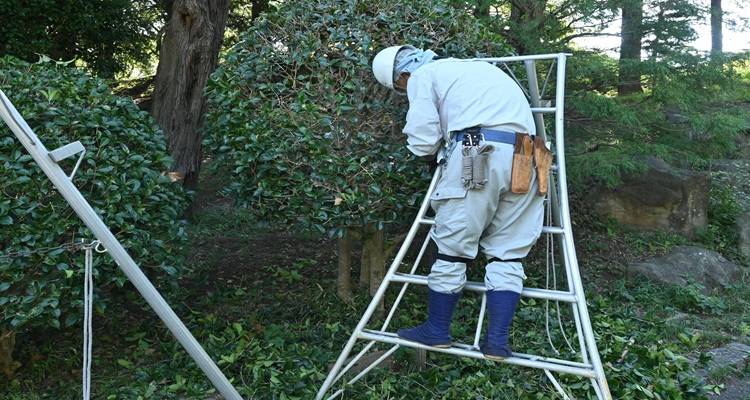
When you hire a tree surgeon to remove your holly tree, they will usually provide a fixed quotation rather than charging by the hour. Labour costs will make up the majority of the total cost, which will depend on the size of the tree, how many people are required, and the complexity of the removal.
- Typical Labour Rates — Tree surgeons usually quote a cost for the project, but typical rates are around £40 to £60 per hour or £300 to £450 per day, per tree surgeon.
- Team Size — For larger removals or to ensure safe working, most surgeons will work in pairs or small teams, which will increase labour costs.
- Complex Removal — Trees growing close to buildings or those that require sectional dismantling will usually take longer and mean labour costs more than the standard averages above.
Another factor that will affect how much you pay for labour and the total cost of the job is where you live, as tree surgeons in London and the South East typically charge 10% to 20% more than the UK average.
Holly Tree Removal Supply Costs
If you need to remove a mature holly tree, it's almost always a good idea to hire a professional tree surgeon to complete the job safely. However, if it is only a small tree or shrub, it might be something you could attempt to remove yourself using basic garden tools.
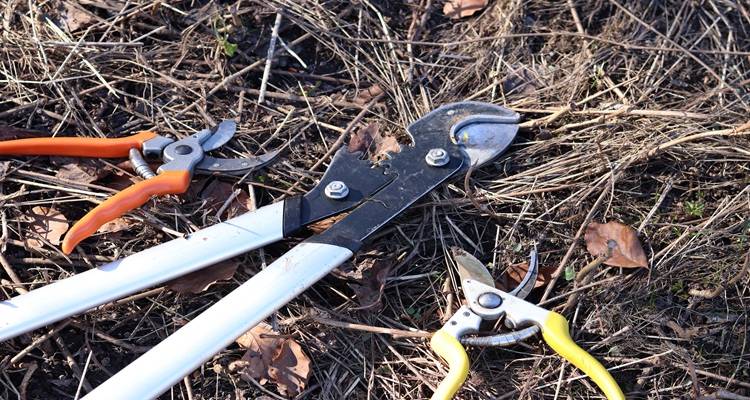
Unless you already have them, there are various pieces of equipment that would make the job easier. The table below lists the equipment you will probably need, along with typical purchase or hire costs.
| Equipment | Typical Cost |
|---|---|
| Pruning saw | £20–£50 |
| Loppers | £30–£80 |
| Secateurs | £10–£30 |
| Heavy-duty gardening gloves | £10–£25 |
| Safety glasses | £5–£20 |
| Wood chipper hire (optional) | £80–£150 per day |
Want a custom price?
Post your job
If you need to purchase most of these items to help you remove your holly tree yourself, expect to pay around £75 to £200, with additional costs if you decide to hire machinery like the wood chipper.
Anything larger than a small holly tree should really be removed by a tree surgeon, as it would typically require professional equipment they are experienced in using, such as:
- Professional chainsaws and cutting equipment.
- Specialist climbing and rigging equipment for working at height.
- Commercial wood chippers to dispose of branches and foliage.
- Stump grinders to remove the remaining tree stump.
Factors That Impact Holly Tree Removal Costs
The cost of your holly tree removal will depend on a number of factors, such as its size and how easy it is to access. The list below will help you understand these factors and why some jobs cost more than others.
Height and Width of the Tree
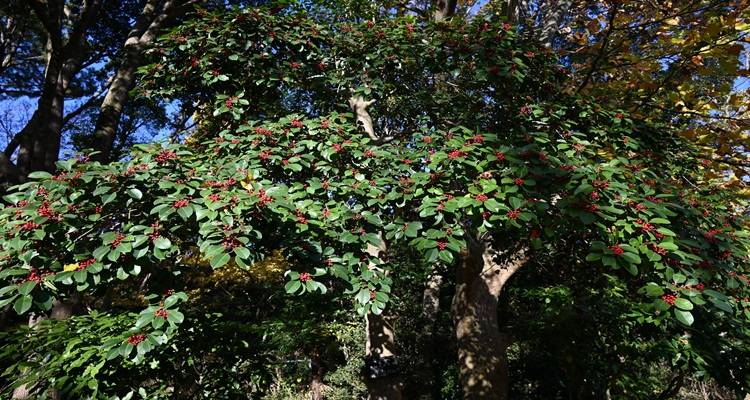
Holly tree removal costs are primarily influenced by the height of the tree, as well as the width of the canopy.
A professional will take off some or all of the branches before felling the tree as this 'limbing' reduces the risk of the tree falling unpredictably during the felling process. Trimming large trees will take longer, increasing the costs of removal.
Thickness of the Trunk
The thickness of the trunk is directly related to how heavy the holly tree is, and this impacts the cost of removing it.
Cutting down a tree with a large diameter trunk will take more time, as it may need to be cut down in sections for safety reasons or to avoid damage to surrounding buildings. This extra time adds to the cost.
Accessibility of the Tree
A holly tree growing in an open area with good access is cheaper to remove than one in a small space with no access for machinery.
Having to remove the tree using manual methods instead of with machinery could require more manpower and take longer, and the limited access could make getting rid of the waste harder, too, increasing your removal costs.
Proximity to Buildings, Fences, or Other Structures
If the holly tree is close to a fence, building or other structures such as a greenhouse or patio, it makes removal more difficult.
If machinery can't be used and manual tools are needed, the work will be more labour-intensive. Plus, if extra care needs to be taken not to damage the surrounding structures, the longer timescales will increase removal costs.
Waste Removal and Disposal
The size of the holly tree will determine the volume of waste, which in turn impacts how much you pay for its removal and disposal.
Most landscapers and tree surgeons will offer waste removal as part of their service. Just make sure it's included in the quotes you request.
Regional Labour Rates
Where you live in the UK is also likely to affect the cost of removing your holly tree, as labour rates vary across the country.
Tree surgeon rates are typically higher in London and the South East compared to the UK average, so London residents could pay around 10% to 20% more for the same work.
Additional Holly Tree Removal Costs
| Additional Service | Average Cost |
|---|---|
| Stump grinding or removal | £150–£200 |
| Waste removal and disposal | £50–£150 |
| Garden clean-up | £100–£200 |
| Cutting the trunk into logs | £50–£100 |
| Tree inspection or health assessment | £150–£450 |
Want a custom price?
Post your job
As well as the holly tree removal cost, there are additional expenses that you may not have considered. Take a look at some of the extras that you might want to factor into your budget.
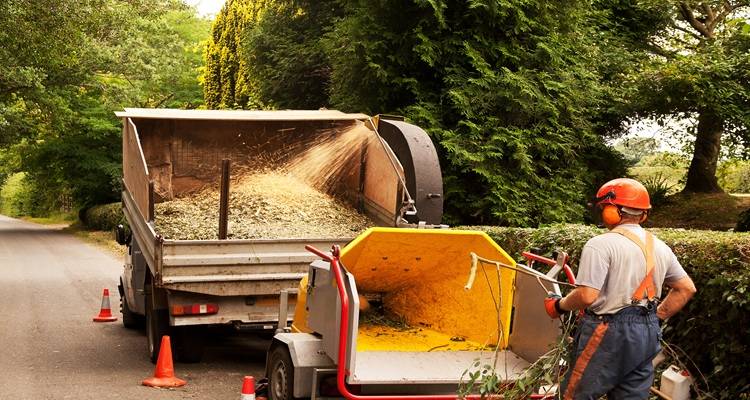
- Stump Grinding or Stump Removal — The cost of removing a tree doesn't typically include grinding or extracting the stump unless you specifically request that it's added to your quote. Extraction is also possible and involves using a mini excavator to dig out the stump.
- Waste Removal and Disposal — Most gardening companies and tree surgeons may include waste removal and disposal as part of their services. However, it's important to check your quote to see if this is included or incurs an extra charge.
- Garden Clean-Up After the Tree Is Removed — Removal of a holly tree will cause a certain amount of disruption and mess in your garden. If you want your garden returned to a clean and tidy state after the holly tree removal, you may have to pay for a complete clean-up.
- Cutting the Trunk into Logs — As holly makes excellent firewood once seasoned, you may want the trunk cut up into logs and perhaps split to accelerate the drying process. This is definitely an extra service and won't be part of a typical quote.
- Tree Inspections or Health Assessments — A tree inspection or health assessment can help you decide whether to remove a holly tree or not. A professional arborist will carry out a tree assessment, which determines its health, structural integrity and safety.
Ask a Trade
Got a question that only a tradesperson can answer? We have thousands of trades ready to answer any question you may have.
Ask your question

Tree Protection Rules for Holly Tree Removal
You may need to obtain permission or give notice before removing a holly tree.
Tree Preservation Order
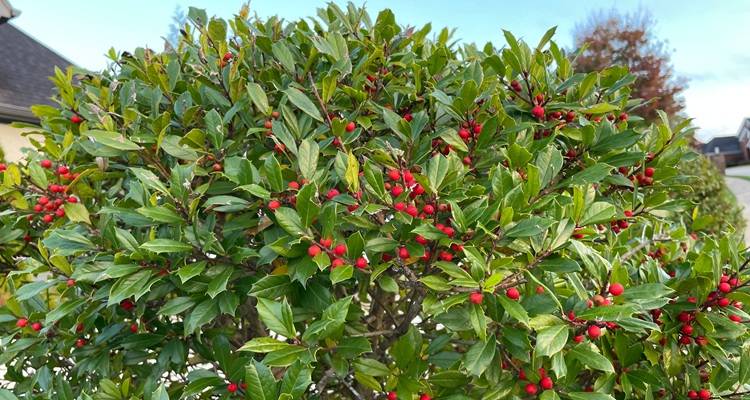
A tree preservation order (TPO) is a legal restriction that protects a tree, group of trees or area of woodland. It prohibits the felling, lopping, topping, uprooting, or wilful damage of trees without prior permission from the local authority.
TPOs can apply to any type of tree as long as the council has determined that it is of value to the local landscape. Cutting down or destroying a TPO tree is a criminal offence and can result in an unlimited fine in England and Wales.
Trees in Conservation Areas
Any tree which has a diameter of 75mm or more is automatically protected in a conservation area. To do any work on these trees, you need to give the local council at least 6 weeks' notice and wait for permission to be granted, or wait until 6 weeks pass and you haven't heard back. If you do the work without giving notice, it is a criminal offence, and you are liable for a fine.
Professional landscapers and tree surgeons are familiar with the process needed for working on TPO trees and those in conservation areas. They are also aware of all the Health and Safety regulations to be followed when removing a holly tree.
Types of Holly Tree Removal
There are three ways of removing a holly tree: straight felling, also known as a straight drop, sectional dismantling, and mechanical removal. Let's take a look at each method in detail.
Straight Felling
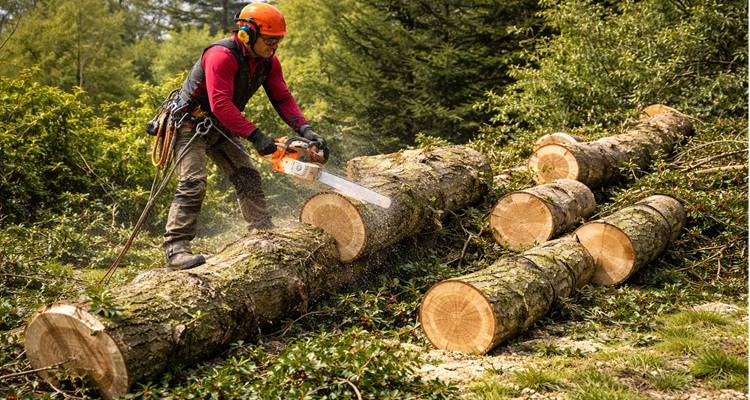
Straight felling refers to bringing down a tree in one piece by cutting it at the base. This method can only be used where there is sufficient space for the tree to fall safely and no structures or obstacles nearby. It is the most cost-effective method as the tree can be removed relatively quickly.
Pros
- ✔ Fastest way to remove a holly tree.
- ✔ Costs less than sectional dismantling.
- ✔ Ideal for large, open spaces.
Cons
- ✖ Requires an open area.
- ✖ Not suitable for urban gardens.
- ✖ Risk of damage if the tree falls incorrectly.
The cost of straight felling a holly is around £250 to £350 for a medium-sized tree.
Sectional Dismantling
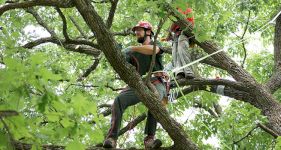
Sectional dismantling involves cutting the tree down piece by piece, with each section being lowered to the ground by ropes and pulleys. The tree surgeon uses a safety harness and climbing ropes to remain secure while working in the tree.
This method requires at least two people, as someone needs to be on the ground to control the descent of the cut sections. It is used to remove trees in residential areas or confined spaces.
Pros
- ✔ The most controlled way of removing a holly tree.
- ✔ Ideal for small gardens or close to structures.
- ✔ Reduces damage on the ground with controlled descent.
- ✔ Useful for dead, damaged or diseased trees.
Cons
- ✖ More expensive than straight felling.
- ✖ Time-consuming process.
- ✖ Sections can be heavy.
- ✖ Requires specialist climbing skills and safety training.
Cutting a holly tree down into pieces is very labour-intensive. The specialist has to climb and then secure themself to the tree, rig the section with ropes and pulleys, cut through each piece with a chainsaw and, in conjunction with someone on the ground, lower the cut section carefully.
Not only is this a slow process, but it is also an expensive one. It is much more costly than straight felling at around £1,000 to £2,500.
Mechanical Removal
Mechanically removing a holly tree can be done with a grapple saw. This machine is a combination of a hydraulic chainsaw and a mechanical grabber arm. It's a safe way of removing large or unstable trees as the operator can work from a distance, grabbing the tree, cutting through the trunk and moving it, all in one motion and from the safety of the vehicle's cab.
Pros
- ✔ Fast, efficient method of tree removal.
- ✔ Safe, as work can be done at a distance and from within the vehicle's cab.
- ✔ Complete control of the removal.
- ✔ One operator can take out a whole tree in minutes.
- ✔ No damage from unpredictable felling.
Cons
- ✖ Very expensive method.
- ✖ Needs a large open space and good access.
- ✖ Requires a qualified operator.
It can cost around £1,000 to £3,000 per day to hire a grapple saw and operator. Prices depend on location and the scale of the work.
Ultimately, the method of removal that you choose for your holly tree will determine the overall price and timescale for the work.
Alternative Options to Holly Tree Removal
There are alternatives to removing a holly tree in some situations. Of course, this won't apply to all circumstances, but before you decide to fell a holly tree, take some time to consider if there is a different route you could take.
Tree Pruning
If the tree is large, unkempt and an eyesore, then perhaps a professional prune would make it a more attractive feature in your garden. Pruning should be done in mid to late summer, or spring if you want to cut the tree back harder. You can reduce the tree by as much as a third to bring it back to a more manageable size or appealing shape.
Crown Reduction
Holly will tolerate a hard prune, so crown reduction is possible as an alternative to removal. Reduction is best done in spring, and should be done by a professional tree surgeon to protect the health of the tree.
Crown Thinning
Crown thinning involves removing smaller branches from within the canopy to make it less dense. Unlike crown reduction, it doesn't affect the overall size of the tree but rather helps light and air get into the canopy, removes diseased branches and reduces wind resistance.
Hedge Trimming (if the Holly Is Part of a Hedge)
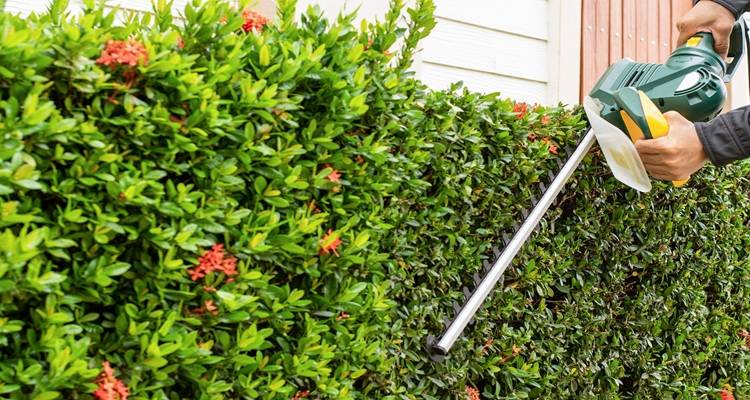
Holly is frequently used as a hedge shrub as it is evergreen and dense, and its prickly leaves serve as a deterrent to intruders. Trimming holly allows you to control its height and width as well as maintain a tidy perimeter in your garden.
All of these options let homeowners fix maintenance issues while allowing the holly tree to remain in place.
Checklist: Hiring Local Tree Surgeons for Holly Tree Removal
Before hiring a contractor to remove a holly tree, there are certain questions you should ask and information that you should obtain. Below are some suggestions for a contractor checklist that you can use to make sure you hire the right person for the job.
Obtain Several Quotes to Compare Prices
For any work in your home, it's important to get at least three quotes so that you can compare prices. It also lets you gauge what the average cost is likely to be for the method that you choose. Make sure when comparing quotations that you are weighing up like-for-like.
Check Qualifications and Experience
Verify the qualifications and relevant experience of the professional that you are considering hiring. Ask to see the tree surgeon's chainsaw qualifications such as City & Guilds or Lantra certificates. You could also check if they are members of a voluntary scheme such as the Arboricultural Association, the Institute of Chartered Foresters, or the International Society of Arboriculture.
Confirm Public Liability Insurance
Anyone working in your home should be adequately covered by public liability insurance to protect you from any accidents or damage that may occur during the work. They should be able to provide you with proof of cover. If they employ anyone, they should also have employers' liability insurance.
Ask Whether Waste Removal Is Included in the Price
Most professional gardening and tree services offer waste removal as part of their business. However, it's important to check whether the removal and disposal of your tree waste is included in the price that you're quoted.
Check Customer Reviews and Previous Work
Previous client feedback gives you insight into the reputation of contractors as well as their professionalism, quality of work and reliability. Check their websites and social media to see if they are people you can work with.
Ensure the Contractor Understands TPO Regulations
Tree surgeons and professional landscaping contractors should have a thorough understanding of TPO regulations as well as the restrictions on working on trees in conservation areas.
Confirm Equipment and Access Requirements
Ask contractors about the type of equipment they will need to bring onto your property and their access requirements. For machinery such as mini excavators or stump grinders, enquire about the use of heavy-duty ground protection mats.
Removing Holly Tree Stumps
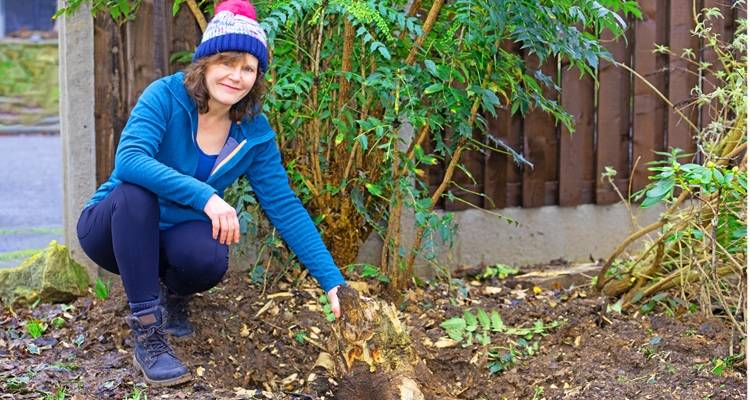
Once the holly tree has been cut down, you will be left with the stump. Some people want the stump removed, and there are three ways of doing this.
Stump Grinding
The fastest and most efficient way to remove a stump is to use a stump grinding machine. It chews through the wood, leaving behind a clear area that can be replanted with whatever you want.
Full Stump Removal
The stump can also be completely removed by using a mini excavator. Don't forget that this will leave behind a large hole that will need to be backfilled with soil.
Chemical Stump Treatment
Using chemicals to kill off a stump is the slowest method and can take months to be effective. If you choose this method, make sure you choose a product sold for home garden use and carefully follow the instructions on the label. Using household chemicals such as Epsom salt or rock salt isn't always safe or legal.
The cost of removing a stump will add to your final bill, but it leaves a tidier space and allows the immediate replanting of the area.
FAQs
How Long After Cutting Down a Holly Tree Should a Stump Be Removed?
It's best to remove a stump immediately after cutting down a holly tree to prevent any regrowth. Holly is a vigorous plant, and suckers will appear quickly if the stump is left in place.
Does Home Insurance Cover Holly Tree Removal?
Home insurance doesn't usually cover voluntary holly tree removal, but the job may be covered if you have to have the tree removed if it has fallen and damaged your home. The purpose of home insurance is to protect against unforeseen or sudden damage, not planned works.
What Is the Best Month to Cut Down a Holly Tree?
January is potentially the best month to remove a holly tree, as nesting season is still a couple of months away, and you are unlikely to disturb any birds. Tree surgeons are also less busy at this time of year, so you may get a cheaper rate than in spring or summer.
How to Determine if a Holly Tree Needs to Be Cut Down?
Holly trees are quite resilient, but even they can be affected by disease or damage. If the tree is showing signs of being unstable or a danger, it should be removed. Obvious structural damage, disease or root issues often indicate a tree should be felled.
What Is the Fastest Way to Remove a Stump?
The fastest way to remove a stump is with a stump grinder. Even the largest, multi-stemmed stumps can be eradicated in a matter of hours with no sign that they were ever there.