Builders
 Carpenters
 Electricians
 Flooring Specialists
 Gardeners
 Handymen
 Heating Engineers
 Painters & Decorators
 Plasterers & Renderers
 Plumbers
 Roofers
 Tilers
 my
myCooker Hood Installation Cost
At a Glance
- The average cooker hood installation cost is around £250.
- Most jobs take 3 to 6 hours to complete.
- A breakdown of extractor hood installation cost by type.
- How long the job takes and what's typically involved.
- What different cooker hood types cost to buy.
Get free estimates
Are you a trade? Get more work today!
£250
Table of Contents
- How Much to Fit a Cooker Hood?
- Cooker Hood Installation Prices
- Labour Cost of Installing Cooker Hood & Timescales
- Supply Costs
- Additional Cooker Hood Installation Costs
- Factors That Impact Cooker Hood Installation Costs
- What's Involved in Installing a Cooker Hood?
- Planning Permission & Building Regulations for Cooker Hood Installations
- Types of Cooker Hoods
- Checklist: Hiring a Cooker Hood Installer Near You
- FAQs
How Much to Fit a Cooker Hood?
A cooker hood helps keep your kitchen free from grease, smoke and cooking odours while you're using your hob. With a wide range of styles available (including extraction and recirculation models), installation costs can vary quite a bit.
It depends on the type of cooker hood you go for, and whether you need new wiring installed, or you're simply replacing an existing cooker hood with a connection already in place.
In this section, we break down the average cooker hood installation cost, what affects the final price, and when you might pay more for labour or electrical work.
If you want an accurate price for your home, you can look at quotes from local electricians and installers in your area, based on the exact type of cooker hood you're fitting.
Cooker Hood Installation Prices
How much does it cost to install a cooker hood? This chart will give you the average costs an electrician will charge to install a cooker hood.
| Installation | Trade | Cost Per Hour | Average Installation Time | Total Cost |
|---|---|---|---|---|
| Swap Cooker Hood Like for Like | Electrician | £40–£60 | 3 to 4 Hours | £120–£240 |
| Install Built-In Cooker Hood | Electrician Electrician's Helper |
£40–£60 £20–£30 |
3 to 5 Hours | £180–£450 |
| Install Island Cooker Hood | Electrician Electrician's Helper |
£40–£60 £20–£30 |
5 to 7 Hours | £300–£630 |
| Installing Integrated Cooker Hood | Electrician | £40–£60 | 5 to 6 Hours | £200–£360 |
| Installing a Chimney Cooker Hood | Electrician | £40–£60 | 4 to 6 Hours | £160–£360 |
Want a custom price?
Post your job
As you can see, the amount of time it takes to install a cooker hood will depend on the type of cooker hood you have chosen.
Labour Cost of Installing Cooker Hood & Timescales
Costs of fitting a cooker hood and the timescales involved depend on what type of cooker hood you are having installed. The above costs are for cooker hood installation by an electrician. This is because some installations will require a new electricity supply, which is notifiable work that needs signing off by a registered electrician, a third-party certifier, or building control, even if someone else does the installation.
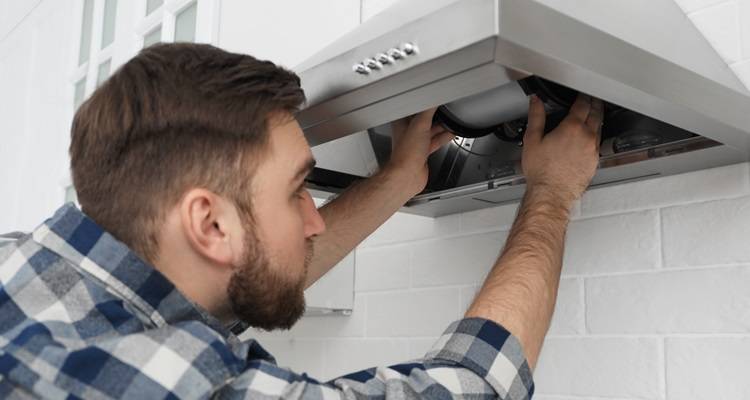
Most cooker hoods can be set up in one of two ways: recirculating (ductless) or ducted (vented outside). Recirculating models are usually quicker to fit because there's no duct to run. Ducted models can take longer because you may need to route ducting to an outside wall or through the ceiling. And if any fixed wiring needs changing, you'll want a qualified electrician.
Recirculation Cooker Hoods
A recirculation hood doesn't vent outside. Instead, it pulls air through a grease filter and (usually) a carbon filter to reduce smells, then pushes the air back into the kitchen. It won't remove steam and moisture in the same way a ducted hood does.
While installation is cheaper because you don't have ductwork, you will have to replace the filters now and then. Most carbon filters need changing every few months (it depends how much you cook), and they usually cost around £10 to £20.
Ducted Cooker Hoods
A ducted cooker hood is installed with ducting that goes through the wall, ceiling or floor and leads to the outside. This means when the extractor is in use the steam and odours are channelled along the ducting and vented outdoors. If you can't run a duct to the outside (for example, in some flats), a recirculating hood is usually the simpler option.
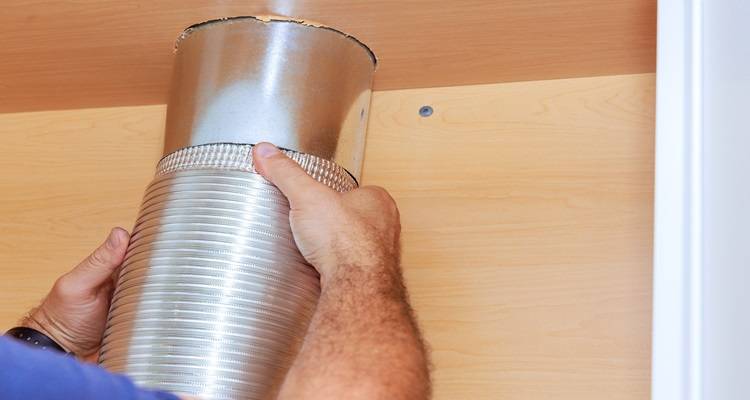
The installation of ducted cooker hoods takes longer because of the extra work the ducting entails. If your cooker hood is being placed on an outside wall, then the ducting won't be a huge job. But for example, if you are having an island cooker hood installed the ducting will need to pass through the ceiling or the floor which can be complex.
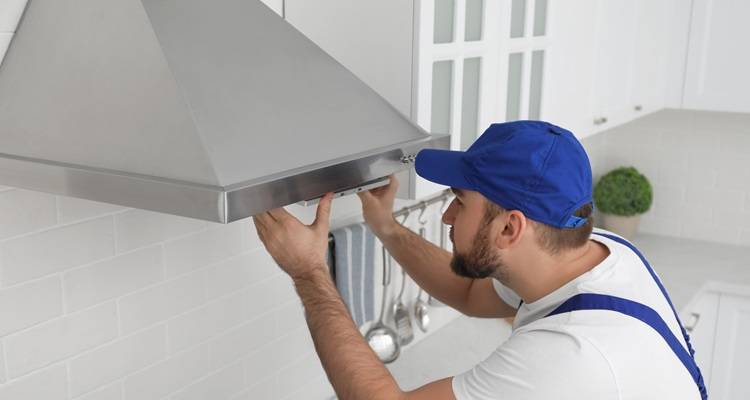
If you're swapping like-for-like and the wiring or connection point is already there, other trades may be able to fit the hood (for example, a kitchen fitter or a competent handyperson). But if any fixed wiring needs altering (like adding a fused spur or running a new cable), you'll want an electrician.
Cooker Hood Installation Costs for Other Trades
| Trade | Price Per Hour | Day Rate |
|---|---|---|
| Kitchen Fitter | £18–£37 | £144–£296 |
| Builder | £38–£50 | £304–£400 |
| Handyperson | £30–£40 | £240–£320 |
Want a custom price?
Post your job
Supply Costs
Cooker hood costs vary. How much does it cost to fit a cooker hood? Well, there are several styles and designs you can choose from, and some are cheaper than others. For example, it is more cost-effective to buy a cooker hood that fits to the wall as this is easier to install than, say, an island hood or a hood using new technology like the downdraft hood.
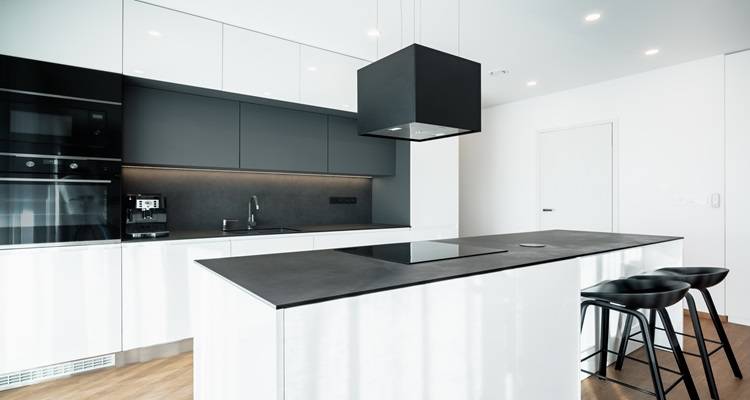
Prices are also influenced by the size of the cooker hood. Popular widths include 60cm, 70cm, 80cm and 90cm, with larger options available too. Some brands are also more expensive than others. For example, a common chimney cooker hood brand can be around £150 cheaper than a chimney cooker hood from a high-end brand.
Cooker Hood Prices
| Cooker Hood Type | Size | Average Cost (Low) | Average Cost (High) |
|---|---|---|---|
| Chimney | 60cm Wide | £50–£80 | £800–£1,100 |
| Canopy | 60cm Wide | £105–£400 | £405–£800 |
| Visor | 60cm Wide | £50–£150 | £450–£550 |
| Integrated | 60cm Wide | £60–£100 | £600–£800 |
| Ceiling | 90cm Wide | £500–£650 | £950–£1,400 |
| Island | 90cm Wide | £500–£650 | £700–£2,000 |
| Downdraft | 60/90cm Wide | £300–£500 | £1,700–£2,300 |
Want a custom price?
Post your job
Additional Cooker Hood Installation Costs
An additional cost whilst installing a cooker hood is the installation of ducting. Vent kits are relatively cheap at around £15 to £25. You will also need someone to drill the right-sized hole in your wall. Any one of the trades in the above chart should be able to do this as long as they have the right tools.
Kitchen Island Installation
Other work you may be doing in the kitchen will also need to be added to your budget. For example, you could have a kitchen island installed with the addition of a hob or a sink.
If you're already planning a kitchen remodel, it's worth pricing everything together so you don't get caught out by the extras.
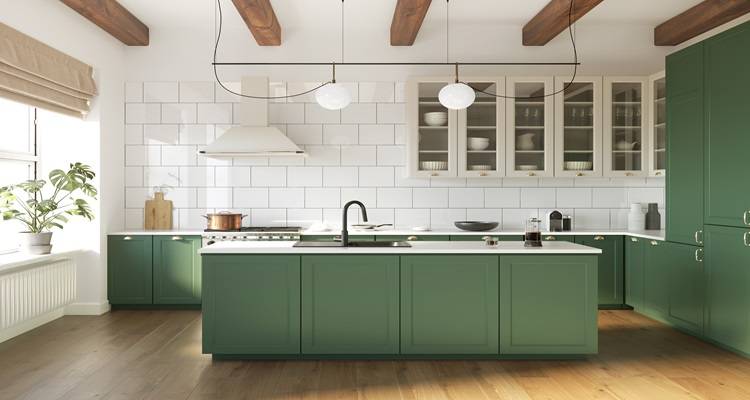
A kitchen island on average will cost between £5,000 and £8,000. If you want a hob integrated into the kitchen island you will have to pay for the appliance and the electrics. A sink will require plumbing.
A New Hob
A hob installed on a kitchen island will usually take an electrician around 2 to 3 hours if the wiring is already in place. If extra wiring needs to be channelled through to the kitchen, then this will take longer and cost more in labour.
A New Sink
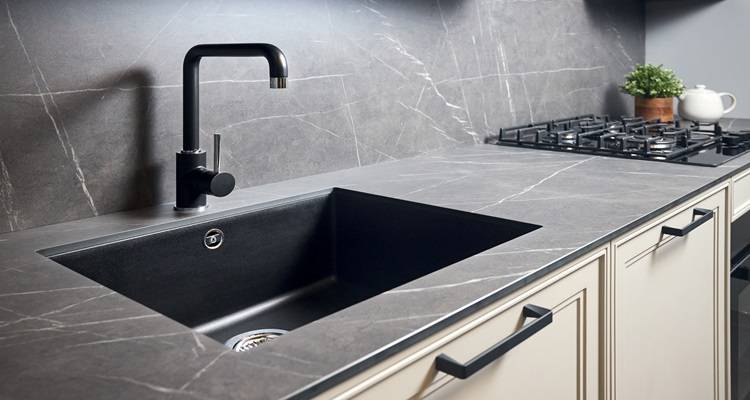
A sink installation will also need a cold and hot water feed, and a plumber will normally extend the pipes from wherever your water supply is located in the kitchen. A plumber will usually take around 2 to 3 hours to install a sink.
New Plug Point
If you haven't got a plug point for your new cooker hood, then an electrician can install one for you. The average time it takes to install a plug is between 1 and 2 hours. At £40 an hour, you are likely to pay around £80 and at £60 an hour the cost will be around £120.
You will always pay more for services if you live in and around the London area where costs are higher.
You will also have to pay for the plug. A single plug will cost around £10 to buy from a DIY store.
Have a look at the chart below to see installation and supply prices. These costs are for installation only and don't include the price of cutting the worktop as you may have already had this done before delivery.
If you haven't, then a builder, handyperson or carpenter can do this job for you. The average price to cut a hole is between £40 and £60.
| Trade | Job | Hours For Installation | Average Cost Per Hour | Total Cost |
|---|---|---|---|---|
| Electrician | Install hob | 2 to 3 | £40–£60 | £80–£180 |
| Plumber | Install sink | 2 to 3 | £40–£70 | £80–£210 |
| Electrician | Install New Plug Socket | 1 to 2 | £40–£60 | £40–£120 |
| Appliance | Average Low Price | Average High Price |
|---|---|---|
| Electric Hob | £150–£400 | £1,000–£3,600 |
| Sink | £50–£200 | £400–£1,200 |
Want a custom price?
Post your job
Factors That Impact Cooker Hood Installation Costs
The cost factors that influence the price of installing a cooker hood are varied. The type of cooker hood you choose will influence the cost of installation.
Another factor is what type of cooker hood extractor you choose and whether you have a recirculating cooker hood or a ducted cooker hood because as you have seen a ducted cooker hood requires more work.
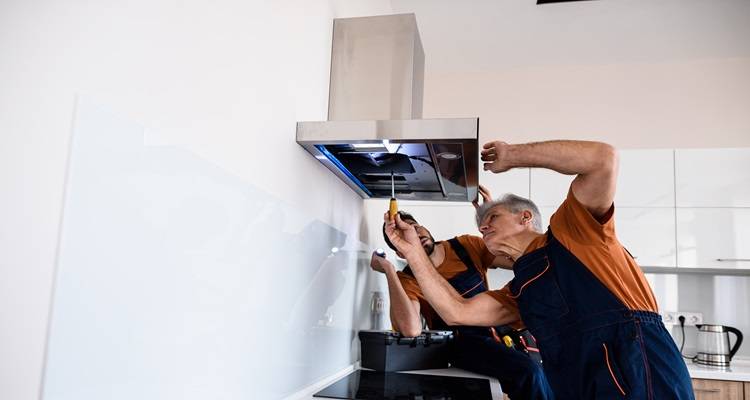
One more that may affect the cost of your installation is if two people are needed. If your electrician needs an assistant with him then this will cost more. An electrician's mate on average costs between £15 and £20 an hour.
What's Involved in Installing a Cooker Hood?
Installing a cooker hood isn't always something you should attempt yourself. While some models may look pretty easy, the job often entails electrical work and almost always drilling into walls or ceilings, not to mention getting the height and positioning just right.
Because this isn't a particularly DIY-friendly task, most homeowners choose to have their cooker hood installed by a qualified electrician. This is especially important if new wiring is needed or the installation needs to meet building regulations.
It's also completely normal (and a sensible move) to get quotes from more than one electrician. With MyJobQuote, you can see quotes from electricians near you that are fast, free, and with no obligation to go ahead.
Here's a simple overview of what happens when a professional installs a cooker hood.
Before the Job Starts
- Initial Checks — The installer will assess where the cooker hood is going, check the wall or ceiling structure, and confirm whether existing wiring and ducting can be reused.
- Measuring and Planning — Measurements are taken to make sure the hood sits at the correct height above the hob and that any ducting route is practical.
During the Job
- Fitting the Hood — The cooker hood is fixed into position, whether that's onto a wall unit, directly to the wall, or suspended from the ceiling in the case of island models.
- Electrics and Ducting — The hood is wired in and, if required, ducting is installed to vent air outside or set up for recirculation.
After the Job
- Testing and Adjustments — The installer will switch the hood on, test fan speeds and lighting, and make any small adjustments to ensure everything works as it should.
- Final Checks — Filters are fitted, fixings checked, and the area is cleaned up before the job is signed off.
Ask a Trade
Got a question that only a tradesperson can answer? We have thousands of trades ready to answer any question you may have.
Ask your question

Planning Permission & Building Regulations for Cooker Hood Installations
For most houses, fitting a small external vent for ducting is fairly effortless and often falls under permitted development. However, if you're in a listed building you'll need listed building consent, and there are restrictions if you live in a conservation area or you're making changes on a front elevation.
If you live in a flat, check your lease and get permission from the freeholder/managing agent before you drill anything.
Replacing a cooker hood on the existing wiring is not a notifiable job in England or Wales.
However, any new circuit (and some other types of fixed wiring work) must comply with the regs and be properly tested. That's why people use a registered electrician, because they can self-certify the work, otherwise it needs to be notified and signed off via Building Control.
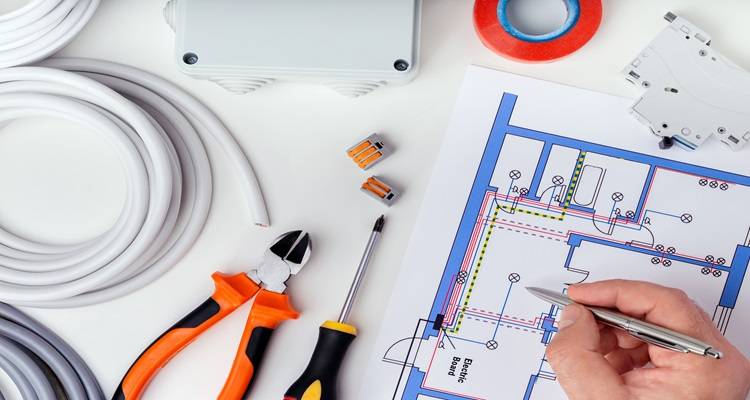
Physically fitting the hood (mounting it and running ducting) doesn't always need an electrician. But if the hood is hardwired, or you're altering any fixed wiring, get a qualified electrician in. Either way, follow the manufacturer's instructions for safe clearances above the hob and for ducting length/bends.
Ventilation guidance under Building Regs (Part F) was updated in 2022, with transitional arrangements running into 2023 for some projects. One key point: a recirculating cooker hood on its own doesn't count as "extract ventilation" for Building Regs purposes. So if you're doing a new build, an extension, or a big refurb that falls under Building Control, you may still need a separate kitchen extract fan or a ducted setup. If you're unsure, ask your installer or Building Control.
Types of Cooker Hoods
Here are the types of cooker hoods you can buy.
Chimney Hood
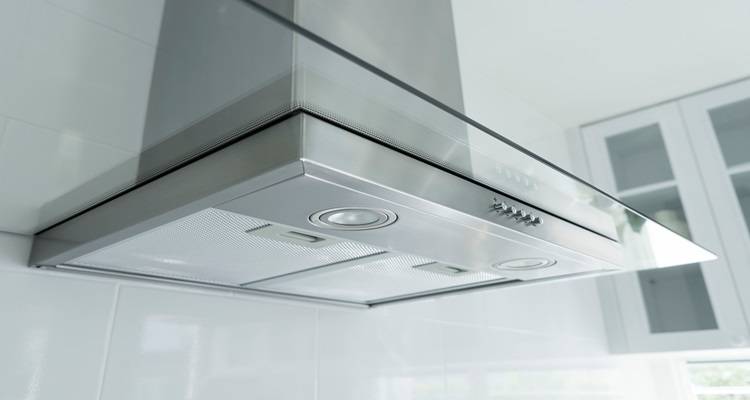
Chimney hoods are often installed against the wall. They are chimney-shaped and are placed above the hob. The extractor can be curved or angled for a modern look. They are ideal in larger kitchens.
Canopy Hood
Canopy hoods fit into a chimney breast or a wall unit. They sit flush against the wall or unit and give a minimal look for householders who want a discreet appliance.
Visor Hood
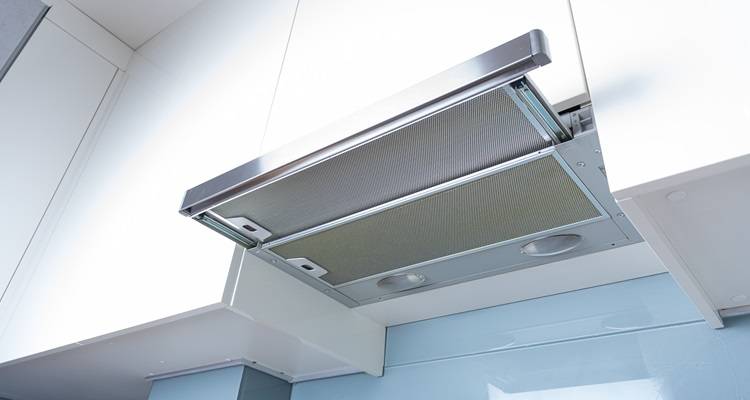
Visor hoods fit under a kitchen wall unit. You can pull out the extractor to extend it and they are ideal for small kitchens. They are perfect if you are on a budget and are looking for an affordable cooker hood.
Integrated Hoods
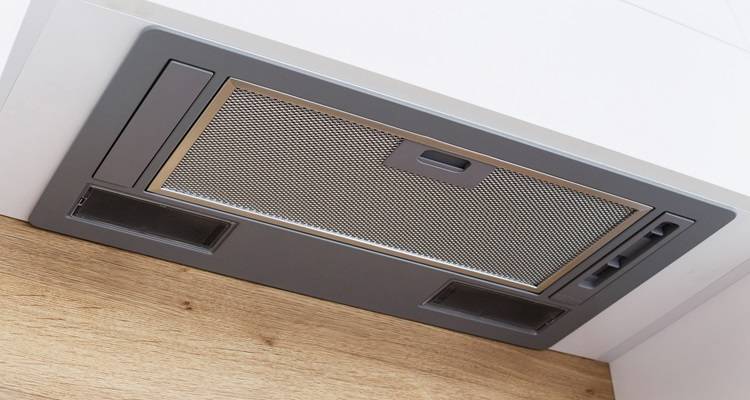
Integrated or built-in cooker hoods are placed in a wall cabinet above your hob and usually come in compact sizes, so they aren't suitable for a large hob. However, they are perfect for small kitchens. Prices vary according to the brand you choose, but you can get one at a reasonable price.
Ceiling Hoods
Ceiling hoods sit flush with the ceiling which gives them a sleek, minimalist look. Installation often requires a false ceiling. This type of cooker hood can be expensive, but if you want a cooker hood that blends in and doesn't stand out like a chimney hood, then a ceiling hood is an ideal purchase.
Island Hoods
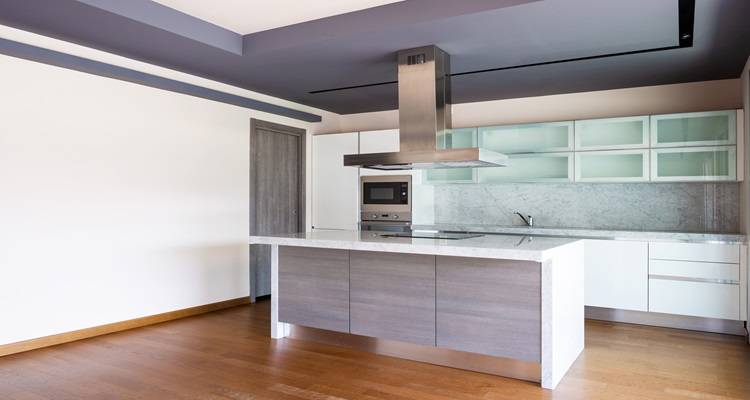
An island hood is suspended from the ceiling and is placed over your hob. Some styles are made to look like pendant lights and are popular with householders who want to make a statement with their appliances.
Downdraft Extractors
Downdraft extractors aren't cheap, but they're handy if you want clean lines and don't fancy a hood above the hob. They're built into the worktop and stay hidden until you switch them on. Then they rise up and pull steam and smells down and away from the cooking area.
Checklist: Hiring a Cooker Hood Installer Near You
As we've already said, an electrician is normally the person you would choose to install your cooker hood. But other trades can also do the job as long as the electricity connection doesn't need a qualified electrician.
Consider these key points before hiring an electrician for this job:
- Have they installed your type of cooker hood before? (chimney, integrated, island, etc.).
- Who's doing the electrical connection? And check whether it needs signing off under Part P.
- What's included in the quote? (Ducting, drilling, any extra wiring, fittings).
- What about waste removal? Ask them if they'll take the old hood and packaging away.
- Do they have recent reviews or photos of similar jobs? Check out before and after photos on their MyJobQuote profile so you know what standard to expect.
- Are they insured? (Public liability as a minimum).
- Will they give you a clear timescale in writing? That's the start time, finish time, and any issues they'll come back for.
FAQs
Can I Install a Cooker Hood Myself?
Sometimes. If it's an easy like-for-like swap and the wiring is already there, it can be doable for someone who's genuinely confident with electrics. But a lot of installs aren't that neat. New wiring, drilling for ducting, awkward fixing points, getting the height wrong… it's easy to mess up. That's why most people get an electrician to fit it correctly.
How High Should a Cooker Hood Be Above the Hob?
It depends on the model. So, always check the manufacturer's instructions first. Without any manufacturer's requirements, building regulations guidance is to install the hood 650mm to 750mm above the hob surface. Too low and it's unsafe (and annoying to use). Too high and it won't clear steam and smells as well, so you end up cranking it up.
What Size Cooker Hood Do I Need?
Go for a hood that's the same width as your hob, or slightly wider. So a 60cm hob pairs well with a 60cm hood, and bigger hobs often suit 80cm or 90cm. If you cook a lot (or love anything smoky), sizing up can help, especially on open-plan kitchens where smells travel fast.
Does a Cooker Hood Need a Plug Socket or Can It Be Hardwired?
Both are common. Some cooker hoods plug into a socket inside a cupboard, while others are hardwired into a fused spur. This is one of the reasons installation costs can jump. If there's no suitable power supply where the hood needs to go, an electrician may need to add one.
How Noisy Are Cooker Hoods?
It varies a lot by model. Quieter cooker hoods can sound more like background "hum". But cheaper or more powerful ones can be noticeably loud on the higher settings. If noise is a deal-breaker, check the dB rating before you buy which you'll find listed in the specs. Don't forget, though. Ducted hoods often sound different to recirculating ones.