Builders
 Carpenters
 Electricians
 Flooring Specialists
 Gardeners
 Handymen
 Heating Engineers
 Painters & Decorators
 Plasterers & Renderers
 Plumbers
 Roofers
 Tilers
 my
mySkirting Board Radiators Cost
At a Glance
- The average cost of installing skirting board heating is around £1,500.
- The job will take approximately 1 to 2 days per room to complete.
- A breakdown of how much skirting board heating costs to install.
- How long this job typically takes and what's involved.
- How to find a local skirting board heating specialist using MyJobQuote.
Get free estimates
Are you a trade? Get more work today!
£1,500
Table of Contents
- How Much Does Skirting Board Heating Cost to Install?
- Skirting Heating Cost Factors
- Skirting Board Heating Running Costs
- How Does Skirting Board Heating Compare to Other Systems?
- Can You Install Heated Skirting Boards Yourself?
- Is Skirting Board Heating Suitable for My Home?
- What are the Benefits of Skirting Board Heating?
- Checklist: How To Find a Skirting Board Heating Installer in the UK
- FAQs
How Much Does Skirting Board Heating Cost to Install?
How much is skirting board heating?
Skirting board heating is more expensive than traditional radiators, but less expensive than installing underfloor heating, as well as being less invasive.
Where are you planning to install skirting board heating?
Living Room/Dining Room
7 votes - 50%50% of votes
Bedroom/Guest Room
4 votes - 29%29% of votes
Kitchen
2 votes - 14%14% of votes
Bathroom
0 votes - 0%0% of votes
Hallway
1 votes - 7%7% of votes

14 votes
See results
Hide results
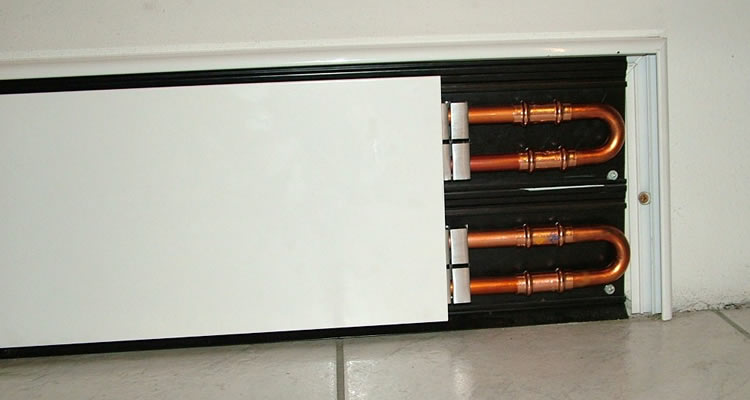
A skirting board heating system looks just like any conventional skirting board on the outside, but inside, they have hidden heating elements capable of warming a room from the ground up.
There are two main types of skirting board heating:
- Wet systems - Wet skirting boards are connected to either your boiler, air source heat pump, or ground source heat pump with small pipes, and work in a similar way to conventional radiators.
- Electric systems - Electric skirting boards have heating cables inside, which are controllable via a thermostat.
So, what's the cost of installing skirting board heating?
Your installation costs will differ depending on the type of system you choose:
Wet systems are more expensive to install, typically around £1,300 to £2,100 for an average-sized living room. However, they do come with the benefit of potentially having lower running costs, depending on efficiency of the heat source.
Electric skirting heating costs less to fit, usually around £1,000 to £1,700 for an average-sized living room, but have higher running costs.
We'll go into this in more detail now.
We have rising damp on a party wall which is quite bad, we have taken off the plaster to reveal quite bad bricks (the house is very old) I was wondering that once we have done what we can would the Thermaskirt skirting boards be a good idea to keep it at bay for future?
"You can use the thermaskirts, but if the job is done properly, you don’t need them."
Skirting Board Radiator Prices
Costs vary depending on the system type and room size. Wet skirting board radiators are more expensive to install but can cost less to run. Electric systems (also known as dry systems) are cheaper to fit but carry higher running costs. The table below shows typical installation costs for both system types by room size.
| Room Size | Wet System Cost | Electric System Cost |
|---|---|---|
| Small bedroom (12m²) | £800–£1,200 | £600–£1,000 |
| Living room (20–25m²) | £1,300–£2,100 | £1,000–£1,700 |
| Open-plan kitchen/diner (35–40m²) | £2,100–£3,200 | £1,500–£2,500 |
| Whole house (3–4 rooms) | £5,000–£9,000 | £3,500–£7,000 |
Want a custom price?
Post your job
Skirting Heating Cost Factors
Several factors can push your installation costs toward the higher or lower end of the ranges shown above:
- System type — wet systems cost more to install than electric systems, but typically have lower running costs.
- Room size and perimeter length — skirting board heating is priced per linear metre of board, so larger rooms with longer perimeters will cost more.
- Number of rooms — installing across multiple rooms in one visit can reduce the per-room labour cost compared to doing each room separately.
- Property type — older properties with uneven walls, limited access, or no existing central heating pipework nearby will add to installation time and cost.
- Material choice — aluminium profiles offer better heat conduction and durability but cost more than MDF-based options. Aluminium typically costs £30–£60 per linear metre in materials alone, versus £20–£30 for MDF.
- Thermaskirt and branded systems — branded wet systems such as Thermaskirt tend to carry a premium over generic alternatives, but are widely regarded as the market-leading option for wet skirting board heating.
- Location — labour rates are higher in London and the South East than in other parts of the UK.
- Existing pipework — for wet systems, the installer needs supply pipes in or near each room. If these are not already in place, additional plumbing work will be needed.
Skirting Board Heating Running Costs
How efficient is skirting board heating?
Running costs depend on whether you have a wet or electric skirting board heating system, and how many rooms are heated. The figures below are based on the current Ofgem price cap rates, which apply from 1 July to 30 September 2026:
- Gas: 7.33p per kWh
- Electricity: 26.11p per kWh
These rates are set by Ofgem and reviewed every 3 months. The estimates below assume moderate usage and will vary depending on insulation quality, thermostat settings, and the size of the property.
| Room Size | Wet System (Est. Annual Cost) | Electric System (Est. Annual Cost) |
|---|---|---|
| Small bedroom (12m²) | £50–£80 | £80–£120 |
| Living room (20–25m²) | £90–£150 | £150–£230 |
| Whole house (3–4 rooms) | £250–£450 | £400–£750 |
Want a custom price?
Post your job
Wet skirting board systems operate at lower water temperatures than traditional radiators — typically 35–55°C compared to 65–75°C — which reduces energy consumption. Electric systems cost more to run but require no pipework and are quicker to install. For a full comparison of running costs against underfloor heating and traditional radiators, see the section below.
How Does Skirting Board Heating Compare to Other Systems?
If you're deciding between skirting board heating and other options, the table below gives a like-for-like comparison of installation costs and estimated annual running costs for a typical living room (20–25m²).
| Heating System | Typical Installation Cost (Living Room) | Est. Annual Running Cost (Living Room) |
|---|---|---|
| Skirting board heating – wet system | £1,300–£2,100 | £90–£150 |
| Skirting board heating – electric system | £1,000–£1,700 | £150–£230 |
| Traditional gas radiator (replace and fit) | £200–£600 | £100–£180 |
| Electric panel radiator | £100–£300 | £200–£350 |
| Wet underfloor heating | £1,800–£2,200 | £100–£200 |
| Electric underfloor heating | £800–£1,200 | £230–£460 |
Want a custom price?
Post your job
Traditional Gas Radiators
Gas radiators connected to a central heating system remain the most common heating choice in UK homes. Installation costs are significantly lower than skirting board heating, making them the most affordable upfront option.
Pros
- ✔ Low installation cost.
- ✔ Widely understood and easy to service.
- ✔ Fast heat output.
Cons
- ✖ Take up wall space and can restrict furniture placement.
- ✖ Uneven heat distribution — warmth concentrates around the radiator.
- ✖ Require higher flow temperatures than skirting board systems, which can reduce boiler efficiency.
Electric Panel Radiators
Electric panel radiators (also known as electric heaters) are a common choice for rooms off the gas network or where adding pipework isn't practical. They have low installation costs but the highest running costs of any system covered here.
Pros
- ✔ Very low installation cost — no pipework required.
- ✔ Simple to fit and control.
- ✔ Suitable for rooms without access to gas.
Cons
- ✖ High running costs due to electricity unit rates.
- ✖ Take up wall space, similar to gas radiators.
- ✖ Less energy efficient than wet systems.
Wet Underfloor Heating
Wet underfloor heating runs hot water through pipes beneath your floor and is one of the most energy-efficient heating systems available. It's best suited to new builds or major renovation projects where floors can be lifted.
Pros
- ✔ Very even heat distribution across the whole floor area.
- ✔ Low running costs, especially when paired with a heat pump.
- ✔ Completely invisible — no radiators or skirting boards needed.
Cons
- ✖ High installation cost, particularly in existing homes where floors must be lifted.
- ✖ Slow to heat up — can take 30–60 minutes to reach operating temperature.
- ✖ Disruptive to retrofit and may require a new boiler.
Electric Underfloor Heating
Electric underfloor heating uses heating mats wired beneath the floor surface. It's the most popular choice for retrofitting smaller rooms such as bathrooms and ensuites, where the disruption of a wet system isn't justified.
Pros
- ✔ Lower installation cost than wet underfloor heating.
- ✔ Less disruptive to fit than a wet system.
- ✔ Ideal for bathrooms and smaller rooms.
Cons
- ✖ Higher running costs than wet underfloor heating.
- ✖ Less effective at heating larger rooms.
- ✖ Still requires lifting and relaying flooring.
Can You Install Heated Skirting Boards Yourself?
Some plug-in electric heated skirting boards are DIY-friendly. But, if you're installing a fully integrated thermal skirting board, you'll need expert support.
Here's what you need to know:
- Hardwired electric skirting - Needs a professional electrician to install and sign off.
- Wet skirting linked to a gas boiler - Requires a Gas Safe registered engineer.
- Wet skirting linked to other heat sources (e.g. heat pumps) - You'll need a qualified heating engineer or plumber.
Ultimately, while a skirting board heater may look straightforward to install, the process will likely involve dealing with two of the most complex elements of any household: heating and plumbing.
Ensuring that the work is carried out safely by a professional will help keep your household safe.
Is Skirting Board Heating Suitable for My Home?
Skirting board heating, whether a wet skirting radiator or an electric system, works well in most modern, well-insulated properties. However, there are some scenarios where it may be less effective or require careful planning.
Where Skirting Board Heating Works Well
- Well-insulated modern homes — where heat loss is low, skirting heating systems can comfortably serve as the primary heat source.
- Bedrooms and medium-sized living rooms — the perimeter heating coverage is well-matched to standard room sizes of up to around 25m².
- Homes with heat pumps — wet skirting systems operate effectively at the lower flow temperatures output by air source and ground source heat pumps.
- Retrofit projects — unlike underfloor heating, no flooring needs to be lifted, making it a practical option for existing homes.
- Hallways and passageways — the perimeter layout makes it particularly effective in corridor-style spaces.
Where Skirting Board Heating May Be Less Effective
- Very large or open-plan spaces — in rooms significantly larger than 35–40m², the heat from the perimeter may struggle to reach the centre evenly. Larger open-plan kitchen/diner spaces may benefit from supplementary heating or a careful heat loss calculation before installation.
- Older, poorly insulated properties — draughts along the base of walls can reduce the efficiency of skirting heating systems, as warmth dissipates before it can circulate. Improving insulation or draught-proofing first is recommended.
- Rooms with uneven or crooked walls — the corner connections used in most skirting board heating systems require good vertical alignment, making installation more difficult in older properties with irregular walls.
- Rooms with limited perimeter space — large fitted wardrobes, kitchen units, or other furniture running along the walls can restrict how much skirting can be installed, reducing the heat output.
If you're unsure whether skirting board heating is the right fit for your property, a heating engineer can carry out a heat loss calculation before installation. This is particularly important for older properties or larger rooms.
Does skirting heating such as Thermaskirt go around internal walls as well as external? In other words, does it go all around the room?
"Yes, skirting heating systems like ThermaSkirt are designed to be installed all around the room, including both internal and external walls, to provide even heat distribution and prevent cold spots."
What are the Benefits of Skirting Board Heating?
Heated skirting boards are a fairly new innovation, so you might not know their benefits. Here are some reasons to consider skirting board heaters:
Space-Saving Design
Thermal skirting takes up less space than traditional radiators.
Skirting radiators are installed at ground level, meaning they don't take up valuable wall space or reduce a room's width like typical radiators might.
This makes them great additions for small properties where every square foot of space needs to be maximised.
Blends Into Any Room
Traditional radiators can look bulky and out of place in some properties. Heated skirting boards help to maintain a room's clean line.
Installing radiator skirting can be a useful method of heating a room without making it look cluttered. And, their universal design means they won't look out of place in old or new properties.
Even Heat Distribution
Skirting board heaters distribute warmth along the base of your walls, helping to provide more even heat distribution than a single wall-mounted radiator.
While wall-mounted radiators concentrate heat within their immediate location, integrated skirting board heaters provide warmth along the perimeter that can then spread naturally through the room. This can result in a more consistent temperature at floor level, with overall room temperatures continuing to be influenced by the airflow.
As such, consider where to place furniture when installing skirting board heating, to ensure it can operate at its most effective.
Can Warm Up Rooms Quickly
Skirting board heating is designed for rapid heat distribution, especially when installed along passageways. It can provide additional warmth to the perimeters of a room.
Compared to underfloor heating, which is becoming increasingly popular in modern homes, skirting board heating reaches optimal temperatures much more quickly.
Energy Efficient
A skirting board heater operates at a lower temperature than an upright radiator, making it an energy-efficient option.
Plus, as more homes install heat pumps, it's good to know that skirting heaters are compatible with that technology, too.
Checklist: How To Find a Skirting Board Heating Installer in the UK
Decided heated skirting boards are right for you? Here's what we suggest when looking for your trader:
- Is the tradesmen suitable for the job? Wet systems need to legally be installed by Gas Safe registered engineers (for gas connections), or an electric system will need qualified electricians.
- Does the installer have the right qualifications? Both a gas and electric installer need to be suitably qualified and a professional electrician should already be familiar with Part P of the Building Regulations and BS 7671 wiring standards in order to self-certify their work.
- Do they have public liability insurance? Although not a legal requirement, most companies and individual tradesmen will be covered by having insurance, in particular relating to personal injury and accidental damage.
- Have you reviewed any past projects? Make sure their previous work aligns with the style and quality you’re looking for, if you know anyone that has recently had a skirting board heating installation, ask for recommendations.
- Have you collected at least 3 quotes? Requesting multiple quotes from different heated skirting board installers you will help give you an idea of the average local price. By using MyJobQuote you can find local companies with no obligation to go ahead with the work.
- Have you received an itemised quote? It's always best to ask for an itemised quote, especially if you're agreeing to the work. Check that it clearly shows what’s included, such as waste removal or any additional costs.
- Do they offer guarantees or warranties? Ask about coverage on any parts and labour to ensure peace of mind during and after installation, again always have such conversations confirmed in writing.
Ask a Trade
Got a question that only a tradesperson can answer? We have thousands of trades ready to answer any question you may have.
Ask your question

FAQs
Do Skirting Heating Systems Require Regular Maintenance?
Skirting board heating systems generally require very little regular maintenance. Electric skirting board systems have no moving parts and no water in the system, so they need minimal attention beyond occasional cleaning of the external profile.
Wet skirting board systems should be included in your annual boiler or heat pump service check, as the engineer can inspect the pipework connections and ensure there are no leaks or pressure issues. It's also worth periodically bleeding the system if any air locks develop, which is the same process as bleeding a conventional radiator.
Can Skirting Board Heating Add Value to Your Home?
By helping your home become more energy efficient, skirting board heating can be seen as positive addition. While it may not directly increase a property’s value on its own, such installations can certainly make a home more attractive to potential buyers.
How Is Skirting Board Heating Eco-Friendly?
Skirting board heating can be more energy-efficient than traditional radiators as it operates at lower temperatures. As for being eco-friendly, this is possible when used in conjunction with a suitable energy source, such as renewable electricity or using a heat pump that doesn't require fossil fuels.
What Is Thermaskirt and How Much Does It Cost?
Thermaskirt is the best-known brand of skirting board heating in the UK, originally pitched on BBC's Dragon's Den. It replaces conventional skirting boards with an aluminium alloy profile containing internal water pipes that connect to your existing central heating system or heat pump.
Materials typically cost £45 to £75 per linear metre, with full room parts totalling £350 to £1,200 depending on room size and layout. Installation adds 1 to 2 days of labour on top. Thermaskirt also offers an electric version (ThermaSkirt E) for rooms where connecting to the central heating system isn't practical.