Builders
 Carpenters
 Electricians
 Flooring Specialists
 Gardeners
 Handymen
 Heating Engineers
 Painters & Decorators
 Plasterers & Renderers
 Plumbers
 Roofers
 Tilers
 my
myCeiling Replacement Cost
At a Glance
- The average cost to replace a ceiling is around £500.
- The job will take approximately 1 to 2 days to complete.
- Find out what ceiling replacement and repair costs in 2026.
- Learn how to identify ceiling cracks to determine if you need a repair.
- Find out how to get quotes for your ceiling job through MyJobQuote.
Get free estimates
Are you a trade? Get more work today!
Want to find out the cost to replace a ceiling?
We'll walk you through everything that impacts the prices you're quoted, so you've got a solid idea of what new ceilings and repairs really cost.
Even if you're just exploring your options, seeing the costs can help you make an informed decision. Getting a quote isn't a commitment. It's just a smarter way to see what's realistic.
In this guide, we'll discuss all the ins and outs of replacing a ceiling or ceiling repair, and all the costs you need to consider, so you know exactly what you're paying for!
With MyJobQuote, you can get quotes from local plasterers (free, no pressure, no obligation).
You'll find our full ceiling repair cost guide below
£500
Table of Contents
- How Much Does It Cost to Repair a Ceiling?
- Supply Cost to Replace Ceiling
- Additional Ceiling Replacement Costs
- Labour Costs and Timescales
- Factors That Impact Ceiling Replacement or Repairs Costs
- Water Damage Ceiling Repair Cost
- Types of Ceiling Repairs
- How to Identify Types of Ceiling Cracks
- Building Regulations & Planning Permission for Replacing or Repairing a Ceiling
- Checklist: Having Your Ceiling Replaced or Repaired
- FAQs
Ceiling Replacement Cost Calculator
How Much Does It Cost to Repair a Ceiling?
The average cost to replace a ceiling is around £400 to £1,000. The actual price you pay will depend on several factors, including the type of ceiling that is being installed and the size of the room in which it's being installed.
When hiring a contractor to repair or replace your ceiling, you can expect them to charge around £150 to £200 per day. With this in mind, you should budget depending on the number of contractors that you need and how long the work is expected to take.
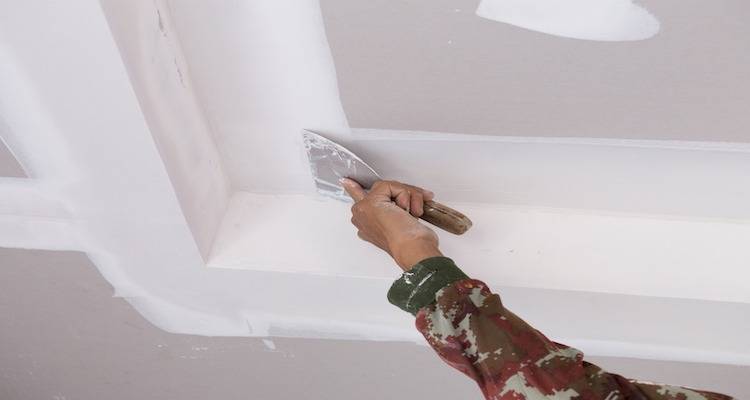
The size of the ceiling will affect the overall cost of the repair or replacement. The size will also affect the length of time that it takes to complete the repair or replacement. The material of the ceiling will also affect the cost. If it is made from plasterboard, then the work will be much quicker.
Older ceilings may be more difficult to repair or replace as they will be more delicate. The replacement price for this type of job will likely be higher as the work will be more challenging to complete and will often take longer. Some ceilings like this may also require specialist expertise.
What is your main reason for replacing a ceiling?
Water damage or leaks
13 votes - 57%57% of votes
Cracks, collapsing or structural damage
4 votes - 17%17% of votes
To remove artex and/or asbestos
3 votes - 13%13% of votes
For aesthetic reasons only
2 votes - 9%9% of votes
As part of a wider renovation project
1 votes - 4%4% of votes

23 votes
See results
Hide results
Before having your ceiling repaired or replaced, a contractor will often need to come out and do an inspection to see the extent of the damage. At this stage, they will be able to give you a good idea of the work that will need to be carried out as well as an estimate of the costs that will be involved.
Are hairline cracks in an Artex ceiling something to be concerned about. They have, apparently been there for years and would Polyfilla work?
"No, filler will not work as they will open up again over time and you can’t imitate the Artex pattern, so would look dreadful. A new coat of multi-finish would do the job you need. You would lose the Artex pattern, but would have a new fresh flat ceiling. Needs to be pre-plaster primed before by whoever did it, then a super mix on for first coat, and two coats of multi-finish plaster after this."
Ceiling Repair Prices
Below is a list of typical ceiling repair and replacement job costs:
| Type of Ceiling Repair | Cost Type | Cost of Job |
|---|---|---|
| Full ceiling replacement | Per project | £400–£1,000 |
| Small patch and repair work | Per project | £150–£200 |
| Remedial simple repairs | Per m² | £5–£15 |
| Plaster a ceiling | Per project | £200–£1,150 |
| Water leak ceiling repair | Per project | £1,400–£1,700 |
Want a custom price?
Post your job
Supply Cost to Replace Ceiling
The cost for supplies will depend on the extent of the job and the materials used. Plasterboard sheets are usually 2400mm x 1200mm in size and come in a variety of different thicknesses and variations. A typical standard plasterboard piece that is 12.5mm thick will usually cost around £6 to £7.
Below is a list of additional tools and materials that you may need to repair or replace a ceiling along with their average costs:
| Material or Tool Type | Average Cost |
|---|---|
| Drywall screws | £5–£10 |
| Timber batten | £2–£6 |
| Scrim tape | £5–£6 |
| Bag of plaster (25kg) | £5–£10 |
| Plastic sheeting | £3–£5 |
| Tape measure | £5–£30 |
| Wood saw | £5–£20 |
| Plastering trowel | £8–£80 |
| Pencil | £2–£5 |
| Work platform/ladder | £60–£200 |
| Spirit level | £10–£20 |
| Stanley knife | £5–£10 |
| Drill with screwdriver function | £25–£200 |
Want a custom price?
Post your job
You may also need to buy some safety gear for this type of work, such as safety goggles (£2 to £15) and dust masks (£1 to £5 each).
Additional Ceiling Replacement Costs
There are a number of additional costs that you may need to think about when it comes to repairing or replacing the ceiling. Below is a list of the other expenses that may come up with these types of jobs:
| Type of Additional Cost | Average Cost |
|---|---|
| Painting | £300–£500 |
| Light fittings | £80–£120 |
| Re-decorating the room | £450–£650 |
| Plaster walls | £150–£200 |
| Repair/replace electrical work | £30–£200 |
Want a custom price?
Post your job
The cost of painting a bedroom is around £300 to £500, depending on the size of the room and the paint chosen.
If you need your walls plastered before this stage, re-plastering costs £150 to £200.
New light fittings cost between £80 and £120, depending on the fittings you choose and the ease of access to the installation area.
Labour Costs and Timescales
A ceiling repair or replacement will usually need the work of a plasterer or a labourer. A plasterer will usually charge around £150 to £200 per day, and a labourer will usually charge around £80 to £100 per day.
A full ceiling replacement will usually take 1 to 2 days to complete depending on the size of the room. The work will often require 2 contractors to complete the job.
Small ceiling repairs can often be completed within a couple of hours, and so you may be able to pay based on an hourly rate. This rate will usually be around £15 to £20.
Ask a Trade
Got a question that only a tradesperson can answer? We have thousands of trades ready to answer any question you may have.
Ask your question

Factors That Impact Ceiling Replacement or Repairs Costs
Several factors may affect the cost of a ceiling repair or replacement. Below is a list of the different things that may affect the overall cost of this type of job:
Type of Job
If a full ceiling replacement is needed, you can expect this to cost considerably more than a small repair as it will take much longer. A full ceiling replacement costs around £400 to £1,000, whereas small patch and repair work will usually cost around £150 to £200.
Size of Ceiling
Larger ceilings may cost considerably more to replace than smaller ceilings. This is due to the extra materials and time needed to complete the job. The cost of labour will increase according to the size of the replacement or repair required.
Extent of Damage
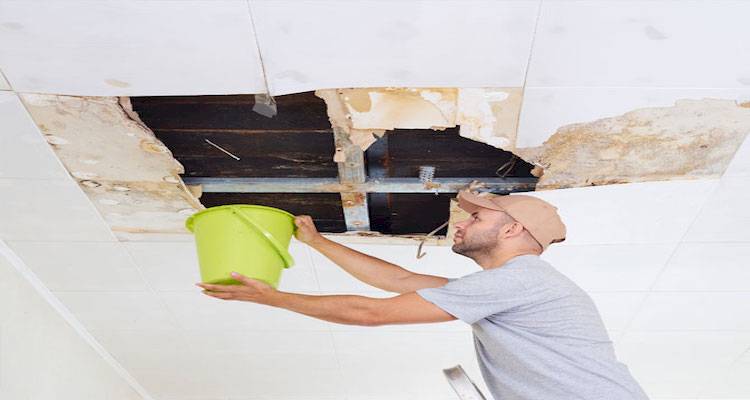
The extent of the damage will also affect the cost. Some jobs will require a lot more work than others, and so the labour costs can really add up. You may also find that additional work needs to be completed once the affected area has been opened up and adequately examined. This is most common with water damaged ceilings.
Location of Property
The location of your property can affect the overall costs that you can expect to pay for a ceiling repair or replacement. Those based in London can expect to pay around £50 to £100 more per day or £5 to £15 more per hour for the cost of labour than those based in the north or other parts of the UK.
We recently got a small extension roof insulated with 100mm insulation boards and plasterboards on top. The guy doing the work said we could heighten the ceiling, by removing the collars that tied the two rafter sides together. Job is less than 5 months old and cracks have started appearing in the ceiling. Will our ceiling eventually collapse?
"Most likely cosmetic; plasterboard taped seams opening up - expansion/contraction due to heat/cold, etc."
Water Damage Ceiling Repair Cost
Repairing ceiling water damage is a multi-stage process, and the ceiling repair itself is the final step. The cost and timeline will depend on fixing the source of the water first.
Crucially, before any cosmetic repair can begin, you must hire a professional to find and fix the source of the leak. This may involve a separate cost for a plumber or roofer. Repairing the ceiling before the leak is stopped will only result in the damage returning.
Cost Factors for Water Damage Repair
The average cost of £30 to £40 per square metre typically only covers the direct patch repair (cutting out the damage and fitting new plasterboard). The total price will vary based on:
- The Cost of the Initial Fix — The plumbing or roof leak repair cost to stop the leak, which could involve anything from a pipe repair to replacing roof tiles or flashing.
- The Extent of Damage — If structural ceiling joists are rotted and need replacing, the cost will increase significantly.
- Drying Time — Hiring dehumidifiers will add to the total cost.
- Finishing — The repaired patch will stand out. You will likely need to budget for painting the entire ceiling to ensure a uniform finish.
The Water Damage Repair Process
Once the leak is fixed, a ceiling specialist will follow these steps:
- Dry the Area — The ceiling void, joists, and surrounding materials must be allowed to dry out completely. This can take several days and may require industrial dehumidifiers.
- Assess the Damage — Once dry, the professional will inspect the extent of the damage. If only the plasterboard is stained, it can be patched. If the water has caused the plaster to crumble or rotted the wooden joists, a larger replacement will be needed.
- Repair and Replace — The damaged section is cut out, and a new piece of plasterboard is cut to size and fitted.
- Finish and Blend — The new patch is taped, plastered (skimmed), and sanded. A special stain-blocking primer must be applied before painting. Otherwise, the old water stain will bleed through the new paint.
Types of Ceiling Repairs
There are many different types of ceiling repairs. Below is a list of the most common types of ceiling repair in UK homes and the pros and cons to each type of repair:
Hairline and Settlement Crack Repairs Cost
Cracks should be observed over time to see if they are increasing in size or numbers to determine their cause.
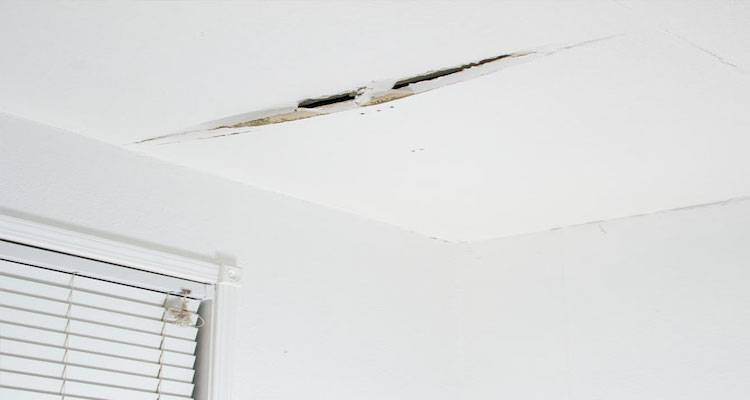
Once you know the reason for the cracks, you can then appropriately repair them. The cost for this type of repair is usually around £10 to £20 per square metre.
Pros
- ✔ It restores the aesthetic of the ceiling.
- ✔ You can prevent the cracks from getting worse and potentially causing further damage.
- ✔ Can sometimes be as easy as covering with flexible paint.
Cons
- ✖ You may repair too soon and start to notice more cracks appearing in the future.
- ✖ Small cracks can sometimes be frustrating.
- ✖ Filling cracks may be unsightly.
Peeling Paint Repair Cost
Peeling paint may be caused by water damage or badly prepared plaster before decorating. The cause should be identified before you carry out any repair work on peeling paint. The cost to repair peeling paint is usually around £100 to £160.
Pros
- ✔ Peeling paint is very unattractive, and repairs will make the ceiling look much more pleasing to the eye.
- ✔ If the underlying cause is dampness in the ceiling, then you can be alerted of a previously unknown issue.
- ✔ It can instantly improve the look of a room.
Cons
- ✖ Peeling paint may be caused by damp, which can be a costly repair job.
- ✖ You will usually need to repair the whole ceiling so that it all matches.
- ✖ Stripping away flaking paint can be a very messy job.
I have a lath and plaster ceiling that has been wallpapered and painted over, the paper is peeling and it looks awful. How much would you charge to remove it and replace it? It is 3.5m by 5m, and 2.5m high.
"Roughly around £750 for the ceiling to be re-boarded etc. If the plaster comes away, then it might be the best option to take down the lath and then board it."
How to Identify Types of Ceiling Cracks
There are lots of different types of ceiling cracks in the UK. Here's what you need to know to identify them in your own home:
Hairline Ceiling Crack
Hairline cracks are the least concerning types of ceiling cracks as they're usually superficial, indicating no structural damage, and are typically less than 1mm in width.
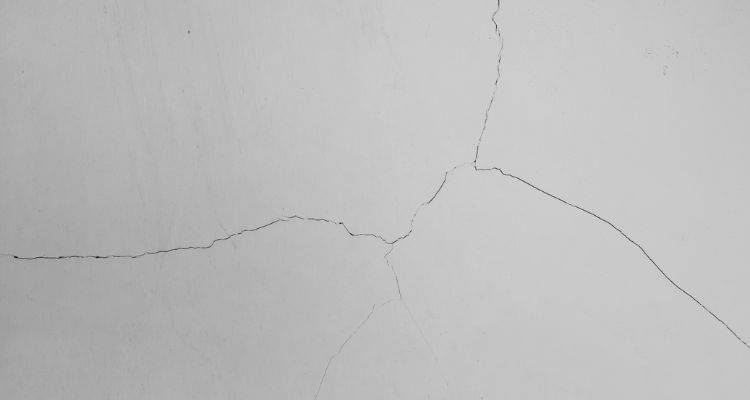
Commonly found at the corners of ceilings, hairline cracks can be caused by:
- Small movements as a new house settles, or as plaster, mortar and concrete dry and shrink.
- Installation of new fixtures, such as light fittings.
- Changes in temperature.
Hairline cracks can be fixed with a thin layer of caulk and a fresh coat of paint. If the cracks become wider than 1mm or keep coming back despite being repaired, call in a ceiling repairs professional for a second opinion.
Spiderweb Ceiling Crack
Spiderweb cracks look as their name suggests, with a defined centre point that spreads outwards to create a spiderweb shape. Like hairline cracks, spiderweb cracks can also be cosmetic, but they can also alert you to structural issues.
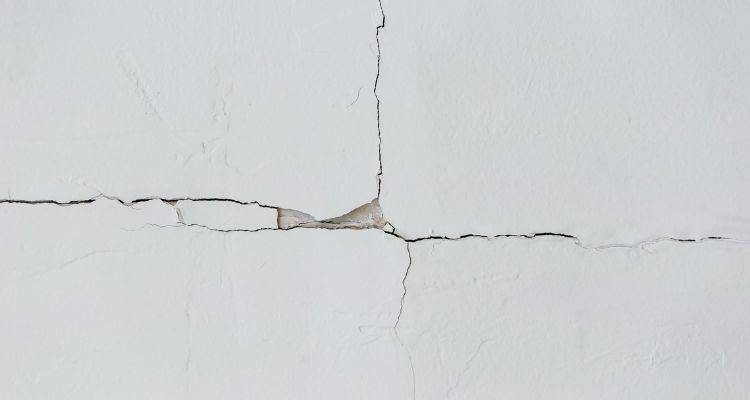
These ceiling cracks can be cause for concern if they:
- Appear suddenly and increase in size rapidly, which can mean there's an excessive load on the ceiling or possible foundation movement.
- Are discoloured or have dampness in and around them, as this can signal leaks from pipes, your roof, or other trapped moisture.
The bottom line? If you spot a spiderweb crack that's growing in size and appears to be getting worse, it's best to get a professional to take a look to find the root cause and carry out a ceiling repair.
Straight Ceiling Crack
These ceiling cracks form along plasterboard joins and beams and run in a straight line. Straight line cracks are often caused by movement at plasterboard joints.

If the straight line cracks are hairline in nature, they are most often cosmetic issues and can be remedied with repainting.
However, if they are widening near beams, are over 5mm wide, or appear in conjunction with discolouration and sagging, it can indicate an issue with moisture or water damage, which needs prompt attention.
Discoloured Ceiling Crack
Discoloured ceiling cracks tend to mean there's an issue with trapped moisture in your ceiling, either active or historic. You can identify discolouration by looking out for brown, yellow, or orange-coloured stains that appear around a crack.
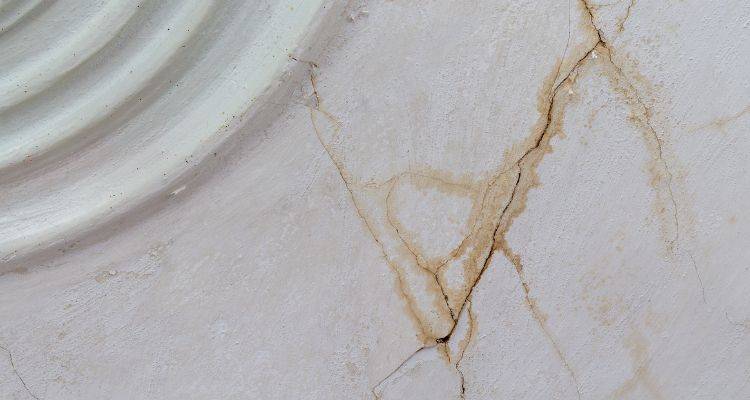
The causes for discolouration around a ceiling crack can be:
- Water leaks from pipes, damage to your property's roof, or faulty plumbing.
- Condensation build-up due to poor bathroom or loft space ventilation.
- Mould growth from persistent, unresolved moisture issues.
Water damage can be devastating, causing ceilings to cave in and causing flooding issues inside the home if left untreated. If you touch the discoloured area and it's damp or cold, it's most likely an active leak, and urgent attention is needed before the issue progresses.
You may also get discolouration around ceiling cracks from old water damage. In these cases where the issue has been fixed, it's simply a cosmetic ceiling repair to remove the discolouration if you're sure no moisture issues persist.
While the type of crack is a good indicator, the most serious warning signs are rapid changes or movement. Ceiling cracks that appear quickly and rapidly deepen or widen are a major cause for concern.
Furthermore, if your ceiling is visibly bowing or sagging, this can mean there is an excessive load on the ceiling (from above) or a leak that could cause the ceiling to collapse. If you notice these serious structural signs, it is crucial to have your ceiling inspected by a qualified professional immediately.
Building Regulations & Planning Permission for Replacing or Repairing a Ceiling
If your home is listed, ceiling work that affects its original features will need listed building consent, which can include replacing the ceiling. Minor repairs using matching materials may not need consent, but check with your local council before starting the work. In England, there is no fee for applying for listed building consent.
If the work that needs to be carried out is due to a roof leak and you need extensive repairs on the roof, then you may need to get building control approval. In England, roof repairs or re-covering normally need building regulations approval if they affect at least half the roof or at least a quarter of the outside of the building.
A roofer registered with a competent person scheme for roof coverings can self-certify the work instead of you applying to building control. The cost of these types of building control notifications is usually around £200.
Checklist: Having Your Ceiling Replaced or Repaired
Ready to hire a local ceiling specialist? Here's what you should keep in mind:
- Are they qualified? Check for relevant qualifications, such as an NVQ in Plastering, or membership of a trade body, such as the Federation of Master Builders (FMB).
- Do they have insurance? Ask to see proof of public liability insurance to cover accidental damage during the job.
- Can they provide references? Check their MyJobQuote profile and ask for photos of previous work. This is especially important for specialist lath and plaster repairs.
- Have they provided a written quote and payment terms? Get a detailed quote breaking down materials, labour, and VAT to ensure you're comparing like-for-like. A small deposit is normal, but never pay in full upfront.
- Have they discussed Artex/asbestos? If your home was built before 2000, existing ceilings (especially Artex) may contain asbestos. A professional must discuss testing and safe removal, which will impact costs.
- Do they offer a guarantee? Reputable plasterers and builders should offer a guarantee. Ask for this in writing.
- Are they clear about timescales and disruption? Ceiling replacement is dusty and disruptive. Get a clear timeline including drying times, and confirm how they'll protect your room and furniture.
Following these steps will help you choose a qualified, insured ceiling specialist who can complete the job safely and to a high standard.
FAQs
How Do You Repair an Artex Ceiling?
Artex repairs can be straightforward, but coatings applied before 2000 may contain asbestos, so arrange testing before sanding, scraping or drilling them. You can purchase an Artex repair kit from most DIY shops that will cover a range of ceiling repairs.
You should apply a generous coat of this texture using an emulsion brush and blend it into the area to match the existing pattern. You can find guides on YouTube on how to accurately achieve the different types of Artex patterns and textures.
What's the Easiest Way to Fix a Small Ceiling Crack?
For small, hairline cracks, clean the area and apply flexible filler or caulk before repainting. Larger or recurring cracks may need a professional assessment to check for underlying movement or moisture.
Is a Plasterboard Ceiling Better Than Lath and Plaster?
Plasterboard is much cheaper than lath and plaster. It is also easier to handle, install and repair. However, lath and plaster are more breathable and, therefore, regulate moisture better within the property. So, both types of ceilings have their advantages.
When Is a Ceiling Repair an Emergency?
A ceiling repair becomes an emergency if there's a risk of collapse or further structural damage. Signs include severe sagging, cracks that widen quickly, loud creaking sounds, or active water leaks.
If you notice bulging or damp patches spreading across the ceiling, it's important to act fast. Move belongings out of the way and contact a professional immediately to prevent collapse or electrical hazards.
How Can I Prevent Cracks from Coming Back After Repair?
Recurrent ceiling cracks are often caused by movement, moisture, or poor adhesion of previous repairs. To prevent them returning, make sure the cause is addressed, for example, repairing any leaks or stabilising ceiling joists. When redecorating, use flexible filler and quality primer before repainting.
In rooms with temperature or humidity changes, consider anti-crack ceiling paint to allow for slight movement.
Can I Repair or Replace a Ceiling Myself?
When completing this type of work as a DIY project, it's essential to consider safety first, especially when removing a ceiling. You should also consider the type of safety equipment that you will need to carry out the work safely.
Since replacing or repairing a ceiling can sometimes be quite a big job and often requires more than one pair of hands, it is usually recommended that you choose an appropriate contractor for the work. If you'd prefer a professional finish or need help with larger repairs, it's better to hire a local ceiling repair specialist.
How Long Does a Ceiling Last?
A ceiling's lifespan depends on keeping it dry and protecting it from damage and movement. Many older homes still have lath and plaster ceilings that are more than a century old.