Builders
 Carpenters
 Electricians
 Flooring Specialists
 Gardeners
 Handymen
 Heating Engineers
 Painters & Decorators
 Plasterers & Renderers
 Plumbers
 Roofers
 Tilers
 my
myKitchen Worktop Replacement Cost
At a Glance
- The average cost of replacing kitchen worktops is around £600.
- The job will take 1 to 1.5 days to complete.
- Simple calculator for you to quickly estimate kitchen worktop replacement costs.
- Kitchen worktop prices in 2026 for different materials.
- Labour costs to replace worktops across the UK.
- How to find a local kitchen worktop fitter using MyJobQuote.
Get free estimates
Are you a trade? Get more work today!
£600
Table of Contents
- Video Overview: Cost of Kitchen Worktops
- How Much Does Replacing Worktops Cost?
- Labour Cost of Replacing Kitchen Worktops and Timescales
- Additional Kitchen Worktop Replacement Costs
- Factors That Impact the Cost of Kitchen Countertops
- What's Involved in Replacing Kitchen Worktops?
- Cost of Different Types of Kitchen Worktop
- Cost of Alternatives to Kitchen Worktop Replacement
- Checklist: Hiring a Kitchen Worktop Fitter in the UK
- FAQs
Video Overview: Cost of Kitchen Worktops
How Much Does Replacing Worktops Cost?
Replacing a kitchen worktop typically costs £600 to £4,200, supplied and fitted, for a standard 5m run. The type of material you choose has the biggest impact on price. Most homeowners choose a laminate worktop, which is the cheapest option at £200 to £800.
More expensive materials, like quartz or granite, cost more to buy and fit. They're heavier and often need specialist templating, which pushes up both the supply and labour cost of kitchen worktops in these materials.
The table below shows the average cost per m², plus what you could expect to pay for a typical 5m run, supplied and fitted, in each material.
| Material | Average Cost per m² | Typical Kitchen (5m, Supplied and Fitted) |
|---|---|---|
| Laminate | £35–£150 | £200–£800 |
| Stainless Steel | £150–£300 | £700–£1,300 |
| Solid Wood | £120–£250 | £720–£1,350 |
| Glass | £250–£350 | £1,250–£1,750 |
| Solid Surface/Composite | £300–£450 | £1,200–£1,850 |
| Quartz | £220–£900 | £1,250–£4,200 |
| Granite | £270–£450 | £1,600–£2,850 |
| Marble | £300–£350 | £1,700–£2,550 |
| Ceramic | £450–£800 | £2,150–£3,900 |
Want a custom price?
Post your job
What is a ballpark figure for replacing kitchen worktops and splashbacks?
"Around £400 Labour + £300 materials. Depending on how big your kitchen is and what kind of worktop/splashback that you want.
Hope that helps."
Kitchen Worktop Replacement Cost Calculator
Labour Cost of Replacing Kitchen Worktops and Timescales
The labour costs to install new kitchen worktops will mostly depend on the material that you choose for your worktops. The more expensive worktops will cost more to install and take longer. This is because they are often made from more difficult-to-handle materials that require specialist fitting skills.
Which material would you like for your kitchen worktop replacement?
Laminate (budget-friendly)
12 votes - 48%48% of votes
Solid Wood
6 votes - 24%24% of votes
Quartz/Composite
6 votes - 24%24% of votes
Stone (Granite/Marble)
0 votes - 0%0% of votes
Undecided
1 votes - 4%4% of votes

25 votes
See results
Hide results
Labour costs typically cover fitting the worktop, cutting out a sink, and sealing the joins. The worktop supply, appliance reconnections, and disposal of the old worktop are usually extra.
In most cases, the fitting is the fastest part, but the whole process can take longer if anything needs to be made to order.
The table gives the prices to fit 5m of kitchen worktop with a sink in different materials. It assumes the existing worktop is laminate or something similar.
| Material | Fitting Duration | Average Cost |
|---|---|---|
| Laminate | 1 day | £100–£350 |
| Stainless Steel | 1 day | £250–£400 |
| Solid Surface/ Composite | 1 day | £300–£500 |
| Solid Wood | 1 to 1 ½ days | £360–£600 |
| Glass | 1 day | £500–£700 |
| Quartz | 1 to 1 ½ days | £600–£1,500 |
| Granite | 1 to 1 ½ days | £800–£1,500 |
| Marble | 1 to 1 ½ days | £800–£1,500 |
| Ceramic | 1 to 1 ½ days | £800–£1,500 |
Want a custom price?
Post your job
Additional Kitchen Worktop Replacement Costs
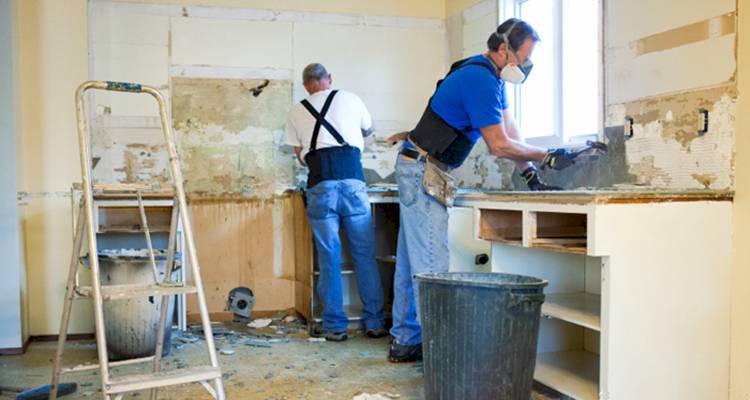
There are a few other jobs that you might want to consider when you are replacing the worktops in your kitchen, as well as some costs that might arise depending on the state of your cabinets, once the worktops are removed.
Kitchen Worktop Removal Cost
Not all kitchen worktop fitters include removal of your old worktops in their quote, so it's worth checking upfront. If it's not covered, you can expect to pay between £100 and £200 to have it removed professionally, or take it on yourself to save that cost, as long as you're comfortable disconnecting the sink and hob first (or leaving that part to a plumber or electrician).
Edging Strips Cost
To give a tidy finish to your worktops, you may need to get some edging tape. This allows you to cover the cut ends of the worktop so that it looks the same as the rest of the worktop. You need this for composite or laminate worktops. It costs £9 to £12 per 3m roll.
Electrician Cost
If you have an electric hob, it will need to be disconnected before the kitchen worktop fitting and reconnected once your new kitchen worktops are in place. Not all kitchen worktop fitters are qualified to do this, so check whether you need to budget for a separate electrician, which can cost around £30 to £50 per hour.
Gas Engineer Cost
If you have a gas hob, it must be disconnected and reconnected by a Gas Safe registered engineer before and after your kitchen worktop replacement. The cost to hire a gas engineer is around £30 to £100 an hour.
Cutting Out Additional Areas Cost
When replacing kitchen worktops, the cost of cutting out for a sink is usually included in the labour cost. However, if you also have a built-in hob, an additional cut out will be required, and this is not always included in the price.
New Kitchen Unit Doors Cost
If some of your unit doors are damaged, then this is a good time to replace them. It can be easier to do without the worktop on. Depending on the material chosen, replacing kitchen cupboard doors costs between £200 and £260 per door.
Replacement Kitchen Units Cost
When you remove your old worktop, you might find that the old cabinets are also in need of replacement. If this is the case, you should look into replacing your kitchen units. You don't want to install a new work surface onto cabinets that can't support it. The average cost for this is £4,000.
Replace Kitchen Sink Cost
If you want to replace your kitchen sink, then you should consider replacing it at the same time as you replace the kitchen worktops. The space for the sink will be cut out of the worktop, so once this is done, you can't easily change the sink at a later date. The average cost for this is £400.
Ask a Trade
Got a question that only a tradesperson can answer? We have thousands of trades ready to answer any question you may have.
Ask your question

Factors That Impact the Cost of Kitchen Countertops
There are two main factors that will affect the cost of replacing your kitchen worktops. These are the type of worktop and the size of the worktop.
Type of Worktop
Material choice has the biggest impact on price. You'll find the full cost breakdown by material in the table above. Heavier materials, like granite and quartz, also add to labour costs, since more than one fitter is often needed to lift and position them safely.
Custom vs Off-the-Shelf. Most worktops come in standard lengths of 3m, so larger kitchens often need two or more sections joined together. A custom-made worktop avoids visible joins and is available in any material, but it costs more.
Kitchen Layout
Your kitchen layout can make a real difference to your overall worktop replacement costs. The more complex the shape of the space, the more material, cutting, and fitting time is involved.
Here's how different layouts affect your worktop replacement cost:
- Galley Kitchens — Worktops run along one or two parallel walls, making them the most straightforward layout to work with, with simple cutting and fewer joints to manage, which helps keep labour costs down.
- L-shaped Kitchens — One corner joint is needed, adding a small amount to both material and fitting costs.
- U-shaped Kitchens — Worktops run on three sides, meaning more material, more joints, and more precision cutting around the shape of the room.
Worktop Size
When you consider the size of the worktop, you need to think of it in two ways: the surface area and the thickness.
Surface Area. The more worktop area you need, the more you'll pay, since both material and labour scale with size.
Thickness. Common UK sizes are 28mm and 38mm for laminate, 12mm to 30mm for solid surfaces, and 20mm or 30mm for quartz and granite. Thicker worktops are generally more durable, but that also makes them more expensive.
For comparison, these are prices for different thicknesses of a midrange laminate worktop.
| Thickness (cm) | Average Cost per m 2 |
|---|---|
| 3.8 | £75–£150 |
| 2.8 | £45–£90 |
| 1.2 | £35–£50 |
Want a custom price?
Post your job
What's Involved in Replacing Kitchen Worktops?
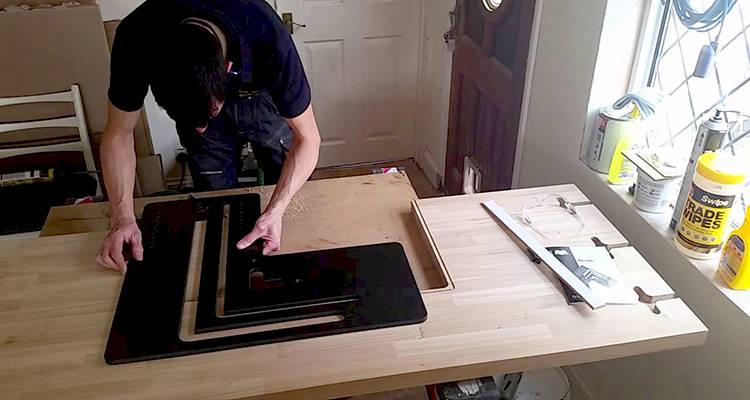
Fitting new kitchen countertops is not a job you should do on your own, as the worktops can be quite heavy.
The majority of homeowners choose to hire professional kitchen fitting specialists for their replacement worktops.
With MyJobQuote, you can compare multiple quotes from local kitchen fitters. It's fast, free, and there's no obligation to go ahead.
Here is a brief look at the process of installing new kitchen worktops when hiring a specialist:
Before the Job
- Planning — Accurate measurements will need to be taken to ensure the worktops will fit properly, plus you get to make all the decisions, such as colour, style, material, and more.
During the Job
- Removal and Base Unit Check — Your old worktops are removed, along with disconnecting the sink and hob where needed. The fitter also checks your base units at this stage to confirm they're sound enough to take the new worktop.
- Cutting, Fitting and Joining — Worktops are cut to size (stone is usually templated and cut off-site), then aligned to the base units and fixed in place. Where more than one section is needed, they're joined together.
- Edging and Sealing — Edging strips are applied where needed, and joints and edges are sealed to keep water out.
After the Job
- Reconnecting Services — Once the worktops have been installed, anything that was disconnected earlier will be reconnected. Electrics and plumbing should be reconnected by professionals for safety's sake.
- Sanding and Polishing — Any sanding or polishing will be carried out to ensure the new countertops are looking their best.
- Clean-Up — The old worktops and any debris will be removed from your home.
Cost of Different Types of Kitchen Worktop
The average kitchen worktop costs less when made of budget materials such as laminate and much more when made from premium materials like quartz or granite. Here is a look at how the different materials compare in terms of cost and performance.
Laminate Kitchen Worktop Cost
- Average cost: £35 to £150 per m².
- Best for: budget kitchens, or anyone who wants the look of natural stone without the cost.
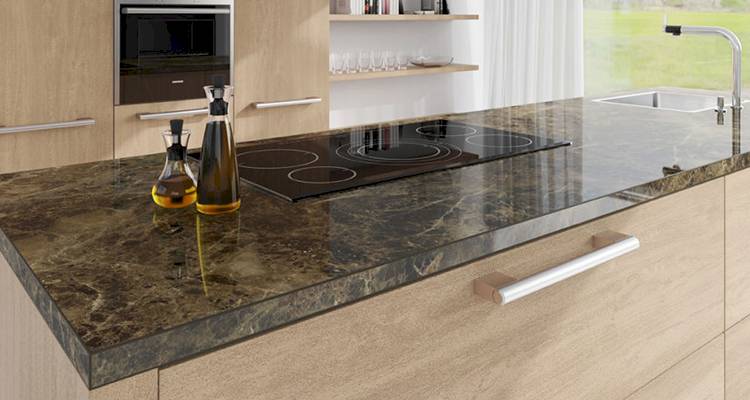
Laminate countertops are the most popular option on the market. They are versatile and come in a wide range of finishes. They can look like natural materials but come at a much lower cost.
Pros
- ✔ Cheap worktop
- ✔ Easy to clean and maintain
- ✔ Scratch and heat-resistant (up to 180°C)
- ✔ Can look like more expensive materials
Cons
- ✖ Can burn under excessive heat.
- ✖ If scratched, they are unhygienic.
- ✖ Can peel if water is left standing on the countertop.
- ✖ Cheaper options are more easily damaged.
Quartz Kitchen Worktop Cost
- Average cost: £220 to £900 per m².
- Best for: busy kitchens where low maintenance and durability matter most.
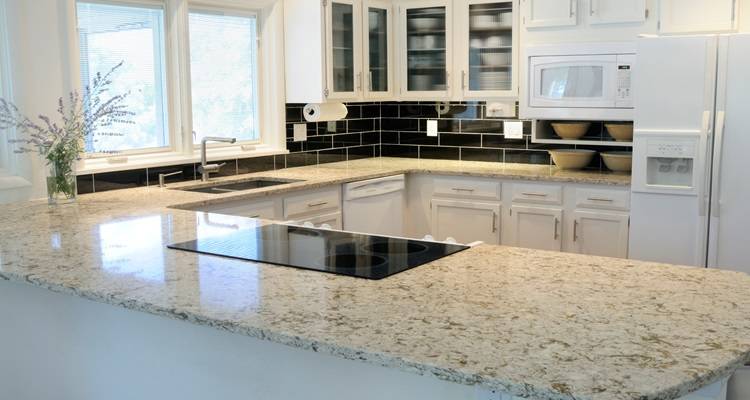
Quartz is a manmade stone. This means it has the durability of natural stone, but also comes in a wider variety of colours and patterns. The average cost of a quartz worktop reflects this. It's one of the pricier options, but among the most durable.
Pros
- ✔ Recycled and eco-friendly options available.
- ✔ Resistant to staining and water.
- ✔ Strong and resistant to chipping.
Cons
- ✖ Can be damaged by large changes in temperature.
- ✖ Heavy material so needs professional installation.
Granite Kitchen Worktop Cost
- Average cost: £270 to £450 per m².
- Best for: homeowners who want a natural, premium finish that can add resale value.
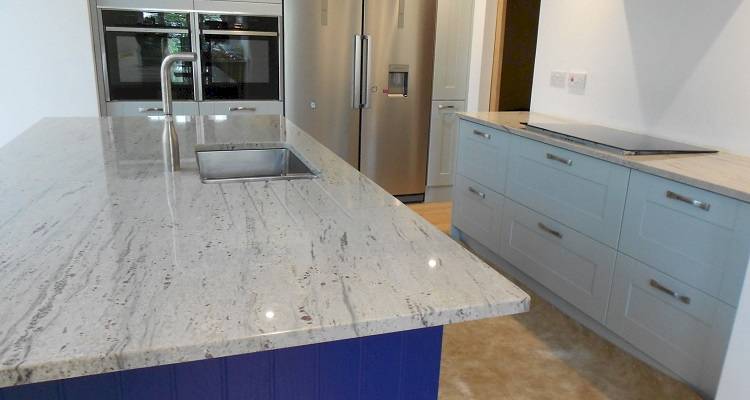
Granite worktops are a very popular choice for kitchen work surfaces as they can provide a polished and expensive-looking finish. However, be mindful that while there are some high-quality imitations available, some granite worktops are often made from engineered stone or with a laminate finish. You can read more in our full guide to granite worktop costs.
Pros
- ✔ Durable and hardwearing.
- ✔ Resistant to changes in heat.
- ✔ Hygienic and easy to clean.
- ✔ Add value to your home.
Cons
- ✖ Heavy — need reinforced cabinets.
- ✖ Require sealing every 2 years.
- ✖ Can't be repaired easily.
- ✖ Limited colour and pattern options as it is a natural material.
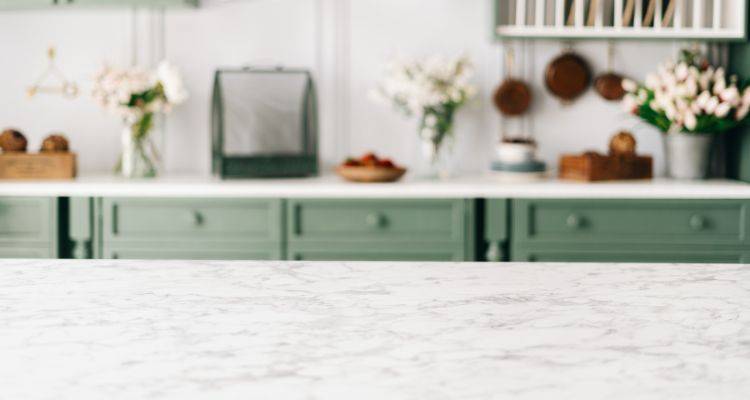
Marble Kitchen Worktop Cost
- Average cost: £300 to £350 per m².
- Best for: luxury or statement kitchens, where appearance takes priority over practicality.
Marble is a leading choice in luxury kitchen design. It is distinctive and looks expensive. It is also timeless.
Pros
- ✔ Luxurious finish
- ✔ Heat resistant
- ✔ Long-lasting
Cons
- ✖ Can stain easily
- ✖ Scratches easily
Solid Surface/Composite Kitchen Worktop Cost
- Average cost: £300 to £450 per m².
- Best for: modern kitchens with integrated sinks and a seamless finish.
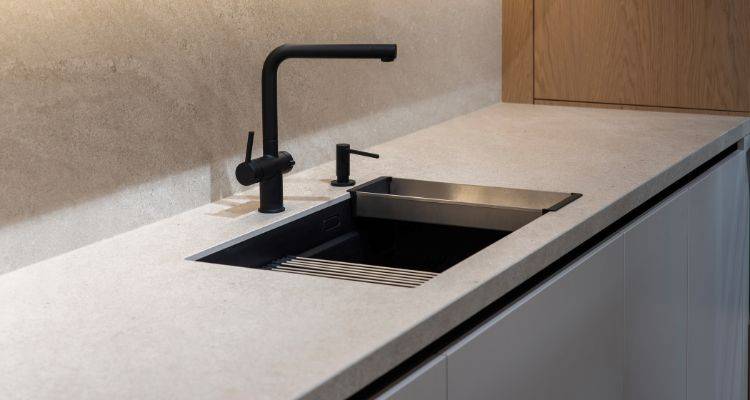
Solid surface worktops, such as Corian and Staron, are made from a blend of natural minerals and acrylic polymers. They are manufactured as a solid, non-porous material throughout, allowing for seamless joins and integrated sinks. Composite worktops are also engineered materials and come in a wide range of colours and designs. You can read more in our full guide to Corian worktop costs.
Pros
- ✔ Resistant to heat and scratching
- ✔ Seamless
- ✔ Stain-resistant
Cons
- ✖ Expensive to buy and fit.
Solid Wood Kitchen Worktop Cost
- Average cost: £120 to £250 per m².
- Best for: traditional or farmhouse-style kitchens on a mid-range budget.
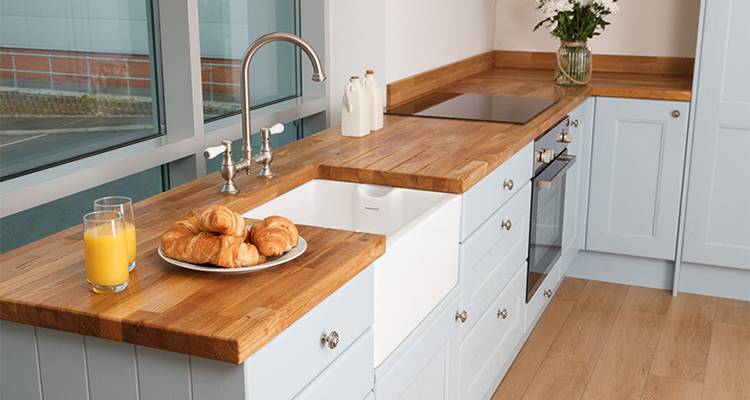
Solid wood is a very classic finish in a kitchen. Wood is a good natural alternative to stone, as it is a cheaper option. It does, however, require a lot more maintenance.
Pros
- ✔ Looks better as it ages.
- ✔ Cheapest natural material.
- ✔ Hygienic when properly maintained.
Cons
- ✖ Requires maintenance twice a year.
- ✖ Can be stained and burnt.
- ✖ Can be scratched.
Ceramic Kitchen Worktop Cost
- Average cost: £450 to £800 per m².
- Best for: contemporary kitchens that need a thin, heat-resistant surface.
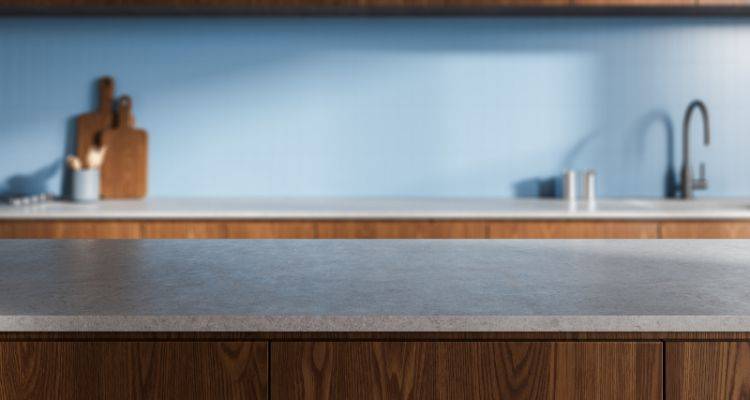
Ceramic kitchen worktops have a lot of character. Because they are made from a very strong material, you can have much thinner countertops. This gives a more modern look to a kitchen.
Pros
- ✔ Hygienic and easy to clean.
- ✔ Resistant to heat and water.
Cons
- ✖ Limited range of colours and designs available.
- ✖ Can crack if heavy items are dropped on them.
Glass Kitchen Worktop Cost
- Average cost: £250 to £350 per m².
- Best for: modern kitchens where a glossy, colourful finish is the priority.
Glass kitchen worktops are a very modern design choice. They have a very glossy finish and come in a wide range of colours and designs.
Pros
- ✔ Easy to clean and hygienic
- ✔ Resistant to staining
- ✔ Heat resistant
- ✔ Many design options
Cons
- ✖ Needs regular cleaning to avoid fingerprints.
- ✖ Can get easily scratched.
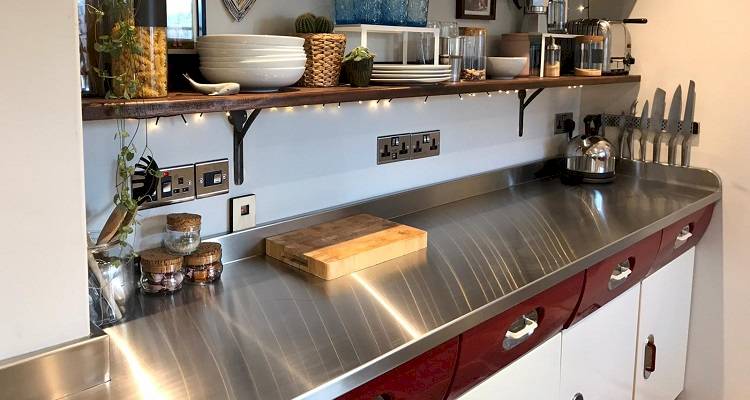
Stainless Steel Kitchen Worktop Cost
- Average cost: £150 to £300 per m².
- Best for: industrial-style kitchens, or keen home cooks who want a hygienic surface.
Stainless steel is the material of choice for countertops in the industrial sector. For anyone who is looking for an industrial-style kitchen in their home, this is the choice.
Pros
- ✔ Strong and durable
- ✔ Antibacterial
- ✔ Easy to clean
- ✔ Waterproof and heat resistant
Cons
- ✖ Cold
- ✖ Clinical
Is it easy to cut an acrylic worktop myself, or do I need a specialist?
"Cutting an acrylic worktop is quite easy if you have the right tools. The blade needs to be a fine tooth blade and when you have penciled your line on where to cut you will need to put ideally masking tape on either side of your pencil line. This will prevent the worktop from chipping on your cut line."
Cost of Alternatives to Kitchen Worktop Replacement
If you're not ready to replace your kitchen worktops entirely, there are cheaper options that can refresh the look of your kitchen.
Fablon and Self Adhesive Wrap Cost
You can apply a layer of vinyl adhesive as a kitchen worktop cover to change or update their look.
The average cost of Fablon or self adhesive wrap is £5 to £15 per m².
How to apply Fablon or self adhesive wrap to kitchen worktops:
- First, clean and dry the countertop.
- Then cut the self adhesive wrap to size, making sure to leave enough excess to fold over the side.
- Remove one corner of the backing paper and peel back the adhesive, so the vinyl sticks down onto the worktop. Use the smoother to press down on the vinyl and remove any air bubbles as you go.
- For curved edges, you can use a hairdryer to heat the film as you stick it down. This will help it to mould to the edge and give a better finish.
Kitchen Worktop Overlay Cost
If you want something more permanent than self adhesive wrap, a worktop overlay gives you a completely new surface without the cost of a full kitchen worktop replacement.
The average kitchen worktop overlay costs include both material and labour:
- Laminate Overlay — £80 to £180 per m².
- Quartz Overlay — £350 to £700 per m².
A kitchen fitter installs a new surface directly over your existing worktop. The new surface is cut to size, bonded on top, and the edges and cut-outs are finished and sealed to protect against water, while your old kitchen worktop stays in place underneath.
Fitting an overlay will add extra thickness to your kitchen worktop and only works if your current worktop is solid and undamaged.
How can I reduce the cost of a new worktop without fitting it myself?
"It depends on the type of worktop you choose. Marble and granite require templates being done by the companies before cutting and fitting. Laminate is the cheapest option and you can easily find a handyman to install for an hourly rate."
Checklist: Hiring a Kitchen Worktop Fitter in the UK
Here are some important questions to ask before hiring a kitchen worktop fitter to replace your kitchen worktops:
- Are they a member of a recognised trade body? Relevant bodies include the Kitchen, Bathroom and Bedroom Specialists Association (KBSA), the Federation of Master Builders (FMB), and the Guild of Master Craftsmen.
- Do they have insurance? Make sure the fitter has public liability insurance, which protects you in case of accidental damage during your kitchen worktop replacement.
- Will they provide an itemised quote? Ask for a breakdown of the costs, so you know exactly what is included in your kitchen worktop replacement and whether there are any additional fees for things like waste disposal.
- Are they experienced with your chosen material? Stone worktops like granite and quartz require specialist skills and tools. Check that your fitter has relevant experience with the material you have chosen.
- Have you compared quotes? When searching 'kitchen worktop fitters near me', you'll find that MyJobQuote has a range of local kitchen fitters available. As such, you should ask for at least three separate quotes before deciding who to hire for the job.
- Do they have positive reviews? Check their MyJobQuote profile to read feedback from previous customers.
FAQs
How Much Should the Worktop Overhang the Cabinet Doors?
A standard overhang is 20mm. However, you can get a smaller or larger overhang depending on your style preferences.
Is Fitting Worktops a Dirty Job?
It can be messy to install and fit a worktop. It is not uncommon for a layer of dust to be created during the process. If you can, keep doors to other parts of your home shut to minimise the mess.
What Is the Best Edge to Have on a Worktop?
This is a matter of preference. If you have small children, you may prefer a more rounded edge to prevent serious injury when they are running around. You may want to consider how the kitchen doors and worktop edges will look together.
How Often Should You Replace Kitchen Worktops?
The lifespan of your kitchen worktop can vary, although the type of material and the amount of use it gets are often key factors. Wooden countertops can have a longer lifespan provided they're well-maintained and refinished, while laminate worktops usually only last 10 to 15 years. Other materials are likely to last much longer.
What Type of Tradesman Fits Kitchen Countertops?
Kitchen worktop replacements can be carried out by a dedicated kitchen fitter. They will have experience working with common materials like wood and laminate. However, for complex wooden worktop designs or stone worktop installations, you may want to hire a carpenter or stonemason respectively.
How Much Does It Cost to Maintain Kitchen Worktops?
Maintenance costs depend on your worktop material. Wooden worktops should be oiled twice a year, with worktop oil costing £15 to £25 per can. Granite and marble countertops need to be sealed once every 2 years as a minimum, with sealant costing £4 to £20.
Most other materials only require regular cleaning with warm water and a soft cloth. The key is to clear up any spillages quickly to avoid staining and avoid abrasive cleaners or sponges, as these can damage some materials.
Where Can I Buy Kitchen Worktops?
You can buy kitchen worktops from DIY stores like B&Q and Wickes, retailers like IKEA, specialist kitchen suppliers including Wren and Howdens, or online retailers. For natural stone worktops, you may need a specialist granite, marble or quartz retailer.
Alternatively, the kitchen fitters you hire can often source materials on your behalf, which may offer convenience, lower costs through trade discounts, and access to higher-quality materials.
Can I Replace My Own Kitchen Worktop?
Replacing kitchen worktops can be a fairly straightforward job for someone who is confident in their DIY skills. The trickiest bit is getting the finish right. The use of sealant and adhesive edging strips can make a big difference to the final look. Most kitchen fitters are experienced at this so will be able to get a good finish easily.
What Are the Benefits of Replacing Kitchen Worktops?
Replacing your kitchen worktops can make your whole kitchen feel new, and while it is cheaper than a new kitchen installation, it can increase the value of your home. New worktops make it easier to keep your kitchen clean and free of germs, especially if your existing worktop is damaged, where dirt can collect. If your old worksurfaces are warped or unstable, replacing them will reduce the chance of an accident happening.
What Are the Signs That I Need New Kitchen Worktops?
If there are cracks in the surface, water can get in, and they become traps for dirt and germs. Burns look unsightly and can be hard to remove if they go beyond the top layer. When a worktop becomes stained, it is a sign that the top layer is damaged and water is being absorbed into the work surface. If your worktops are unstable or warped, they should be replaced as this creates a risk of injury and cannot be fixed.
Is It a Big Job to Replace Kitchen Worktops?
Compared to a full kitchen renovation job, replacing kitchen worktops is a much smaller job. Your cabinets stay in place, and there is no major building work involved. However, a kitchen fitter still needs to make precise cut outs for the sink and hob, manage joints accurately, and handle heavy materials.