Builders
 Carpenters
 Electricians
 Flooring Specialists
 Gardeners
 Handymen
 Heating Engineers
 Painters & Decorators
 Plasterers & Renderers
 Plumbers
 Roofers
 Tilers
 my
myEV Charger Installation Cost
At a Glance
- The average electric car charger installation cost is around £1,000.
- This job takes between 2 and 4 hours to finish.
- Electric vehicle (EV) charger installation costs by type and power output.
- The pros and cons of different EV chargers.
- How to find a local EV charger installer using MyJobQuote.
Get free estimates
Are you a trade? Get more work today!
£1,000
Table of Contents
- Cost to Install an EV Charger at Home
- What's Included in Car Charger Installation Costs?
- Electric Car Charger Installation Cost (Labour Only)
- Home Electric Car Charger Cost (Supply Only)
- OZEV Grants and Government Schemes for EV Charger Installation
- Choosing an Electric Vehicle Charger
- Factors That Impact EV Charger Installation Costs
- Additional EV Charger Installation Costs
- What's Involved in Installing an EV Charger?
- Where Can I Install an EV Charging Station?
- Benefits of Installing an EV Charger at Home
- Home EV Charging Running Costs
- Checklist: Hiring an EV Charger Installer in the UK
- FAQs
EV Charger Installation Cost Calculator
Cost to Install an EV Charger at Home
The average cost to install an electric car charger in the UK is £1,000.
However, you can also potentially reduce your EV charger installation cost if you qualify for an Office for Zero Emission Vehicles (OZEV) grant.
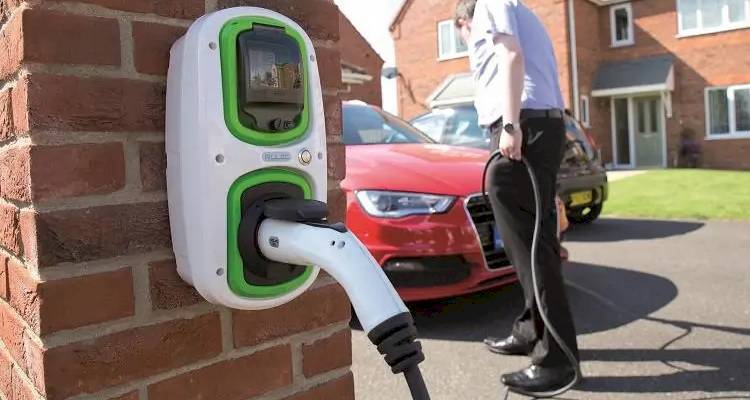
EV Charger Installation Prices
This table shows the main types of home EV chargers, their average installed prices, and helps you to identify the best match for your EV charging needs:
| Charger Type (Power) | Average Cost |
|---|---|
| 3-pin plug (2.3kW) | £150–£300 |
| Untethered home charger (7kW) | £750–£1,100 |
| Tethered home charger (7kW) | £850–£1,300 |
| Tesla Wall Connector (7kW) | £850–£1,100 |
Want a custom price?
Post your job
Here's a quick guide to help you understand which EV charger might be best for your situation:
- 3-pin plug (2.3kW) — Useful for occasional or emergency charging, not suitable for long-term use due to slow charging power. No installation is needed.
- Untethered home charger (7kW) — Compatible with most electric vehicles and has a good balance between cost and speed.
- Tethered home charger (7kW) — Good for daily charging with built-in cable for ease of use.
- Tesla Wall Connector (7kW) — Designed for Tesla vehicles, providing optimal integration and charging performance.
What type of electrician do I need to install an EV charger?
"An approved electrician with the relevant EV qualification."
What's Included in Car Charger Installation Costs?
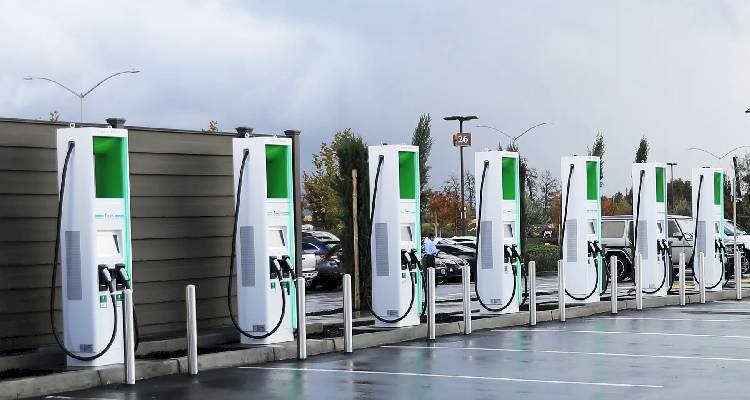
Your EV charger installation cost will typically include the following:
- Supply of the EV charging unit
- An on-site survey/inspection to assess requirements and suitability
- Standard cabling/fixings
- Electrical installation of the unit and running the cable
- Testing/certification
- Demonstration and walk-through of setup (usually)
Here's what isn't included in an EV home charger install:
- Additional electrical upgrades/work separate to the EV installation.
- Consumer unit upgrades or significant rewiring.
- Long cable run installations (longer than the standard allowance).
If, upon inspection, your electrician deems additional electrical work or upgrades necessary, these will be priced separately to your EV fitting costs.
What EV charger installation feature do you consider most important?
Price and affordability
2 votes - 67%67% of votes
Fast-charging speed
0 votes - 0%0% of votes
Smart App compatibility
1 votes - 33%33% of votes
Energy efficiency and eco-friendly
0 votes - 0%0% of votes

3 votes
See results
Hide results
Electric Car Charger Installation Cost (Labour Only)
The total electric car charger installation cost will include both the charger and the labour to install it. The labour cost of an electric vehicle charger installation is typically around £600.
Your EV charger installation costs will fluctuate depending on your cable run length and whether or not you need any additional electrical upgrades or groundwork to complete the fitting. Any additional electrical work required is going to increase the labour cost to install an EV charger at home.
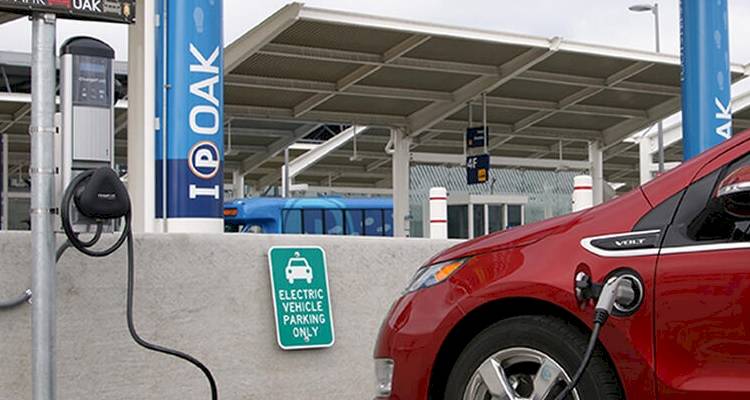
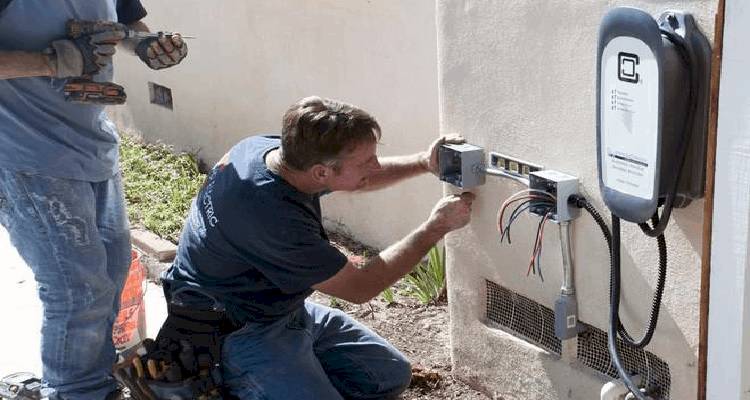
It will usually take an electrician around 2 to 4 hours to complete an EV charger installation, and most electric car charger installations are completed in a single visit, but more complex installs may take longer.
EV installation time and the total cost of installing an electric car charger may vary depending on:
- Size and layout of the property.
- Distance from the charging station to the vehicle.
- Any other necessary rewiring jobs, electrical upgrades or installations.
- Company used and location of your home.
With labour making up a sizeable proportion of the cost to install an electric car charger at your property, it's always a good idea to get a few quotes from local installers to make sure you're getting the best rates.
While rates may vary from one installer to another, where you live will also impact your EV charger install cost, as labour rates for experienced EV charger electricians can be 15% to 25% higher in London and the South East.
What's the cost of fitting a charging station for an electric car at home?
"You will be looking around the £700 to £1000 depending were the charging point is to be located."
Home Electric Car Charger Cost (Supply Only)
Below is a table of the average supply costs of installing an EV charging point, excluding the costs of labour:
| Charger Type | Power | Average Cost |
|---|---|---|
| 3-pin charging cable | 2.3kW | £150–£300 |
| Untethered 7kW wall charger | 7kW | £350–£700 |
| Tethered 7kW wall charger | 7kW | £450–£800 |
| Tesla Wall Connector | 7kW | £480–£630 |
Want a custom price?
Post your job
OZEV Grants and Government Schemes for EV Charger Installation
To encourage the uptake of electric vehicles, there are a range of grant options to help with the costs of installing home EV charging stations:
- Renters and flat owners — As of 2026, if you live in rented accommodation, or own a flat, you can potentially gain a contribution of 75% of the installation costs, up to £500, through the government's OZEV grant (Office for Zero Emission Vehicles) to help towards EV charger installation costs.
- Scottish residents — Eligible residents in Scotland can apply for a domestic charge point grant from the Energy Saving Trust, which can provide up to £400 towards fitting and purchase of an EV charger.
- Landlords — In addition to the above, landlords can apply for the Residential Landlord Chargepoint Grant to cover installation costs up to £500. Likewise, eligible households may be able to access on-street parking grants covering 75% of eligible costs, up to a total of £500.
- Businesses — If you run a business, then workplace and local authority schemes, such as the Workplace Charging Scheme providing up to £500 per socket, can help provide funding to have an electric car charger installed.
Access to the grants and receiving approval is subject to availability and your individual eligibility, which is checked on a case-by-case basis.
In most cases, you choose an OZEV-approved installer, who applies for the grant on your behalf, and once authorised will fit your charger, making grant-funded electric vehicle charging stations unsuitable for DIY fitting.
Choosing an Electric Vehicle Charger
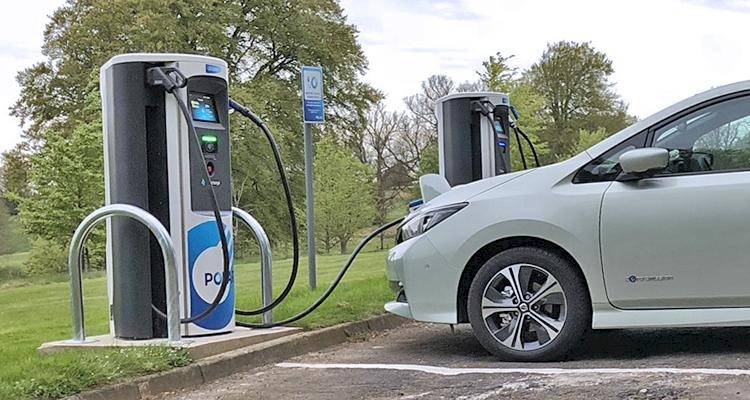
There are several choices for your home electric vehicle charger, so it's important to understand each type and pick the right option for your car and home.
It's also worth noting that most UK properties have a single-phase electricity supply, meaning chargers up to 7kW are suitable.
Let's look at the most common UK EV chargers and their advantages and disadvantages:
3-Pin Plug
A 3-pin plug is a common choice as it can be used for most standard domestic sockets, with a charging rate of around 2.3kW.
Pros
- ✔ No installation needed.
- ✔ Low up-front cost.
Cons
- ✖ Slower charging rate.
- ✖ Not suitable for long-term use.
Untethered Home Charger
Untethered home chargers have a socket but no fixed cable.
Pros
- ✔ Compatible with most electric vehicles.
- ✔ Tidy appearance when not in use.
Cons
- ✖ Less straightforward than a tethered charging point as you need to attach and detach your own charging cable each time you want to use it.
- ✖ You'll need to store your charging cable when not in use.
Tethered Home Charger
Tethered home chargers have a built-in charging cable that's permanently attached.
Pros
- ✔ Convenient and useful for everyday use.
- ✔ Faster charging capabilities compared to a 3-pin plug.
Cons
- ✖ Less visual appeal as the cable is always attached, even when not in use.
- ✖ If you change your electric vehicle, you might need to change your charging station if your new car isn't compatible.
Tesla Wall Connector
The Tesla Wall Connector is designed for specific Tesla electric vehicle use.
Pros
- ✔ Designed for Tesla vehicles.
- ✔ Offers smart feature integration.
Cons
- ✖ Can only be used on Tesla vehicles.
- ✖ To get the fastest charging speeds, you may need to have three-phase power installed at an extra cost.
If I were to purchase a charging station for an electric car, does it have to be stationary and fitted into the mains, or could it be portable?
"Yes, if it comes with 13A plug, Over that you need a dedicated circuit and fixed installation."
Factors That Impact EV Charger Installation Costs
The main EV charging station price drivers are due to the type of EV charger, power output, ease of access, and geographical location.
- Type of charger — A 3-pin plug will cost less than a tethered charging point, and choosing high-end charging points (branded, such as Tesla) or smart features will boost your overall costs.
- Installation location — If your charging point is far from your consumer unit, you'll need longer cable runs, equating to higher overall costs.
- Ease of access — If the installation or your electrical supply is difficult to access, this can increase installation time and total costs.
- UK location — EV charger installation costs are higher in the capital and surrounding large cities.
Additional EV Charger Installation Costs
As well as the factors that can affect the cost of your EV charger install, there are other costs you should also factor into your budget. These would be in addition to the typical install costs and could include:
- Consumer unit upgrade — Some older consumer units may need to be upgraded to work with an EV charger, which will add to your overall costs.
- Groundworks — If you need to run cabling under driveways, paths, or gardens, the groundworks, and reinstating everything after the install, will increase costs.
- Other electrical upgrades — If other electrical upgrades (e.g. wiring, earthing, or protective devices) are required to meet current requirements for installing EV chargers, these will cost extra.
What's Involved in Installing an EV Charger?
Only a qualified electrician should install chargers in the UK for your electric car, as even if you are confident in your DIY skills, it is illegal to do so unless you are officially registered.
As this isn't a suitable project to do yourself, you should only ever have your charger installed by a professional local EV charger installer. Search online with MyJobQuote and find tradesmen who are well-experienced in electric car charging and install chargers on a regular basis.
Let's take a broad look at the process when getting an EV charger installed by a qualified electrician:
Before the Job
Site Survey. After deciding on a contractor and your preferred type of electric car charger, they will come and survey the area and measure out the area of installation for the charging point.
Consumer Unit Check. If your consumer unit doesn't have enough capacity for the new installation, your electrician will suggest additional work before the fitting begins. This could include the need to replace a fuse box by installing a new consumer unit.
During the Job
Cable Installation. Your electrician will then run a dedicated cable from your consumer unit to the charging station, adding any necessary insulation if you have off-street parking outdoors.
Mounting the Charger. The charging station can be attached to the wall once the cable has been secured in the right location, and the charger unit is then connected to the power.
After the Job
Final Testing. Finally, the electrician will test the EV charging station. This is to ensure your new electric car charger passes safety checks, meets government regulations and is fully operational, without overpowering the main fuse board.
Need a quote to install an electric car charger at home?
Use MyJobQuote to get free quotes from EV charger installers near you. It's quick, easy, and there's no obligation to go ahead.
Where Can I Install an EV Charging Station?
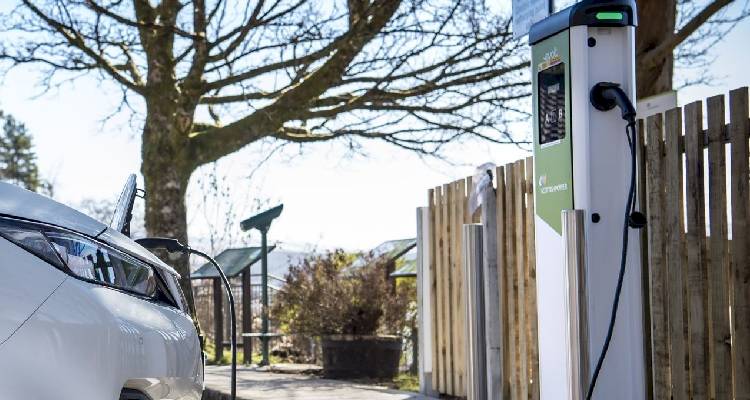
Your EV charging station can be installed:
- Inside garages
- On external walls
- Near off-road parking (e.g., driveways)
Other options to place your EV charging station include a carport driveway, a covered parking spot, or roadside parking, which is found right outside the property.
For EV installations with grant funding: You may need to have dedicated off-street parking to be approved for specific installation grants.
However, if you don't have off-street parking it may not be possible and if you live in a rented property, landlord approval is required first. Likewise, if you live in a flat with communal grounds, shared parking or with more than one property owner then you may also need permission from freeholders and any management company members.
Benefits of Installing an EV Charger at Home
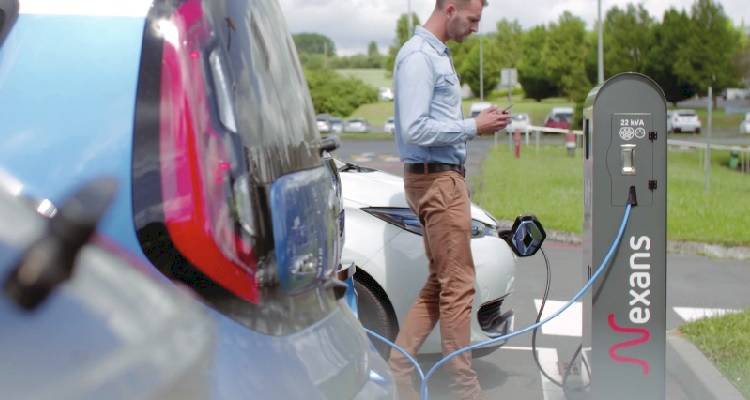
There are many reasons to purchase an electric car, and to enjoy the benefits of your own home charging station.
Below are the benefits which come from installing a domestic EV charging station:
Eco-Friendly
One of the most common reasons people choose an electric vehicle is due to the environmentally friendly benefits.
These include zero tailpipe emissions, reducing greenhouse gas emissions, and being a low-carbon choice for the electricity sector.
Convenience
Installing your own charging station at home means you can dedicate specific charging time overnight, and don't have to rely on finding an empty public charging station.
You may also be able to travel longer distances as you can fully charge your vehicle before a journey, and top up your charge at stations along the way.
Cost-Effective
By installing your own EV charging station at home, you'll save on the overall costs of running a vehicle.
Ask a Trade
Got a question that only a tradesperson can answer? We have thousands of trades ready to answer any question you may have.
Ask your question

Home EV Charging Running Costs
Next to ease and availability, one of the biggest benefits of installing an EV charging station at home is the savings you will make on running costs for your electric vehicle.
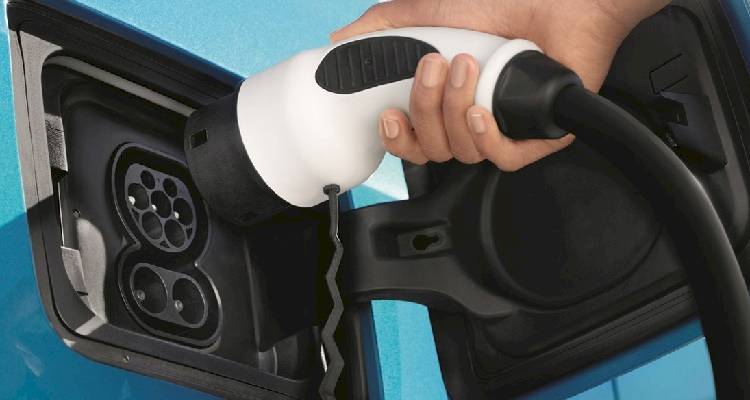
- Home charging is cheaper — Standard domestic electricity tariffs are around 26p per kWh, whereas public charging stations charge a premium rate costing around 40p to 85p per kWh.
- Lower cost per charge — A full charge from a public charge point will be around £25 to £45, while the same at home will be closer to £8 to £12.
- EV tariffs reduce costs further — Cheaper, dedicated off-peak EV-charging tariffs can reduce costs even further, with kWh rates as low as 6.5p.
- Little to no running costs for the charger itself — Once installed, an EV charger needs little ongoing maintenance and has virtually no running costs itself.
With the savings in running costs for your electric vehicle over time, it's easy to see how the cost of installation of a home EV charging point can be a good investment.
Checklist: Hiring an EV Charger Installer in the UK
Consider these key points before hiring an electrician and having your EV charger installed:
- Have you received multiple quotes? Find local electricians that specialise in having an electric car charger installed, which you can do via MyJobQuote and ask for written quotes from at least three separate tradesmen.
- Are they fully qualified and authorised to install an EV charging station? Double-check that the electrician is Part P qualified and authorised to carry out the installation of an electric car charging station.
- Are they part of a recognised government-approved scheme? Make sure they are registered with a government-approved scheme or body as recommended by BRAC (the Building Regulations Advisory Committee).
- Are they an OZEV-approved installation company? If you choose to apply for an OZEV grant, you'll need to find an OZEV-approved installation company, and the grant will convert to an actual saving once you receive the go-ahead on your application.
- Have they completed similar jobs before? Ask how often they install chargers designed for an electric car and make sure that the electrician is familiar with the specific type of electric car charger you need.
- Do they have positive reviews of their work? Check online reviews and testimonials, read through their MyJobQuote profile for additional feedback and search for examples of previous jobs to ensure you're booking a professional installation.
- Have you checked there aren't any hidden charges? Your EV charger cost should automatically include the physical charger unit listed within the quote, but also ask if there are any additional fees such as any internal rewiring or if the main fuse box needs updating.
- Are they insured and do they offer guarantees? Ask to see if your electrician is insured with at least Public Liability Insurance which covers against personal injury or accidental damage. Check they also provide a guarantee for your new electric car charger.
- Have you received a written agreement before starting the work? As part of your initial agreement when having a charger installed for your electric vehicle, make sure everything is confirmed in writing, whether it's a standard installation or one that's likely to be more complicated.
- Will you receive a receipt or payment confirmation? Remember to ask for a receipt or payment confirmation to protect you against possible future disputes.
FAQs
Can I Install an Electric Car Charger Myself?
No, it's not recommended that you install an electric vehicle charger yourself as in the UK only a fully-qualified and registered electrician can carry out the work legally. It can also be a major risk to yourself and your home to alter your electrics without the correct knowledge. If your electric car charger is installed incorrectly, then it may cause electric shock, fire, or interior damage.
Do I Need Planning Permission to Install Chargers for an EV?
In most cases the answer is no, providing you are the homeowner and have access to off-street parking. Having an EV charger installed on the wall of your property is usually considered a permitted development. However, if you live in a listed building or within a conservation area then separate rules may apply. Always check with your local planning authority first.
Do I Need to Follow Any Building Regulations?
Yes, as even when planning permission isn't required, the installation must comply with building regulations and electrical safety standards. Legally this can only be actioned by a registered electrician. Ask if they can self-certify and who's responsible for notifying Building Control.
What Are Rapid Chargers?
The term 'rapid charging' is the name given to public EV chargers that can reach a power rate of 50kW or more. Rapid chargers are not accessible for home stations or domestic households, and can only be found at public stations, including petrol stations, supermarkets, and service stations.
Will an Electric Car Make My Electricity Bill Higher?
Yes, but you will end up with actual savings with running costs by saving on the price of fuel and therefore increasing the vehicle efficiency. There's also a variety of EV energy tariffs that can help you save even more.
Can an EV Charger Increase Home Value?
While it won't drastically increase your home's value, having access to an electric car charger can still be appealing to potential buyers. Especially given the increase in EVs and the fact the UK government has put plans in place to stop the production of cars with a combustible engine by the year 2030.
What Is a Smart EV Charger?
A smart charger is a unit that can be controlled via a smartphone app or via an internet connection. It allows you to set charging time, such as schedule overnight charging. Having a smart charger also enables you to monitor energy usage and potentially take advantage of changing energy rates.
Can I Charge My EV Using a Regular Socket?
While technically possible with the right connections, it is a much slower process that puts a strain on both your home's electric circuit and fuse board, whereas having a dedicated electric car charger is not only faster and more reliable, but also comes with additional safety features such as automatically shutting off in the event of a power surge or the system overloading. As such, an official electric car charger installed is by far the more responsible option.
How Much Does It Cost for an EV Charger Removal?
Hiring a registered electrician to remove your electric car charger will cost around £200 to £350. Moving house or upgrading to a smart charger are usually the main reasons for having the original charger unit removed.