Builders
 Carpenters
 Electricians
 Flooring Specialists
 Gardeners
 Handymen
 Heating Engineers
 Painters & Decorators
 Plasterers & Renderers
 Plumbers
 Roofers
 Tilers
 my
myCost of Static Caravan Decking
At a Glance
- The average cost of static caravan decking is around £1,400.
- This job typically takes 1 to 2 days to finish.
- Simple calculator for you to quickly estimate caravan decking installation costs.
- Caravan decking costs for 2026 by size and materials.
- What's involved in laying caravan decking and a breakdown of each step.
- How to find the right tradesperson for the job with MyJobQuote.
Get free estimates
Are you a trade? Get more work today!
£1,400
Table of Contents
- How Much Does Static Caravan Decking Cost?
- Labour Cost of Static Caravan Decking
- Supply Cost of Static Caravan Decking
- Additional Caravan Decking Costs
- Factors That Impact Caravan Decking Costs
- What's Involved in Installing Caravan Decking?
- DIY vs Professional Static Caravan Decking Installation Costs
- Building Regulations and Park Fees for Caravan Decking
- Cost of Different Types of Static Caravan Decking
- Checklist: Hiring a Caravan Decking Installer in the UK
- FAQs
How Much Does Static Caravan Decking Cost?
The cost of installing caravan decking is around £1,400. However, price estimates range from £960 to £3,000+, inclusive of materials and labour.
The size of the project is the most important factor that influences the average cost of the project. The bigger the decked area, the more materials required, so the job will be more expensive. Additional features such as terraced decks with steps and balustrades will cost significantly more than a basic design.
The type of materials used will also have a big impact on the cost of adding decking to your holiday home. At the lower end, a typical small uPVC decking will cost roughly £660, whereas a similarly-sized aluminium decking costs around £1,300.
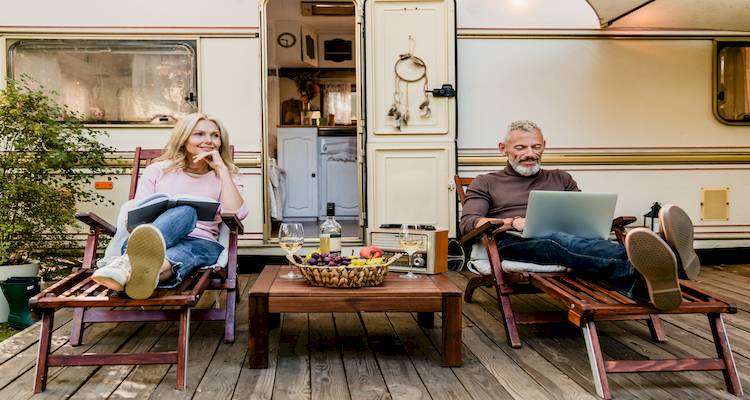
Beyond the cost, static caravan decking is also a straightforward way to add extra outdoor living space to your holiday home, creating room for seating, dining, or simply somewhere dry to step out onto.
Static Caravan Decking Prices
| Type | Approx. Cost per m² | Small Deck (~12m²) | Medium Deck (~24m²) |
|---|---|---|---|
| Timber | £50–£70 | £600–£840 | £1,200–£1,700 |
| Composite | £80–£120 | £960–£1,450 | £1,900–£2,900 |
| uPVC | £40–£70 | £480–£840 | £960–£1,700 |
| Aluminium | £90–£130 | £1,100–£1,550 | £2,150–£3,100 |
Want a custom price?
Post your job
How much it will cost for 5m² of decking, including materials and labour?
"There are many factors to calculate when pricing a job. E.g., removal of existing decking, the new decking's height, whether steps or railings are required, and also the type and style of boards. That said, for a basic install, I would say £700 to £1,200."
Caravan Decking Cost Calculator
Labour Cost of Static Caravan Decking
Labour typically makes up around 35% to 45% of the total cost of a static caravan decking project, with the remainder going towards materials. This split can shift depending on the material chosen, since premium options like aluminium reduce the labour share, as they involve less finishing work.
Most installers quote per day rather than per square metre, since the time taken depends more on access and ground conditions than on size alone. A typical quote will state a day rate of around £280 to £420, or a fixed total cost once the installer has assessed the site.
What caravan decking feature do you consider most important?
Durability and weather resistance
1 votes - 33%33% of votes
Low maintenance and easy to clean
2 votes - 67%67% of votes
Attractive design and aesthetics
0 votes - 0%0% of votes
Additional space for seating, furniture, or plants
0 votes - 0%0% of votes

3 votes
See results
Hide results
Installing a static caravan deck typically takes 1 to 2 days, depending on the size, complexity, and weather conditions. Labour costs are roughly:
- Small deck (12m²): 1 day, single tradesperson, around £225.
- Larger deck (24m²): 2 days, may involve an extra tradesperson, around £900.
Additional factors can increase labour costs or duration, including poor site conditions, limited access to the static caravan, or extra workers needed for complex designs. The type of decking material does not significantly affect installation time.
Supply Cost of Static Caravan Decking
You'll be relieved to know that decking does not have to be costly. There are many caravan decking ideas you can choose from on a tight budget.
- Softwood timber decking — £25 to £40 per m² (the cheapest option, but needs the most maintenance).
- Hardwood timber decking — £70 to £93 per m² (more durable than softwood, but still requires upkeep).
- Composite decking — £50 to £80 per m² (long-lasting, low maintenance).
- uPVC decking — £20 to £35 per m² (lightweight, weather-resistant, one of a few vinyl solutions used for static caravan decking).
- Aluminium decking — £60 to £100 per m² (durable, lightweight, weather-resistant).
These costs cover only the decking boards, frame timber, and fixings. They do not include labour, tools, or site preparation.
Additional Caravan Decking Costs
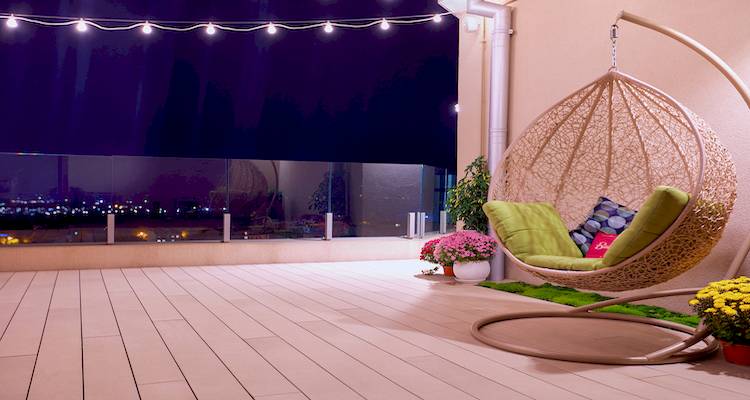
A number of extra jobs can affect the total cost of your static caravan decking project. The table below summarises the most common ones.
| Additional Job | Typical Cost |
|---|---|
| Elevated decking (posts and support) | £300–£900 |
| Glass balustrade | £1,100–£1,800 |
| Decking lights | £30–£40 |
| Skirting panels | £14 per 3m (uPVC) to £150 per panel (composite) |
| Stairs | £150–£800 |
| Site preparation | £200–£800 |
| Removal of old decking | £200–£800 |
Want a custom price?
Post your job
- Elevated decking needs posts, usually spaced around 8 feet apart, to stop the boards sinking into the ground. The number needed depends on the material, joist size, and any local building regulations.
- A glass balustrade is a modern railing option that adds a safety barrier and a more premium finish than standard balusters.
- Decking lights are usually recessed for a trip-free finish, and LED kits keep running costs down.
- Skirting panels around the base of a raised deck improve both appearance and security, stopping anything getting underneath the static caravan.
- Stairs are needed for raised decking, with cost depending on height, number of steps, and material.
- Site preparation, such as levelling ground or clearing debris, is often the first job and can add significantly to the total cost on sloped or uneven pitches.
- If you're replacing old decking, removal and disposal costs should be budgeted for separately unless your installer includes this in their quote.
Ask a Trade
Got a question that only a tradesperson can answer? We have thousands of trades ready to answer any question you may have.
Ask your question

Factors That Impact Caravan Decking Costs
The cost of a static caravan decking project depends on the following factors:
Size
The size of your static caravan affects cost significantly, especially for a full side deck rather than a front enclosed deck. Larger decking also takes longer to install, increasing labour costs.
Decking Material
Material choice has one of the biggest impacts on material costs. Timber is the best option for a tighter budget, while composite offers a longer lifespan for a higher upfront cost, and aluminium sits at the premium end.
Location and Accessibility
Labour rates are typically 10–25% higher in London and the South East. Remote or coastal parks may also incur extra transport charges, and difficult site access, such as narrow routes or uneven ground, can increase labour time.
Seasonal Demand
Installation costs can rise during peak spring and summer months in popular holiday regions, when demand for installers is at its highest.
What's Involved in Installing Caravan Decking?
While it's possible to install decking yourself, hiring a professional is the best way to ensure a refined, weatherproof finish. Here's a simple overview of what's involved.
Before the Job
- Checking the ground and measuring up. Installers assess ground conditions and confirm the decking size and layout.
- Planning the foundation. This includes deciding between concrete posts or sleepers, depending on ground conditions.
During the Job
- Laying the foundation. Posts are secured in concrete, or sleepers are used, to support the structure.
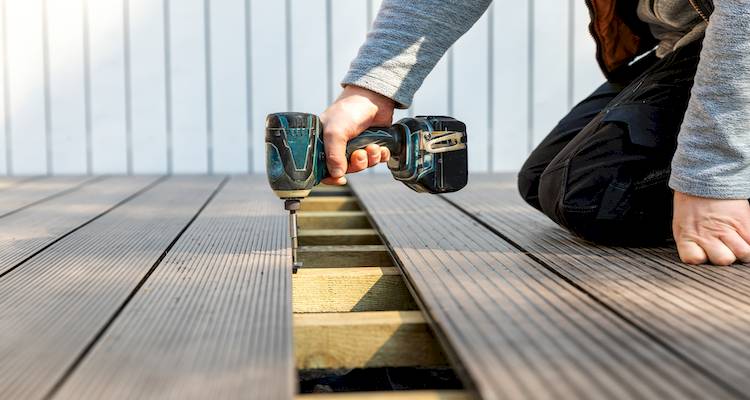
- Fitting joists and decking boards. Joists are attached to the posts, then boards are laid in a floorboard formation.
- Adding stairs and balusters. Stairs are built to the correct rise and run, and balusters are fitted as a safety barrier.
After the Job
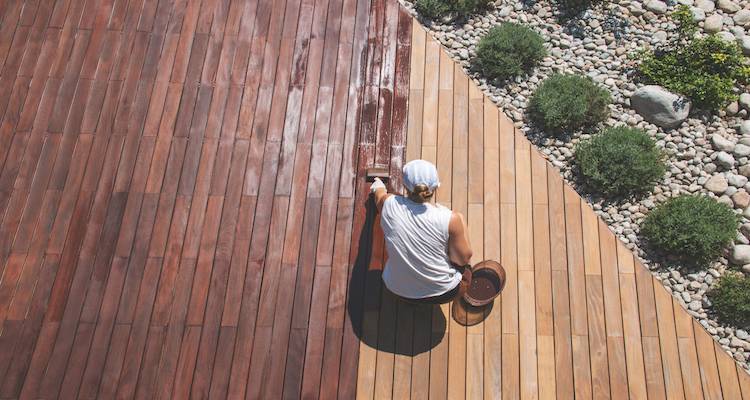
- Sealing and finishing touches. The decking is sealed, with post caps or other finishing details added.
- Final checks. The installer checks that everything is level, secure, and ready for furniture or fittings.
A few of the boards on my decking have gone soft and one of the joists underneath looks rotten. Is it worth repairing or better to replace the whole thing? It's about 4m x 3m.
"It's very hard to cost. Can be repaired, but for what it's worth, if it's starting to rot, my guess is that's very old, so if the budget's there, I would personally replace."
DIY vs Professional Static Caravan Decking Installation Costs
Installing decking yourself can reduce labour costs, but it doesn't eliminate expenses entirely. You'll still need to budget for materials, tools, ground preparation, and waste removal.
| DIY Cost Item | Typical Cost |
|---|---|
| Decking boards, frame timber and fixings | £800–£2,000 |
| Concrete pads or ground levelling materials | £150–£500 |
| Tool hire (post hole digger, saw, spirit level) | £50–£200 |
| Skip hire or waste disposal | £150–£300 |
| Additional materials (weed fabric, gravel, damp proofing) | Up to £110 |
Want a custom price?
Post your job
At the higher end, DIY installation can still cost up to £3,000, so it isn't always the cheaper option once every cost is accounted for. Ground preparation is usually the most challenging and expensive part of a DIY decking project, particularly on grass or uneven ground.
Self-Build Decking Kits
Pre-fabricated decking kits are another option if you want to reduce labour costs while avoiding a full from-scratch build. Kit prices vary by size, but as a guide:
- Small entry platform with steps: from around £940.
- Medium patio area with steps and gate: from around £1,750.
- Large wrap-around deck: from around £3,750.
Kits typically include the frame and boards, but you'll still need to budget for site preparation, tools, and installation if you're not fitting it yourself.
Hiring a professional decking installer increases upfront costs but usually includes labour, correct ventilation compliance, structural integrity, and a workmanship guarantee. Contractors may also source materials at trade prices and ensure the job meets static caravan decking regulations, reducing the stress of planning your decking project.
Building Regulations and Park Fees for Caravan Decking
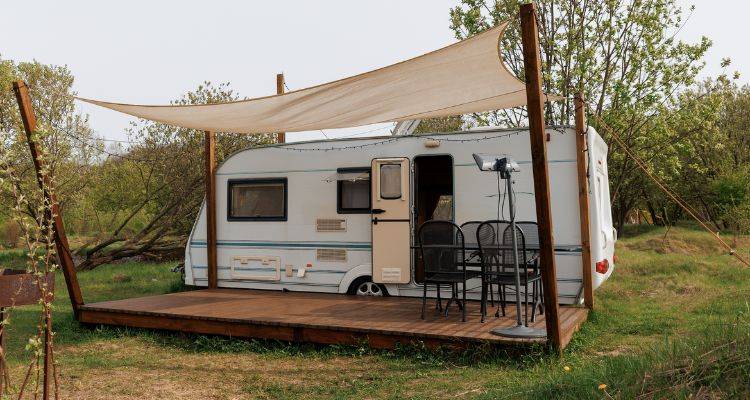
Building static caravan decking does not usually require full planning permission, as the static caravan is located on privately owned park land. However, you will almost always need written approval from the park operator before starting any work. Check your contract for guidelines about building decking around your holiday home and how to inform the park owners of your plans.
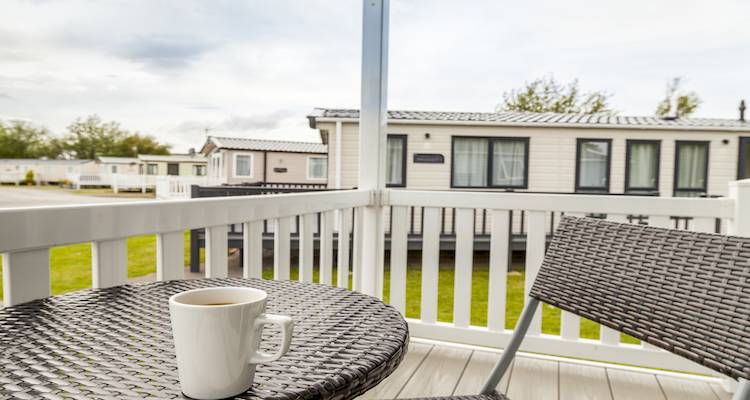
Some caravan parks charge an administration fee for reviewing decking applications, and certain parks require you to use approved contractors. This can increase installation costs if you can't choose your preferred provider.
Park rules may also limit the size of your decking or require specific fire-resistant materials. These restrictions can affect both design and overall cost. There will also probably be restrictions around ventilation under the caravan to consider.
Typical Regulations That May Affect Cost
- Minimum ventilation requirements under the caravan.
- Use of fire-resistant or non-combustible materials may mean cheaper materials are not an option.
- Restrictions on deck size or positioning.
- Requirement to use park-approved contractors.
- Some caravan parks require you to follow design rules to ensure your decking matches their aesthetic preferences, again limiting material choices.
Cost of Different Types of Static Caravan Decking
Adding decking to your static caravan can completely change its appearance, creating more living space for relaxing, dining, or letting children play outside. Your budget and needs will usually determine which of the large range of materials is best for you.
Wood Caravan Decking Cost
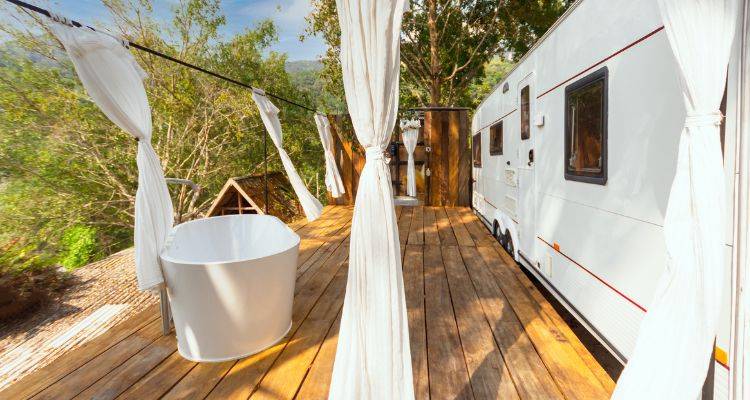
Wood is the most widely used static caravan decking material because of its affordability and versatility. It requires the most upkeep of the four options, needing regular staining and sealing to prevent rot and splintering, and can become slippery when wet.
Wood Decking: £25 to £93 per m²
- Maintenance — Needs regular staining and sealing to prevent rot and splintering.
- Durability — Softwood lasts around 10 years, while hardwood can last 10 to 15 years or more.
- Appearance — A natural, rustic overall look with a wide choice of colours and finishes.
Composite Caravan Decking Cost
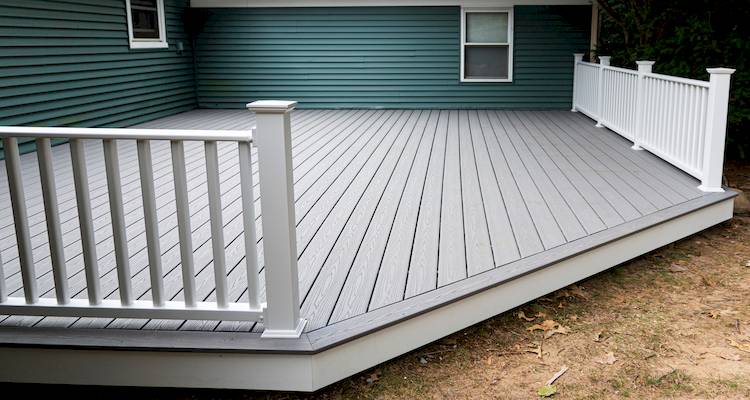
Composite decking costs more upfront than timber, but its low maintenance and long lifespan can make it the best option for owners looking for a longer-term solution. Some finishes are designed to replicate natural wood, though not everyone likes the more plastic-looking options.
Composite Decking: £50 to £80 per m²
- Maintenance — Low upkeep, needing only occasional cleaning.
- Durability — Resistant to fading and splintering, with a lifespan of over 30 years when well maintained.
- Appearance — Designed to replicate natural wood, though some finishes can look plastic.
uPVC Caravan Decking Cost
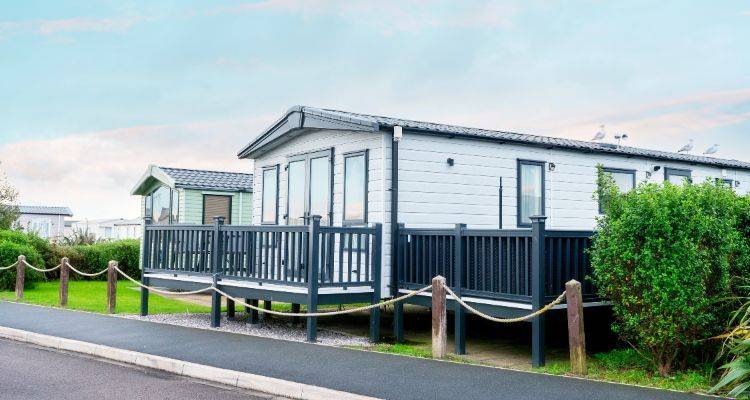
uPVC is generally the most affordable vinyl solution, making it popular for owners on a tighter budget. It can be more difficult to repair if damaged, and some finishes can suffer sun damage over time.
uPVC Decking: £20 to £35 per m²
- Maintenance — Little to no maintenance required.
- Durability — Lightweight, does not absorb water, and doesn't rot or decay.
- Appearance — Stylish and long-lasting, though it lacks a natural wood look and can get hot underfoot.
Aluminium Caravan Decking Cost
Aluminium is the most expensive option, but it's also the most durable, with some products lasting up to 60 years, which may offset the higher initial cost in the long run.
Aluminium Decking: £60 to £100 per m²
- Maintenance — Requires no sealing, painting, or staining.
- Durability — Won't crack, warp, or rot, and is slip and fire-resistant.
- Appearance — A modern look, though with fewer colour options than uPVC or composite.
We've got a hardwood deck that's about 12 years old. Some boards are starting to grey and split at the ends. Is this the beginning of the end, or is it still worth treating and keeping?
"No, you should keep it. Twelve years is young for high-quality hardwood. Greying is natural oxidation from UV rays, and end-splitting is normal weather-related drying. Your deck is absolutely worth saving. Because the structural framework is likely sound, cleaning, sanding, and re-oiling will bring it back to life."
Checklist: Hiring a Caravan Decking Installer in the UK
Once you've chosen the best caravan decking style, consider the following when looking for a contractor to build your new decking:
- Are they licensed and insured? Verify that the company you are hiring is qualified and licensed for the job, and although public liability insurance isn't legally required, it's something else to consider as reputable tradesmen will be covered against injury or accidental damage.
- Is there a clear contract? Before signing or paying for anything, ensure the contract includes a completion date, along with a breakdown of the full cost and labour fees, along with any terms and conditions if the project changes or is delayed.
- Is waste removal included? The chances are it's included automatically, but this is always worth checking and getting confirmed in writing so you don't receive any additional charges without prior notice.
- Do they have relevant experience? Choose a builder experienced with your type of project or ask them for references — especially if your caravan decking involves complex elements such as landscaping or multi-level decking.
- Will they sign off any building regulations? Many tradesmen are able to self-certify, meaning they can provide documentation to confirm the work covers any requirements. If they're unable to do so, you will need to apply for a Building Regulations Compliance Certificate via your local authority.
- Have you compared multiple installers? Compare estimates, communication, and professionalism to find the best value and fit for your project and budget. It's recommended to receive at least 3 separate quotes before deciding who's right for the job, and you can do this with the help of MyJobQuote.
- Have you checked their reviews and portfolio? Look at online reviews such as feedback on MyJobQuote, along with examples of past work to confirm they are able to provide the quality of work you're looking for and provide you with confidence in their ability.
FAQs
How Long Does Caravan Decking Last?
The lifespan of caravan decking depends on the material and maintenance. Typically, softwood decking lasts up to around 10 years, while hardwood decking can last 10 to 15 years or more with proper care. Aluminium decking can last up to 60 years if well maintained, so it may be worth the higher initial costs.
Is Caravan Decking Worth It?
Decking is a simple way to improve the appearance of your caravan. It can be used to make a useful outdoor space. It's a great way to increase the value of your caravan. When combined with skirting, decking can help to reduce draughts and insulate your caravan.
Why Is Static Caravan Decking So Expensive?
Costs add up quickly because the price covers materials, labour, site preparation, and often additional features such as stairs, balustrades, or skirting. Premium materials like aluminium and composite also cost more upfront than timber, though they typically last longer and need less maintenance.
Does Caravan Decking Need Skirting?
Skirting isn't a legal requirement, but it's commonly added alongside decking to hide the underside of the static caravan, improve insulation, and reduce draughts. Some parks may require it for aesthetic reasons.
What Is Static Caravan Decking Made Of?
Static caravan decking is most commonly made from timber, composite (a mix of wood fibres and plastic), uPVC, or aluminium. Each material has a different balance of cost, maintenance, and lifespan.
How Much Is Wrap-Around Decking for a Static Caravan?
Wrap-around decking covers a larger area than a standard front or side deck, so costs are higher. For a typical wrap-around project, expect to pay from around £1,800 up to £6,000 or more, depending on size, material, and any additional features.
Is Composite Decking Worth the Extra Cost for a Caravan?
Composite decking costs more than timber per square metre, but it needs far less maintenance and typically lasts over 30 years with proper care. For owners who want a low-upkeep static caravan decking option, the higher upfront cost can be worth it over time.