Builders
 Carpenters
 Electricians
 Flooring Specialists
 Gardeners
 Handymen
 Heating Engineers
 Painters & Decorators
 Plasterers & Renderers
 Plumbers
 Roofers
 Tilers
 my
myAsbestos Water Tank Removal Cost
At a Glance
- The average cost of standard asbestos water tank removal is around £550, with typical prices ranging from £450 to £650.
- Most straightforward removals take half a day to one day, although restricted access or replacement work can take longer.
- A breakdown of asbestos water tank removal costs in 2026, including labour, disposal and additional work.
- What affects the price, how long removal takes and the regulations involved.
- When removal may be necessary, how asbestos tanks are identified and what to check in a quote.
Get free estimates
Are you a trade? Get more work today!
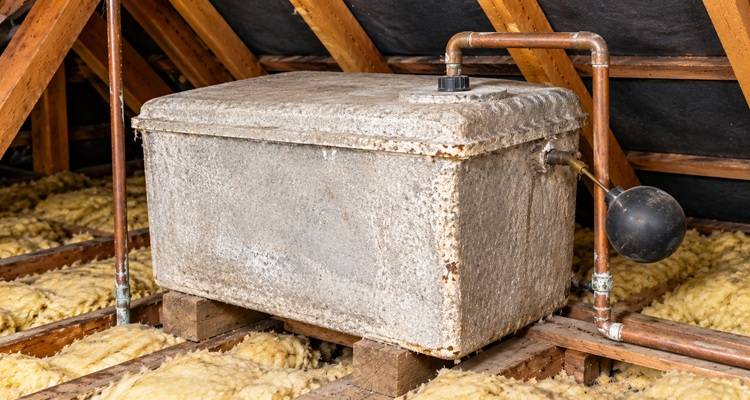
Some UK homes built before asbestos was banned in 1999 still contain older cold water storage tanks or cisterns made from asbestos cement. These tanks are commonly found in loft spaces and were used because asbestos cement was durable and water-resistant.
If you've discovered an asbestos water tank in your property, you'll probably want to know how much it'll cost to remove.
Asbestos water tank removal typically costs between £350 and £850. The amount you pay will depend on factors such as the size and condition of the tank, accessibility and whether it can be removed intact.
A small, accessible tank will usually be at the lower end of the price range. Larger tanks in restricted loft spaces can cost considerably more to remove.
You'll also need to budget for additional work if you require a replacement water tank, plumbing alterations or changes to the loft access.
You can compare quotes for asbestos water tank removal through MyJobQuote before arranging the work.
If you suspect your roof contains asbestos, take a look at our asbestos removal cost page for more information.
£550
Table of Contents
- How Much Does Asbestos Water Tank Removal Cost?
- What Is an Asbestos Water Tank?
- Asbestos Water Tank Removal Labour Costs
- What Affects Asbestos Water Tank Removal Costs?
- Additional Asbestos Water Tank Removal Costs
- How Long Does It Take to Remove an Asbestos Water Tank?
- Does an Asbestos Water Tank Need to Be Removed?
- Do I Need an Asbestos Survey Before Removing a Water Tank?
- Can I Remove an Asbestos Water Tank Myself?
- Asbestos Water Tank Removal Regulations
- What Does an Asbestos Water Tank Removal Quote Include?
- FAQs
How Much Does Asbestos Water Tank Removal Cost?
The cost of removing an asbestos water tank varies between properties. Accessibility, tank size and condition, waste disposal requirements and any replacement work can all affect the final quote.
The following prices provide a guide to typical costs:
| Job | Typical Cost |
|---|---|
| Small, easily accessible asbestos tank removal | £350–£450 |
| Standard asbestos water tank removal | £450–£650 |
| Large or difficult-access asbestos tank removal | £650–£850+ |
| Asbestos testing or sample analysis | £30–£75 per sample |
| Removal and replacement with a plastic tank | £600–£1,400+ |
| Loft hatch enlargement | £150–£600+ |
| Asbestos waste disposal | Usually included in removal quote |
Want a custom price?
Post your job
Asbestos removal prices may be quoted without VAT, so check whether VAT is included when comparing estimates.
If your contractor is supplying a replacement tank, modifying pipework or carrying out other building work, VAT may also apply to these elements.
Learn more about asbestos survey costs.
What Is an Asbestos Water Tank?
An asbestos water tank is a cold water storage tank or cistern made from asbestos cement.
Asbestos cement combines cement with asbestos fibres to strengthen the material and increase its durability.
Older tanks can be found in areas such as:
- Loft spaces
- Roof voids
- Airing cupboards
- Utility rooms
- Older commercial buildings
Not every old water tank contains asbestos. Older tanks may also be made from materials such as galvanised steel, fibreglass or plastic.
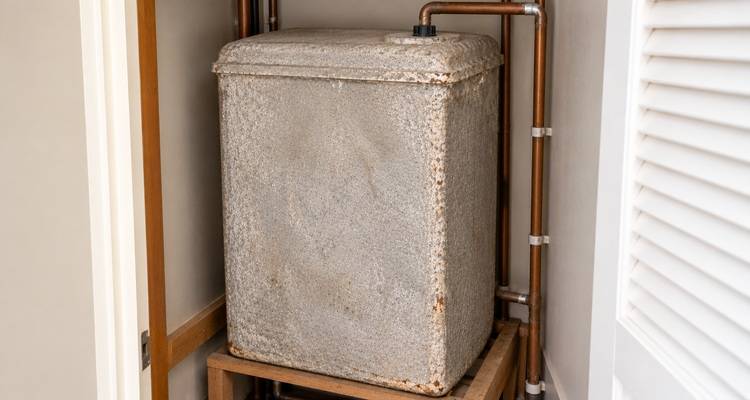
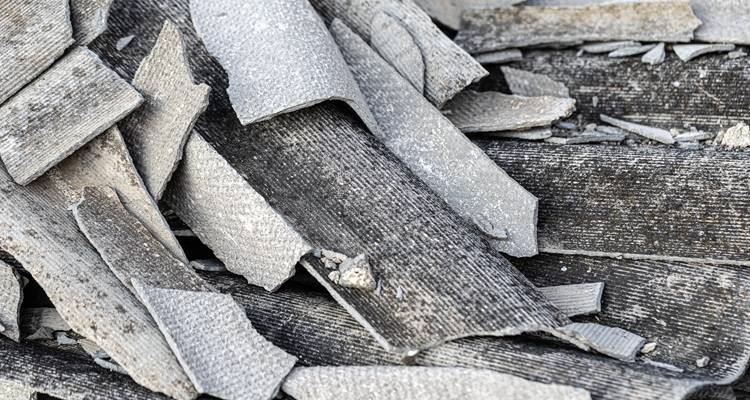
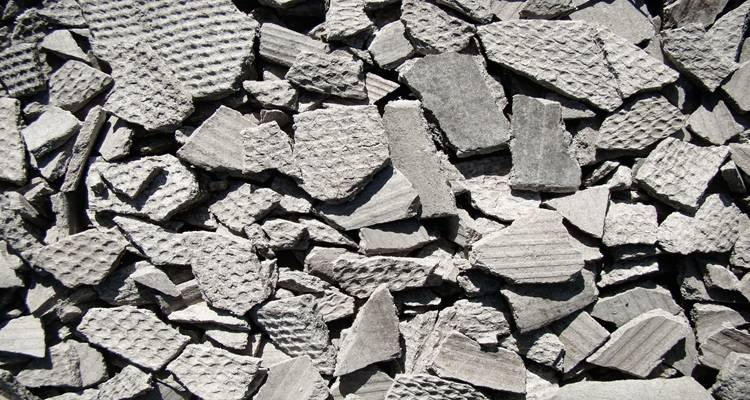
Asbestos cement is generally considered lower risk than more friable asbestos-containing materials because the fibres are bound within the cement. However, fibres can still be released if asbestos cement is significantly damaged, drilled, cut or broken.
Asbestos was banned in the UK in 1999, but asbestos-containing materials can still be present in properties built before the ban.
Asbestos Water Tank Removal Labour Costs
Asbestos water tank removal is usually priced as a complete job rather than at an hourly rate.
Depending on the work required, the quote may include:
- Initial assessment
- Site preparation
- Disconnecting the tank where necessary
- Wrapping or sealing the tank
- Removing it from the property
- Waste transport
- Disposal charges
- Cleaning the work area
Some contractors have a minimum call-out charge, particularly for smaller jobs. A straightforward water tank removal may require two workers to handle and move the tank while reducing the risk of accidental damage.
Labour costs can increase when:
- Loft access is restricted
- The tank is particularly heavy
- Pipework requires modification
- The tank can't fit through the loft hatch
- Additional asbestos-containing materials are discovered
Transport and disposal charges can also make up a significant part of the overall quote.
What Affects Asbestos Water Tank Removal Costs?
Several factors can influence the final cost of removing an asbestos water tank.
Tank Size
Larger tanks take more time and labour to remove. They're also heavier, making it more difficult to move them through loft hatches and other restricted spaces.
A particularly large tank may require additional workers or handling equipment.
Tank Condition
The condition of the tank can affect the removal process.
An intact asbestos cement tank may be simpler to remove. A damaged, cracked or deteriorating tank can require additional precautions to minimise the risk of fibres being released.
Location
Many asbestos water tanks are located in lofts, but some are positioned in roof voids and other enclosed spaces where movement is restricted.
Difficult access can increase the amount of time required to remove the tank.
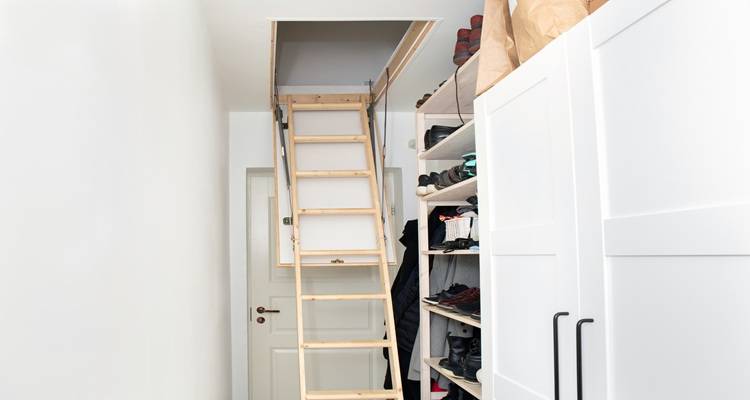
Loft Hatch Size
The size of the loft hatch can have a significant impact on removal costs. Some older tanks were installed before the loft opening was fully completed, meaning the tank may be too large to pass through the existing hatch.
Depending on the circumstances, additional work may therefore be needed to remove the tank safely.
Removal Method
Health and Safety Executive guidance recommends handling asbestos cement products in a way that minimises breakage.
Where possible, removing a tank intact can simplify the process. Restricted access may require a different removal method carried out using suitable asbestos-control procedures.
Plumbing Work
Additional plumbing costs may apply if:
- Pipework needs disconnecting
- Valves need removing
- The water system requires modification
- A replacement tank is being installed
Find more information about plumber costs.
Waste Disposal
Asbestos waste needs to be packaged, transported and disposed of correctly. Waste handling and disposal charges are often included in the removal quote, but confirm this with the contractor before work begins.
Your Location
Labour costs vary across the UK. Prices are generally higher in London and the South East than in many parts of the North of England, the Midlands and Wales.
Find Tradespeople, compare up to 3 quotes!
It's FREE and there are no obligations

Additional Asbestos Water Tank Removal Costs
Some projects involve additional work alongside removing the existing tank.
Asbestos Survey
If the material hasn't been identified, you may need an asbestos survey before removal.
Typical cost: £180–£500+
Sample Testing
Laboratory testing can be used to confirm whether asbestos is present.
Typical cost: £30–£75 per sample

Replacement Cold Water Tank
A modern plastic tank may be installed after the old tank has been removed.
Typical cost: £150–£600+ for the tank itself, with installation charged separately
Find out more about hot and cold water tank installation.
Plumbing Alterations
Existing pipework may need to be altered when a replacement tank is installed.
Typical cost: £100–£500+, depending on the work required
Loft Hatch Enlargement
If the existing tank can't pass through the loft opening, the hatch may need to be enlarged.
Typical cost: £150–£600+
Making Good
Additional work following removal may include:
- Plasterboard repairs
- Decorating
- Loft boarding repairs
Removal of Other Asbestos Materials
If additional asbestos-containing materials are discovered during the project, such as asbestos cement sheets, flues or pipework, the overall removal cost can increase.
Air Testing
Air testing isn't normally required for straightforward asbestos cement removal, although it may be requested in some circumstances.
How Long Does It Take to Remove an Asbestos Water Tank?
Most straightforward asbestos water tank removals can be completed within half a day to one day.
Typical timescales include:
| Job Time | Estimated Time |
|---|---|
| Small accessible tank | 2–4 hours |
| Standard loft tank | 4–8 hours |
| Difficult-access tank | 1 day or longer |
| Removal plus replacement tank installation | 1–2 days |
Want a custom price?
Post your job
Factors that can increase the timescale include:
- Restricted loft access
- Multiple tanks
- Plumbing alterations
- Additional asbestos-containing materials
- Loft hatch enlargement
- Poor weather affecting waste transport
Does an Asbestos Water Tank Need to Be Removed?
Finding asbestos in your property doesn't necessarily mean it needs to be removed immediately.
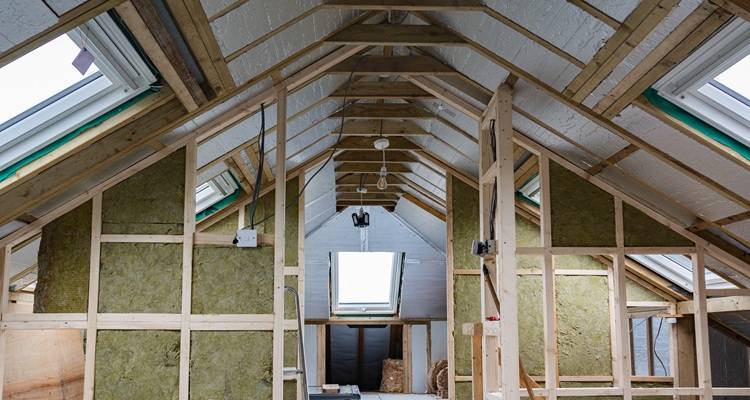
Some intact asbestos cement products can remain in place if they're in suitable condition and aren't likely to be disturbed.
Removal may be considered when:
- The tank is no longer in use
- The tank is deteriorating
- Renovation work is planned
- The loft is being converted
- The water system is being upgraded
Avoid disturbing materials suspected of containing asbestos. If you're unsure whether a tank contains asbestos, testing can be used to identify the material before work begins.
Do I Need an Asbestos Survey Before Removing a Water Tank?
Not necessarily.
If the tank has already been identified as containing asbestos cement, an additional survey may not always be required.
However, testing may be recommended if the material hasn't yet been identified.

A visual inspection alone can't always determine whether a water tank contains asbestos. Laboratory analysis can be used to confirm whether asbestos fibres are present.
Can I Remove an Asbestos Water Tank Myself?
Removing an asbestos water tank yourself isn't recommended.
The Health and Safety Executive identifies some work involving asbestos cement as non-licensed work. However, this doesn't mean asbestos removal should automatically be treated as a DIY job.
The risk of releasing asbestos fibres increases if the material is:
- Broken
- Cut
- Drilled
- Sanded
- Damaged during handling
Even asbestos cement can release fibres when disturbed.
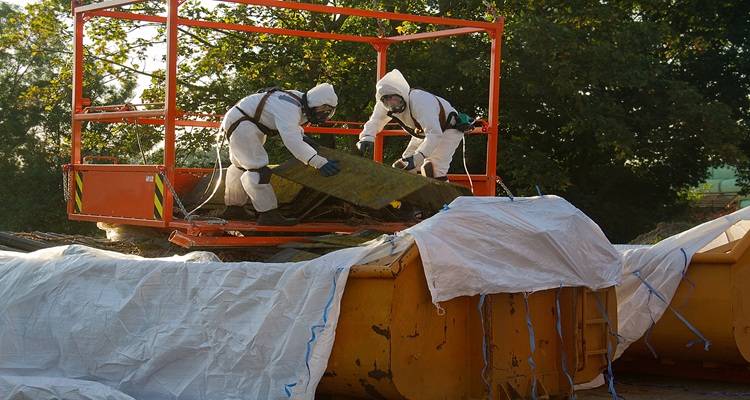
There are also specific requirements for packaging, transporting and disposing of asbestos waste.
For these reasons, asbestos-containing materials should be handled by someone with appropriate asbestos training who can follow the relevant safety and disposal requirements.
Asbestos Water Tank Removal Regulations
Several regulations and guidance documents apply to asbestos work in the UK.
Control of Asbestos Regulations 2012
The Control of Asbestos Regulations 2012 cover the management of and work involving asbestos.
HSE Asbestos Essentials
The Health and Safety Executive's Asbestos Essentials provides guidance on working with asbestos-containing materials, including some lower-risk asbestos cement products.
HSE Task Sheet A15
HSE Task Sheet A15 provides guidance relating to asbestos cement and reinforced plastic products, including:
- Water tanks
- Water cisterns
- Ducting
Waste Disposal Rules
Asbestos waste needs to be appropriately contained, labelled, transported and disposed of through authorised routes.
Licensed and Non-Licensed Work
Different asbestos-containing materials and types of work are subject to different requirements.
Some asbestos cement removal can fall under non-licensed work when the work meets the relevant criteria and is carried out in line with HSE requirements.
This doesn't mean that all asbestos removal is non-licensed or suitable for DIY removal. The requirements depend on the material, its condition and the work being carried out.
What Does an Asbestos Water Tank Removal Quote Include?
Before accepting a quote, check exactly what's included.
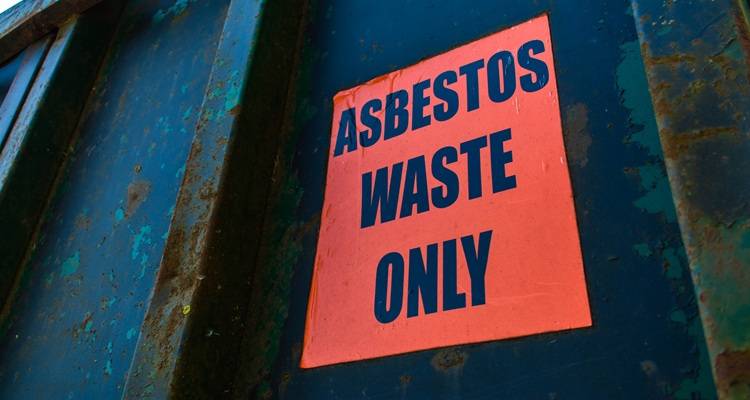
Depending on the job, the quote may cover:
- Property assessment
- Work area preparation
- Removal of the tank
- Protective equipment
- Control measures
- Wrapped or sealed waste packaging
- Cleaning the work area
- Waste transport
- Disposal charges
- Waste documentation where applicable
You should also check whether the quote includes:
- Plumbing disconnection
- Replacement tank installation
- Loft hatch work
- Making good afterwards
- VAT
You can compare quotes through MyJobQuote to compare prices for the work required.
FAQs
How much does it cost to remove an asbestos water tank?
Most domestic asbestos water tank removals cost between £350-£850. Difficult access, larger tanks and additional work can increase the overall price.
Is an asbestos water tank dangerous?
An intact asbestos cement tank generally presents a lower risk than damaged or more friable asbestos-containing materials. The risk of fibres being released increases if the tank is damaged, broken or disturbed.
Can you leave an asbestos water tank in the loft?
In some circumstances, yes. Finding asbestos doesn't automatically mean the tank needs to be removed. Its condition, location and whether future work could disturb it should all be considered.
How do I know if my water tank contains asbestos?
A visual inspection alone may not be enough to identify asbestos. Laboratory testing can be used to confirm whether the material contains asbestos fibres.
Can a plumber remove an asbestos water tank?
A plumber may be able to disconnect associated pipework, but asbestos-related work should be carried out by someone with appropriate asbestos training who follows the relevant requirements and guidance.
Does an asbestos water tank need to be removed whole?
Not always. Where possible, keeping asbestos cement intact can minimise disturbance. However, restricted access can sometimes require a different removal method using appropriate asbestos-control procedures.
How long does asbestos water tank removal take?
Most straightforward removals take between a few hours and one day. Difficult access, additional asbestos-containing materials or replacement work can extend the timescale.
How is an asbestos water tank disposed of?
The tank needs to be appropriately contained and transported as asbestos waste before being disposed of through an authorised waste route in line with the relevant requirements.