Builders
 Carpenters
 Electricians
 Flooring Specialists
 Gardeners
 Handymen
 Heating Engineers
 Painters & Decorators
 Plasterers & Renderers
 Plumbers
 Roofers
 Tilers
 my
Cost to Skim a Room
At a Glance
- The average cost to skim a room is around £600.
- It will take approximately 1 to 3 days to complete the work.
- Details of room skimming costs by room size and project type.
- What affects the cost of skimming a room and what's typically involved.
- How to find and hire a plasterer near you using MyJobQuote.
Get free estimates
Are you a trade? Get more work today!
Planning to skim a room in 2026?
Whether you're looking for a smoother finish to your plaster, or need to cover up some cracks or other imperfections, skimming your walls and ceilings achieves a professional finish without the need for replastering.
Whether you are renovating one room or refreshing your whole home, read on to learn more about UK skimming prices and what affects the total cost.
£600
Table of Contents
- How Much Does It Cost to Skim a Room?
- Labour Cost to Skim a Room
- Supply Only Cost of Skimming a Room
- What Affects the Cost to Skim a Room?
- Additional Costs of Skimming a Room
- What's Included in a Plasterer's Quote?
- How Long Does It Take for Plaster to Dry?
- Artex and Other Existing Textured Finishes
- Re-Skimming vs Plastering from Scratch
- Hiring a Plasterer vs DIY
- Tips to Keep Skimming Costs Down
- Checklist: Hiring a Plasterer Near You
- Should You Skim or Replaster?
- FAQs
How Much Does It Cost to Skim a Room?
Typical costs for skimming a room will be between £375 and £750 for just the walls, and between £500 and £1,100 for the walls and ceiling.
There are a number of factors that will affect the final cost of your room skimming project, with the size of the room being the main one, but things like the condition of your walls, the layout of your room, and where you live also have an impact.
What best describes your plastering job?
Re-skimming walls in good condition
1 votes - 7%7% of votes
Plastering from scratch on bare brick or block
2 votes - 14%14% of votes
Skimming a ceiling only
2 votes - 14%14% of votes
Full room walls and ceiling together
9 votes - 64%64% of votes

14 votes
See results
Hide results
The average cost of skimming a room is around £600, which includes labour and materials, but this can go up or down depending on the above factors.
Price to Skim a Room by Size
The table below provides estimates of the costs of skimming just the walls or the walls and ceiling for different-sized rooms:
| Room Size / Work | Typical Cost | Typical Timescale |
|---|---|---|
| Small room (2m×2m) Walls |
£375–£500 | 1 day |
| Small room (2m×2m) Walls and ceiling |
£500–£700 | 1 to 2 days |
| Medium room (3m×3m) Walls |
£425–£600 | 1 to 2 days |
| Medium room (3m×3m) Walls and ceiling |
£600–£850 | 1 to 2 days |
| Large room (5m×4m) Walls |
£550–£750 | 2 to 3 days |
| Large room (5m×4m) Walls and ceiling |
£800–£1,100 | 2 to 3 days |
Want a custom price?
Post your job
Room Skimming Prices per m²
Plasterers will usually quote a total cost for skimming a room that covers the labour and materials, but typical skimming costs per m² are between £13 and £30.
Smaller projects will be at the higher end of this range, as costs like call-out fees and minimum labour fees will make up more of the total price. These have less of an impact with bigger projects, so the cost per m² will be lower.
The table below shows the typical costs per square metre for different sizes and types of room skimming projects.
| Room Size / Work | Approx. Area | Typical Cost per m² |
|---|---|---|
| Small room (2m×2m) Walls |
19m² | £20–£26 |
| Small room (2m×2m) Walls and ceiling |
23m² | £22–£30 |
| Medium room (3m×3m) Walls |
29m² | £15–£21 |
| Medium room (3m×3m) Walls and ceiling |
38m² | £16–£22 |
| Large room (5m×4m) Walls |
43m² | £13–£17 |
| Large room (5m×4m) Walls and ceiling |
63m² | £13–£17 |
Want a custom price?
Post your job
Labour Cost to Skim a Room
How much do plasterers charge to skim a room?
Most plasterers charge by the job rather than using a fixed hourly rate. However, quotes are generally based on how long the work will take, with average day rates for a plasterer ranging from £200 to £300.

Skimming a room is a labour-intensive job, and with materials being relatively cheap, much of the total cost of getting a room skimmed is made up of the labour fees.
The table below gives you an idea of the typical labour costs you might be expected to pay for the different-sized room skimming projects:
| Room Size / Work | Typical UK Labour Cost | Typical London and South East Labour Cost |
|---|---|---|
| Small room (2m×2m) Walls |
£200–£300 | £250–£400 |
| Small room (2m×2m) Walls and ceiling |
£300–£450 | £400–£550 |
| Medium room (3m×3m) Walls |
£250–£400 | £300–£500 |
| Medium room (3m×3m) Walls and ceiling |
£400–£550 | £500–£650 |
| Large room (5m×4m) Walls |
£400–£550 | £500–£650 |
| Large room (5m×4m) Walls and ceiling |
£550–£800 | £650–£900 |
Want a custom price?
Post your job
As you can see from the table, if you live in London or the South East, you can expect to pay more for your skimming labour costs, as plasterers here charge rates that are higher than the average for much of the UK.
Supply Only Cost of Skimming a Room
Because skimming is simply applying a new finish to existing plaster, for most projects the supply only costs will mainly be the finishing plaster.
Gypsum finishing plaster costs around £10 to £15 for a 25kg bag. This should cover about 10 square metres, so supply costs for room skimming are around £1 to £1.50 per m².
Most homeowners choose to have a plasterer take care of the entire skimming project, which is why total project costs are higher than just adding together the costs of labour and materials.
However, if you were looking for cost savings, you can see how organising all the materials yourself and then hiring a plasterer to apply them, while it means more work for you, may be a way to save money.
What Affects the Cost to Skim a Room?
Skimming a room can be a fairly straightforward job, but there are a few factors that can affect the cost, and they include:
- Room Size — The bigger the room, the more material required and the longer it will take, so costs will be higher.
- Current Plaster's Condition — Skimming helps improve the finish of your current plaster, but if that needs some repair first, expect to pay more.
- Skimming the Ceiling — If you want the ceiling skimmed as well as the walls, this will cost more, and if the ceiling is hard to access, costs could increase further.
- Room Layout — Rooms with complex layouts, lots of corners, alcoves, chimney breasts, or other features are harder to skim, take longer, and will cost more.
- Location — Rates for plasterers are higher in London and the South East, so your room skimming project will cost more if you live here.

Additional Costs of Skimming a Room
Your quote may only include the cost to skim walls and not the additional costs of any extra work that needs to be done before the plasterer can begin the skimming work. Typical additional costs to add to your budget include:
Wallpaper Removal Cost
Wallpaper needs to be stripped before any skimming can be done. If you want the wallpaper removed, then you should expect to pay between £40 and £120 for a single wall or between £300 and £600 for a large room.

Ceiling Overboarding Cost
If you decide to lay plasterboard over a damaged ceiling or one that is covered in Artex, the cost will be, on average, between £400 and £1,000.
Repairs to Damaged or Blown Plaster Cost
Minor repairs to fix damaged or blown plaster will cost, on average, between £100 and £300, depending on how much work is needed.
Radiator Removal and Refitting Cost
Any radiators will need to be moved to skim a wall completely. For a plumber to remove and refit the radiator, you should expect to pay between £80 and £250. Costs may be higher in London.
Moving Furniture Cost
Most plasterers will ask that the room they are working in be cleared before they arrive. If you know that you can't move the furniture, ask the plasterer if they can add this to the quote.
Average costs are between £50 and £100, depending on the amount of furniture to be moved.
Waste Disposal Cost
Skimming walls in good condition doesn't accumulate too much waste. But if you have wallpaper or plaster removed, then you will need to remove and dispose of the waste. The plasterer might add this cost to the quote as an additional service, or you could hire a skip.
Hiring a small skip that holds around 30 bin bags will cost between £60 and £130.
What's Included in a Plasterer's Quote?
When you are comparing quotes, check to see what is and isn't included.
Normally included:
- Labour
- Materials
- Surface preparation
- Minor filling or patch repairs
- End of job basic clean-up
Not usually included:
- Wallpaper stripping
- Major repairs
- Radiator removal
- Furniture removal
- Waste disposal for large amounts of waste
- Decorating
How Long Does It Take for Plaster to Dry?
Fresh plaster usually takes between 3 and 7 days to dry before it can be decorated. The drying time depends on several factors:
- The type of plaster.
- The room temperature (a well-ventilated room is better).
- The surface (brick or concrete takes longer to dry than plaster on plasterboard).
- Humidity (high humidity will slow down the drying process).
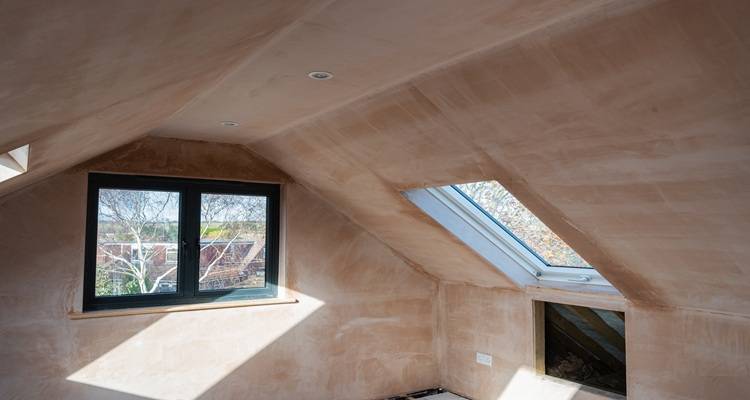
The easiest way to tell if the plaster is drying is to observe the colour change. When plaster is wet, it is a dark brown colour, but as it begins to dry, it turns a pink or peach colour. Once the wall has this lighter shade all over it, it should be dry and ready to decorate.
Artex and Other Existing Textured Finishes
Artex was a highly popular wall and ceiling covering in the 1960s and 1970s, and even in the 1980s. Properties with Artex ceilings may contain asbestos, especially if it was applied before 1984.
Your plasterer may well advise you to leave the Artex in place and skim over the texture, rather than having it removed.

If you decide you want the Artex removed, then you need to use a company dealing with asbestos removal, and you may be looking at between £17 and £125 per m2, depending on the method of removal.
Re-Skimming vs Plastering from Scratch
Skimming is applying a light coat of plaster onto a surface that is in good condition to make it smooth and flat. It's a good way to refresh the walls of older properties or hide small cracks or dents.

Plastering from scratch is when the plaster is applied to bare blockwork or brick. A plasterer will apply a base coat before the plaster and then a finishing coat to complete the job. The cost of plastering from scratch is considerably higher than for skimming because the work takes longer, and extra materials are required.
If you are considering replastering, there are also specialist options such as acoustic plaster, which have the added benefit of helping to absorb sound and reduce reverberations within the room.
Ask a Trade
Got a question that only a tradesperson can answer? We have thousands of trades ready to answer any question you may have.
Ask your question

Hiring a Plasterer vs DIY
Like most things, when you are watching a professional, the job looks easy. But skimming and plastering is a skill that takes time to learn. If you are competent at DIY, you may want to attempt skimming in low-visibility areas. For a quality finish on ceilings and walls, we recommend hiring a professional.
Tips to Keep Skimming Costs Down
Here are some ways you can keep the cost of skimming down:
- Strip wallpaper
- Remove heavy furniture and clear the room
- Have more than one room skimmed to combine costs
- Get at least 3 quotes for local plasterers
Checklist: Hiring a Plasterer Near You
Before you decide to hire a plasterer, use this checklist to ensure each quote contains the information you need to make the right decision.
- Get at least 3 written quotes so that you can compare the services offered and the price for the job.
- Ask the plasterer if they have a website or if they have company reviews on the internet that you can read.
- Reach out to family, friends and neighbours for recommendations.
- Confirm the plasterer has public liability insurance.
- Ask whether waste removal is included in the price.
- Confirm that any additions you have requested, such as furniture removal, have been added.
- Check when the work can start and the payment terms.
- Ask if they guarantee the work.
Make sure you receive the quote in writing and that it is fully itemised.
Ready to get a quote?
Get free, no-obligation quotes from local plasterers near you.
Should You Skim or Replaster?
Skimming is usually the best option when the existing plaster is firmly attached and only has minor cracks, dents, or an uneven finish. A thin finishing coat can create a smooth surface without removing the original plaster.
Replastering is more suitable when the existing plaster is loose, crumbling, badly cracked, or affected by damp. The damaged material may need to be removed before a new base coat and finishing coat are applied. This takes longer and costs more than skimming, but it provides a more reliable surface when the existing walls are in poor condition.
A plasterer can inspect the walls and advise which method is appropriate before providing a quote.
FAQs
What Is the Difference Between Skimming and Plastering?
Skimming is applying plaster over an existing wall or ceiling that is in good condition or has had a minor repair. Plastering from scratch is carried out by first applying a base coat and then the plaster directly onto bare brick or board.
How Long Does It Take for Plaster to Dry After Skimming?
It usually takes between 3 and 7 days for plaster to dry. Skimming is quicker than plastering from scratch and may be dry after 3 to 5 days. The plaster is brown when it is wet, and it changes to a pinky/peach colour once dry.
Can You Skim Over Old Plaster?
Yes, you can if the old plaster is in reasonable condition and isn't flaking or badly damaged. Crumbling, loose plaster will need to be removed.
Can I Skim a Room Myself?
It may not be worth skimming a room yourself unless you are a DIY expert with plastering experience.
Skim plaster dries quickly, and so you need to spot mistakes immediately. You might be left with an uneven surface and then have to pay for a plasterer to strip off the plaster and start again.
How Long Does It Take to Skim a Room?
Between 1 and 3 days, depending on the size of the room and the complexity of the job.