Builders
 Carpenters
 Electricians
 Flooring Specialists
 Gardeners
 Handymen
 Heating Engineers
 Painters & Decorators
 Plasterers & Renderers
 Plumbers
 Roofers
 Tilers
 my
myHouse Rewire Cost Calculator
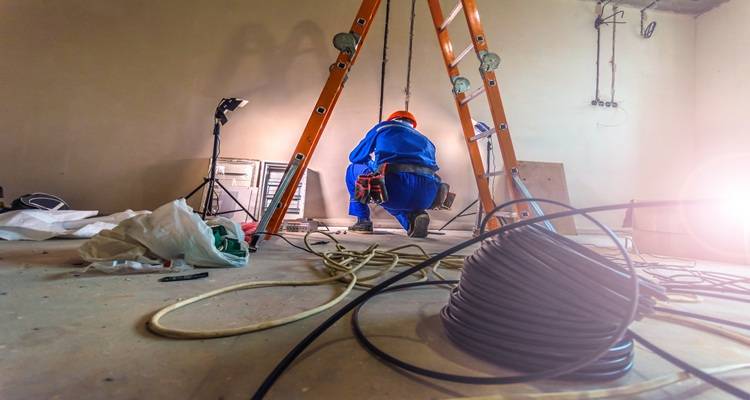
A house rewire involves removing the existing wiring, sockets, switches and consumer unit, and replacing them with modern equivalents. Reasons for a house rewire include safety issues such as frequent tripping, flickering lights, buzzing sockets, discoloured wiring, etc. Other reasons are dated or damaged wiring, renovating an old house or an electrical upgrade.
The cost of a house rewire is between £2,500 and £11,000, depending on a number of factors, including the property size, layout, number of necessary components, occupancy, and location.
Our rewiring a house cost calculator generates a tailored estimate based on your property’s requirements, so you can have a rough idea of how much it should cost before obtaining quotes from electricians near you for a more specific price for your exact job.
Table of Contents
House Rewire Cost Calculator
Do I Need to Rewire My House?
It's a good idea to have an electrician inspect your property and issue an Electrical Safety Certificate before going ahead with a full rewire.
If you have noticed problems such as buzzing electrical equipment, frequent breaker tripping, or flickering lights, it's a good sign your property is due for rewiring.
Older homes often have outdated wiring that doesn't meet modern safety standards and can't handle the demands of the increased number of appliances most homes now have. This can lead to the system running inefficiently and can also pose safety problems and increase the risk of electrical fires.
Using Our House Rewire Cost Calculator
By adding information into our electrical rewiring cost calculator we can give you a quick rewire cost, with a tailored estimate for rewiring your home based on your specific property and preferences.
How to use our house rewiring cost calculator in the UK:
- Select Your Property Type — House rewiring prices vary by property type, as larger detached properties usually have longer cable runs than terraces or flats.
- Choose Wiring Complexity — Tell the calculator whether your existing wiring is modern and straightforward, typical of older homes, or very old and difficult to access.
- Pick Your Fittings and Finishes — Decide whether you want basic sockets (like white plastic ones) or if you want to upgrade to mid-range or premium fittings such as modern metal lightswitches or decorative ceiling roses.
- Add Any External Wiring Needs — If you require external circuits, take into consideration how many outdoor sockets or how much rewiring you need for CCTV and outdoor lights. Fitting power to the garage or installing a complete electrical supply for an outbuilding can increase the overall rewire cost.
- Specify Your UK Region — The average house rewire cost in London is higher than in most other parts of the UK, so inputting your region will get you more accurate estimates for your area.
- Calculate Your Estimate — Once you’ve completed all fields, hit Calculate to see an instant estimated rewire cost based on real data and hundreds of quotes from homeowners across the UK.
You can also reset the form at any time if you want to compare how the type of fittings or external wiring requirements can impact the cost to rewire a house. Just hit Reset to clear your selections, or update individual values as needed.
Ready to Get a Quote?
Get three free, no-obligation quotes from electricians in your area with MyJobQuote today.
You can easily compare quotes from local electricians — just submit a few details about your job and we'll take care of the rest.
Average Cost of a House Rewire
The average cost of a house rewire varies depending on, amongst other things, the size of the property. Below are prices for rewiring various-sized homes in the UK, with prices often around 10% to 25% higher in areas such as London and the South East when compared to the national average.
| Property Type | Estimated Cost |
|---|---|
| 1 bed flat | £3,000 – £3,500 |
| 2 bed house | £4,000 – £5,000 |
| 3 bed semi | £6,000 – £7,000 |
| 4 bed detached house | £8,000 – £9,000 |
| 5 bed or extended home | £10,000 – £11,000 |
Labour Cost to Rewire a House
The typical day rate for an electrician is £250-£300, although allowances should be made for regional differences. Hourly rates are, on average, £40-£60, although this can rise to as high as £100 per hour in some parts of London.

How long a rewire takes is largely dependent on the size of the property, which impacts your labour costs. Bigger homes take longer to rewire and therefore cost more, in some cases needing more than one electrician to do the work. Where walls need to be chased or floorboards lifted, the presence of a second electrician will speed up progress.
Factors That Impact House Rewire Costs
There are many factors which impact the cost to rewire a house:
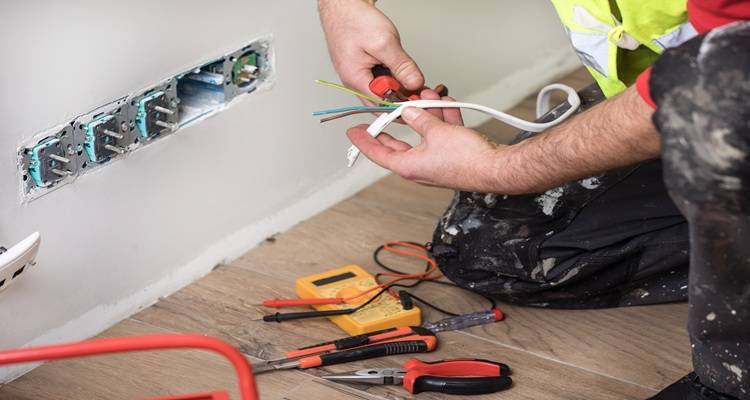
- Property Size and Layout — A large home will need additional materials in the form of cabling and wires, which can also be impacted by how many switches and how many sockets are needed.
- Occupied vs Unoccupied — Access to the walls, floors and ceilings is a big part of how house rewires are priced. An empty property costs less to rewire as there is no furniture to move, carpets to lift or occupants to disturb. This can make the price around 10% cheaper.
- Number of Sockets, Switches, and Light Fittings — The more of these there are, the higher the final price will be. The quality of the units will also affect the cost, with standard electrical fittings being cheaper than higher-end models.
- Location — Where you live has an impact on how much you pay for a local electrician. London and the South East are more expensive than the North of England, Wales or Scotland, so the cost of rewiring a house in Edinburgh will be less than a similar job in Bristol.
- Additional Work — Work such as chasing walls, electrical upgrades, re-plastering and re-painting, installing smart technology, or replacing a fuse box with a modern consumer unit may not be included in your quote.

Additional House Rewire Costs
A rewire is a disruptive process, so many homeowners take the opportunity to get extra work done or future-proof their home at the same time, even when it means spending a little more.
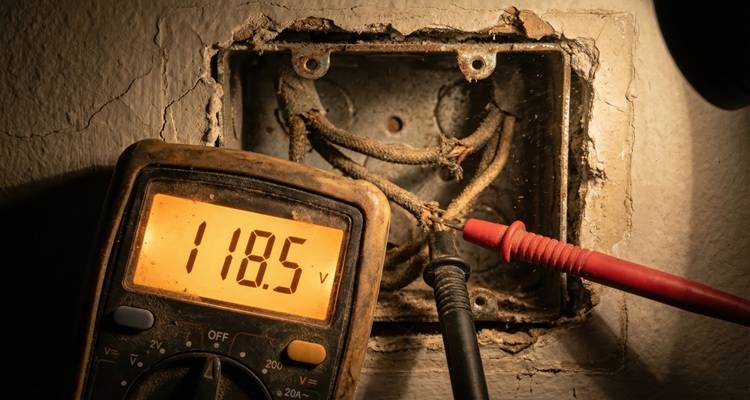
Installing New Sockets or Lights
Adding new or extra sockets and lights is common practice during a rewire. Many older homes still have single sockets or insufficient lighting, so this is the perfect time to rectify these issues.
External Lighting
Rewiring doesn’t have to mean internal work only. External lights, CCTV, and electric gates are added features that will increase the cost but improve your home’s security.
Data Cabling or Network Wiring
If you want to enhance your data speed, installing new data cabling will also add to your costs. However, upgrading your network wiring at the same time as a rewire may save you money in the future.
Decorative Repairs Post-Rewire
Rewiring is a messy job, and remedial works such as re-plastering, painting and general redecoration are often necessary. Don’t forget to budget for this part of your project.
How to Lower the Cost of a House Rewire
Although you can’t do a house rewire yourself, there are some ways that you can save money on this work.

Have the Work Done While the House is Empty
An empty house is around 10% cheaper to rewire. Electricians don’t have to move furniture, lift carpets or work in crowded lofts, which is reflected in the cost. It means the work gets done faster, too.
Combine with Other Renovation Work
Combining a rewire with other electrical works, such as upgrading cables, installing smart home tech or additional lights, means you will save money overall.
Get Multiple Quotes
Ensure you obtain at least 3 quotes so that you have an idea of what the job should cost on average. This information allows you to negotiate and ultimately choose the best electrician for your project.
Use Local Electricians
By using local electricians rather than a national or franchise company, you should save on travel fees. Local tradespeople want to build or maintain their reputation in the community, so they will be keen to offer a good service. They’ll also be able to respond more quickly to follow-up requests or issues.