Builders
 Carpenters
 Electricians
 Flooring Specialists
 Gardeners
 Handymen
 Heating Engineers
 Painters & Decorators
 Plasterers & Renderers
 Plumbers
 Roofers
 Tilers
 my
myResin Driveway Guide
Are you considering installing a resin driveway in front of your property?
Our guide will help you understand if it is possible to lay one yourself as a DIY task, the pros and cons of this driveway type, and what building regulations or planning permission you may need.
We will also consider various resin driveway ideas and how long a typical installation takes so you can plan your project accordingly.
Read on to find out more!
Table of Contents
- What is a Resin Driveway?
- Types of Resin
- Resin Driveway Ideas
- What Are the Pros and Cons of a Resin Driveway?
- How Much Does a Resin Driveway Cost?
- How to Install a Resin Driveway: Step-by-Step Guide
- How Long Does It Take to Install a Resin Driveway?
- Do I Need a UV-Stable or Non-UV-Stable Resin?
- Building Regulations or Planning Permission for a Resin Driveway
- How to Clean and Maintain a Resin Driveway
- How to Prolong the Lifespan of a Resin Driveway
- Alternatives to a Resin Driveway
- FAQs
What is a Resin Driveway?
Before going any further, it is worth considering what exactly is meant by a resin driveway.
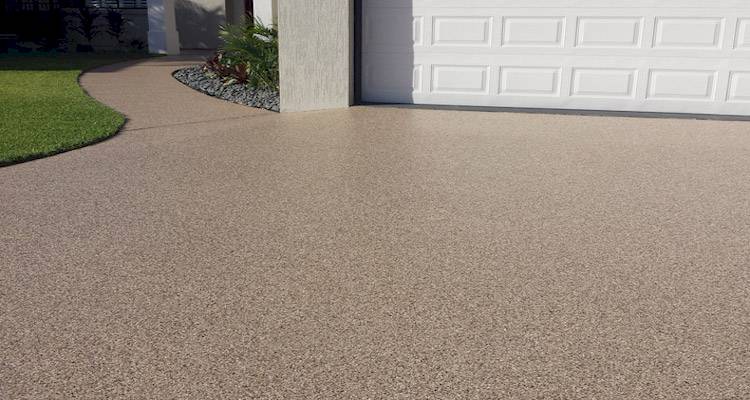
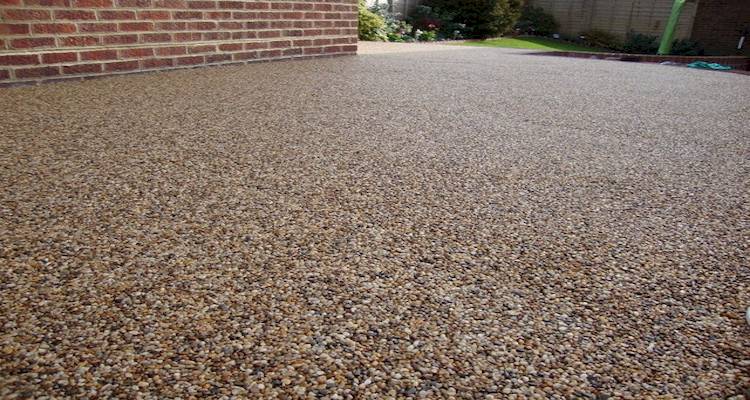
A resin driveway is a type of driveway that uses resin as a binding agent to hold aggregate materials together, creating a durable and aesthetically pleasing surface.
It differs from a gravel driveway in that it provides a more uniform and seamless appearance, while also offering better durability and resistance to weathering.
Types of Resin
The two main types of resin driveway are resin bound and resin bonded. They are different in a lot of ways, and it pays to know what the strengths and weaknesses of each are before making a decision.
Resin Bound Driveways
A resin bound system combines the resin and aggregate, which is then spread over the driveway surface. A good quality resin bound material will contain UV resistant resin as the area is obviously constantly exposed to sunlight.
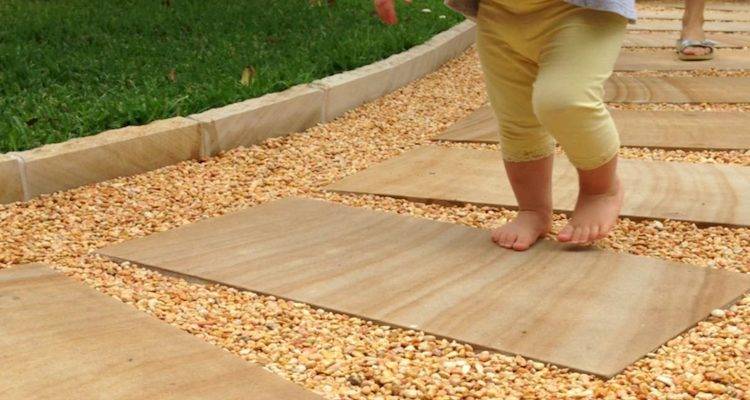
If non-UV resistant resin is used, colour fading can occur in as little as a few weeks after installation. So, while it may be tempting to use a cheaper resin, the consequences may not be worth it.
Pros
- ✔ It is a water permeable substance, so there is very little risk of standing water as long as the proper base is in place.
- ✔ Extremely durable as well as being frost and weed resistant.
- ✔ Various colours of aggregate available, as well as numerous designs.
- ✔ Low maintenance.
Cons
- ✖ More expensive than a resin bonded system.
- ✖ Difficult to do as a DIY job.
- ✖ A proper sub-base must be in place to prevent cracking or movement of the resin layer.
Resin Bonded Driveways
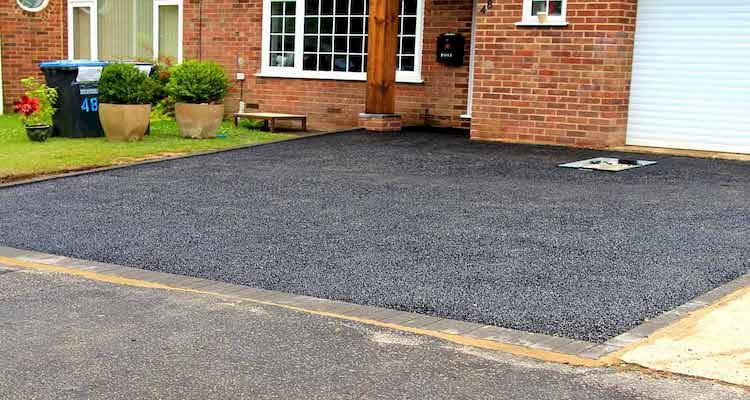
This system consists of a layer of resin being applied to the surface of the driveway and the loose stones or aggregate being scattered on top. By looking at resin bonded driveway reviews, you should decide if this type of driveway meets your needs.
Pros
- ✔ Cheaper alternative to resin bound driveways.
- ✔ It can be done as a DIY project.
- ✔ It gives a more authentic look to older and period properties mimicking gravel driveways.
Cons
- ✖ As only one side of the stones is attached to the resin there is greater potential for them to become loose and scattered.
- ✖ Resin bonded applications are not water permeable, and a suitable drainage system will need to be fitted at the same time.
- ✖ Provides a thinner layer of protection for your driveway.
What is the Best Type of Resin Driveway?
The best driveway resin will depend on many things, including the area's size to be covered, the existing base, budget, and how much the driveway is used. However, if your criteria are longevity, low maintenance, and environmental soundness, then a resin bound driveway is probably the best option.
What distinguishes resin bound from resin bond in the context of driveways?
Resin Driveway Ideas
Driveway resin is a very versatile product and can be used both as a practical application and as an additional aesthetic feature of your garden and home.
Resin Driveway Colours
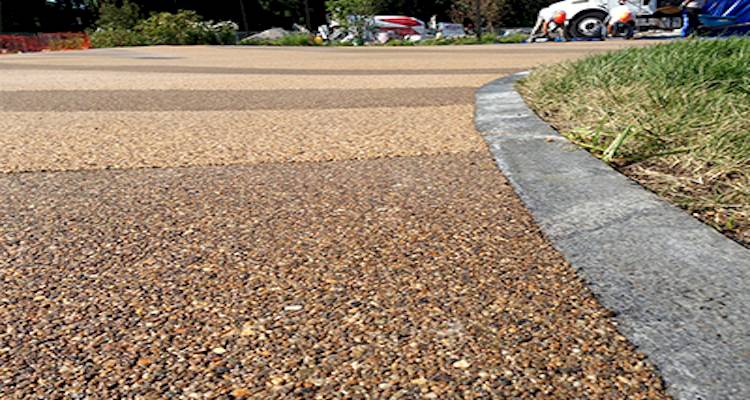
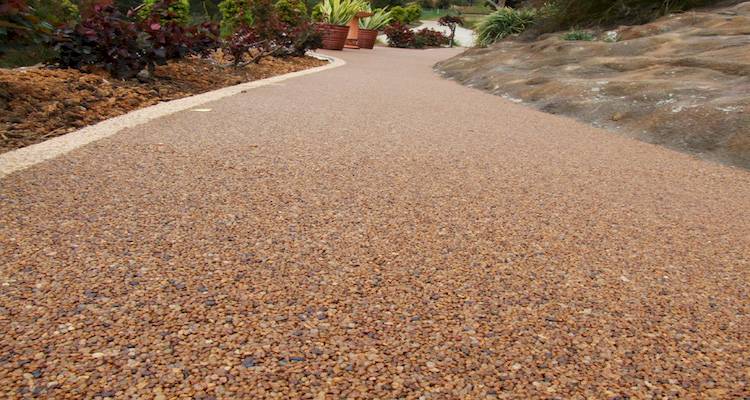
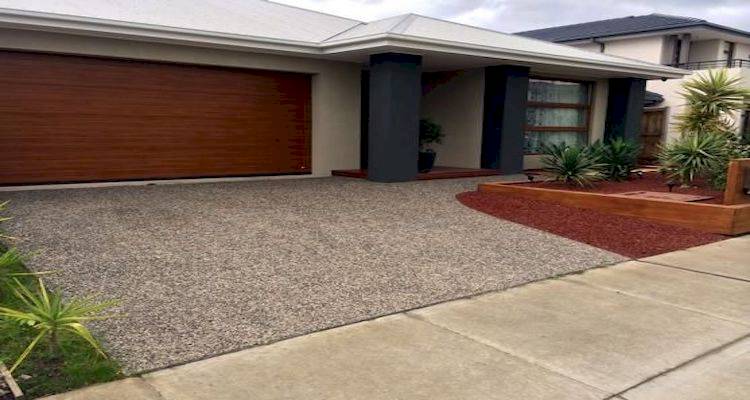
The colour of a resin bound or bonded driveway comes from the stones or aggregate incorporated with the resin to produce the finished surface. There are a multitude of colours and variations available, making it aesthetically adaptable to all sorts of settings and landscapes.
Consider choosing a colour that complements your home's architecture and the surrounding landscape.
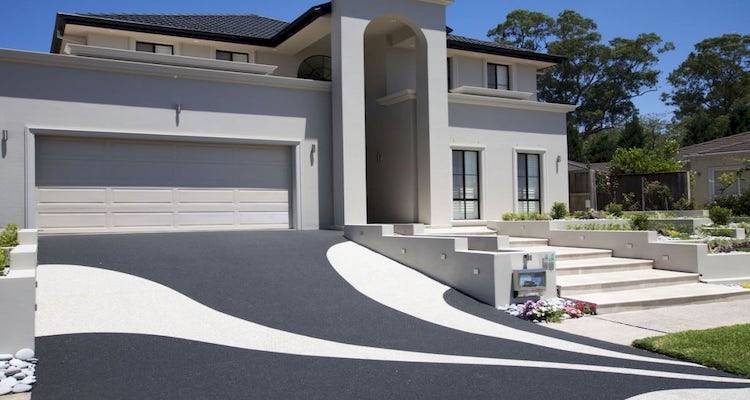
Resin Driveway Designs
As with the variety of colours of aggregate available, resin driveways can also incorporate different designs and patterns. For example, you could have geometric shapes, lettering, or even your house number embedded into the driveway resin by using different colours or types of stone.
Mix with Other Materials
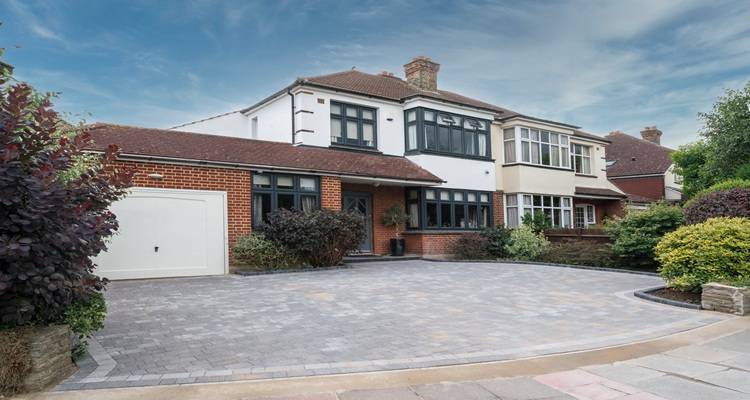
To achieve different looks, you can also combine the resin driveway with other materials such as block paving or bricks. These can be used as edging, to differentiate different areas of the driveway or to break up an expanse of resin driveway.
What Are the Pros and Cons of a Resin Driveway?
Resin driveways are a popular choice, but they’re not right for every home. Here’s a clear breakdown of the advantages and disadvantages to help you decide.
Pros
- ✔ Long lifespan — When installed correctly, a resin driveway can last around 20–25 years with minimal maintenance.
- ✔ Attractive, custom finish — A wide range of stone types, colours and patterns means you can create a fully bespoke look.
- ✔ Low maintenance — Requires very little upkeep beyond occasional sweeping and washing.
- ✔ Permeable (resin bound) — Allows water to drain through the surface, reducing puddles and helping prevent flooding or surface runoff.
- ✔ Flexible options — Available as both resin bound and resin bonded, so you can choose based on budget and performance.
- ✔ Quick installation — Faster and less labour-intensive than block paving driveways, often making it a more cost-effective option overall.
- ✔ Modern appearance — Smooth, seamless finish that works well for contemporary homes and landscaping.
Cons
- ✖ Quality depends on materials — Non-UV resistant resin can fade or discolour quickly. Choosing UV-stable resin is strongly recommended.
- ✖ Not always permeable — Resin bonded driveways are non-permeable and may require drainage such as a soakaway.
- ✖ Not ideal for heavy loads — Can crack under frequent use by heavy vehicles like vans, lorries or machinery.
- ✖ Higher upfront cost — Typically around £40 per m², depending on the system and design.
- ✖ Installation quality is critical — Poor groundwork or installation can lead to cracks and early failure. It’s important to check verified reviews and examples of their previous work.
- ✖ DIY can be risky — Fast curing times and mixing requirements make it difficult to achieve a professional finish without experience.
How Much Does a Resin Driveway Cost?
The average cost of installing a new resin driveway will depend on several factors, such as the existing suface, the type of resin, and how complext the driveway design is.
Resin is usually a mid-range option compared to other common driveway materials like block paving, gravel, or tarmac.
How to Install a Resin Driveway: Step-by-Step Guide
If you’re considering a resin driveway, it’s a good idea to get at least three quotes from installers via MyJobQuote.
Before starting, decide whether you want a resin bound or resin bonded driveway, along with your preferred design, colour, and aggregate type.
Step-by-Step Installation Process
- Prepare the base — The existing surface must be stable and level. Gravel and block paving usually need to be removed, while concrete or tarmac can sometimes be used if in good condition.
- Install (or assess) sub-base — For permeable (SUDS-compliant) driveways, a porous sub-base such as MOT Type 3 is required.
- Add edging — Edging is installed around the perimeter (typically 15–20mm above the base) to hold the resin in place.
- Mix materials — For resin bound systems, aggregate and resin are mixed together. For resin bonded systems, resin is applied first.
- Apply the surface — The resin (or resin mix) is spread evenly and levelled. For bonded systems, aggregate is scattered on top.
- Allow to cure — The surface typically sets within 4–8 hours but should be left for 24 hours before vehicle use.
What type of surface can a resin driveway be installed on? Would this depend on other conditions/factors too?
Can You Install a Resin Driveway Yourself?
DIY resin driveway kits are available, but installation can be challenging due to the need for accurate mixing, quick application, and proper groundwork.
- Mixing — Resin and aggregate must be evenly combined. Professionals use forced-action mixers, while DIYers typically rely on paddle mixers.
- Application — The mixture must be spread and levelled quickly before it begins to set.
DIY is best suited to small areas such as paths. For full driveways, professional installation is usually recommended.
Common DIY risks include:
- Uneven coverage or poor finish
- Resin setting too quickly during application
- Incorrect edging or depth
- Working in unsuitable weather conditions
How Long Does It Take to Install a Resin Driveway?
Most resin driveways can be installed within 1–2 days, depending on the size of the area, the condition of the existing base, and weather conditions.
- Base preparation — 4–8 hours (longer if excavation is required)
- Sub-base installation — 4–8 hours depending on size and material
- Mixing and application — Completed within a few hours due to fast curing times
- Curing — Walkable in 4–8 hours, vehicle use after 24 hours
Resin bound driveways are generally quicker to install as the material is applied in one layer, while resin bonded systems involve separate resin and aggregate stages.
Do I Need a UV-Stable or Non-UV-Stable Resin?
Choosing between UV-stable and non-UV-stable resin depends on several factors, including your driveway's exposure to sunlight and how you use the space.
It's usually better to opt for UV-stable resin, but here is a comparison:
- Colour Consistency — Non-UV resin can darken over time when exposed to sunlight, and this change often happens unevenly, creating visible patches across your driveway. UV stable resin maintains its colour far better, with any changes occurring gradually and uniformly across the entire surface.
- Shadow Marking — Objects left on non-UV resin, such as cars, bins, furniture, and planters, will create distinct outlines where the covered areas remain lighter than the exposed sections. When you move these items, the colour difference becomes obvious. UV-stable resin greatly reduces this problem.
- Durability and Flexibility — UV-stable resin offers greater compositional flexibility, making it generally more resistant to cracking. While non-UV resin is still durable, it may be more prone to developing cracks over time.
- Temperature Resistance — Properties in areas with extreme temperatures, whether hot summers or cold winters, benefit from UV-stable resin. It can perform better at both high and low temperatures than non-UV alternatives.
- Terminology — Professionals often refer to UV-stable resin as Aliphatic resin, while non-UV-stable resin is often known as Aromatic resin. Understanding these terms can help when discussing options with resin driveway installers.
Do resin bound driveways retain their colour or do they fade over time?
Building Regulations or Planning Permission for a Resin Driveway
You should familiarise yourself with any rules and permissions involved in installing a resin driveway on your property so that you comply with all necessary regulations.
Planning Permission
Driveway regulations were updated in 2008 to reduce flooding and environmental impact caused by replacing front gardens with non-permeable surfaces.
In most cases:
- Permeable driveways — Do not require planning permission, regardless of size.
- Non-permeable driveways (over 5m²) — Require planning permission unless water is directed to a permeable area (e.g. a lawn or soakaway).
- Small driveways (under 5m²) — Usually do not need permission.
Key difference: Resin bound driveways are permeable and allow water to drain through, while resin bonded driveways are non-permeable and will require drainage.
If you need to drop a kerb to create access, you’ll also need approval from your local authority.
Building Regulations
There are no direct Building Regulations that apply to installing a new resin driveway. However, if you make substantial changes regarding access to the property, such as installing steps where there were none before, then you may need to consider Building Regulations.
Shared Driveways
The maintenance and upkeep of a shared driveway will be responsible for all of those who use it for access or parking.
The costs of maintaining the driveway can be shared between those who use it, or each party may choose to maintain their part of the driveway. Any legal obligation about who should pay for the maintenance of the shared driveway will depend on the property deeds.
How to Clean and Maintain a Resin Driveway
Looking after your resin driveway is essential to ensure that your investment lasts as long as possible. This may involve fixing any damage promptly and keeping the driveway clean and free from debris.
Cleaning & Maintenance
A stiff brush can be used to sweep up any dirt or debris on your resin bound driveway. A resin bonded driveway may be more difficult to sweep as this could dislodge aggregate pieces.
A leaf blower can be used to gently remove leaves, twigs, and other debris without disturbing the gravel or stones.
Hosing down the surface of a resin driveway should be sufficient to get rid of most dirt, while more stubborn stains may need a mild detergent to remove them.
If you use a power washer, you should use it on the lowest setting and avoid holding the nozzle of the washer too close to the resin surface to minimise any damage or loosening of aggregate. A fan type lance for a pressure washer is best used for resin driveways.
Repairing & Refreshing a Resin Driveway
Although resin driveways are durable, they can develop minor damage or begin to lose their appearance over time. Most issues can be repaired or refreshed without needing a full replacement.
Damage to a resin bound driveway can be caused by point loading, such as from a motorbike stand or car jack. It is important if you are using these things to lay down boards to spread the load and avoid breaking the resin surface.
Small cracks or damaged areas can usually be repaired using specialist resin repair kits that include matching aggregate. The damaged section is cut out to create clean edges, and a fresh resin mix is applied and levelled to match the surrounding surface.
Once the repair has settled and weathered slightly, it should blend in well with the rest of the driveway. Acting quickly when damage appears will help prevent it from spreading.
If your driveway is looking tired or discoloured, you may be able to apply a new top layer or specialist treatment to restore colour and improve the overall finish. In cases where the surface is more worn, resurfacing the driveway can provide a like-new appearance without the cost of a full replacement.
How to Prolong the Lifespan of a Resin Driveway
A well-installed resin driveway can last 20–25 years, but its lifespan depends heavily on how well it is maintained. Taking a few simple steps can help prevent damage and keep it looking its best for longer. Follow the cleaning and maintenance tips above, and also consider the following:
- Keep it clean — Regularly sweep away leaves, dirt and debris to prevent staining and moss or algae growth.
- Wash occasionally — Rinse the surface with water or use a mild detergent for tougher marks. Avoid harsh chemicals that could damage the resin.
- Avoid heavy loads — Try not to park heavy vehicles like vans or lorries on the driveway, as excessive weight can lead to cracks or surface damage.
- Use pressure washers carefully — If using a pressure washer, keep it on a low setting and use a fan nozzle to avoid loosening the surface.
- Prevent weed growth — While resin bound driveways are resistant to weeds, seeds can settle on the surface. Regular cleaning helps minimise this.
- Protect against point loads — Avoid placing items like skips, ladders, or car jacks directly on the surface. Use boards to distribute weight.
- Fix small issues early — Repair minor cracks or damage as soon as they appear to prevent them from spreading.
- Choose UV-stable resin — If installing a new driveway, opting for UV-resistant resin will help prevent fading and extend its lifespan.
Alternatives to a Resin Driveway
There are lots of material choices available when it comes to laying a driveway. It can be difficult to make an informed decision while taking into account the budget for your new driveway, the area to be covered and the longevity that you want to achieve.
Concrete Driveway
Concrete driveways have been around for a long time, and for good reason. The material is strong and durable, relatively cheap, and it's also a low maintenance option.
The ability to stamp patterns into the concrete to mimic bricks or slabs can break up the otherwise monotonous look of a concrete driveway, and it also comes in different colours so you can match it to your property.
Although it is durable, stains such as oil and grease can be an issue and difficult to remove. As concrete is impermeable, it will be necessary to install drainage if the driveway is not on a gradient.
Block Paving Driveway
Block paving driveways come in wide range of colours, so the choice of patterns and designs make it appealing for a bespoke look.
It is a hard-wearing material, and a well-constructed block paving driveway should last 15-20 years. However, it is one of the most expensive driveway options as it is very labour intensive.
There is a need for drainage unless the driveway is on a slope, and there is a tendency for weeds and grass to grow between the pavers. Maintenance, therefore, includes weeding and washing down occasionally to remove surface dirt or moss.
Tarmac Driveway
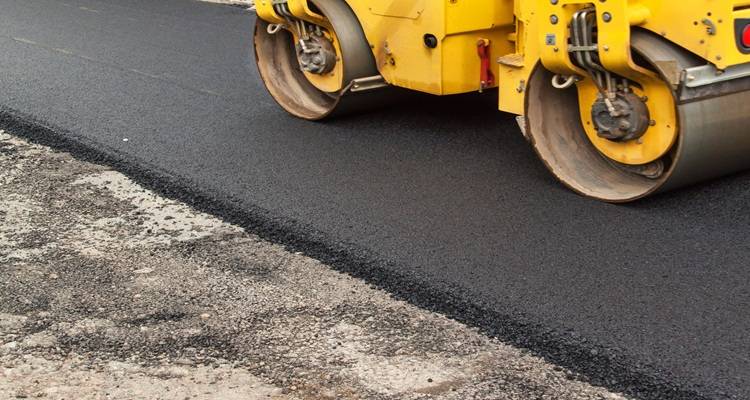
A tarmac driveway is not the most popular anymore, but it can be a cost-effective alternative to a resin driveway. There are colour choices nowadays that were not previously available, and by mixing it with materials such as block paving, you can have a unique design.
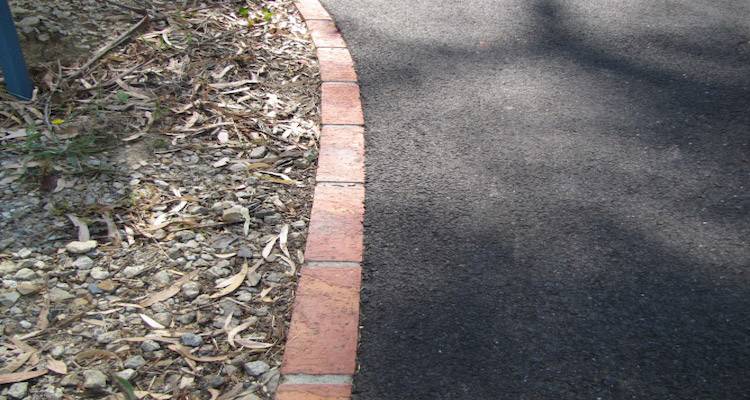
Whilst it is durable, tarmac can be prone to cracking; however, unlike other materials such as concrete driveways, if damage occurs, it can be resurfaced. It is also an impermeable surface, so drainage will need to be included in your installation if the driveway is not sloping or standing water will become a problem.
Gravel Driveway
Installing a gravel driveway is potentially one of the cheapest options, but it can look really good when well done.
Although it is hard-wearing and durable, there is a lot of maintenance, particularly keeping it weeded unless you lay a weed suppressant membrane. It can also be difficult to clear heavy snow from a gravel driveway without removing some of the gravel.
Gravel is a good deterrent against intruders as it is impossible to walk quietly on a gravel surface. With a permeable base, it also allows water to drain away following heavy rainfall.
Most Popular Driveway Material
Resin bound driveways have become one of the most popular choices, although some people still prefer block paving. Resin driveways look good and can incorporate intricate designs and patterns, making them perfect for a bespoke driveway.
They are also durable and with a permeable base that will allow water to drain away without installing drainage channels. While some homeowners prefer block paving as a more long-lasting material, some perceive them as old fashioned.