Builders
 Carpenters
 Electricians
 Flooring Specialists
 Gardeners
 Handymen
 Heating Engineers
 Painters & Decorators
 Plasterers & Renderers
 Plumbers
 Roofers
 Tilers
 my
myImprinted Concrete Driveway Cost
At a Glance
- The average cost to lay an imprinted concrete driveway is around £7,100.
- The job will take approximately 5 to 6 days to complete.
- NEW! Use our imprinted concrete driveway cost calculator for an instant estimate.
- A complete pricing breakdown for a new imprinted concrete driveway, including materials and labour.
- How long the job should take and a general overview of what is involved.
- How to find and hire a local driveway installer using MyJobQuote.
Get free estimates
Are you a trade? Get more work today!
Considering an imprinted concrete driveway and wondering how much it will cost?
The average UK homeowner will pay around £7,100 for a pattern imprinted concrete driveway of 60m², but factors such as the design, size, and location of your project can affect its cost, so it's always worth comparing a few estimates. Smaller driveways can cost from around £3,500 and larger driveways can exceed £11,000.
If you're ready to start your project, it's easy to get fast, free, no-obligation quotes from local driveway installers through MyJobQuote, or you can use our calculator below for a rough estimate, first.
Want to learn more before getting a quote? Our complete guide breaks down all the costs of installing a printed concrete drive, such as labour fees and the average imprinted concrete driveway costs per m², so read on to discover how much your imprinted concrete driveway could cost, and what factors will affect the final price.
£7,100
Table of Contents
- How Much Does a Printed Concrete Driveway Cost?
- Labour Costs and Timescales for Imprinted Concrete Driveways
- What Affects Imprinted Concrete Driveway Costs?
- What Does an Imprinted Concrete Driveway Quote Include?
- Additional Costs of Installing an Imprinted Concrete Driveway
- Things to Consider When Installing Imprinted Concrete Driveways
- Why Choose Pattern Imprinted Concrete Driveways?
- How Imprinted Concrete Compares to Other Driveway Materials
- Laying a Printed Concrete Drive Yourself
- Maintenance Costs for a Stamped Concrete Driveway
- Hiring a Professional to Lay an Imprinted Concrete Driveway Checklist
- FAQs
How Much Does a Printed Concrete Driveway Cost?
Imprinted concrete usually costs £100 to £130 per m² in the UK including materials and labour. Larger driveways usually work out cheaper per square metre, as preparation costs are spread across a larger area.
That means an average two-car driveway (60m²) usually costs around £6,200 to £8,000, while a smaller single-car drive (30m²) generally costs between £3,500 and £4,500.
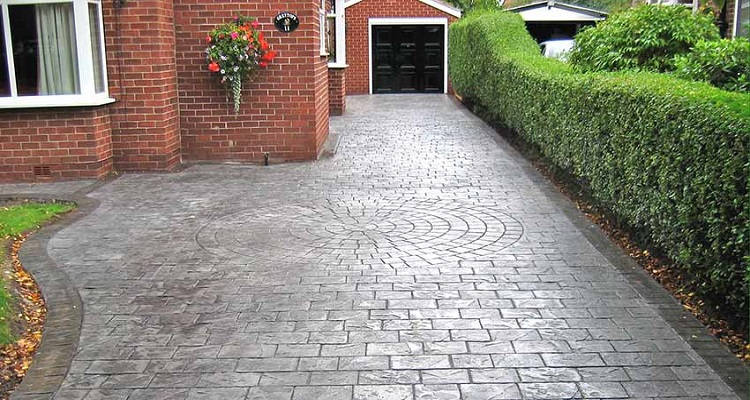
"Imprinted concrete" goes by several names, including stamped concrete, pressed concrete, printed concrete, and patterned concrete. These terms all describe the same process: a mould pressed into wet concrete to create a decorative pattern, so the pricing and installation advice in this guide applies to all of them.
Imprinted Concrete Driveway Prices
| Driveway Size | Duration | Material Cost | Labour Cost | Total Average Cost |
|---|---|---|---|---|
| Patterned Concrete Driveway (30m²) | 3 to 4 days | £1,900–£2,400 | £1,600–£2,100 | £3,500–£4,500 |
| Patterned Concrete Driveway (60m²) | 5 to 6 days | £3,400–£4,200 | £2,800–£3,800 | £6,200–£8,000 |
| Patterned Concrete Driveway (90m²) | 6 to 8 days | £4,900–£6,000 | £4,100–£5,500 | £9,000–£11,500 |
Want a custom price?
Post your job
Imprinted Concrete Driveway Cost Calculator
Labour Costs and Timescales for Imprinted Concrete Driveways
Labour usually makes up a significant part of the cost of an imprinted concrete driveway, and typically covers the following stages.
- Excavating the existing surface and ground beneath it.
- Preparing and compacting the sub-base.
- Pouring the concrete to the correct depth.
- Applying colour hardener and release agent.
- Stamping the pattern at the correct stage before the concrete sets.
- Sealing the finished surface.
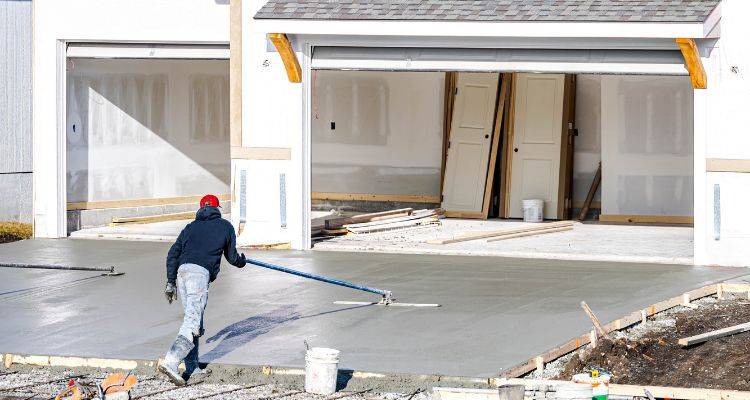
For a standard installation, labour costs typically range from £45 to £65 per m², depending on the complexity of the design and local labour rates.
What Affects Imprinted Concrete Driveway Costs?
Although imprinted concrete driveways are usually priced by square metre, the final cost can vary depending on the size of the driveway, the finish you choose, and how much preparation work is needed before the concrete is poured.
What imprinted concrete driveway feature do you consider most important?
Durability and long-lasting qualities
1 votes - 33%33% of votes
Low maintenance and easy to clean
0 votes - 0%0% of votes
Overall appearance or design
1 votes - 33%33% of votes
Affordable option and within budget
1 votes - 33%33% of votes

3 votes
See results
Hide results
For most projects, the lowest prices apply to straightforward rectangular driveways with simple patterns and easy access. More decorative designs, awkward layouts, or difficult ground conditions will increase labour time and material costs.
Some things that can impact costs include:
- Area Size — Larger driveways usually cost less per square metre because labour and equipment costs are spread across a bigger area, but cost more overall. The same finish can also be used for patios, although imprinted concrete patio costs are usually lower because the area is smaller.
- Pattern and Colour Choice — Standard stamped patterns and single-colour finishes cost less than decorative borders, multiple colours, or more detailed imprint designs.
- Ground Preparation — If an old driveway needs removing, or if excavation and a new sub-base are required, this can add significantly to the total cost of a new driveway.
- Shape of the Driveway — Curved edges, irregular shapes, and sloping surfaces take longer to prepare and imprint than simple straight layouts.
- Edging and Borders — Adding contrasting borders or separate edging sections increases both labour time and material use.
- Location in the UK — Labour rates are usually highest in London and the South East, where driveway installation costs are often above the national average.
What Does an Imprinted Concrete Driveway Quote Include?
Quotes can vary between installers, so it's worth checking exactly what's covered before comparing prices. Most standard quotes include the following.
- Excavation of the existing surface and ground beneath it.
- Sub-base preparation and compaction.
- Supply and pouring of the concrete.
- Colour hardener and release agent application.
- Imprinting of the chosen pattern.
- Sealing of the finished surface.
- Removal of general waste from the immediate work area.
Some items are less commonly included as standard, and may need to be requested or quoted separately.
- Dropped kerb applications or approvals.
- Drainage channels or soakaways.
- Decorative borders or multi-colour designs.
- Removal of trees, shrubs, or other obstructions.
Additional Costs of Installing an Imprinted Concrete Driveway
When budgeting for an imprinted concrete driveway, it's important to allow for extra work that may not be included in a basic installation quote. Some driveways require drainage improvements, edging, or access adjustments before the concrete can be laid.
- Drainage Channels — Installing drainage channels usually costs between £150 and £400 depending on the length required and where the water needs to be directed.
- Manhole Cover Replacement — Recessed manhole covers that match the driveway pattern typically cost around £100 to £250 each.
- Kerb Lowering — If a new driveway requires pavement access, your local authority may charge around £2,000 to lower the kerb legally.
- Drainage Permission or Planning Adjustments — If the surface is not permeable and water drains onto the road, additional drainage work may be needed to avoid having to apply for planning permission.
- Sealing After Installation — Most imprinted concrete driveways include sealing as part of installation, but future resealing every few years should also be budgeted for.
These costs will not apply to every project, but they are common reasons why final quotes can vary between properties.
Things to Consider When Installing Imprinted Concrete Driveways
Imprinted concrete is a solid choice for a driveway as it ticks all the boxes. It's durable, low maintenance, affordable, and will add a dash of personal style to your home. So if you are considering a concrete imprint for your driveway, then you will need to consider a few things first, especially before hiring a specialist to come and carry out the work.
- Customising — There are hundreds of patterns to choose from, including the main pattern and the border and edging pattern. There are also dozens of colours to choose from, so think about which look will best match the exterior of your home.
- Utility Services — Be aware of any utility services, such as gas and water, that may be running beneath the area you want to pave over. You will need to ensure they are not damaged during the excavation of your current driveway. Also, if you or anyone else may need to gain access to these pipes or cables in the future, it will be impossible without having to crack open the concrete.
- Planning Permission — In England and Northern Ireland, a non-permeable front driveway larger than 5m² usually needs planning permission unless rainwater drains to a lawn, border or soakaway within your property. However, if you already have a soakaway installed, permission is not usually needed provided the driveway drains into it.
- Reducing Cracking Risk — After a number of years, some concrete surfaces have a tendency to crack due to general wear and the harsh weather conditions we often experience in the UK. However, the risk of this can be reduced by adding adequate crack control joints, which are cut into the concrete.
Are imprinted concrete driveways prone to cracking?
"Not if done correctly although I would advise a fully permeable resin system if budget allowed."
Why Choose Pattern Imprinted Concrete Driveways?
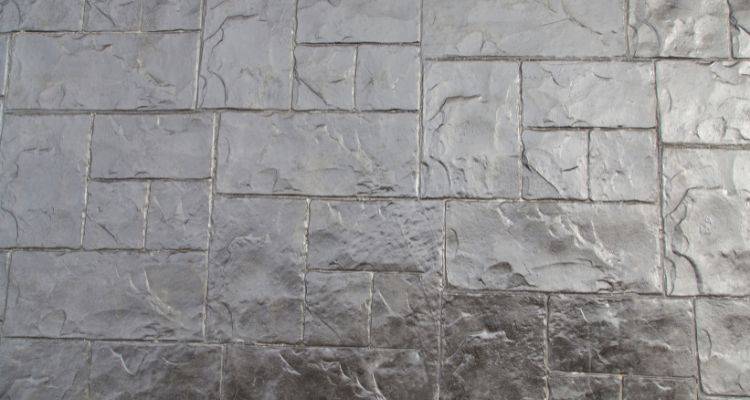
If you have a driveway that is showing signs of wear and tear, then you may want to consider going down the route of having a concrete drive installed, or more specifically an imprinted concrete drive.
| Benefit | Why It Matters |
|---|---|
| Durability | Can handle regular vehicle use for many years with proper installation and maintenance. |
| Low maintenance | Fewer joints than block paving means fewer places for weeds to grow. Upkeep includes sweeping, washing, occasional resealing, and keeping the joints sealed. |
| Decorative finish | Wide choice of patterns and colours that can imitate brick, stone, slate, or cobbles. |
| Long-term value | Higher upfront cost than basic surfaces, but often balanced out by durability and low ongoing maintenance. |
I'm debating installing block paving but a friend has suggested imprinted concrete. Which is best?
"Block paving and imprinted concrete are both great ways to spruce up your driveway. But personally I would swing towards imprinted concrete simply because it is so much easier to maintain if it is sealed properly then you only need a quick jet wash every other month to bring it back to new."
Durability
Imprinted concrete driveways are popular because they provide a strong, durable surface that can handle regular vehicle use for many years when installed correctly. How long yours lasts will depend on the quality of the base and how well the joints and surface are maintained.
Low Maintenance
Unlike block paving, imprinted concrete forms a mostly continuous surface with a few control joints to help reduce cracking, rather than joints around every block. Routine maintenance usually involves occasional sweeping, washing, and resealing every few years.
Decorative Finish
One of the main advantages of imprinted concrete is the wide choice of patterns, textures, and colours available. Homeowners can choose finishes that imitate brick, stone, slate, or cobbles while keeping the strength of a concrete surface.
Long-Term Value
Although the initial cost is higher than some basic driveway materials, imprinted concrete often offers good long-term value because it combines durability, appearance, and relatively low ongoing maintenance costs.
How long do imprinted concrete drives tend to last?
"Hi Over fifteen years if the builder done it properly. I have done a lot and I have some pictures. Thanks"
How Imprinted Concrete Compares to Other Driveway Materials
Imprinted concrete usually sits in the middle-to-upper price range for driveway materials. It costs more than plain concrete or gravel, but is often cheaper than premium block paving while offering a decorative finish with lower maintenance.
| Driveway Type (60m² Installed) | Typical Cost |
|---|---|
| Gravel driveway | £2,500–£4,200 |
| Concrete driveway | £5,000–£7,500 |
| Imprinted concrete driveway | £6,200–£8,000 |
| Tarmac driveway | £2,500–£5,000 |
| Block paving driveway | £4,500–£7,500 |
| Resin driveway | £3,500–£5,500 |
Want a custom price?
Post your job
Although imprinted concrete costs more than some basic surfaces, many homeowners choose it because it combines durability, decorative appearance, and relatively low ongoing maintenance.
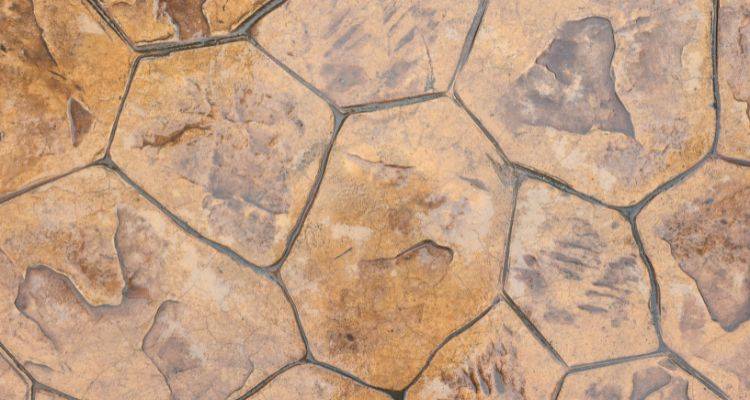
Imprinted Concrete vs Other Concrete Finishes
Concrete driveways aren't limited to one finish. If you like the durability of concrete but aren't sure imprinting is right for you, it's worth understanding how the main finishes compare.
| Concrete Finish | Typical Installed Cost per m² | Key Difference |
|---|---|---|
| Plain or brushed concrete | £60–£90 | A flat, functional finish with no pattern. It's the cheapest concrete option, but has less kerb appeal. |
| Exposed aggregate concrete | £70–£100 | The top layer is washed away to reveal the stones within the mix, giving a textured, speckled look. |
| Coloured or dyed concrete | £75–£110 | Colour is added throughout or brushed onto the surface, but without any imprinted pattern. |
| Imprinted (stamped) concrete | £100–£130 | A mould is pressed into the wet concrete to mimic block paving, stone, or slate, giving the highest kerb appeal of the concrete finishes. |
Want a custom price?
Post your job
In general, the more decorative the finish, the higher the price, as each extra step (colouring, texturing, or imprinting) adds to labour time. Imprinted concrete sits at the top of this range, but it's often chosen over plain or exposed aggregate finishes because of the wider range of patterns available.
Laying a Printed Concrete Drive Yourself
Even for an experienced DIY enthusiast, concreting a drive is a task they will probably struggle with and should usually leave to a professional. Imprinted concrete is particularly difficult because the concrete must be poured, coloured, and stamped at exactly the right stage before it begins to set.
For example, if you have a sloped driveway, there is a risk of the concrete pooling at one end, creating drainage problems and affecting the final finish. Uneven stamping or poor timing can also leave visible marks that are difficult to correct once the concrete hardens.
A typical 30m² single-car driveway will usually require the following materials and equipment.
- Ready-mix concrete.
- Colour hardener.
- Release agent.
- Sealant.
- Stamping mats.
- A compactor and mixing equipment (usually hired).
DIY material costs often reach £1,800 to £2,400 before tool hire.
Hiring a professional for the same size driveway usually costs around £3,500 to £4,500, so although DIY may appear cheaper, the saving is often limited once materials, equipment, and waste disposal are included.
If you are not experienced in working with large concrete pours, hiring a specialist is usually the safer option because mistakes can be expensive to repair.
Maintenance Costs for a Stamped Concrete Driveway
Although imprinted concrete is generally low maintenance, there are still a few long-term costs to budget for, particularly resealing and occasional surface repairs.
| Maintenance Task | Typical Cost |
|---|---|
| Professional resealing (per m²) | £4–£8 per m² |
| Professional resealing (60m² driveway) | £240–£480 |
| Small crack repairs | £100–£300 |
| Resurfacing worn concrete | £40–£70 per m² |
| DIY acrylic sealer (20 litres) | £55–£110 |
Want a custom price?
Post your job
Most driveways should be resealed every 3 to 5 years to preserve the colour, protect against weather damage, and reduce surface wear.
One of the main benefits of imprinted concrete is that it requires less routine maintenance than block paving because it has far fewer joints where weeds can grow and no jointing sand that needs replacing.
Basic upkeep usually involves sweeping away debris and occasional washing with water or a mild detergent to remove dirt, oil, and tyre marks.
If you want to reduce long-term maintenance costs, resealing imprinted concrete can often be done yourself using an acrylic-based driveway sealer. The surface should be cleaned thoroughly first and allowed to dry completely before applying a thin, even coat.
Hiring a Professional to Lay an Imprinted Concrete Driveway Checklist
- Compare multiple quotes — Get at least three estimates so you can compare prices, included preparation work, and the finish being offered.
- Ask to see previous driveway work — Imprinted concrete relies heavily on finish quality, so photos or examples of completed projects are useful before choosing a contractor.
- Check what is included in the quote — Make sure excavation, sub-base preparation, concrete thickness, colouring, and sealing are clearly listed.
- Confirm drainage plans — A good installer should explain how surface water will drain and whether channels or soakaways are needed.
- Look for guarantees — Many specialists offer workmanship guarantees, particularly for cracking, sinking, or early surface defects.
- Check reviews and insurance — Always choose a contractor with public liability insurance and recent customer feedback where possible.
Ask a Trade
Got a question that only a tradesperson can answer? We have thousands of trades ready to answer any question you may have.
Ask your question

FAQs
How Long Does It Take to Lay an Imprinted Concrete Drive?
For a specialist, installing a patterned concrete drive should take about 5 to 6 days to complete. The job will include excavation of the current drive and ground beneath, laying a new sub-base, laying the concrete, and then imprinting the pattern.
How Long Does It Take for a Concrete Driveway to Dry?
Concrete hardens as it cures, so it needs protection from drying out too quickly. You can usually walk on the driveway after around 2 days and park after around 7 days, but check with your installer as the concrete mix and weather can affect these timings.
Can Installing a Patterned Concrete Driveway Be Done as a DIY Project?
Although it is possible for experienced DIYers, imprinted concrete is difficult to install because the concrete must be poured, coloured, and stamped at exactly the right time before it sets. For most homeowners, hiring a specialist gives a more reliable finish and reduces the risk of costly mistakes.
Do You Need Planning Permission for a Concrete Drive?
In England and Northern Ireland, a front driveway larger than 5m² will usually need permission if the surface is not permeable and water cannot drain into a lawn, border or soakaway within the property. A drainage channel only avoids this requirement if it directs water to one of these areas, rather than onto the road or into a public drain.
In Wales and Scotland, a new front driveway must let water soak through or drain to a suitable area within your property to avoid needing permission, whatever its size. These rules apply to houses rather than flats or maisonettes, so check with your local council if you are unsure.
How Long Will an Imprinted Concrete Driveway Last?
A well-installed imprinted concrete driveway can last many years with relatively little maintenance. Its lifespan depends on the base preparation, installation quality and upkeep, including resealing the surface and maintaining the joints.
How Much Does an Imprinted Concrete Driveway Cost in the UK?
The average cost to lay an imprinted concrete driveway is £7,100 for a 60m² driveway, but this will vary significantly depending on the size of the driveway and how much labour costs in your area.
Is Imprinted Concrete Cheaper Than Paving for a Driveway?
Imprinted concrete is often similarly priced to mid-range block paving, although labour costs can make some designs more expensive. Premium block paving may also cost more than a basic imprinted concrete finish, depending on the materials chosen.