Builders
 Carpenters
 Electricians
 Flooring Specialists
 Gardeners
 Handymen
 Heating Engineers
 Painters & Decorators
 Plasterers & Renderers
 Plumbers
 Roofers
 Tilers
 my
myTree Root Removal Cost
At a Glance
- The average cost to remove tree roots is between £200 and £750.
- The price depends on the size and spread of the roots, the removal method, and your location.
- Most jobs take 1 to 3 days to complete.
- A breakdown of tree root removal costs.
- How long the work is likely to take.
- How to find a local tree surgeon using MyJobQuote.
Get free estimates
Are you a trade? Get more work today!
Tree root removal is priced by complexity. The size and spread of the roots, how accessible the site is and whether hard landscaping is involved all affect what you'll pay.
In this guide, you'll find tree root removal costs by job size, labour rates for tree surgeons and landscapers, the three main removal methods, and what to check before hiring. Everything you need to budget for the job.
£500
Table of Contents
- How Much Is Tree Root Removal?
- Labour Costs and Timescales
- Supply Costs
- Additional Costs
- Cost Factors for Tree Root Removal
- Types of Tree Root Removal
- Alternative Options to Tree Root Removal
- Building Regulations for Tree Root Removal
- Hiring Contractors Checklist for Tree Root Removal
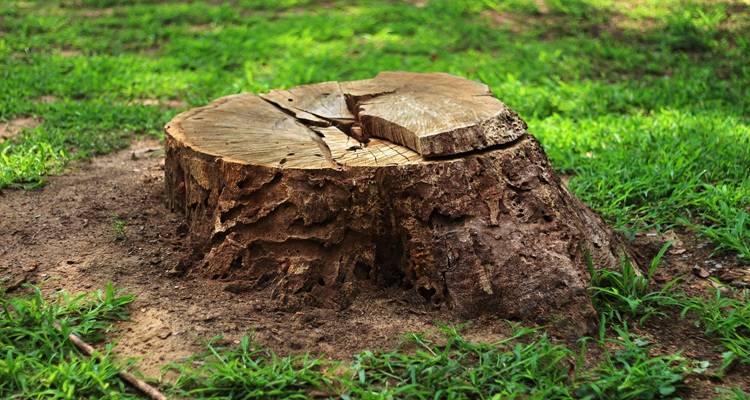
- Removing Tree Stumps and Roots
- FAQs
How Much Is Tree Root Removal?
Tree root removal typically costs £200 to £750. If roots are growing beneath a patio, driveway, or other hard landscaping, costs can exceed £1,000 due to the additional labour and excavation required.
Tree Root Removal Prices
The cost of removing tree roots varies depending on root size, soil type, access, and any surrounding structures.
| Job Description / Root Size | Average Price Range | Estimated Duration |
|---|---|---|
| Small tree root removal | £50–£200 | ½ day |
| Medium root system removal | £100–£300 | 1 to 2 days |
| Large tree root removal | £200–£750 | 2 to 3 days |
| Root removal under patios or driveways | £1,000–£2,500+ | 2 to 4 days |
| Tree root removal with stump grinding | £100–£600 | ½ to 1 day |
Want a custom price?
Post your job
The figures above represent typical prices charged by professional tree surgeons and landscapers. Costs may vary depending on the complexity of the job and your location.
Labour Costs and Timescales
Most homeowners hire a qualified tree surgeon or landscaper for tree root removal. Professionals may charge an hourly rate for smaller jobs, a day rate for larger ones or a fixed price after assessing the work. A tree surgeon typically charges £250 to £460 per day, with an average of around £375. Hourly rates run from £40 to £50. Landscapers cost £165 to £330 per day, or £25 to £60 per hour.
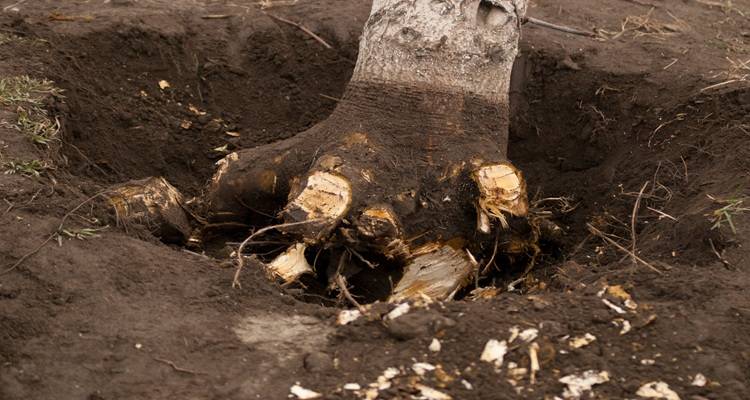
Small roots may be cleared in a couple of hours, while medium roots typically take 2 to 4 hours. Large or extensive root systems can take anywhere from half a day to several days, depending on the method used. Roots located beneath decking, patios or driveways take longer still, as the material above must be lifted and then repaired or replaced afterwards.
Supply Costs
Tree surgeons and landscape specialists use either manual extraction or mechanical removal, depending on root size, location, and the client's budget. If you're planning a DIY approach, hiring specialist equipment may be necessary and will add to your overall costs.
Tree Root Removal Tools: Spades and Digging Equipment
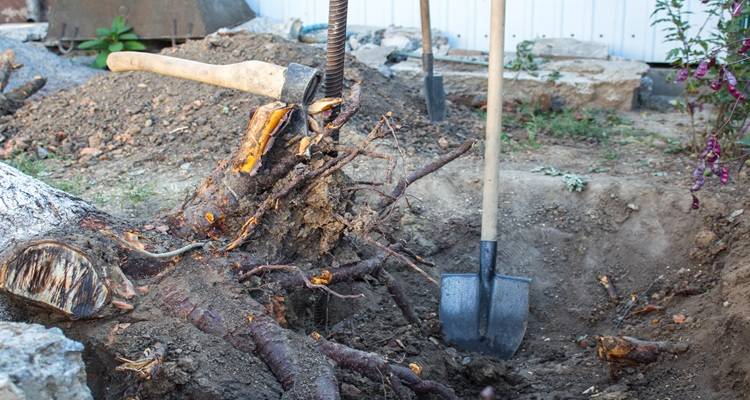
Serrated-edge spades, mattocks, picks, shovels, and digging bars are standard tree root removal tools for clearing smaller roots. Manual tools like these are suited to shallow or small root systems and are the lowest-cost option.
Root Saws and Pruning Saws
Root saws and pruning saws are used to sever roots in awkward or confined spaces. The teeth are double-hardened and carbide-tipped to cut through soil and compacted earth without dulling quickly.
Chainsaws
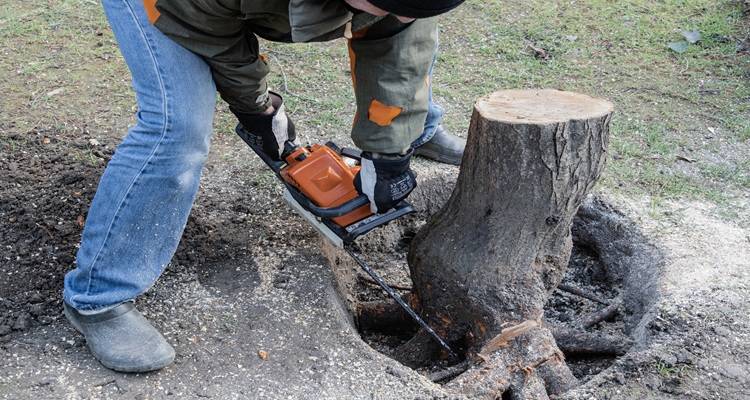
Tree surgeons sometimes use chainsaws to cut through roots surrounding a stump once the soil has been cleared. Using a chainsaw for root cutting is not recommended for non-professionals due to the risk of kick-back from rocks and debris.
Tree Root Removal Machines: Mechanical Stump Grinders
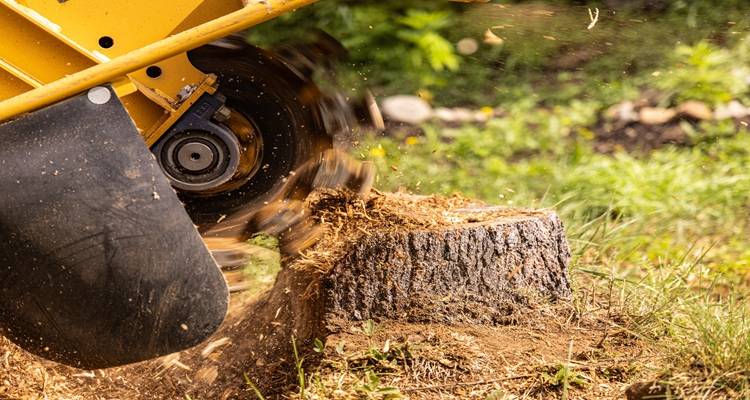
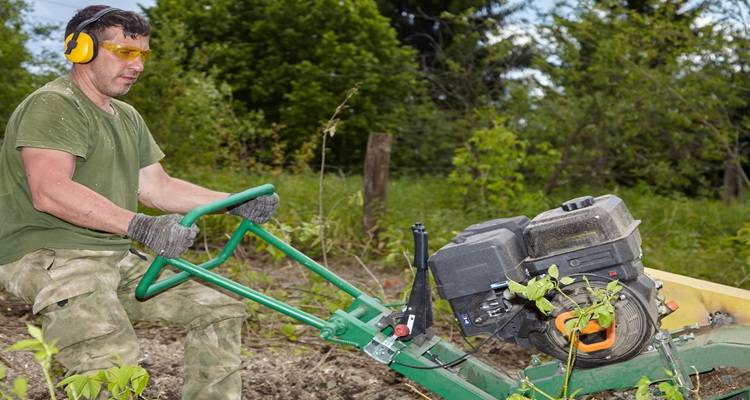
A stump grinder is the most commonly used tree root removal machine for larger jobs. It uses a rotating wheel fitted with carbide-tipped teeth to chew through roots and stumps efficiently, and can be hired for DIY use or operated by a professional.
Mini Diggers for Excavation
A mini digger clears soil around large roots and stumps, allowing larger roots to be cut and extracted. It is typically used when roots are too extensive to remove manually.
Protective Equipment
Safety boots, gloves and goggles should be worn whenever removing tree roots. If using mechanical tools such as a chainsaw or stump grinder, ear protection is also necessary.
Additional Costs
Several additional costs are worth factoring into your budget before work begins. These are some of the most common extras you may encounter.
Stump Grinding
Some homeowners choose to leave the stump in place, but if you want to remove it, hiring a stump grinder for DIY use costs between £70 and £150 per day, or £100 to £170 for 2 days. Hiring a specialist with a stump grinder ranges from £100 to £600, depending on the size of the stump and access.
Excavation Work
For large root systems, a mini digger is often needed to expose the roots before they can be cut and removed. Mini excavator hire costs £200 to £330 per day, depending on your location.
Waste Removal and Disposal
Smaller roots can be composted or taken to a local recycling centre. Larger volumes of waste may need to be transported and disposed of professionally. A one-off green waste removal typically costs £50 to £250, depending on location and volume.
Repairing Damaged Patios, Driveways, or Paths
Where tree roots have grown beneath hard landscaping, you will need to budget not only for their removal but also for repairing the surface above. Costs vary depending on the extent of the damage and the materials involved.
Replacing Turf or Landscaping After Root Removal
Once roots are cleared, the area may need re-turfing or replanting. New turf costs around £3 to £5 per square metre. Grass seed is cheaper to buy, averaging around £10 per kilo, though it takes longer to establish.
Soil Replacement or Levelling
The void left after root removal may need filling with soil to level the ground. A bulk bag of soil (half to one tonne) costs between £70 and £100, while loose loads are cheaper at around £35 to £40 per tonne. A wacker plate to compact the refill costs approximately £40 to £70 per day.
Cost Factors for Tree Root Removal
Several factors influence how much you pay to remove tree roots. Understanding these before getting quotes will help you budget more accurately.
Size and Spread of the Root System
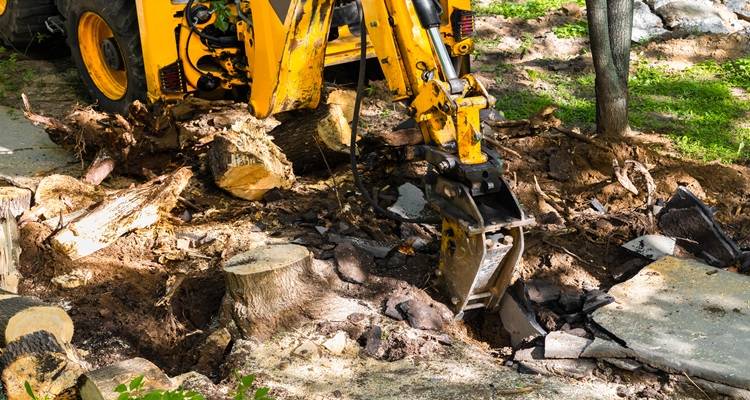
The size and spread of the roots is one of the biggest cost drivers. Although most tree roots are relatively shallow, they often extend for many metres laterally. Species such as willow and poplar are particularly aggressive, with roots spreading 40 metres or more in search of water.
Depth of the Roots
Deep roots may require machinery such as a mini excavator to access, which increases costs. Most roots sit within the top 2 metres of soil, but depth varies by species and soil conditions.
Type of Tree
Some trees are known for extensive root systems. Willow, poplar, oak, walnut, and pine can all have expansive roots that take significantly more time and labour to remove than those of smaller or shallower-rooted species.
Accessibility of the Area
Restricted access drives up costs. If roots need to be cut into smaller pieces to navigate narrow alleys, or if there is no space for machinery, manual extraction becomes necessary. This extends timescales and increases labour costs significantly.
Safety Risks or Nearby Structures
Roots close to building foundations, drains, patios, or driveways require additional caution and often manual-only removal. If the tree itself is unstable or diseased, extra precautions will also be needed, adding to the overall price.
Whether the Roots Are Beneath Paving, Driveways, or Buildings
Roots beneath hard landscaping mean the surface must be lifted before the roots can be accessed, and then repaired or replaced afterwards. This significantly increases both labour time and total cost.
Machinery Required for Excavation
When roots are large or extensive, a mini excavator is commonly used to clear soil and break up roots. Hiring one, with or without an operator, adds to your budget, but speeds up the job considerably compared to manual extraction.
Waste Disposal Requirements
Smaller roots can be composted, but larger volumes will need professional disposal. Whether you hire a skip, pay for collection or include disposal in a contractor's quote, this cost should be factored in from the start.
Regional Labour Rates
Tree surgeon and landscaper rates vary across the UK. London and the South East are typically more expensive than the North of England or Wales. Getting at least 3 quotes helps you gauge what's reasonable in your area.
Types of Tree Root Removal
There are three main methods for removing tree roots: manual, mechanical and chemical. The right choice depends on the size of the roots, site access and your budget.
Manual Root Removal
Manual tree root removal uses hand tools such as mattocks, spades, axes, loppers and pruning saws to expose, cut and extract the roots. It is best suited to small or shallow roots, or to situations where machinery cannot safely be used.
Pros
- ✔ Lowest cost method
- ✔ No large machinery to manoeuvre
- ✔ Eco-friendly
- ✔ Suitable for DIY tree root removal
Cons
- ✖ Labour-intensive
- ✖ Time-consuming
- ✖ Impractical for large or extensive root systems
Average prices for a day's manual tree root removal by a professional are around £250 to £375, depending on the extent of the roots, location and site accessibility.
Mechanical Root Removal
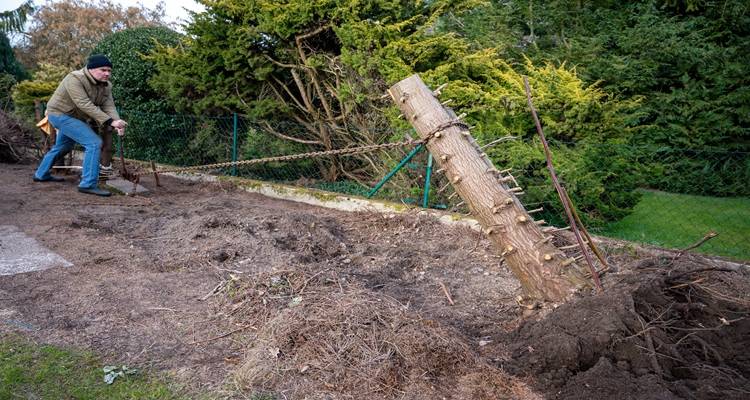
Mechanical root removal uses machinery, typically a stump grinder, mini excavator or winch, to extract roots quickly. It is the preferred method when roots are large, extensive and the site allows good machinery access.
Pros
- ✔ Fast removal of roots and stumps
- ✔ Less labour-intensive
- ✔ No chemicals in the soil
- ✔ Choice of stump grinding or root excavation
Cons
- ✖ More expensive option.
- ✖ Large machinery can damage turf and nearby plants.
- ✖ Unsuitable for many urban locations.
Stump grinders can be hired from £70 to £150 per day, or up to £600 with a professional operator. A mini excavator costs £200 to £330 per day to hire, rising to £300 to £600 with an operator, with an average of around £500 for an 8-hour day.
Chemical Root Treatment
Chemical root removal uses authorised products to accelerate the decomposition of roots and stumps. These require cautious handling, particularly in households with children or pets.
Pros
- ✔ Cheaper than mechanical removal
- ✔ DIY-friendly
- ✔ No large machinery required
- ✔ Can be used where mechanical extraction is impossible
- ✔ Minimal labour and equipment needed
Cons
- ✖ Slow process, as most chemicals take several weeks to months to be effective.
- ✖ Some chemicals are not safe for children, pets or the environment.
- ✖ Risk of soil contamination.
Chemical removal is the most budget-friendly option, but it is not suitable where roots need to be removed quickly or where there is a risk of contaminating nearby soil or water.
Alternative Options to Tree Root Removal
If full removal is not practical or necessary, there are several alternatives worth considering.
Root Pruning
Root pruning trims the tree's roots to restrict any damage they are causing to nearby structures or services. It should only be carried out by a professional tree surgeon, as cutting back too many roots can destabilise the tree. For costs related to above-ground pruning work, see the tree pruning cost guide.
Installing Root Barriers
Root barriers are physical barriers made from metal or plastic, installed after root pruning to prevent roots from regrowing in the same direction. They are used to protect buildings, paths, driveways, and underground services.
Stump Grinding
Stump grinding removes the visible portion of the trunk to below ground level, allowing the remaining roots to die and decompose naturally. Without the stump to supply nutrients, the tree will not regrow.
Landscaping Adjustments
Where removal is not essential, incorporating the stump and roots into a garden feature is a low-cost alternative. Wildflowers, ferns, climbing plants or edible mushrooms can all be grown around or on a stump for a naturalised effect.
Building Regulations for Tree Root Removal
Tree root removal does not generally require planning permission, but there are important legal restrictions you should be aware of before starting any work.
Tree Preservation Orders
A Tree Preservation Order (TPO) is a legal restriction imposed by the local authority to protect specific trees or woodland. Under a TPO, you cannot fell, uproot, lop, top, or wilfully damage or destroy the tree unless you have obtained written consent from the council, the tree is dead, or work is needed urgently on a dangerous tree.
Ignoring a TPO is a criminal offence that carries an unlimited fine. You will also be required to replace the removed tree.
Trees in a Conservation Area
All trees with a trunk diameter of 75mm or more measured 1.5m from the ground within a conservation area are automatically protected. You must give the council at least 6 weeks' written notice before carrying out any work, and you cannot proceed until they confirm the work can go ahead or the 6 weeks pass and you haven't heard back.
Working on a tree with a Tree Preservation Order in place or working without giving the council notice are criminal offences and carry a fine. If you are unsure whether your tree falls within a conservation area, check your local authority's planning portal.
Roots close to property foundations or underground services such as drains should always be removed by a professional.
Ask a Trade
Got a question that only a tradesperson can answer? We have thousands of trades ready to answer any question you may have.
Ask your question

Hiring Contractors Checklist for Tree Root Removal
Before hiring a contractor for tree root removal, it's important to ask the right questions to ensure the work is done safely and to a professional standard.
- Is there a Tree Preservation Order on the tree? Check with your local authority before any work is carried out. If the tree is dead, notify the council in writing at least 5 days in advance. If the tree poses an immediate danger, you can carry out the work first and notify the council as soon as reasonably possible afterwards.
- Are they qualified and insured? Ask for proof of public liability insurance and check whether the contractor is accredited by the Arboricultural Association or listed on the International Society of Arboriculture directory.
- What removal method and equipment will they use? Confirm whether they plan to use manual, mechanical or chemical removal, what machinery will be brought onto your property, and what precautions they will take to minimise damage.
- Does the quote include an itemised breakdown? Quotes should clearly break down charges for labour, equipment, waste disposal, difficult access, and any site restoration such as backfilling or surface repair.
- Will they carry out a site assessment before quoting? A good contractor should assess the site beforehand, particularly to identify nearby underground services or structural risks.
- Do they have positive reviews and examples of similar work? Look at their website, social media and third-party review sites to assess reliability, professionalism and quality of work before committing.
Removing Tree Stumps and Roots
Tree root removal is typically carried out alongside stump removal. As the roots are connected to the stump, removing tree roots and the stump at the same time is usually the most practical and cost-effective approach. This is especially common after a tree has been felled. For full pricing on having a tree taken down, see the tree removal cost guide.
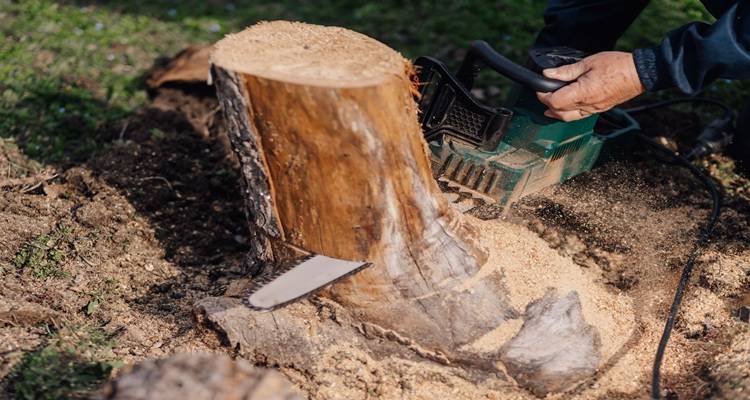
If a stump remains in the ground, roots retain a nutrient source through shoots and suckers and will continue to grow, which can still cause problems over time. Stump grinding removes any remaining roots effectively and prevents regrowth, allowing the area to be safely reused for landscaping.
Although stump grinding costs more than root removal alone, it is often the most thorough solution.
FAQs
Do Tree Surgeons Remove Roots?
Yes, tree surgeons are the most commonly hired professionals for root removal, particularly for large, complex or high-risk jobs. They have the training, specialist equipment and insurance to remove roots safely, especially where they are close to buildings, drains or other structures. For smaller or less complex jobs, a landscaper may also be able to carry out the work at a lower day rate.
Who Is Responsible for Tree Root Damage to Drains in the UK?
Responsibility for drain damage caused by tree roots generally falls to the landowner on whose property the tree is growing. Drain tree root removal is typically the homeowner's cost to bear if the pipe both runs inside your boundary and serves only your property. For pipes shared with another property or past your boundary, responsibility falls on the sewerage company, which must have repairs done at its expense.
How Do You Remove Tree Roots from Drains?
If you are sure the drains are your responsibility (see above), you can call a drainage specialist who will typically use a high-pressure water jet to break up and flush out the roots, or a mechanical cutting tool fed through the drain. Once cleared, a CCTV drain survey is usually carried out to assess any structural damage. If roots have cracked or collapsed the pipe, repair or replacement work will add to the overall cost. This is a specialist job and not suitable for DIY.
What Time of Year Is Cheapest for Tree Root Removal?
Winter is generally the cheapest time of year to hire a tree surgeon, as demand is lower. Prices can be 15% to 25% less than summer rates.
Will Tree Roots Grow Back After Removal?
Tree roots can grow back if the stump is left in the ground, as it continues to supply nutrients to any remaining roots. Stump grinding removes the stump to below ground level, cutting off that nutrient supply and preventing regrowth. Manual or mechanical extraction alone removes the physical roots but does not stop regrowth if the stump remains. Chemical treatment accelerates decomposition but takes longer, and roots are unlikely to regrow once fully decomposed.
Can You Remove Tree Roots Without Killing the Tree?
Yes, but cutting too many roots, or removing large structural roots close to the trunk, can destabilise or kill the tree. Root pruning carried out by a qualified tree surgeon can remove problematic roots selectively while minimising harm to the tree.
What if My Neighbour's Tree Roots Are Affecting My Property?
Speak to your neighbour in the first instance. You are allowed to cut roots within your boundary, but Tree Preservation Orders and conservation area restrictions may apply so you should check with your local council before cutting anything. Also consult a qualified tree surgeon or arborist for professional advice as cutting the roots can destabilise the tree.
Why Shouldn't You Leave a Tree Stump in the Ground?
A stump left in the ground can allow roots to continue growing and cause problems with underground services or nearby structures. It can also attract pests such as ants and fungal diseases like honey fungus, which can spread to other plants in your garden.
Does Drilling Holes in a Stump Make It Rot Faster?
Drilling a grid of holes into a stump can speed up decomposition, especially when used alongside an authorised stump killer. Holes should be roughly two-thirds the height of the stump, 2.5 to 3cm in diameter and 15 to 20cm apart, to allow the chemical to spread evenly through the wood.