Builders
 Carpenters
 Electricians
 Flooring Specialists
 Gardeners
 Handymen
 Heating Engineers
 Painters & Decorators
 Plasterers & Renderers
 Plumbers
 Roofers
 Tilers
 my
mySun Tunnel Installation Cost
At a Glance
- The average cost of sun tunnel installation is £550.
- Most sun tunnel installations take around 1 day to complete.
- Typical costs for installing a sun tunnel in 2026 by type and size.
- How long sun tunnel installation takes and what's involved.
- How to find a sun tunnel fitter with MyJobQuote.
Get free estimates
Are you a trade? Get more work today!
£550
Table of Contents
- How Much Is a Sun Tunnel Installation?
- Sun Tunnel Installation Labour Costs
- What Impacts Sun Tunnel Installation Costs?
- Additional Sun Tunnel Costs to Consider
- Benefits of a Sun Tunnel Installation
- Are Sun Tunnels Worth the Investment?
- Sun Tunnel vs Skylight
- Planning Permission and Building Regulation for Sun Tunnels
- What's Involved in Installing a Sun Tunnel?
- Checklist: Finding a Sun Tunnel Installer Near You
- FAQs
How Much Is a Sun Tunnel Installation?
The average sun tunnel installation cost is between £520 and £715, with the higher end being for a rigid tunnel on a flat roof rather than a pitched roof.
A sun tunnel is an innovative yet cost-effective way to add natural light to your home, especially in areas that can't benefit from natural sunlight.
Getting enough natural sunlight can be tricky in a smaller home with few windows, or if you live in a property where sun opportunities are scarce. Yet natural light in your home will bring a host of benefits, including being good for your health and potentially saving you money on your energy bills.
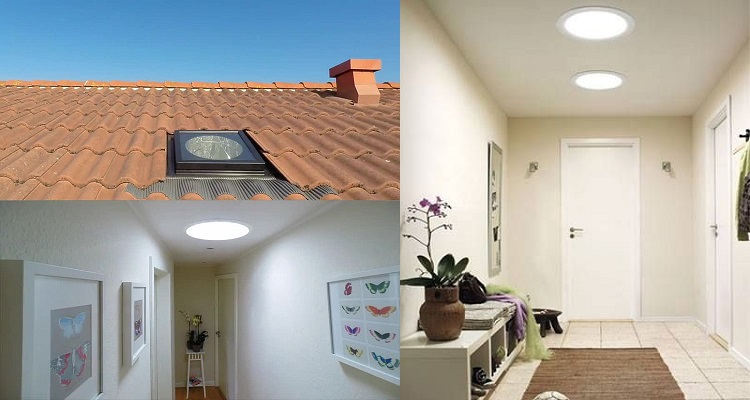
With a sun tunnel you can begin channelling natural sunlight through a tube from your roof down to your ceiling, using reflective materials, and a diffuser at the end to help disperse the light covering as much of the room as possible.
So, how much does a sun tunnel cost to install?
Our price guide will help you calculate how much a sunlight tunnel (or sun tube) will cost you to fit, including labour, material fees and any additional charges.
Installing a sunlight tunnel will cost you around £550 on average.
Ready for a quote?
We have a range of sun tunnel fitters ready to offer you a free quote!
For all the sun tunnel information, read below...
Sun Tunnel Installation Prices
The following table displays the cost of installing a sun tunnel, comparing three different variations, all of which can be completed within a day's work. This includes materials and labour fees, although prices may vary depending on your location and the extent of work required.
| Job Description | Average Cost |
|---|---|
| VELUX 10″ Rigid Sun Tunnel Pitched Roof | £520 |
| VELUX 14″ Flexible Sun Tunnel Flat Roof | £615 |
| VELUX 14″ Rigid Sun Tunnel Flat Roof | £715 |
By comparison, the below showcases the average material costs only for installing a sun tunnel.
| Job Description | Material Cost |
|---|---|
| VELUX 10″ Rigid Sun Tunnel Pitched Roof | £220 |
| VELUX 14″ Flexible Sun Tunnel Flat Roof | £290 |
| VELUX 14″ Rigid Sun Tunnel Flat Roof | £340 |
Want a custom price?
Post your job
Sun Tunnel Installation Labour Costs
Labour typically accounts for around 50 to 55% of the total sun tunnel installation cost. For most standard jobs, you can expect to pay between £250 and £375 for labour alone, with the remainder covering the cost of materials and the sun tunnel kit itself.
The table below breaks down typical labour-only costs for sun tunnel installation by job type.
| Job Description | Labour Cost |
|---|---|
| Sun tunnel installation — pitched roof (standard) | £250–£300 |
| Sun tunnel installation — flat roof | £300–£375 |
| Sun tunnel installation — complex/long tunnel run | £350–£450 |
| Installer day rate | £200–£350 per day |
Want a custom price?
Post your job
Most sun tunnel installations, whether a flexible or rigid tube on a pitched or flat roof, are completed within a single day. Where the tunnel run is longer, requires navigating loft obstructions, or involves a second-floor ceiling, the job may take up to 2 days, which will increase the overall labour cost.
Labour rates also vary by location. Installers in London and the South East typically charge more than those in the North of England, Wales, or Scotland. If scaffolding is required to safely access the roof, this will be an additional cost on top of the labour rate.
What Does Sun Tunnel Installation Labour Include?
When you hire a professional sun tunnel installer, the labour cost typically covers the following:
- Removing and replacing roof tiles to create the opening for the roof panel.
- Fitting and weatherproofing the roof panel with appropriate flashing.
- Running the reflective tubing through the loft space from the roof panel to the ceiling.
- Fitting the diffuser at the ceiling end to disperse natural light into the room.
- Final sealing checks to ensure no risk of water ingress or heat loss.
Always confirm what is included before agreeing to a quote. Waste removal, scaffolding, and any repair work to existing roof tiles or flashing are not always included as standard.
What Impacts Sun Tunnel Installation Costs?
Several factors will affect the overall sun tunnel cost, from the type of sun tunnel you choose to the complexity of your roof.
Let's take a look at these cost factors below:
- Tunnel Type — You have the choice between a rigid or flexible tunnel. A rigid sun tunnel runs as a straight tube from the roof through the loft down to the ceiling, delivering the most light, while a flexible tunnel navigates around objects in your loft space, though the angle reduces the amount of light that enters the room. Rigid sun tunnel installation costs tend to be higher where loft access is limited.
- Roof Panel — Your choice of roof panel will affect the overall sun tunnel installation cost. A dome roof panel is more effective at capturing light, as it refracts on entry, dispersing more natural light into the room, whereas a flat panel reflects some light rather than capturing it.
- Tube Diameter — The diameter of the tube affects both the amount of light delivered and the sun tunnel cost. Consider 10 inches for small rooms or hallways and up to 14 inches for larger rooms such as a living room or kitchen.
- Roof Type — Your roof type directly affects tunnel installation costs. Flat roofs typically require more involved flashing and weatherproofing than pitched roofs, pushing the sun tunnel installation cost higher.
- Tunnel Length — Longer tunnels require more materials and increase labour costs. Where the tunnel runs in a straight line, light transmission is better, but if it needs to navigate a second or first floor, the tunnel installation becomes more complex, and the total cost will reflect this.
- Access — If scaffolding is needed to reach the roof safely, it will add to your overall installation cost. Always check whether access costs are included in any quote you receive.
- Labour — Labour costs vary based on your location and the complexity of the sun tunnel installation, and can significantly affect the total cost. Installers in London and the South East typically cost more than in other parts of the UK.
Additional Sun Tunnel Costs to Consider
Beyond the core installation cost, there are several additional expenses that may apply depending on your home and chosen product.
- Extension Kits — If the distance between your roof and ceiling exceeds the standard tunnel length, you'll need extension sections. VELUX rigid sun tunnel extension sections typically cost between £60 and £165 per section, depending on the length (600mm or 1200mm) and tunnel diameter (10" or 14").
- Electric Lighting Kit — Sun tunnels only deliver light during daylight hours. The VELUX ZTL 014 kit allows you to use the same diffuser fitting as a conventional light at night and typically costs between £90 and £110. You'll also need an electrician to wire it in.
- Scaffolding — If your roof can't be safely accessed from a ladder, scaffolding hire will be required. A small tower for roof access typically costs between £640 and £970 for a standard 6-week hire.
- Roof Tile Repairs — Any cracked or damaged tiles found when creating the roof opening may need replacing at the same time. Replacing 5 tiles typically costs between £170 and £260 depending on the tile type.
- Cleaning and Maintenance — The external dome or flat panel will benefit from occasional cleaning to maintain maximum light transmission, which can usually be done yourself with a soft cloth and water.
- Planning Application Fees — Most installations don't require planning permission, but if it is required, it currently costs £548 in England.
Benefits of a Sun Tunnel Installation
Sun tunnels are an efficient and affordable way to add natural light into your home, especially useful for darker interior spaces. Here are the key benefits:
- Improves Natural Light — Sun tunnels channel sunlight from your roof to areas that don't normally receive it — ideal for hallways, bathrooms, or lofts.
- Less Artificial Light Needed — No need to turn manual lighting on as much during the day, which in return will help reduce your energy bills.
- Health & Wellbeing — Exposure to natural light is known to improve mood and overall wellness.
- Flexible Design — Sun tunnels can be tailored to fit around obstructions such as loft spaces to provide maximum brightness.
- Subtle Appearance — By installing a sun tunnel you can still maintain the overall look of your home's exterior.
Are Sun Tunnels Worth the Investment?
A sun tunnel won't pay for itself through energy savings alone, but it offers a combination of practical and wellbeing benefits that make it a cost-effective upgrade for the right space.
Reduced Reliance on Artificial Lighting
In rooms that rely on artificial lighting throughout the day (such as a hallway, bathroom, or windowless kitchen), a sun tunnel can significantly reduce the amount of time you need the lights on. Once installed, a sun tunnel delivers natural light for free, with no running costs and no electricity consumption of its own.
Minimal Heat Loss in Winter
Unlike a skylight, a sun tunnel uses insulated reflective tubing rather than glazing, so heat loss in winter is minimal. It's unlikely to have any noticeable effect on your heating bills and energy efficiency standards are checked by building control when the installation is signed off.
Improved Home Appeal
Bright, well-lit rooms are consistently popular with buyers. While a sun tunnel won't add a fixed amount to your property's value, improving natural light in dark or windowless areas can make your home more appealing and easier to sell.
Wellbeing Benefits
Natural light can improve mood and mental health and help regulate sleep patterns, benefits that are difficult to put a price on but widely recognised as valuable.
Sun Tunnel vs Skylight
Sun tunnels and VELUX window skylights are pretty much designed to do the same thing (add natural light into your home). However, sun tunnel installation costs are less expensive than a skylight, requiring a lower budget for materials and labour fees.
The table below compares typical supply-and-fit costs for a sun tunnel against a skylight window.
| Option | Average Installed Cost |
|---|---|
| Sun tunnel — 10″ pitched roof | £520 |
| Sun tunnel — 14″ flat roof (flexible) | £615 |
| Sun tunnel — 14″ flat roof (rigid) | £715 |
| VELUX window — centre pivot, small (supply and fit) | £655 |
| VELUX window — top-hung, small (supply and fit) | £755 |
| VELUX window — centre pivot, large (supply and fit) | £815 |
| VELUX window — top-hung, large (supply and fit) | £995 |
Want a custom price?
Post your job
As the table shows, sun tunnel and skylight costs are broadly comparable at the entry level. A small centre pivot VELUX window starts from £655, which is similar to a standard sun tunnel installation. However, skylight costs rise quickly with size and specification, and the installation is typically more involved, often requiring 2 people and taking 6 to 8 hours to complete.
Sun Tunnel
Pros
- ✔ More affordable option compared to a skylight.
- ✔ Ideal for small spaces, such as bathrooms and hallways.
- ✔ Quicker and less-invasive installation process.
- ✔ Energy efficient due to minimal heat loss.
Cons
- ✖ Doesn't provide any outside view.
- ✖ No ventilation for airflow.
Skylight
Pros
- ✔ Ideal for larger areas, creating more light.
- ✔ Provides ventilation when opened.
Cons
- ✖ More expensive than a sun tunnel.
- ✖ Can potentially require structural work.
- ✖ Requires cleaning and general maintenance.
Planning Permission and Building Regulation for Sun Tunnels
In the majority of cases sun tunnel installation doesn't require planning permission, as long as the roof panel isn't more than 150mm beyond the existing roof slope and no part of the installation extends beyond the highest part of the roof. These rules do not apply to flats or maisonettes.
However, you will need listed building consent if you live in a listed building.
As for building regulations, there are certain rules and requirements your sun tunnel installation must adhere to because it involves altering the roof structure. Work is signed off by the council's building control department or a private registered approver. They will inspect the work and issue the certificate. A new sun tunnel cannot be self-certified (replacement ones may be), so make sure to budget for the cost of approval.
What's Involved in Installing a Sun Tunnel?
Sun tunnel installation isn't something we recommend for even skilled DIY enthusiasts.
Removing or replacing roof tiles, attaching the panel and sealing it up, is a tricky task even for most experienced roofing experts. As well as the potential damage to the roofing, leading to expensive roof repair costs if the panel is not sealed properly, this will cause leaks and can lead to water damage, costing you more in the long term.
As a result, most homeowners choose to hire a professional.
With MyJobQuote, you can request several quotes from sun tunnel installers in your local area. It's fast, free, and there's no obligation to go ahead.
Before the Job Starts
- Surveying and Planning — The installer will assess your roof type, check the available roof space, and map out the tunnel route. They will confirm whether a rigid tunnel can run in a straight line or whether flexible tubes are needed to navigate the loft space.
- Choosing Components — The correct tube diameter, roof panel type, and rigid or flexible tubes will be confirmed based on your sun tunnel installation requirements.
During the Job
- Cutting the Opening and Fitting the Panel — Roof tiles are removed, the roof panel is secured, and flashing is fitted around it to weatherproof the opening.
- Running the Tunnel and Fitting the Diffuser — The reflective tubing is fitted from the roof panel down through the loft, channelling natural daylight into the room. A diffuser is then fitted at the ceiling end to disperse natural light across the room.
After the Job
- Sealing and Final Checks — The roof panel and flashing are checked to ensure everything is properly sealed, with no signs of water ingress or heat loss.
Checklist: Finding a Sun Tunnel Installer Near You
Consider these key points before installing a sun tunnel in your home:
- Which is the right type of tunnel for your home? Sun tunnels come in both flexible and rigid tubes. Make sure you choose the option that best fits your home's layout and roof design.
- What type of sun tunnel captures the most light? Choosing the right design is largely down to the materials used and the tunnel's shape. For example a dome panel captures more sunlight than a flat panel, which can reflect some of the light away.
- Will a sun tunnel reduce my energy costs? Installing a sun tunnel can decrease your reliance on electrical lighting and usage, helping to lower your energy bills.
- Does your tradesman have experience with roofing and sealing panels? Ensure the person you hire has sufficient roofing experience, especially when it comes to properly sealing panels to prevent leaks.
- Do they have evidence of their previous work? Ask to see a portfolio, or alternatively check their website and MyJobQuote profile for photos and reviews, as well as asking friends and family for recommendations.
- Do they have public liability insurance? As well as providing a guarantee once they've completed the work, any reputable tradesman is likely to at least have public liability insurance to protect against injury and accidental damage (although this isn't a legal requirement).
- Have you requested more than one quote? By using MyJobQuote you can request at least three quotes, so you can compare prices. Each one should contain a breakdown of the work to be supplied.
- Are there any hidden extra costs? Once you've received a quote, check the likes of waste removal is already included, as well as other additional sun tunnel installation costs such as scaffolding and that there's a contingency plan in the event of any delays.
Ask a Trade
Got a question that only a tradesperson can answer? We have thousands of trades ready to answer any question you may have.
Ask your question

FAQs
How Long Does a Sun Tunnel Typically Last?
How long a sun tunnel lasts depends on how well the roof panel is flashed and sealed, so choosing a trusted installer is crucial. The reflective tube inside generally maintains its effectiveness over time, while the roof dome or diffuser may need occasional cleaning to ensure optimal light transmission.
Can a Sun Tunnel Be Installed in a Multi-Storey Home?
Yes, sun tunnels can be installed in multi-storey homes, but the installation may require longer tubing and careful planning to navigate loft spaces or multiple ceilings. Using flexible tunnels with minimal bends can help maintain maximum light transfer between floors.
Will a Sun Tunnel Impact the Temperature Inside My Home?
Sun tunnels are designed primarily for light, not ventilation, so they have minimal impact on indoor temperature. Quality installations with proper insulation prevent heat loss in winter and heat gain in summer, meaning they won't significantly change your room's temperature.
Can a Sun Tunnel Be Installed in a Bathroom or Wet Room?
Yes, sun tunnels can be installed in bathrooms or other wet areas, but it's important to use a model that is properly sealed and designed to handle moisture. Ensure the tunnel comes with waterproof flashing and the diffuser on the ceiling is resistant to humidity and can prevent potential leaks and reduce condensation, allowing natural light to brighten even the most damp spaces safely.
Is It Possible to Install a Sun Tunnel in a Flat or Apartment?
Providing you have access to the roof or ceiling space, then in theory yes. However, you will have to obtain planning permission from your local planning authority as well as consent from building management or the freeholder before proceeding. Building control approval also applies.
Can I Install a Sun Tunnel Myself?
Sun tunnel installation isn't a suitable DIY project. Unless you have the appropriate roofing experience, you may end up with more costs than you had originally planned. There are also safety concerns when working on a roof, so if you don't have the appropriate equipment and experience, or aren't comfortable working at heights, then it's best to hire a professional for your sun tunnel installation.