Builders
 Carpenters
 Electricians
 Flooring Specialists
 Gardeners
 Handymen
 Heating Engineers
 Painters & Decorators
 Plasterers & Renderers
 Plumbers
 Roofers
 Tilers
 my
myDemolition Costs
At a Glance
- The average cost of demolition is around £8,800.
- This job will take around 1 week to complete.
- A breakdown of the average demolition costs for different buildings, including house and garage demolition costs.
- What affects house demolition costs and how you can make cost-effective choices.
- How to find and hire a local demolition expert.
Get free estimates
Are you a trade? Get more work today!
Want to know the demolition cost for your project?
In this demolition cost guide, we break down average demolition costs for houses, garages and smaller outbuildings, explain typical demolition cost per m², and show how demolition companies calculate quotes so you can budget confidently or use it alongside a demolition cost calculator.
Ready to get a quote for demolition?
More than 1 million homeowners across the UK use MyJobQuote to find tradespeople near them every year.
All you need to do is submit a few basic details about what you're thinking of doing. We'll then connect you with demolition contractors near you for free, no-obligation quotes.
Want to explore demolition costs in more detail first?
Keep reading for typical prices, timescales and cost factors for different types of demolition work.
£8,800
Table of Contents
- How Much Does Demolition Cost?
- House Demolition Costs
- Garage Demolition Costs
- Small Structures Demolition Costs
- Additional Demolition Costs
- Labour Cost of Demolition
- What Impacts Demolition Costs?
- What's Involved in Demolition?
- Benefits of Professional Demolition
- Planning Permission, Notices and Safety Rules for Demolitions
- Checklist: Hiring a Demolition Specialist in the UK
- FAQs
How Much Does Demolition Cost?
In the UK, typical demolition costs can start from around £1,500 to £3,000 for small jobs like garage or shed demolition and rise to £6,500 to £20,000+ for full house demolition, depending on the size of the building, access, materials, and waste removal requirements.
So, how much does it cost to demolish a house?
Across all project types, the average demolition cost is around £8,800, but your price will vary depending on whether you are demolishing a small outbuilding, a single garage or a full house, with garage demolition costs usually sitting well below the price of a complete property demolition.
Demolition can also be difficult to budget for because you may need approvals from your local authority, utility disconnections, waste removal and ground preparation for any new structure, and all of these extra items are explained in the cost breakdowns below.
I'd like an old brick shed demolished carefully, so I can reuse or sell the bricks. How long should I expect this to take?
"Depends on the size of shed and how strong the cement bed and joints are connecting the bricks. I would have said you could probably do it in a day if it was a 4 metre square shed, for £400, leaving the site clean and tidy."
Demolition Cost per m² (UK)
Most residential demolitions are priced by floor area, with typical UK rates in the region of £80 to £100 per m² depending on access, materials and waste handling.
Expect the lower end where access is straightforward and structures are simple, and the upper end for tight urban plots, mixed materials or where hazardous materials (e.g. asbestos) need specialist removal.
Demolition Prices
The table below shows typical low to high demolition costs for common projects in the UK, including small and large house demolition, garage demolition and removing a load-bearing wall.
| Demolition Type | Low Range | High Range | Average Cost |
|---|---|---|---|
| Small house (80m² to 100m²) | £6,500 | £10,000 | £8,250 |
| Large house (200m² to 250m²) | £16,000 | £20,000 | £18,000 |
| Garage demolition | £1,100 | £3,300 | £2,200 |
| Remove a load-bearing wall | £1,300 | £2,200 | £1,650 |
Want a custom price?
Post your job
House Demolition Costs
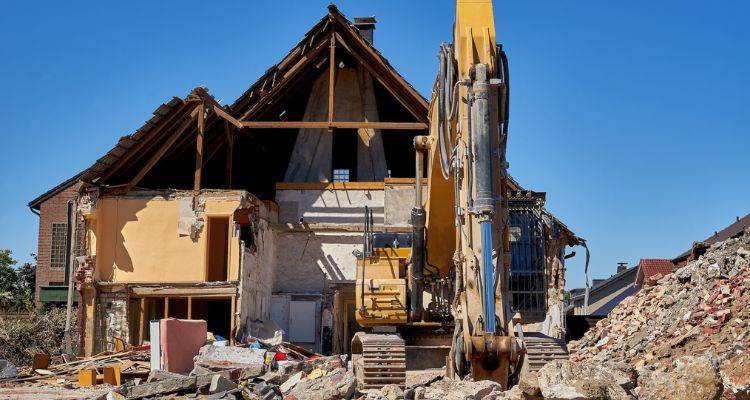
House demolition costs vary by size, access, location and materials, but most full demolitions in the UK fall somewhere between £6,500 and £20,000, with a typical medium-sized house costing around £13,500.
For a more detailed breakdown by size, method and cost per m², see our full house demolition cost guide which explains how quotes are calculated and what can push prices up or down.
There are plenty of reasons you might want to demolish a house:
- You're planning a new build and want to use the land the existing structure is on.
- The existing building has serious structural issues, and for safety reasons, you need to demolish it.
- You want to save money on renovating an old structure and want to start afresh.
| Size of House | Average Demolition Cost |
|---|---|
| Small house (80m² to 100m²) | £8,250 |
| Medium house (150m² to 200m²) | £13,000 |
| Large house (200m² to 250m²) | £18,000 |
Want a custom price?
Post your job
Garage Demolition Costs
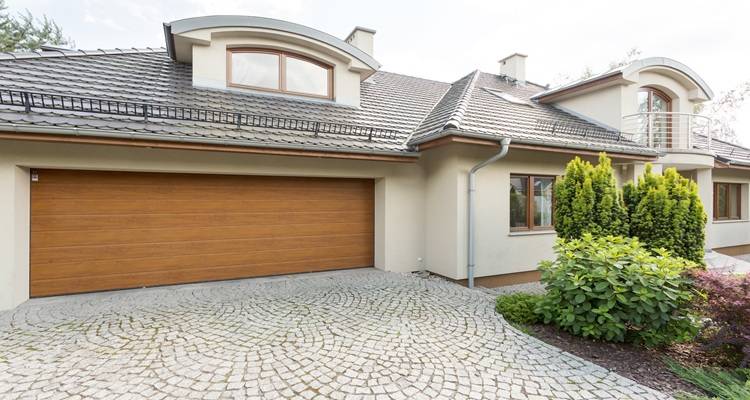
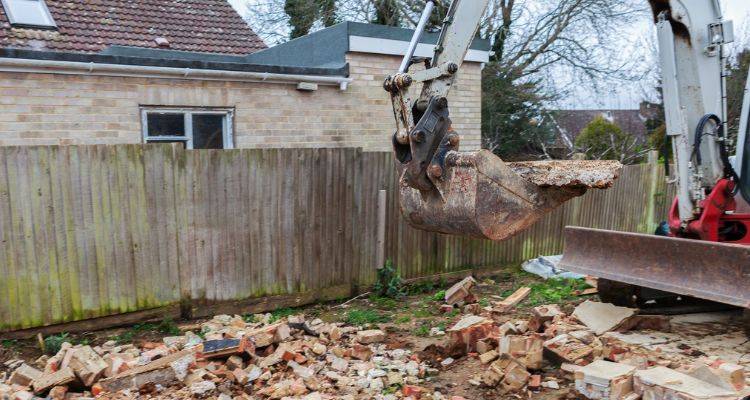
Demolishing a garage can be a great option if you no longer use the space or want to redevelop the area, with typical garage demolition costs ranging from around £1,000 to £3,000 and an average of roughly £2,200 for a standard single garage.
Removing an old garage can free up valuable space and create new opportunities, such as:
- Creating space for a house extension to use as a home office, extra living room or additional bedroom.
- Extending your driveway or adding more greenery and landscaping at the front of your home.
- Removing an asbestos or dilapidated garage to improve kerb appeal, safety and overall property value.
On average, what does it cost to have a load-bearing wall safely demolished and removed? Including the cost of whatever must be installed in its place.
"The cost is normally around £1,000 to £1,500 with steel, but you will need building regs and a structural engineer to calculate the steel."
Small Structures Demolition Costs
For smaller standalone jobs, typical prices are lower and most tasks finish within half a day to 2 days depending on access, size and waste removal.
| Structure | Typical cost (incl. waste) |
|---|---|
| Garden boundary wall (small to medium) | £400–£800 |
| Small shed / timber outbuilding removal | £200–£500 |
| Concrete shed / small masonry outbuilding | £500–£2,000 |
| Decking demolition and removal | £15–£25 per m² |
| Concrete slab / hardstanding removal | £50–£150 per m² |
Want a custom price?
Post your job
Additional Demolition Costs
In this section, we're going to explore some additional costs commonly associated with the cost of demolition work.
Asbestos Removal
A key consideration when calculating demolition costs is to find out whether your structures have asbestos present. Ideally, any asbestos should be removed before major demolition takes place, as far as is reasonably practicable, unless it would cause a greater risk removing it than leaving it undisturbed where it is.
The cost of asbestos removal is around £2,500, but this figure can fluctuate depending on the scale of the issue.
An asbestos survey is a good place to start, and these cost around £200. The asbestos specialist can then assess your structure and let you know if you need to take any action before demolition.
Utility Disconnection and Meter Relocation
Before any demolition can start, all mains services such as gas, electricity, water and drainage must be safely disconnected by approved providers, and in some cases meters need to be moved or removed entirely.
As a rough guide, you might pay somewhere in the region of £500 to £1,500 per utility for permanent disconnection or meter relocation, depending on your provider, the complexity of the job and how quickly you need the work done.
These utility costs are usually billed separately by your supplier or specialist broker, so always check whether they are included in your demolition quote or need to be budgeted for as an extra.
Tree and Vegetation Clearance
If there are mature trees, large hedges or heavy vegetation blocking access to the site or standing close to the structure, you may need separate clearance work before demolition can begin.
Simple hedge or shrub clearance might cost around £200 to £600, while removing a medium-sized tree can be in the region of £400 to £800 and larger or more complex trees can easily reach £1,000+ once access and stump removal are taken into account.
These jobs are often carried out by tree surgeons or landscapers rather than the demolition contractor, so it is worth asking early on whether any tree work is needed and how this will be priced.
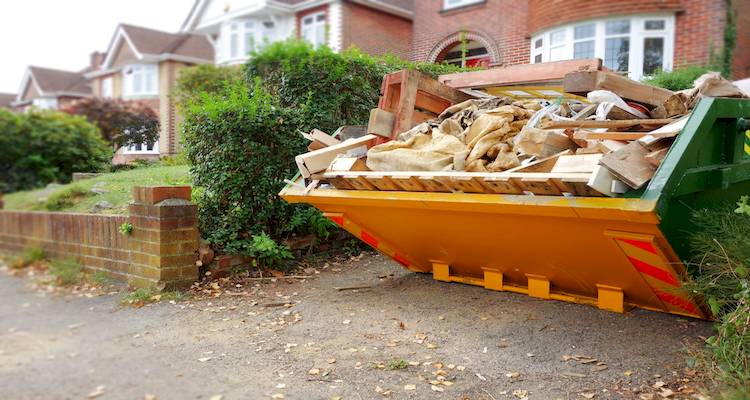
Waste Removal
If you're planning a home demolition, you'll want to have your garden cleared first to avoid mixing up the rubble.
There are a few options for garden waste removal, with the first being the 'Man with a Van' type businesses who will come to your home, load up their van with garden waste and dispose of it for you.
Garden waste removal costs vary and can be as low as £17 and up to £330 depending on how much garden waste you have to remove.

The second option is to hire a skip. The cost for skip hire can be anything from £75 to £440, depending on the size of the skip and how long you want it for.
The final option, which may not be available to everyone, would be to see if your local council offers a garden waste takeaway scheme. To find out whether this is available to you, give your local council a quick call.
We are going to have our existing garage demolished to make way for a 2-storey extension, however, the incoming gas and electricity supplies and meters are in the garage and need to be relocated. Where can the new supply go?
"You can relocate the supply to the outside of the building, making a closed in closure space for the supply meter and consumer unit, which should resolve your relocation problems."
Salvage and Material Credits
On some demolition projects, contractors may reduce the overall cost if they can salvage valuable materials from your building for resale or reuse.
Items such as quality bricks, roof tiles, timber, architectural features, and scrap metals can sometimes be taken away and either included in the quote value or shown as a small credit that helps to offset waste removal and skip hire costs.
Salvage credits are not guaranteed and usually only apply where materials are in good condition and access is suitable, so it's worth asking your demolition specialist during the site visit whether any potential salvage value has been factored into your price.
Labour Cost of Demolition
Now, let's take a look at labour costs and how long demolition typically takes.
Demolition timescales vary depending on what is being demolished. A full 4-bedroom home can take anywhere from 4 to 8 days, with more complex jobs like terraced or semi-detached homes taking longer.
Demolitions for garages and walls take less time, and can usually be completed within a day or two.
You'll pay the contractors on either daily or weekly rates depending on the quoted timescales, which can range from £100 to £200 a day, per contractor. For this reason, it's important to ask how many labourers will be used on your project and for how long at the quotation stage.
Ask a Trade
Got a question that only a tradesperson can answer? We have thousands of trades ready to answer any question you may have.
Ask your question

What Impacts Demolition Costs?
A few different factors can affect the overall cost of demolition.
Let's take a closer look.
Size and Type of Property
The price of demolition will vary greatly depending on the size of the property. However, the type of property can also incur high costs due to the complexity of the job.
- Size of Property — Naturally, the cost of demolishing a 2-bedroom bungalow will be less than demolishing a 4-bedroom, 3-storey home.
- Type of Property — If you need to demolish a terraced home, there will be much more to consider from the contractor's point of view with the attached homes and the street it's on.
Location
The cost of trade jobs differs from region to region based on a few factors.
- Big Cities Like London and Birmingham — You'll pay more for a tradesperson than you would in small towns and villages.
- Small Towns and Villages — Contractors need to be more competitive than the next to win jobs, so you'll enjoy cheaper rates in those areas.
The cost of living is also different around the country. Bear this in mind when you are working out your budget for demolition work.
Site Access
If your property is on a narrow street or has limited space around it, this can make it harder for contractors to get machinery on site, increase labour time, and add to the overall cost.
In some cases, mechanical demolition might not be possible if there isn't enough room and manual demolition takes longer and costs more.
It's worth checking if the cost of scaffolding, hoarding or protection for nearby buildings, if needed, is included in your quote.
Building Materials
The material of the structure affects how long it takes to demolish and the cost of waste disposal.
- Brick or Concrete — Heavier and slower to demolish, and more expensive to dispose of.
- Timber-Framed Buildings — Usually cheaper and quicker to take down.
- Steel-Framed Structures — May require specialist equipment, but can have good scrap value that offsets costs.
Demolition Method
The method your demolition specialist uses will also affect your quote.
- Manual Demolition — A slower but safer method of demolition. It's often used for smaller jobs, locations with restricted access, or where you want to salvage materials.
- Mechanical Demolition — Faster and more cost-effective for most residential properties. It uses excavators and wrecking equipment.
What's Involved in Demolition?
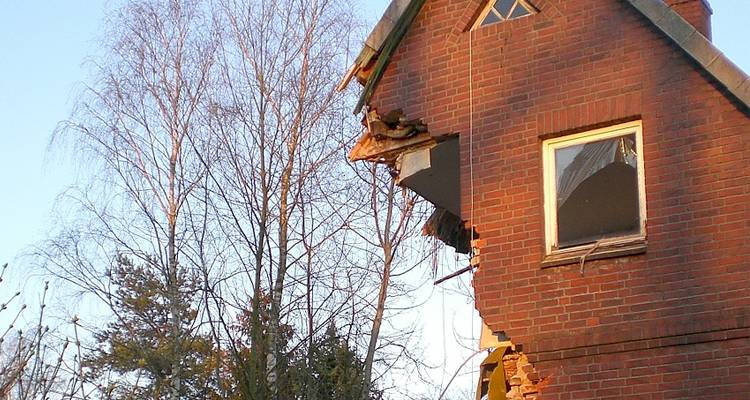
Demolition should be left to trained professionals to ensure that structures are demolished safely and correctly to avoid any injury to yourself or bystanders.
With MyJobQuote you can request multiple quotes from demolition contractors near you. It's fast, free, and there's no obligation to go ahead.
Let's go through the typical demolition of a small detached home to give you an idea about the process of demolishing a house.
Before the Job Starts
- Utility Disconnection — All services will be cut off from the home, such as water, electricity, gas, phone line, and any other lines into the home.
- Site Boundary — A boundary will be made around the construction site for the health and safety of pedestrians and anyone working on the site.
- Hazardous Material Removal — Any hazardous materials like asbestos or similar will be removed from the home before anything is demolished.
During the Job
- Soft Strip — There will be a 'soft strip' of things inside the home, such as kitchen units, cables, pipes, radiators, etc.
- Windows, Doors and Timber — All windows, doors, linings, and any internal or external timber will be removed next.
- Roof Removal — The roof's lead flashing and tiling will then be removed.
- Structural Joints — Structural joints will then be removed throughout the home.
- Wall Demolition — The demolition of walls will be next, with any salvageable material saved for future use or to be crushed.
After the Job
- Site Clearance — Lastly, the contractors will break up debris, foundations, and drains no longer in use.
Benefits of Professional Demolition
Whether you are demolishing a full house, a garage or a smaller structure, using professional demolition contractors brings clear advantages in terms of safety, compliance and overall project control.
Why Use Professional Demolition Contractors?
- Professional contractors are trained to assess structures, choose the right demolition method and manage risks such as unstable walls, hidden foundations and buried services.
- They handle permits, notices and Building Act/demolition notice requirements, including any demolition notices, utility disconnections and required asbestos surveys or removal.
- Specialist machinery and experienced teams allow them to complete demolitions quickly and efficiently, reducing disruption to you and your neighbours.
- Reputable firms carry the correct insurance, provide method statements and risk assessments, and take responsibility for site safety and public protection.
- Most professional demolition services include organised waste removal and recycling, helping to keep your site clear and compliant with environmental rules.
Planning Permission, Notices and Safety Rules for Demolitions
While building regulations will apply to what is built on the site after demolition, demolition control is actually covered by the Building Act 1984, rather than Building Regulations. Buildings of 50m³ or more being demolished usually need prior approval from the council, with the relevant demolition notice going to the council's building control team.
When Is Planning Permission Needed for Demolition?
In England, demolishing a building under 50m³ doesn't require planning permission, and larger buildings may still be demolished under permitted development rules, but you will still need to apply to the council to see if prior approval is required.
Checks will be made on the method of demolition and how the site will be restored after, and a site notice about the proposed work needs to be displayed at the same time as the application.
If the building is listed, it will require listed building consent before any demolition can take place, and in conservation areas, planning permission will be required for demolishing any building of 115m³ or more.
You should always speak to your local planning department early on, as they can confirm whether your project is covered by permitted development rights, needs prior approval, or requires a full planning application for demolition.

Section 80 Demolition Notice (Building Act 1984)
While a Section 80 notice generally applies when demolishing some or all of a building in England and Wales, there are some exemptions, such as if the building is 50m³ or less, or is a shed, conservatory, greenhouse, or prefab garage that's part of a larger building.
The work may also be excluded if the demolition is internal and the building remains occupied, or you are demolishing certain agricultural buildings.
This written notice tells the council which building is being demolished, what work is proposed and when it is likely to happen, and copies of the notice will need to be sent to the gas and electricity suppliers for the area, as well as the occupiers of any buildings next to the one being demolished.
Once the Section 80 notice has been submitted, you need to wait 6 weeks from the date of the notice to start demolition, unless the council serves its own notice first, with any conditions it wants to impose.
Safety Duties During Demolition
Even where separate planning permission is not needed, demolition work must still comply with the Construction (Design and Management) Regulations 2015, including safe disconnection of services, protection of the public and proper handling of hazardous materials.
In practice, this means arranging for gas, electricity, water and telecoms to be safely capped off, carrying out any required asbestos surveys and removal, and making sure the contractor has a clear method statement and risk assessments in place.
My neighbour wants me to sign a party wall agreement so he can demolish his part of our shared pitched roof to extend his kitchen. I'm worried it will damage my property, and no one else on the terrace has done anything like this - what can I do?
"The best thing to do is inform your neighbour that you will appoint a party wall surveyor who he must pay for to draw up an agreement, so that you would be covered for any damage caused to your property."
Party Walls and Shared Structures
If the demolition affects a shared wall, roof, chimney or structure between you and a neighbour, you need to serve notice on your neighbours, who have 14 days to consent in writing to form an agreement. If they don't consent or respond, surveyors will need to be appointed to settle the party wall award.
This is particularly relevant for terraced and semi-detached houses, shared garages and boundary walls, and you should look to give notice to neighbours between 2 months and 1 year before work starts. If you are unsure about what's required, you should speak to a party wall surveyor.
Checklist: Hiring a Demolition Specialist in the UK
When you're ready to hire a local demolition specialist, we recommend that you bear the following things in mind:
- Are they qualified to carry out demolition work? For anything beyond a small job, you should expect them to have the proper demolition training, such as the CCDO scheme.
- Are they registered with any relevant trade bodies? NFDC membership is a good sign you're dealing with a recognised demolition contractor, and if asbestos is involved, ask if you need to use a licensed asbestos removal specialist.
- Can they remove waste legally? They must be legally registered as a waste carrier, which you can verify yourself using the relevant public registers.
- Do they have insurance? You should ensure that they have public liability insurance to protect both them and you from any issues further down the line.
- Have you been given an itemised quote? Make sure you get an itemised quote to see exactly what's included in your quote. Be sure to ask about waste removal/skip hire, and if this is included in your quote.
- Do they have examples of their work? Take a look at the photos on their MyJobQuote profile for an example of previous work.
- Do they have positive reviews? Check their MyJobQuote profile to see reviews from past clients.
FAQs
Do Contractors Need a Demolition Licence?
While contractors don't require a specific demolition licence to carry out demolition work, they need to comply with all health and safety requirements and demolition controls in the area they are working in to protect themselves from prosecution.
Can I Stay Living in My House During Demolition Work?
Staying in your home during demolition depends on the size and location of the work. Small jobs may allow you to stay at home, but larger demolitions can create heavy dust, noise, and disruption, so moving out temporarily may be the safer option.
Do I Need a Structural Engineer to Remove a Load-Bearing Wall?
Yes, you'll typically need structural calculations and a specification for the supporting beam, and building control approval before work starts. A qualified contractor will usually liaise with the engineer and building control as part of the process.
How Are Dust and Noise Controlled During Demolition?
Contractors use measures like water suppression, debris screening, and time-restricted working hours to minimise dust and noise. Neighbour notifications and protective hoarding are often part of the agreed method statement for the job.
Can I DIY Demolition?
Confident DIYers may be able to tackle very small, simple jobs like taking down a short, non-shared garden wall or removing a lightweight timber shed, as long as there are no services, shared boundaries or hazardous materials involved. Demolition can hide unseen foundations and may affect neighbours or pedestrians, so if you're in any doubt, treat it as a job for the professionals and wait for a contractor to assess it and confirm the best method.