Builders
 Carpenters
 Electricians
 Flooring Specialists
 Gardeners
 Handymen
 Heating Engineers
 Painters & Decorators
 Plasterers & Renderers
 Plumbers
 Roofers
 Tilers
 my
Common Guttering Problems and How to Fix Them
Guttering problems are very common in UK homes. A lot of the time they start with something small like a blockage, a failed joint, a sagging section or a bracket that’s come loose over time.
When your gutters stop directing water properly, you can get problems like rain running down external walls, collecting around foundations or creeping into the edges of your roof.
In this guide, we’re going to look at the most common guttering problems, what they look like, what they’re usually caused by and what the most practical repair options are.
You’ll also find out when simple cleaning is enough and when you need to get in touch with someone to repair or replace your guttering.
Table of Contents
Why Is My Guttering Not Working Properly?
Most guttering faults have common causes. Water may stop flowing where it should when:
- Leaves, moss or debris block the channel
- Joints or seals deteriorate
- Gutters sag or lose their correct fall
- Brackets loosen or break
- Downpipes or drains become blocked
- The gutter is too small for the roof area
- Roof tiles or felt direct water incorrectly
- Sections crack or distort over time
Where the water appears usually gives you a good clue about the underlying fault you’re dealing with. It could be overflowing, dripping, running behind the gutter or leaking down a pipe, to give you a few examples.
Common Guttering Problems
Here are some of the most frequent guttering issues UK homeowners find themselves dealing with. You’ll find out what problems look like, what they’re normally caused by, the damage they can cause and what the most practical repair options are.
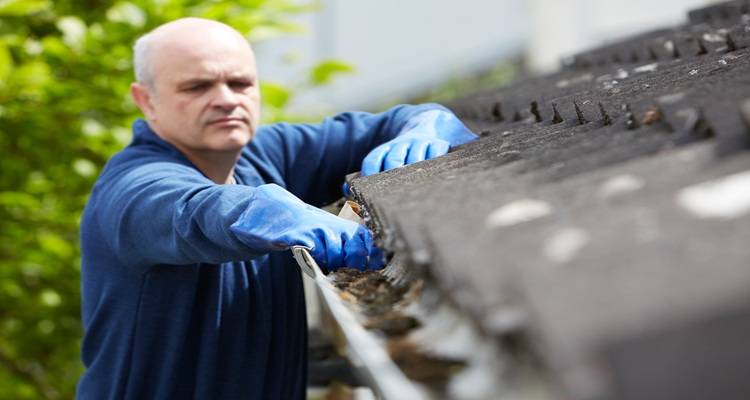
Blocked Gutters
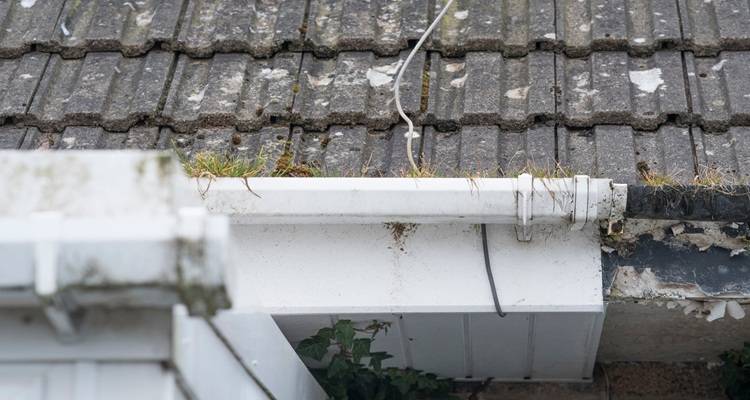
What it looks like: When you have a blocked gutter, you might see water pooling inside the gutter, spilling over the front edge or travelling backwards towards the fascia. You may also notice moss, leaves, twigs, silt or nesting material sitting in the channel.
Likely causes: Leaves, moss, twigs, roof debris, silt and bird nesting material. Homes near trees or with heavy roof moss often experience repeated gutter blockages.
Potential damage: Overflowing water can stain walls, damage pointing, soak fascia boards and contribute to damp around your windows.
Repair direction: Clear the debris and check outlets and downpipes. If blockages happen a lot, you could consider additional outlets or addressing any roof moss.
Overflowing Gutters
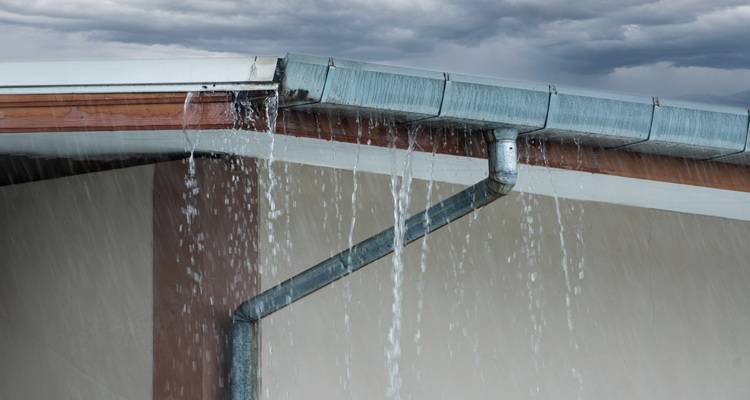
What it looks like: Water spilling over the front edge during rainfall, often in one specific location.
Likely causes: Debris in the gutter, a blocked outlet, a blocked downpipe, incorrect fall, gutters that are too small, too few downpipes or a blocked underground drain. Heavy rain often exposes weaknesses with gutters.
Potential damage: Persistent overflow can cause damp patches, stained render and water pooling around the base of your property.
Repair direction: Try to find out whether the blockage is in the gutter, outlet, downpipe or drain. Realign the gutter if the fall isn’t right.
Gutter cleaning costs.
Leaking Gutter Joints
What it looks like: Water dripping from the joint between two gutter sections.
Likely causes: Perished rubber seals, loose clips, distorted sections, dirt trapped in the joint or poor installation. Temperature changes can also have a big impact on seals.
Potential damage: Drips can stain walls, damage paintwork and contribute to damp.
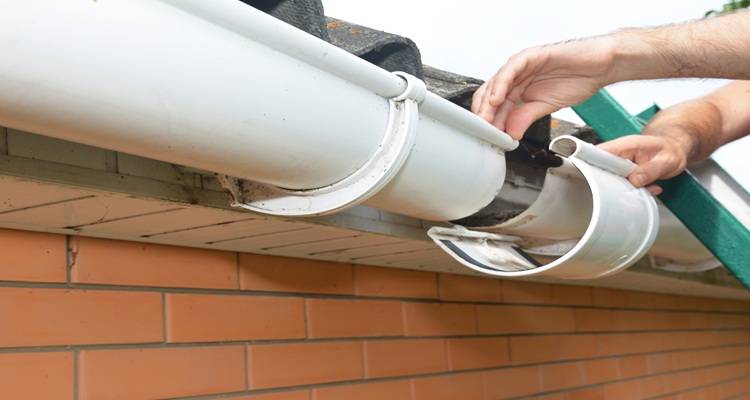
Repair direction: Clean and reseat the joint. Replace the connector or seal if you need to and try not to rely on sealant as a long-term fix for plastic guttering.
Cracked Or Split Gutters
What it looks like: Visible cracks, splits or holes in the gutter channel.
Likely causes: Age, impact damage, storms, ice, UV exposure, incorrect fixings or thermal movement.
Potential damage: Water escapes through cracks and drips directly onto your walls or the ground.
Repair direction: Replace the damaged section. Localised cracks don’t usually need full system replacement unless the deterioration is substantial and widespread.
Sagging Gutters
What it looks like: A visible dip or low point in the gutter that holds standing water.
Likely causes: Broken or widely spaced brackets, heavy debris, standing water, loose fascia boards, incorrect installation or gutter sections that expand and move.
Potential damage: Sagging creates low points where water collects instead of reaching the outlet. This can cause overflow and damp.
Repair direction: Refit or replace brackets, correct spacing and realign the gutter. Repair your fascia boards if they’re loose.
Learn more about damp-proofing costs.
Find fascia and soffit replacement services.
Gutters Pulling Away From The House
What it looks like: The gutter looks like it’s detached or angled away from the fascia.
Likely causes: Loose brackets, rotten fascia boards, incorrect fixings or excess weight from debris or storm damage.
Potential damage: Water misses the gutter completely and runs down the wall to cause staining or damp.
Repair direction: Secure or replace brackets. Repair fascia boards before you refit the gutter.
Water Running Behind The Gutter
What it looks like: Water appears between the gutter and the fascia instead of inside the gutter.
Likely causes: Roofing felt not reaching the gutter, missing eaves trays, incorrect gutter position, damaged roof edges, water overshooting or blockages forcing water backwards.
Potential damage: Roof‑edge rot, fascia damage and penetrating damp.
Repair direction: This may be a roof-edge issue. Eaves trays, felt repairs or repositioning the gutter can help.
Downpipe Blockages
What it looks like: Water overflowing at the top of the downpipe or backing up into the gutter.
Likely causes: Leaves, moss, debris trapped at bends, blocked outlets, objects entering from open pipe tops or underground drainage blockages.
Potential damage: Overflowing water can damage your walls and gutters.
Repair direction: Check whether the blockage is in the pipe or the drain.
Clearing the pipe may be enough in some cases, but blocked drains often need further investigation.
Leaking Downpipe
What it looks like: Water dripping from joints, cracks or where the pipe meets the drain.
Likely causes: Loose joints, cracked fittings, failed brackets, misaligned sections or corrosion in metal systems.
Potential damage: Stains on the wall and damp patches.
Repair direction: Replace damaged sections, refit joints or correct alignment. Metal pipes might need rust treatment or replacement.
Downpipe Discharging In The Wrong Place
What it looks like: Water leaving the pipe by foundations, onto a path, against a wall or into a blocked gully.
Likely causes: Incorrect installation, unsuitable drainage connections or blocked gullies.
Potential damage: Foundation erosion, slippery surfaces and damp.
Repair direction: Redirect the pipe into a suitable drainage system or soakaway.
Incorrect Gutter Fall
What it looks like: Standing water, repeated blockages or overflow away from the downpipe.
Likely causes: Incorrect angling of the gutter towards the outlet.
Potential damage: Water stagnation, overflow and damp.
Repair direction: Realign the gutter according to the guidance from the manufacturer.
Water Overshooting The Gutter
What it looks like: Water shooting over the front edge during heavy rain.
Likely causes: Gutters positioned too low, steep roof pitch, heavy rainfall, incorrect tile overhang, valleys directing large volumes of water or gutters that are too narrow.
Repair direction: Repositioning, upgrading or adding outlets can help.
Noisy Gutters Or Downpipes
What it looks like: Dripping, tapping or gurgling noises.
Likely causes: Water hitting pipe bends, loose fittings, blockages, poor alignment or water falling too far inside the pipe.
Repair direction: Secure fittings, clear blockages or adjust alignment.
Rust Or Corrosion
What it looks like: Flaking coatings, rust around joints, holes or corroded brackets.
Likely causes: Age, weather exposure or poor maintenance.
Repair direction: Local repairs may be possible, but widespread corrosion usually means you need to sort out a replacement.
Damp Caused By Faulty Guttering
Faulty gutters can contribute to penetrating damp, stained walls, peeling paint, damaged pointing, mould, rotten fascia boards and water collecting near foundations. Internal damp shouldn’t automatically be blamed on guttering, so make sure that you check other possible sources as well.
Why Do My Gutters Overflow In Heavy Rain?
Heavy rain can expose things like partial blockages, insufficient gutter capacity, too few outlets, poor fall, blocked downpipes or overshooting water from steep roof sections. A bit of overflow during extreme rainfall is different and not so much of a cause for concern compared to the kind of overflow that happens during normal weather.
Why Is Water Dripping From The Gutter Joint?
Drips usually come from failed seals, loose clips, dirt in the fitting, misaligned sections, cracked connectors or gutters that have been cut too short. Plastic guttering expands and contracts, and this is why joints need to allow movement.
Why Is Water Running Down The Wall?
Water down the wall can be caused by overflowing gutters, leaking joints, water passing behind the gutter, cracked downpipes, roof defects or blocked gullies splashing water back. Check where the water first appears before you take any action.
Can Faulty Gutters Damage A House?
Unresolved gutter faults can lead to problems like damp walls, damaged render, rotten fascia boards, roof-edge damage, mould, soil erosion, water pooling and slippery paths. Not every leak causes foundation damage, but long-term exposure is never ideal when you’ve got a property you need to keep in good condition.
Read more about roof repair costs.
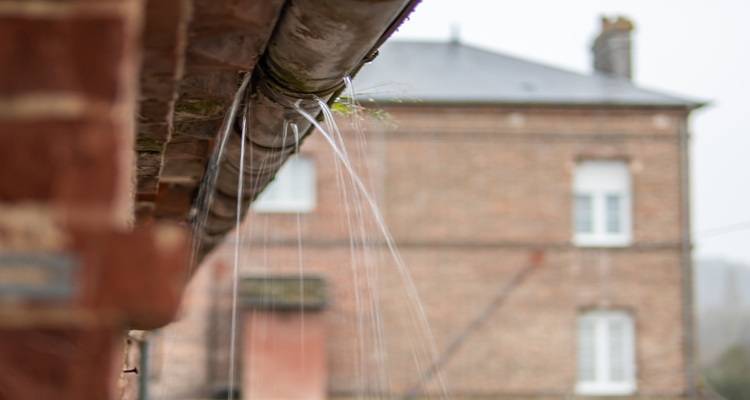
Can You Fix Guttering Yourself?
DIY fixes may be suitable when:
- The blockage is accessible from ground level
- A low‑level fitting has come loose
- A simple downpipe section needs to be reconnected
- No work at height is needed
It’s usually best to hire someone when:
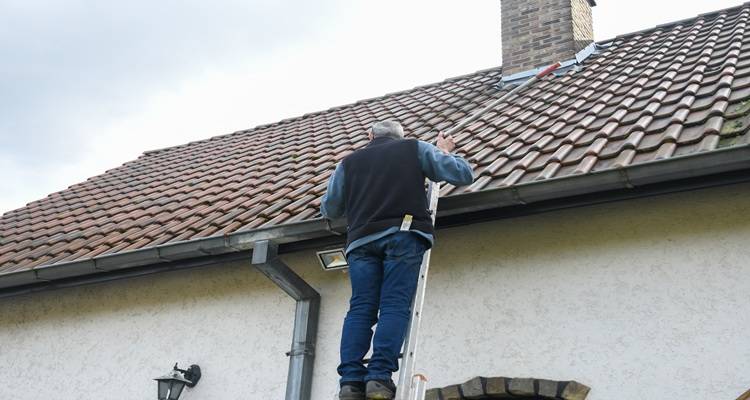
- The gutter is above ground‑floor level
- Ladders or roof access are needed
- Fascia boards are rotten
- Several sections have been damaged
- Water is running behind the gutter
- The cause may involve the roof edge
- The underground drain may be blocked
- The property is tall or awkward
Avoid leaning from windows or working at height during poor weather.
Learn more about drain unblocking costs.
How Are Guttering Problems Fixed?
Guttering repairs depend on the cause of the problem. Common jobs include:
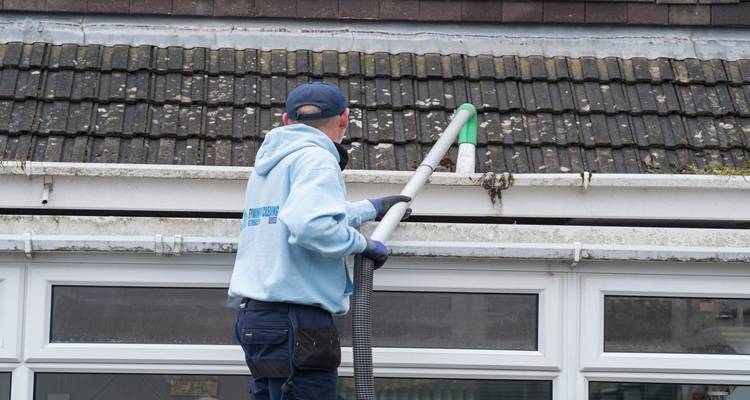
- Removing blockages
- Cleaning outlets and downpipes
- Replacing seals or fittings
- Replacing cracked sections
- Refitting or adding brackets
- Correcting the fall
- Repairing fascia boards
- Installing eaves trays
- Repositioning gutters
- Upgrading downpipes
- Clearing drains
- Replacing the system if deterioration is widespread
Make sure that you always confirm the cause before you get any parts replaced.
Should Gutters Be Repaired Or Replaced?
Repair work is the most suitable option when damage is localised, most sections are in good condition, only seals or brackets have failed, or the gutter has come out of alignment.
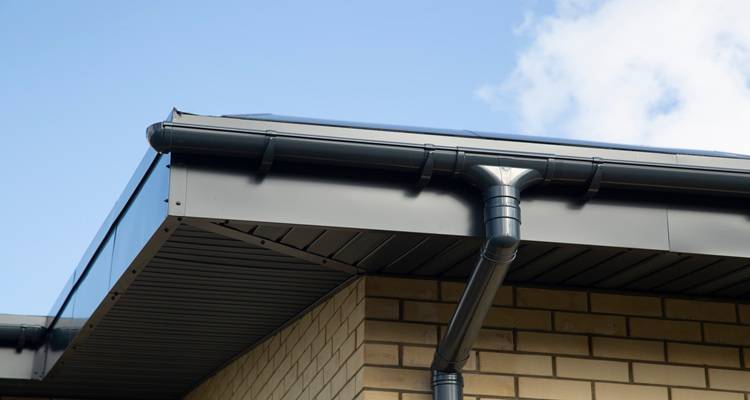
Replacement is better when cracks or corrosion are widespread, multiple joints leak, the system is distorted or undersized, repairs keep failing or matching parts aren’t easy or even possible to get hold of.
Read about gutter replacement costs.
How Much Does Gutter Repair Cost?
Gutter repair costs can vary depending on things like the height of the property, the type of guttering, the extent of the damage and whether access equipment is needed. As a general UK guide, most homeowners can expect the following:
Gutter cleaning: £40-£120 for a typical house. Larger homes or heavy moss build‑up may cost more.
Joint or seal replacement: £20-£60 for the part, plus £40-£80 labour.
Bracket replacement: £5-£10 per bracket, plus £40-£80 labour depending on height and access.
Downpipe repairs: £60-£150 depending on the material, number of joints and whether the pipe needs refitting.
Replacing a short gutter section: £80-£180 including labour and materials.
Correcting gutter alignment: £80-£200 depending on length and whether brackets need replacing.
Fascia board repairs: £300-£900 depending on how much timber needs removing and whether scaffolding is required.
New guttering installation: £400-£1,200 for a typical semi-detached home, depending on material, which might be uPVC, aluminium or cast iron, for instance.
Drain unblocking: £80-£200 for basic rainwater drain clearance. Excavation or CCTV surveys will cost you more.
Always check whether quotes include labour, materials, access equipment, waste removal and VAT as these can change the final price significantly.
Read more about gutter repair costs.
Preventing Guttering Problems
There are lots of steps that you can take regularly that will help you avoid costly problems with your gutters. Here are some of the most important and effective ones.
- Clear leaves and debris regularly
- Check gutters after storms
- Inspect joints and brackets
- Keep outlets and gullies clear
- Watch for wall staining
- Repair loose fittings promptly
- Trim overhanging branches
- Address roof moss early
- Ensure downpipes discharge correctly
- Consider gutter guards only if suitable
Find a local guttering tradesperson.