Builders
 Carpenters
 Electricians
 Flooring Specialists
 Gardeners
 Handymen
 Heating Engineers
 Painters & Decorators
 Plasterers & Renderers
 Plumbers
 Roofers
 Tilers
 my
myGravel Driveway Guide
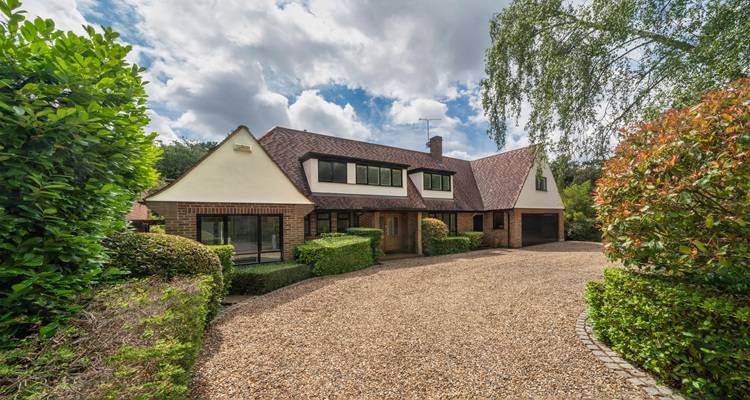
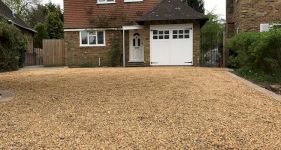
Are you thinking about installing a gravel driveway at your home?
If you are looking for gravel driveway ideas, then look no further, as this guide will tell you everything you need to know. From modern designs to budget-friendly layouts, there are plenty of ways to customise your driveway.
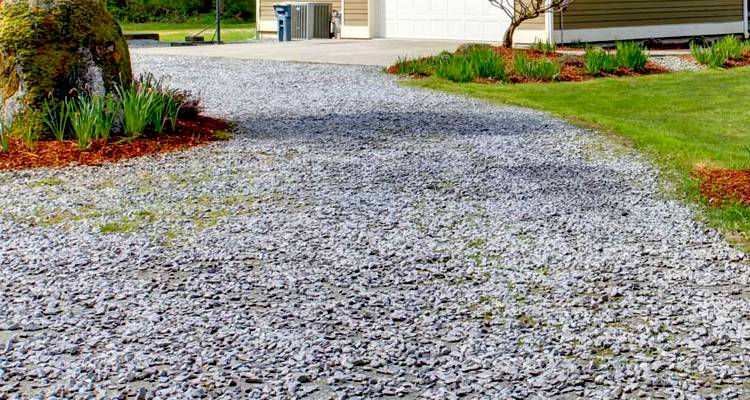
Table of Contents
- What is a Gravel Driveway?
- Types of Gravel
- Gravel Driveway Ideas
- What Are the Pros and Cons of a Gravel Driveway?
- Gravel Driveway Costs and Installation Time
- How to Install a Gravel Driveway: DIY Guide
- Driveway Regulations and Planning Permission Approval in the UK
- How to Clean and Maintain a Gravel Driveway
- Alternatives to a Gravel Driveway
- FAQs
What is a Gravel Driveway?
Gravel is defined as any loose rock or stone larger than a grain of sand but smaller than a cobble. Gravel pieces usually range from around one-tenth of an inch to around two and a half inches.
Gravel driveways are sometimes referred to as stone driveways, although the term can also include larger decorative stones or crushed aggregates.
Gravel can be used to create a simple but effective driveway. Creating a gravel driveway usually involves digging out driveway foundations and then pouring gravel into the foundations and levelling it out. This creates a neat surface that can accommodate parked cars.
Types of Gravel
There are multiple different driveway gravel types that you can choose from for a gravel driveway. Choosing the best gravel for a driveway is essential for durability and appearance. The right gravel size, shape, and material can affect how stable the surface is, how it looks, and how well it handles vehicle traffic.
Below is a list of the most common gravel types for driveways and some information on each type:
Pea Gravel
A pea gravel driveway is a very popular type of gravel driveway. The stones are small in size, round in appearance, and have a smooth surface.
This type of gravel features a range of colours, and you will likely see flecks of green, blue, red, black, brown, and white. The colour and texture of this type of gravel make it very aesthetically pleasing.
Pros
- ✔ Popular variety.
- ✔ Easy to walk on.
- ✔ Nice range of colours.
- ✔ Aesthetically pleasing.
Cons
- ✖ Not for everyone.
River Rock
River rock gravel contains a diverse collection of rocks that have been worn and rounded by moving water. The stones come in a variety of colours, sizes, and textures.
The surface of these rocks is very smooth due to the moving water. River rocks can be quite expensive, depending on the season and the availability in your area.
Pros
- ✔ Variety of colours.
- ✔ Variety of sizes.
- ✔ Variety of textures.
- ✔ Smooth texture.
Cons
- ✖ It can be quite expensive.
- ✖ Not always available.
Crushed Stone
Crushed stone is created by mechanically crushing natural quarried stone. This type of gravel can come in several colours depending on the type of stone that it’s manufactured from.
Some stone types inhabit a range of colours which can be very aesthetically pleasing on a driveway. Crushed stones usually come in grey, white, blue, and red colours. They are usually angular in shape, which means that they hold together well. The pieces sit together well and don’t tend to shift much under the weight of a vehicle, making them perfect for a driveway.
Pros
- ✔ Don’t shift much.
- ✔ Hold together well.
- ✔ Range of colours.
Cons
- ✖ Some pieces can be sharp.
- ✖ Not to everyone’s taste.
MOT Type 1
MOT Type 1 gravel is a crushed stone material that is commonly used as a sub-base material for driveways. It is known for its durability and ability to provide a stable base for heavy traffic. It also offers good drainage properties to prevent water from pooling on your driveway. You can use it in combination with one of the other types of gravel above for a more decorative finish.
Gravel Driveway Ideas
Gravel driveways look great on their own, however, if you are looking to make your gravel driveway appear a bit more unique, there are many different things you can do.
Below is a list of gravel driveway ideas to help you jazz up your driveway:
Gravel Driveway Colour Ideas
It is easy to add a bit of extra colour to your driveway. Here are some ways you can improve your gravel driveway with colour:
- Add Colour with Plants — Add some overhanging shrubs or plants along the edge of your driveway to make it look a little brighter. Another advantage is that it eliminates the need for edging along the sides of your driveway.
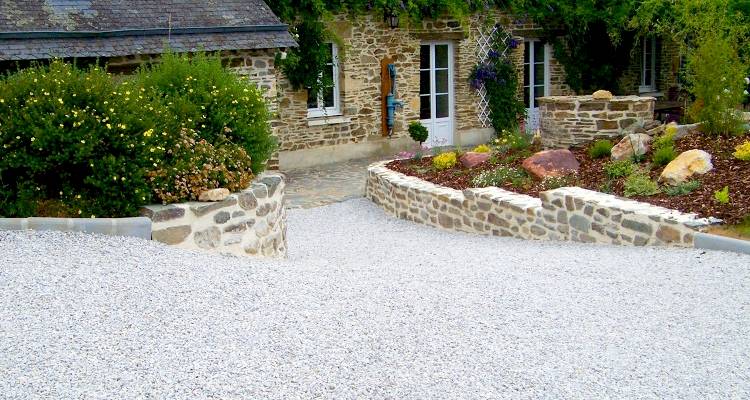
- Colour Match — Choose gravel stones that match the colours used in your house design, such as exposed stone, brick, or render colours, to create a cohesive look between your driveway and the rest of your property.
- Two-Tone Gravel — Use two contrasting colours of gravel to create a striking visual effect.
- Gravel Colour Patterns — You can create patterns in your gravel by incorporating different colours and separating different areas.
- Colourful Gravel Combinations — Consider using gravel with varied colours to create a range of colour combinations. Use colour theory to find complementary colours.
Gravel Driveway Design Ideas
Here are some ideas that can make your gravel driveway more aesthetically appealing:
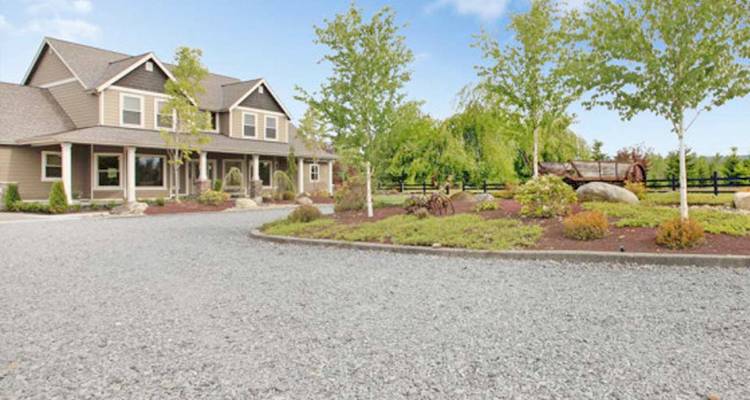
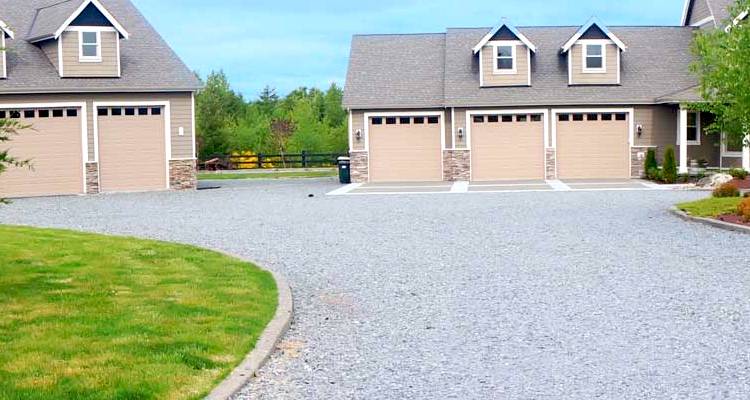
- Create a Rounded Driveway — If the space you have is large enough, you could create a rounded driveway with a centrepiece. This is a driveway that looks a little bit like a roundabout and has a central feature. This type of driveway will only really work if you have a large space available for landscaping.
- Combine Gravel with Block Paving — You can make your ordinary gravel look more interesting by installing block paving alongside it.
- Decorative Borders — Use concrete blocks, large boulders, or timber to edge the gravel and enhance the appearance of your gravel driveway.
- Border Edging Between Driveway and Lawn — Use paved borders or edging to separate the gravel from the lawn. It prevents gravel from getting into your lawn mower while mowing and creates a neat, polished appearance.
- Planting Trees — Trees planted along the edges of your gravel driveway can provide shade for your vehicles and add to the overall design.
- Border Flowers — Plant flowers along the borders of your gravel driveway to soften the hard landscaping.
Practical Gravel Driveway Ideas
Here are several practical design features that improve the functionality of your gravel driveway:
- Gravel Grids — Installing a grid system beneath your gravel can help keep stones from shifting or moving out of place, particularly if your driveway is on an incline.
- Choose Durable Gravel — For driveways with high vehicle use, it's recommended to use angular or crushed stone varieties, as they compact and lock together more effectively than smooth stones.
- Light Sloping or Curved Driveways — Install outdoor lighting for sloped or curve driveways to prevent issues when using it at night.
- Create a Path — Add paved paths around the gravel for accessibility and for people wearing formal shoes. This will make walking easier and prevent the gravel from becoming displaced as much.
- Add a Rumble Strip — Installing a rumble strip along the front of your gravel driveway make it look neater and can help shake off excess gravel.
Small Gravel Driveway Ideas
Even if you only have a small space to create your driveway, there are still many ways to make sure it looks attractive:
- Keep the Design Simple — Use minimal layouts with clean lines to avoid making a small driveway feel cluttered. A simple, well-organised design will look more spacious and functional.
- Use Borders and Edging — Install edging materials such as brick, stone, or metal to define the space and prevent gravel from spreading. Straight, clean edges work particularly well in compact areas.
- Choose Lighter Coloured Gravel — Lighter shades like beige or light grey can reflect more light and help create the illusion of a larger space.
- Stick to One Colour — Avoid too many contrasting features or colours, as this can make the area feel busy and smaller than it is.
- Add a Simple Path — Incorporate paving slabs or stepping stones to improve accessibility and add subtle visual interest without overwhelming the space.
- Include Low-Maintenance Planting — Add small plants or borders along the edges to soften the look while keeping the overall design neat and easy to maintain.
What Are the Pros and Cons of a Gravel Driveway?
If you are considering getting a gravel driveway, you may be curious about the advantages and disadvantages that come with one. Below is a list of the main pros and cons of choosing a gravel driveway:
Pros
- Budget-Friendly — A gravel driveway is a great cheap option when compared to many other types of driveway. It’s especially cost-effective if you are covering a large area of land.
- Long-Lasting — A well-installed and cared for gravel driveway can last for many years.
- Easy-to-Maintain — A gravel driveway doesn’t require much maintenance. Removing weeds occasionally and refreshing the top level of gravel every few years is enough to keep it looking perfect.
- Good drainage — Gravel is permeable, which means water can’t stagnate and ruin the driveway.
- Quick to Install — Laying a gravel driveway can be quite a fast process, especially when compared to other driveway installations.
Cons
- Weed Growth — Weeds can easily grow through gravel, so it’s important to keep on top of weed control with this type of driveway.
- Hole Development — Over time and as you use your driveway, it may start to develop holes, and these will need to be filled in.
- Limited Styles and Colours — Although you can get different colours and sizes of gravel, you are much more limited in what you can get when compared to some other driveway types.
- Can be Dusty — Gravel driveways can produce a lot of dust, which can transfer onto your car.
- Not Great in Winter — Snow and ice are very difficult to remove from a gravel driveway.
Gravel Driveway Costs and Installation Time
When planning on having a new driveway installed, costs and timescales are usually one of the biggest questions asked.
The cost of a gravel driveway will depend on several factors, including the size of your driveway, the type of gravel used, and your location in the UK. Those based in the London area can expect to pay more for their gravel driveway installation than those based in the North or other parts of the UK.
On average, it takes around 1-3 days to install a gravel driveway. Roughly one day for a small driveway, two days for a medium driveway, and three days for a large driveway.
You can find out more about how much your new driveway might cost in our dedicated gravel driveway costs guide, and use our calculator to get a more accurate estimate.
How to Install a Gravel Driveway: DIY Guide
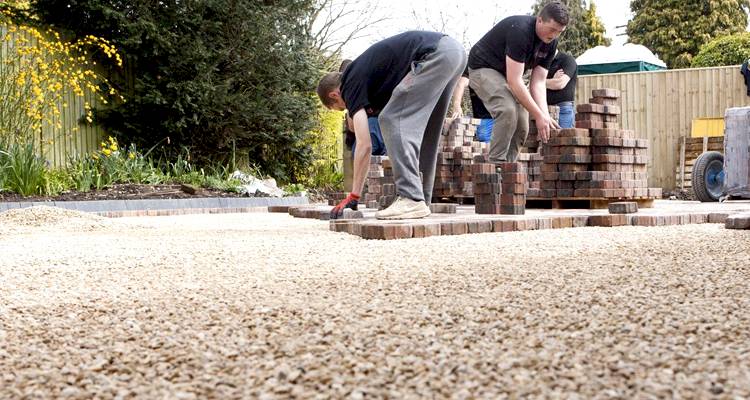
A gravel driveway is one of the simplest driveway types to install. Most homeowners still prefer to go down the professional route to ensure they have a fully working driveway that is finished to a high standard.
With MyJobQuote, you can compare several quotes from local driveway installers. It's fast, free, and there is no obligation to go ahead.
If you're planning a DIY gravel driveway, following the correct steps is essential to ensure a stable and long-lasting surface. Below is a step-by-step guide on how to install a gravel driveway yourself:
Before the Job Starts
- Work out How Much Gravel You Need — A good rule of thumb is that a tonne of gravel should cover around 10 to 15 square metres of the driveway.
- Prepare the Area — Before laying your driveway, you will need to prepare the area. This may involve removing your old driveway or removing turf, debris, or topsoil.
- Dig Out the Area — Next, you will need to dig out the area. This should be to a depth of around 150mm to 250mm. The level you dig to will depend on whether you are installing a sub-base.
- Compact the Area — Ensure that the area is completely compacted.
During the Job
- Install the Sub-Base — It is recommended that you install an aggregate underneath your gravel layer to ensure that the area remains stable and doesn't sink when used. This will act as your sub-base. Make sure this is compacted as much as possible. It's recommended to make this layer at least 100mm thick, but deeper is better.
- Add Weed Membrane — Next, add a weed prevention membrane layer over the top of the sub-base.
- Apply the Gravel — Finally, shovel your chosen gravel onto the weed membrane. Make sure the gravel layer is at least 50mm thick and evenly spread. It helps if you use a rake to spread the gravel out evenly.
How deep should gravel be for a driveway? What is standard and why would one tradesman quote for doing it deeper than another?
After the Job
- Clean Up — Remove any excess materials, debris, or equipment from the site.
- Dispose of Waste — Properly dispose of any old driveway material, turf, or topsoil that has been removed.
- Allow to Settle — Let the driveway settle for a day or two before heavy use, and monitor for any areas that may need additional gravel.
Driveway Regulations and Planning Permission Approval in the UK
When it comes to a gravel driveway, you usually won’t need to worry about planning permission. The rules state that any new or replacement driveway of any size does not need planning permission as long as the surface is permeable and allows water to drain through, such as gravel.
If your property is a listed building or is in a conservation area, then you may need planning permission to make any changes to your home. It is advised that you contact your local authority before commencing with any work.
Building regulations don’t generally apply to driveway work. However, you will need to make sure that your new driveway doesn’t make any changes to the access to your property.
If you are unsure whether your new driveway or any alterations may need building regulations approval, then you should contact your local authority for advice.
How to Clean and Maintain a Gravel Driveway
A gravel driveway is quite easy to maintain in comparison to other driveway types. It doesn’t require any major cleaning and the maintenance is easy to keep on top of. Below is a list of things that you can do to maintain your gravel driveway:
Remove Debris
Whenever you see little bits of debris in your gravel, such as sticks or leaves, you should pick them out and dispose of them. The longer you leave debris to build up, the more difficult the task will be when you come to do it.
Using a leafblower is ideal to keep the driveway clear of leaves and other debris.
Fill in Holes or Ruts
Over time, gravel driveways can develop ruts, dips, and uneven areas. These issues can usually be fixed by levelling the surface, adding fresh sub-base where needed, and applying a new top layer of gravel.
Some homeowners will simply move some gravel from another area of the driveway and spread it into the hole.
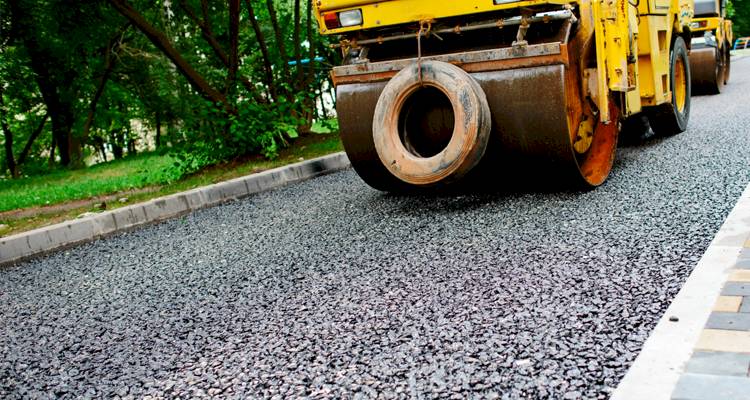
However, this just causes more weak spots. The best form of gravel driveway repair and restoration is filling the hole with new gravel. Gravel driveway repairs tend to be quite simple and should only require the addition of some new gravel.
Add Fresh Gravel
You should aim to add a fresh layer of gravel to your driveway every one to two years. This will keep the driveway looking fresh and will help to ensure it lasts for a very long time.
Use Edging Material
As your driveway is used, the gravel can move around, and some of it can end up in the grass or coming off the sides of the driveway in places where it shouldn’t.
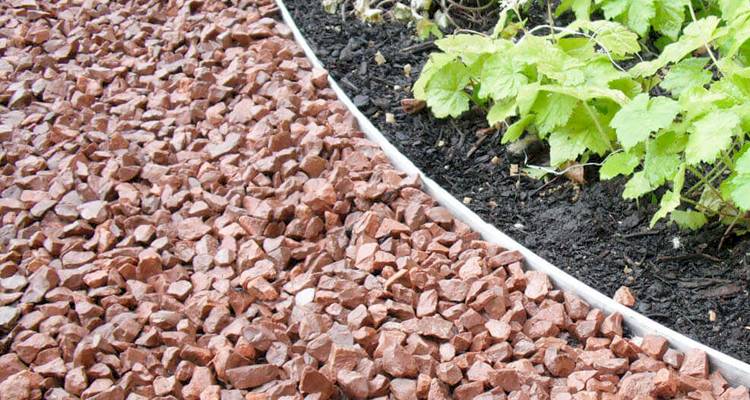
The best way to ensure your gravel stays in place when you use it is to install gravel driveway edging, which will help contain all of the pieces of gravel.
Common edging materials for gravel driveways include:
- Concrete edging strips
- Plastic edging
- Stone edging blocks
- Timber sleepers
- Steel edging
Apply Weed Killer
Even if you use a weed membrane underneath your gravel, some stubborn weeds could still poke through. If this happens, you should apply some weed killer to them and pull them up.
If you’re worried about a lot of weeds coming through, it’s a good idea to apply weed killer to the area regularly to prevent it from becoming a big problem.
What can I do about weeds that grow through the gravel in my driveway?
Alternatives to a Gravel Driveway
There are several alternatives if you decide a gravel driveway isn’t for you. Below is a list of the most common types of driveway in the UK and the pros and cons of each type:
Block Paving
Block paving is a very popular choice of driveway in the UK because there is a range of different blocks available, and you can create gorgeous patterns with an attractive finish.
The blocks can be laid in many styles, so it’s easy for homeowners to find an aesthetic that suits their home.
Pros
- ✔ Diverse styles.
- ✔ Hard-wearing.
- ✔ Aesthetically pleasing.
Cons
- ✖ High costs.
- ✖ Difficult to install.
Resin
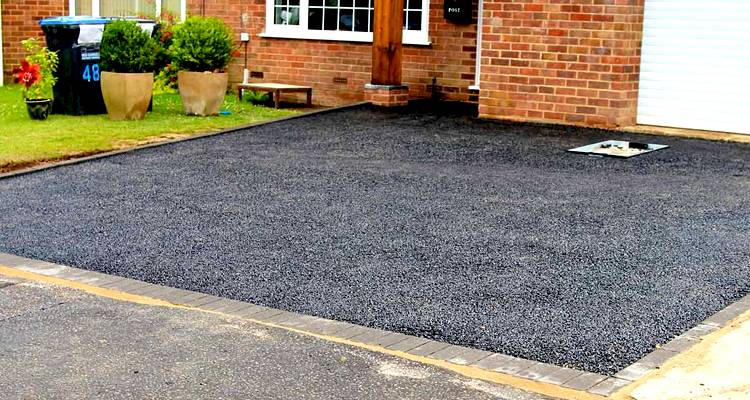
Resin driveways are becoming more and more popular in the UK. They provide an aesthetically pleasing finish and are known for being very durable. They are also quite quick to install and don’t require a lot of maintenance.
Pros
- ✔ Aesthetically pleasing.
- ✔ Good drainage.
- ✔ Diverse colours.
- ✔ Not too expensive.
- ✔ Fast installation.
- ✔ Easy to maintain.
Cons
- ✖ Hard to find experienced installers.
Concrete
Concrete is a very popular driveway material in the UK. It is extremely durable and easy to maintain. There are several colour options available so you can easily create a concrete driveway that fits in with the theme of your home.
Pros
- ✔ Easy to maintain.
- ✔ Good heat resistance.
- ✔ Aesthetically pleasing.
- ✔ Many colours available.
Cons
- ✖ Could crack over time.
- ✖ It can be quite expensive.
- ✖ Surface stains can be a problem.
Asphalt
Asphalt is another popular type of driveway in the UK. It is durable, aesthetically pleasing, and lasts for a very long time, making it a great investment.
However, it can be quite expensive to install, so not a great option if you’re on a tight budget.
Pros
- ✔ It lasts a very long time.
- ✔ Very durable.
- ✔ Aesthetically pleasing.
Cons
- ✖ Requires some maintenance.
- ✖ It can be expensive to install.
- ✖ Falls victim to some weather damage.
FAQs
Can You Restore a Gravel Driveway?
- Even out the surface of the driveway and smooth it out.
- Apply additional sub-base or stone fines to fill out the gaps and create an even smoother surface.
- Apply a new top layer of gravel and smooth out the surface.
Can You Install a Gravel Driveway on Top of Grass?
When it comes to a gravel driveway, it’s always best to have a strong sub-base underneath the gravel, and grass simply won’t provide a stable enough surface.