Builders
 Carpenters
 Electricians
 Flooring Specialists
 Gardeners
 Handymen
 Heating Engineers
 Painters & Decorators
 Plasterers & Renderers
 Plumbers
 Roofers
 Tilers
 my
myComposite Decking Installation Cost
At a Glance
- The average composite decking installation cost is around £1,250.
- This job typically takes 1 to 3 days to complete.
- A composite decking cost calculator to quickly estimate your UK costs.
- Composite decking prices per m² in 2026, by type and installation.
- What's involved in the job and how long it takes.
- How to find a local composite decking installer using MyJobQuote.
Get free estimates
Are you a trade? Get more work today!
£1,260
Table of Contents
- How Much Does Composite Decking Installation Cost?
- How Much Does Composite Decking Cost per m²?
- How Much Does a Composite Decking Installer Cost?
- Cost of Different Types of Composite Decking
- Factors That Impact Composite Decking Costs
- Composite Decking vs Wood Cost
- What's Involved in Installing Composite Decking?
- Benefits of Composite Decking
- Checklist: Hiring Composite Decking Installers in the UK
- FAQs
Composite Decking Cost Calculator
How Much Does Composite Decking Installation Cost?
What's the cost of composite decking installation?
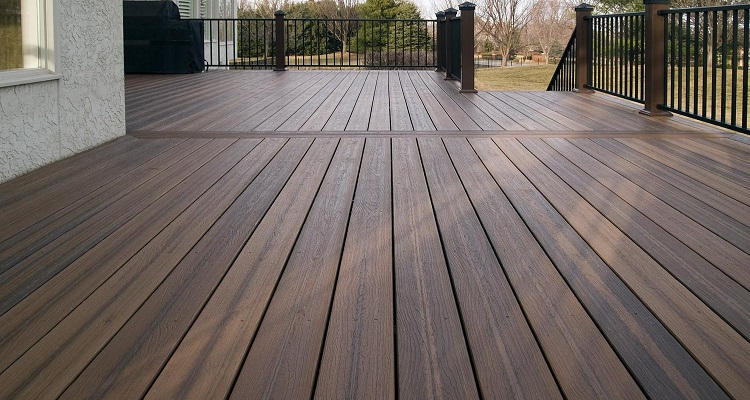
The average cost of composite decking installation is around £1,250 for a typical 15m² deck. What you pay depends mainly on the type of decking you choose, from budget hollow core to premium capped solid core.
Composite decking is quickly becoming the most popular timber alternative for garden decking for various reasons, stemming from price to maintenance benefits.
PVC decking is also available, which has proven to be another excellent alternative to timber. However, depending on the quality of the product and how it is installed, PVC can be prone to flexing under pressure.
Composite Decking Prices
Across all options, labour is typically around £450, with most installations taking about 2 days.
If you want a more accurate price for your project, try our composite decking quote calculator above for a quick, no-obligation estimate.
| Composite Decking Material | Installed Cost (15m²) | Installed Cost (25m²) | Installed Cost (40m²) |
|---|---|---|---|
| Hollow Core Uncapped Composite Decking | £975 | £1,650 | £2,600 |
| Hollow Core Capped Composite Decking | £1,300 | £2,150 | £3,400 |
| Solid Core Uncapped Composite Decking | £1,350 | £2,250 | £3,600 |
| Solid Core Capped Composite Decking | £1,650 | £2,750 | £4,400 |
| PVC Decking | £1,050 | £1,750 | £2,800 |
Want a custom price?
Post your job
For context, 15m² suits a small seating area, 25m² fits a family-sized deck for dining and lounging, and 40m² allows for a larger space, such as a dining zone alongside a separate lounge or hot tub area.
So, what is composite decking?
Composite decking is an artificial material made from wood and plastic fibres held together with a bonding agent. The materials are heated and bonded to ensure a sturdy core that is designed to be significantly more durable than standard timber decking.
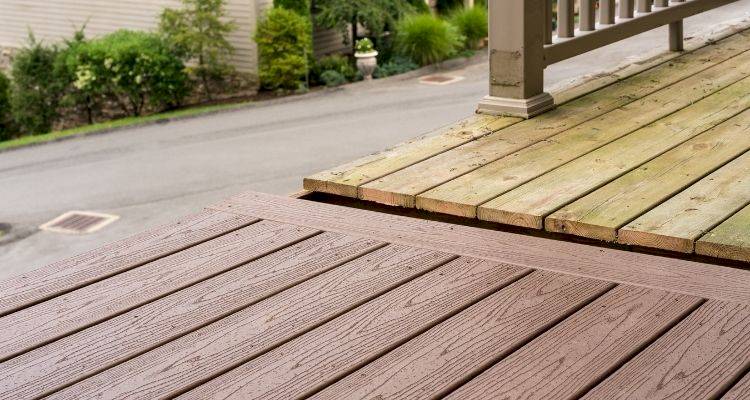
And what's the difference between capped and uncapped?
Capped composite decking has a tough outer layer, or cap, added during the manufacturing process. This makes it more durable and resistant to scratches, stains, and general wear and tear.
The initial outlay for composite decking is a little more expensive than standard timber material. However, compared to the majority of softwood decking it tends to last much longer and with less maintenance required.
I'm looking to have 2 sections of our garden decked using composite. The first would be 1.5m x 3.5m, and the second 3m x 3m in size. The garden is flat. Are you able to provide a rough estimate of how much roughly that would cost?
"To give you a rough idea, approximately £700 for the decking boards and £250 for the sub frame in timber. The labour would be around £400, allowing two days to get completed."
How Much Does Composite Decking Cost per m²?
Focusing solely on the material cost aspect of the job, the price varies considerably depending on the material you choose.
Which of the following types of composite decking are you installing?
Hollow Core Uncapped Composite
2 votes - 25%25% of votes
Hollow Core Capped Composite
1 votes - 13%13% of votes
Solid Core Uncapped Composite
2 votes - 25%25% of votes
Solid Core Capped Composite
1 votes - 13%13% of votes
PVC Decking
2 votes - 25%25% of votes

8 votes
See results
Hide results
Solid core composite is much stronger and is available in both capped and uncapped versions. The capping is an added protection to prevent mildew and mould from affecting the boards.
Composite Decking Prices per m²
| Composite Decking Material | Cost per m² |
|---|---|
| Hollow Core Uncapped Composite Decking | £35 per m² |
| Hollow Core Capped Composite Decking | £55 per m² |
| Solid Core Uncapped Composite Decking | £60 per m² |
| Solid Core Capped Composite Decking | £80 per m² |
| PVC Decking | £40 per m² |
Want a custom price?
Post your job
Specialist composite decking installers may get discounts you cannot access as a one-off buyer.
Because of this, it's worth asking for a specific breakdown of quotes you get, to check whether getting the materials yourself is more affordable.
How Much Does a Composite Decking Installer Cost?
Contractors will typically charge around £200 to £250 per day for installing composite decking, which will cover the labour costs involved in the job.
Most of the time goes on ground preparation, digging and levelling out the ground, ready for the supports to be put in place for the decking.
Garden levelling can be a lengthy process, as any mistake at this point can impact the accuracy of the final job.
The cost per m² within the following table includes any additional overheads and handling costs.
| Job Description | Average Cost per m² |
|---|---|
| Installing Hollow Core Uncapped Composite Decking | £65 per m² |
| Installing Hollow Core Capped Composite Decking | £85 per m² |
| Installing Solid Core Uncapped Composite Decking | £90 per m² |
| Installing Solid Core Capped Composite Decking | £110 per m² |
| Installing PVC Composite Decking | £70 per m² |
Want a custom price?
Post your job
Cost of Different Types of Composite Decking
There are three main types of composite decking to choose from:
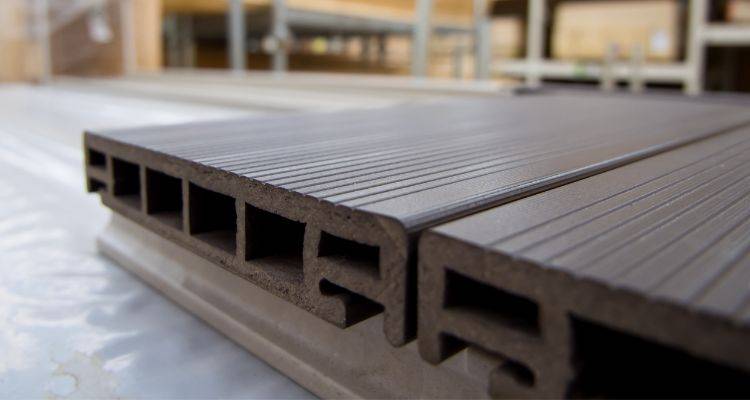
Hollow Core Composite Decking Cost
Hollow core decking is the cheapest composite option, making it a popular budget choice.
- Material cost (per m²) — around £35.
- Material cost (15m²) — around £525 uncapped, or £825 capped.
Pros
- ✔ Cheapest composite decking material.
- ✔ Available in various styles, colours and designs.
- ✔ Easy to install.
Cons
- ✖ Not as strong as solid core decking.
- ✖ Can flex or break underfoot over the years.
- ✖ May look cheap.
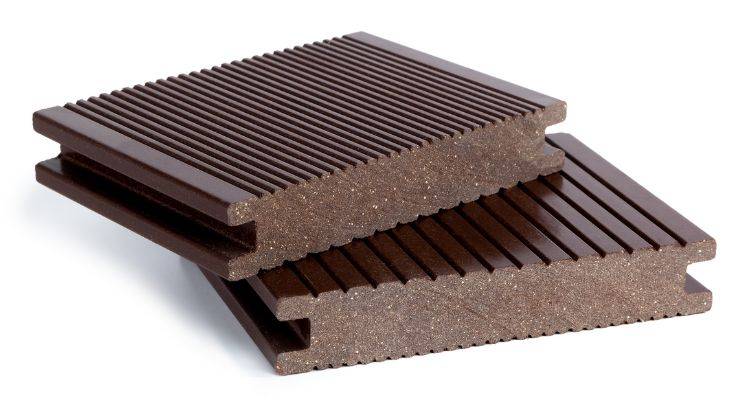
Solid Core Composite Decking Cost
Solid core decking costs more than hollow core, but it's stronger and longer-lasting.
- Material cost (per m²) — around £60.
- Material cost (15m²) — around £900 uncapped, or £1,200 capped.
Pros
- ✔ Extremely strong and hard-wearing.
- ✔ Requires next to no maintenance.
- ✔ Resistant to mildew, mould, and algae.
Cons
- ✖ More expensive than hollow core composite.
- ✖ As it's solid core, it weighs more, making it harder to manoeuvre and install.
- ✖ Labour costs can be higher due to handling issues.
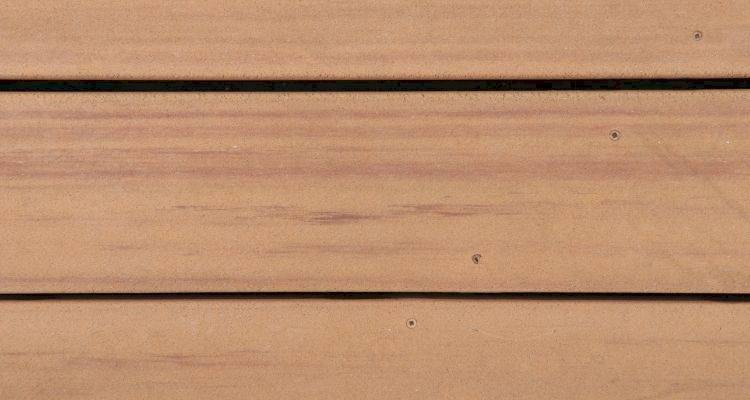
PVC Decking Cost
PVC composite decking is a mid-range option.
- Material cost (per m²) — around £40.
- Material cost (15m²) — around £600.
Pros
- ✔ Clean, shiny finish, available in various colours and designs.
- ✔ Low-maintenance, waterproof option.
- ✔ Extremely lightweight and easy to install.
Cons
- ✖ Shows scratches and scuffs quite easily.
- ✖ Surface can become slippery when wet.
- ✖ Can look a little cheap and flimsy.
What would be the normal and minimum spacing for joists for a 4x2.5m 28mm composite decking against the house wall?
"No different to normal decking. Use 400mm spacing for the joists, and you will be good to go."
Factors That Impact Composite Decking Costs
To help with your composite decking project's budget, let's go over the main factors that impact overall cost.
Decking Material
The biggest cost factor affecting composite decking installation is your choice of decking material.
On average when comparing a 15m² space, solid core composite costs £375 more than uncapped hollow core, while upgrading from uncapped to capped hollow core adds around £300 to the price of the same 15m² area.
Your choice of material comes down to your budget and performance preferences. If you're looking for the most cost-effective option, hollow core uncapped composite decking is your best choice.

The Size of Your Deck
The size of your deck is one of the biggest factors in the overall cost. A larger area needs more boards, more subframe, and more labour, so the price rises with every extra square metre you add.
Your Garden's Layout and Condition
Depending on the current state of your garden, your project costs can rise or fall.
You'll need to pay the cost of levelling your garden if it's currently uneven, so that your decking fitters have an even surface to lay your composite safely.

On top of this, you'll need to pay to remove the excess land. Garden waste removal costs around £200, depending on the volume.
If there are accessibility issues with where you want the decking installed (e.g., you have small corridor-like areas leading to the area you want to be decked), it'll take your decking fitters longer to reach the area, increasing your labour costs.
And if you've chosen a complicated layout for your decking, this is going to take longer, and potentially mean more materials, which will all be reflected in the cost.
How can I maximise safety on a composite-based deck?
"Composite decking is safe and also better than pressure-treated lumber, which is harmful to man and pets. When you say maximise safety, what do you mean? Do you mean is it safe? It is safe, there is no more danger or risk with this than any other material."
Deck Height and Raised Designs
A raised or multi-level deck costs more than a simple ground-level one. The extra height needs a stronger substructure, along with steps and railings for safety, which all add to the materials and labour involved.
Your Location
Your costs will change depending on your location in the UK.
Big cities like London have a higher cost of living, meaning the cost of trade jobs increases.
In London and surrounding south-east areas, you can expect to pay higher than the national average for trade jobs.
Composite Decking vs Wood Cost
Composite decking costs more to install than traditional timber decking upfront, but its low maintenance and longer lifespan often make it the better long-term investment. Here's how the two compare.
Choose composite decking if:
- You want low maintenance, with just an occasional clean instead of regular sealing and staining.
- You want a long lifespan of 15 to 25 years or more.
- You're happy to pay more upfront, around £65 to £110 per m², for minimal upkeep over time.
Choose timber decking if:
- You want a lower upfront installation cost, around £40 to £110 per m².
- You prefer the look and feel of natural timber.
- You don't mind ongoing maintenance such as sealing, staining, and repairs to prevent rot and warping.
Thinking About Other Decking Materials?
If you haven't settled on composite yet, our garden decking cost calculator also covers softwood, hardwood, PVC, Trex, and Ipe decking, so you can compare costs across all the options before deciding.
What's Involved in Installing Composite Decking?
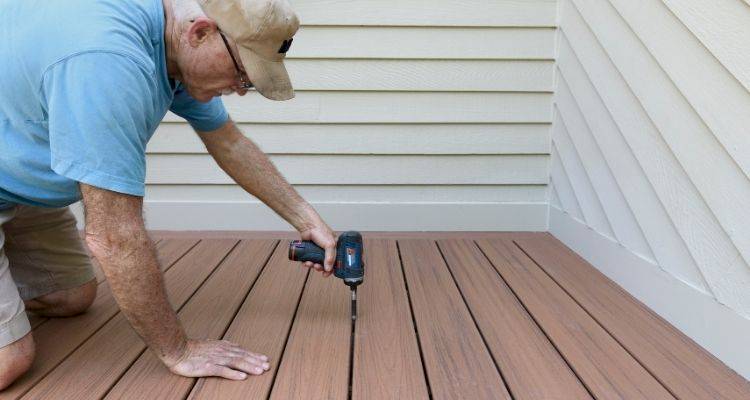
Here's an overview of what to expect when you hire a specialist to install your composite decking:
Before the Job
- Site Survey and Measurements — Your installer will assess the site (ground levels, surfaces, and drainage) and measure the area to calculate the materials needed.
- Design and Specification — You'll agree the design, layout, materials, and the placement of any steps, balustrades, or lighting, and the installer will flag any planning or building-regs considerations and utilities to be aware of.
- Quote and Schedule — You'll receive a finalised quote, and once you agree, the work is scheduled and access and material storage organised.
During the Job
- Preparation and Groundworks — The area is cleared and levelled with a slight fall to divert water away from the property, and a sub-base, concrete footings, and weed-control membrane are laid if needed.
- Sub-frame and Boards — Supports, joists, and noggins are positioned and levelled to form a rigid sub-frame, with the edges set so the trims sit flush, then the composite decking boards are laid to the chosen design.
- Finishing and Clean-Down — Trims, fascias, steps, balustrades, and any specified lighting are fitted and tested, then the area is cleared of all materials and debris and cleaned down.
After the Job
- Final Checks and Snagging — Your installer will confirm everything is as it should be, with straight lines, neat edges, and secure fixings. Any snags identified are resolved.
- Waste Removal — Any remaining waste materials or old surfaces are tidied up and removed.
- Care and Paperwork — Your installer will provide any manufacturer registrations or warranties, along with care and maintenance instructions to keep your new deck looking its best.
Ask a Trade
Got a question that only a tradesperson can answer? We have thousands of trades ready to answer any question you may have.
Ask your question

Benefits of Composite Decking
Below we take a look at some of the benefits to installing composite decking:
- Durability — Composite decking is incredibly hard-wearing, and unlike timber it doesn't rot. It is also less prone to algae, although you may need to occasionally clear surface algae in damp or shaded areas.
- Long-lasting — Unlike timber decking, which can splinter, warp, and degrade over time with regular use, composite decking tends to maintain its appearance over time, along with its integrity with minimal maintenance required.
- Low Maintenance — Unlike timber decking, which requires regular cleaning and treatments to maintain its appearance, composite requires significantly less maintenance, with a simple hose down to keep it clean.
- Sustainability — Composite materials are made up of a combination of wood and plastic. This means that old, recycled materials can be used to create a composite, and some old composite can be recycled and used again.
- Aesthetics — With composite decking, the aesthetic options are almost unlimited, with an array of colours and designs available to suit your décor and design choices.
- Value — Composite decking typically lasts 15 to 25 years, and high-quality, well-installed boards can last even longer, whereas timber can degrade faster and require costly repairs if not properly maintained. Although the initial cost is higher, composite decking offers roughly three times the value for money compared with timber, making it a smart long-term investment.
If you're refreshing the whole garden, composite decking also works well alongside other low-maintenance surfaces, such as artificial grass.
Is there a risk of composite decking burning if it catches on fire, or is it safe from this risk, unlike, say, timber decking?
"Just as flammable. I wouldn’t advise garden heaters or log burners on top of it."
Checklist: Hiring Composite Decking Installers in the UK
Here are a few key things to consider when you start looking for a local composite decking installer:
- Do they have good reviews and testimonials? Look at the trader's reviews and ratings from previous customers, check their online presence and MyJobQuote profile for customer feedback.
- Have you seen examples of their previous decking experience? Take a look at photographs, videos of recent projects or ask for a portfolio of past work and see if anything is similar to the look you're after.
- Are they fully insured? While the likes of Public Liability Insurance aren't legally required, any reputable tradesmen will be covered in the event of accidental damage or personal injury.
- Have you received multiple quotes? It is always a good idea to gather quotes from at least 3 local tradesmen, which you can do via MyJobQuote, allowing you to compare prices and help gauge a realistic figure for the work required without any commitment.
- Have they provided an itemised breakdown? Always ask for a detailed breakdown of costs before going ahead with the work, so you know exactly what you're being charged for while avoiding any hidden extras without prior knowledge.
- Is there a contingency plan for any delays? Should the job overrun or be delayed due to unforeseen circumstances such as bad weather or material shortages, make sure this has been discussed and agreed in writing.
- Have you received confirmation in writing? When you have agreed to hire a tradesman for the job, ensure you have written confirmation of the work being completed and the prices match what's been agreed.
FAQs
Do You Need Planning Permission for Composite Decking?
In most cases, no. Garden decking and other raised platforms are permitted to be built in your garden without planning permission, providing that the garden decking is no higher than 30cm from the ground, the composite decking doesn't cover more than 50% of the garden, and your property isn't a listed building or part of a conservation area. If you plan on creating something outside these boundaries, you'll need to speak to your local planning office to avoid fines or penalties.
Can You Install Composite Decking Yourself?
No, this isn't a job for DIY unless you're experienced, as poor construction carries real risks. Decking needs careful measuring and levelling, and an unbalanced deck can overload the support points or cause drainage issues that warp or rot the boards.
What Is the Cost of Composite Decking Removal?
Composite decking removal usually costs around £200 to £300. That covers roughly half a day's work plus waste removal, though the exact cost depends on the size and structure of the deck being removed.
Can You Lay Composite Decking on Top of Grass?
No, composite decking shouldn't be laid directly on top of grass, as it can shift and trap unwanted moisture. Lay a suitable sub-base and raised subframe first to prevent these issues.
Does Composite Decking Have Weight Limits?
Composite decking is typically designed to hold around 240 to 250kg per m². This varies by product and joist spacing, so it's best to follow the manufacturer's guidelines if you're unsure.
Can I Upgrade My Timber Decking to Composite Decking?
Yes. If the existing subframe is in good condition, you can reuse it as the base for a composite upgrade, which saves on the overall cost.