Builders
 Carpenters
 Electricians
 Flooring Specialists
 Gardeners
 Handymen
 Heating Engineers
 Painters & Decorators
 Plasterers & Renderers
 Plumbers
 Roofers
 Tilers
 my
Ask a Trade
Got a question that only a tradesperson can answer? We have thousands of trades ready to answer any question you may have.
Ask your question
Fitting a loft ladder can open your loft so you can gain access to extra storage space in your home. Check out our how-to guide to discover how to fit a loft ladder.
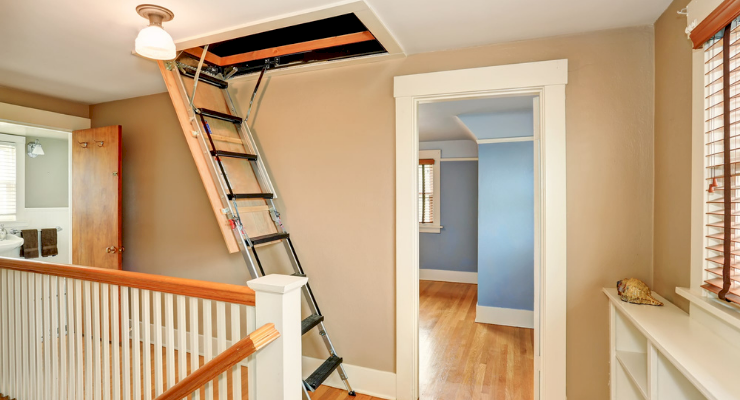
Below is a list of the tools that you will need to successfully install a loft ladder:
You will need the following safety equipment to ensure that this type of work is carried out safely:
The materials that you need to install a loft ladder are listed below, although a large part of the overall loft ladder installation cost will depend on the design and materials being used.
First you will need to determine where to fit your loft ladder, and mark a position in the ceiling by drilling a screw that goes all the way through the plasterboard.
The exact dimensions of the gap required will depend on the loft ladder unit. Ensure you check the manufacturer's specifications and instructions beforehand, otherwise you will need to measure the size of the unit manually.
You can then locate the screw in the loft, providing a rough estimate of where you need to position your loft hatch.
Be mindful of any ceiling joists as you will need to cut one of these for when you install the loft ladder. You should never cut two joists side by side, a joist with a strut or hanger fixed to it, or any joist on a roof built from factory-made trussed rafters without prior advice from a structural engineer.
Cutting a joist needs building regulations approval from building control (England and Wales) or a building warrant from the council's building standards service (Scotland), so always ensure this is in place before you start.
If cutting joists isn't something you're comfortable doing yourself, then hire a tradesman with experience installing loft hatches and ladders.
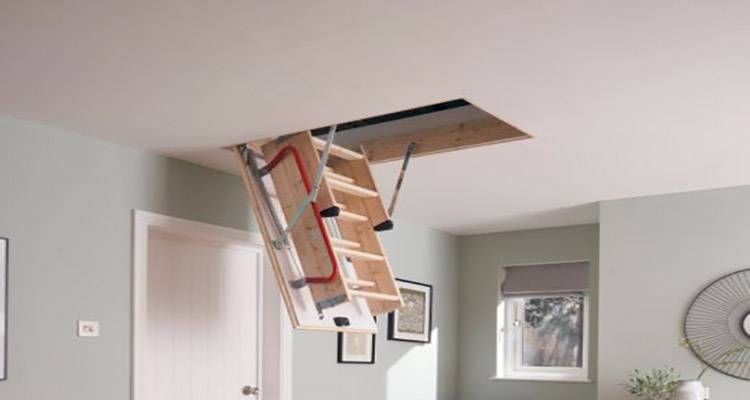
Brace the joist before cutting to prevent it from sagging. Use a circular saw to cut most of the way through, and finish off with a hand saw to avoid damaging the plasterboard.
Once the piece of joist is removed, add two pieces of timber in the front and two pieces in the back to head it off. These two pieces should run perpendicular to the cut joist, allowing you to install a double joist hanger for extra support.
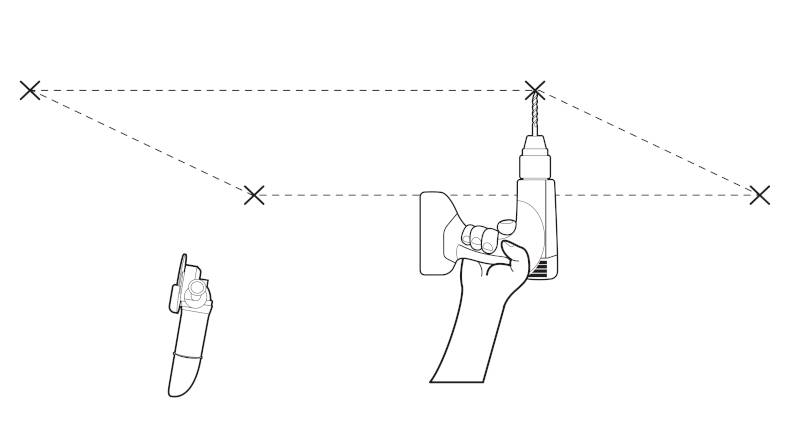
Once you have done your preparation and your framing is in place, you want to mark the four corners of the frame. Drive a screwdriver through each of the four corners and then cut the plasterboard from underneath, ideally using a jab or plasterboard saw.
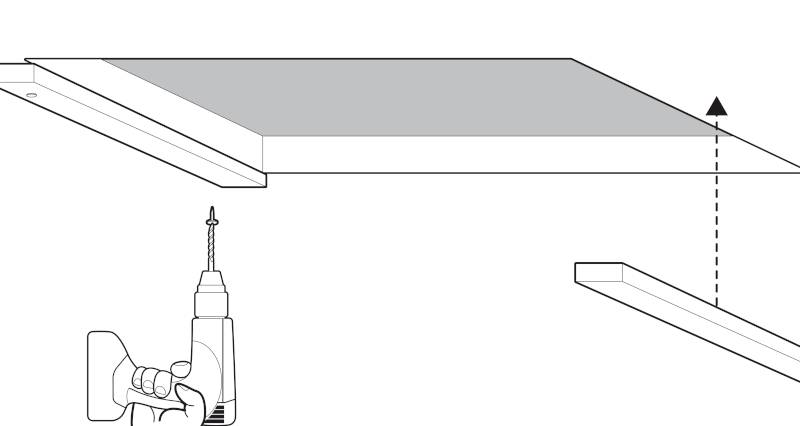
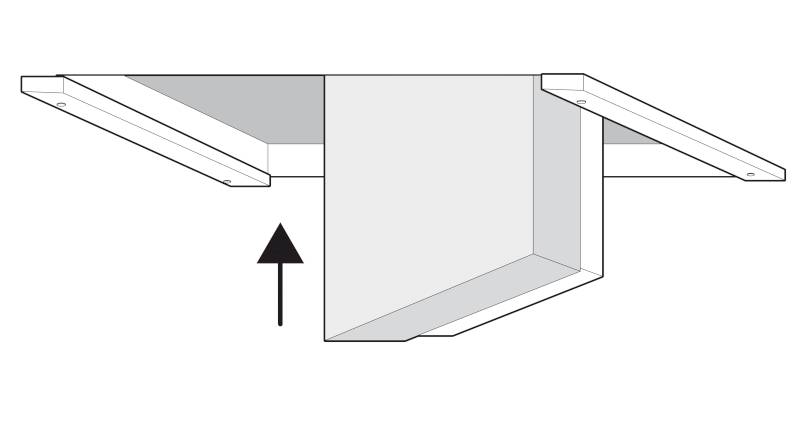
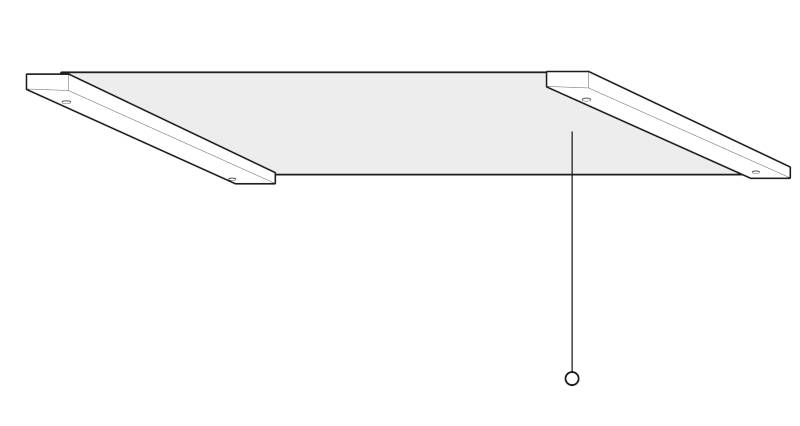
Use the temporary support boards and mount them to the bottom of your gap. This gives your ladder unit a temporary place to rest while you are completing the rest of the work.
During the next step, you will need someone to help you, as ideally you want to have one person in the loft and the other down below. Hand the loft ladder unit up through the gap to whoever is in the loft. They can then help position it correctly, and once ready the ladder can be lowered down onto the temporary support beams.
You want to make sure the frame is square in the hole. To do this, you need to measure diagonally in both directions. As long as the two measurements are equal, the frame is square and you can move forward with the rest of the installation. If they're not, you should use some shims to square it up.
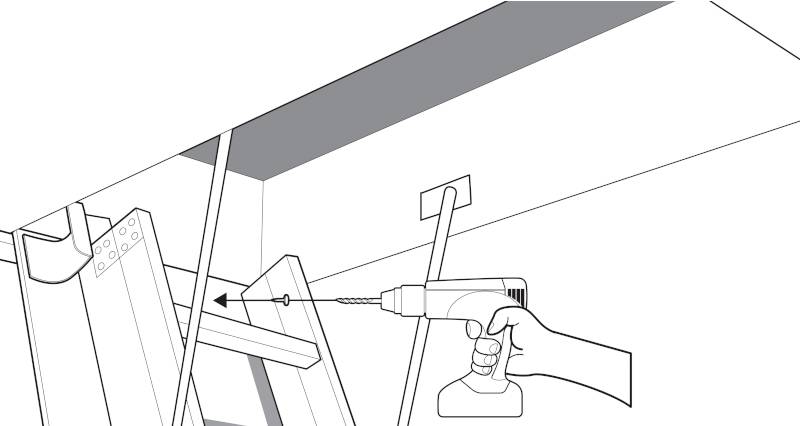
Add in some temporary support screws so that you can get everything shimmed in exactly where it is supposed to be. You should also pre-drill the hinge area ready for screws.
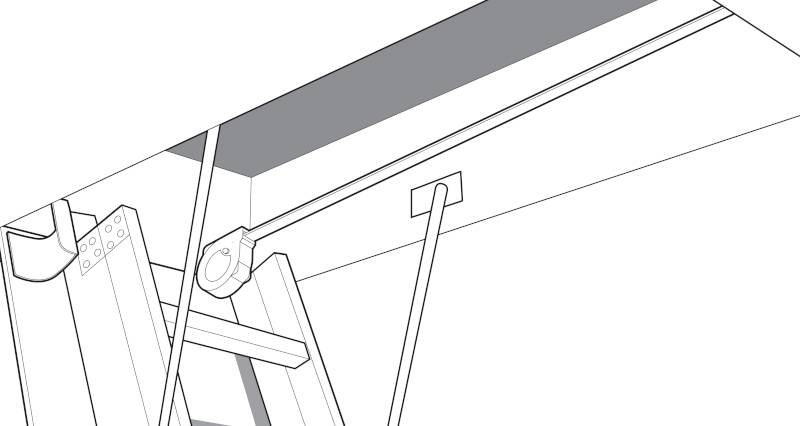
Go on to screw the hinges into position, ensuring that everything remains straight and in place.
Once your ladder unit is fully in position, you should then test it to ensure it works smoothly and properly and to ensure that there are no errors in its function. Once you're sure of this, you can remove the temporary support beams and trim and shims that were used to put it in place.
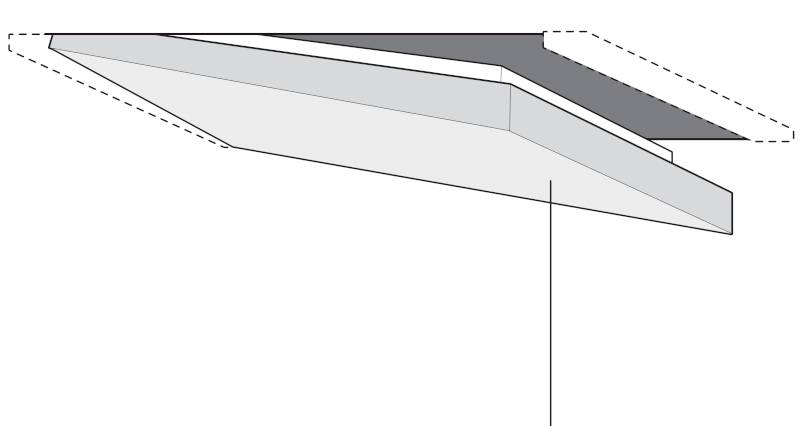
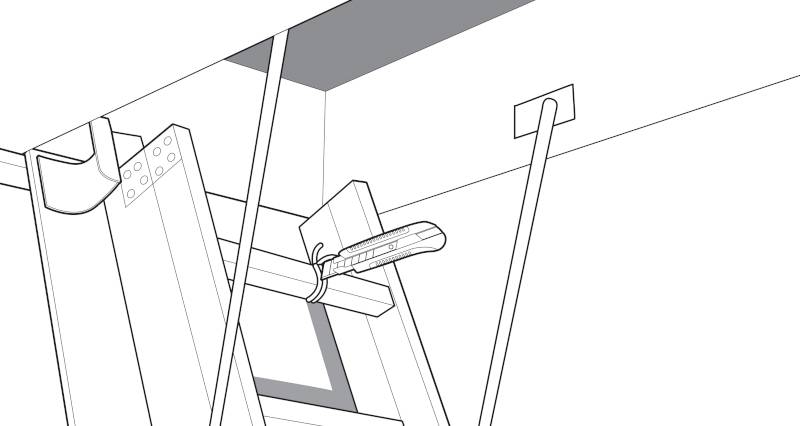
If there is a safety tie on the ladder, this can now be removed. It is also now that you can cut the legs to size, although this won't be required for the majority of telescopic ladders. If you do need to though, take correct measurements before using a hand saw to cut and then sand off any rough edges.
You can then add the feet to the bottom of the ladder according to the manufacturer's instructions and if you wish to add any decorative trim (optional) then you can do so now the ladder is fitted into place.
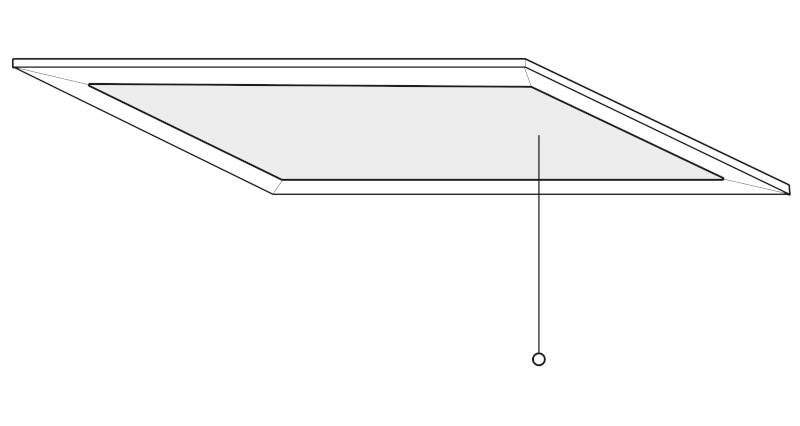

The best type of loft ladder is one that is easily retractable and offers the necessary support that you require. Choose one that will fit into your existing loft hatch, or if you are creating a hatch yourself, then make sure you have the correct dimensions when purchasing the ladder to go with it.
You should begin by measuring the space from the floor to the ceiling. Then, you also want to measure out and ensure that there is enough space for the ladder to swing.
If you are confident in your DIY skills, you may be able to build a loft ladder yourself. However, it is recommended that you choose one that is pre-made from a DIY store to ensure that it is safe and able to carry the necessary weight needed.
It is not always necessary to get a new loft hatch and ladder when you replace your loft ladder. Many hatches work just fine with a variety of different ladders. Simply perform your loft ladder removal and replace it with a like-for-like ladder that fits into the existing hatch.
Although this can depend on the design and height of the ceiling, the most suitable angle is usually between 60–70° to ensure the ladder is installed safely and isn't too steep.





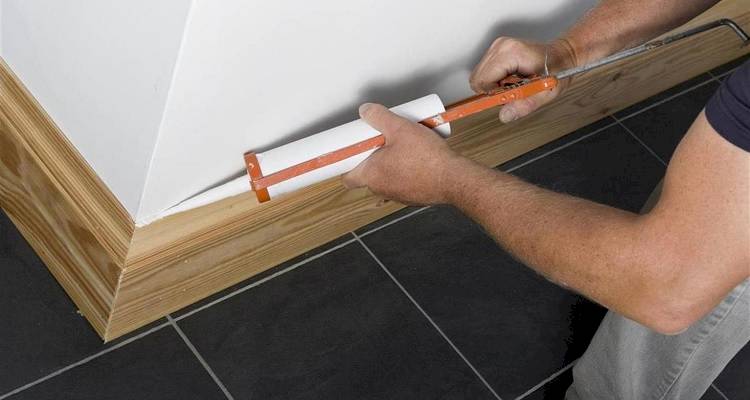

Copyright 2026 MyJobQuote.co.uk. All rights reserved
Privacy Policy | Terms and Conditions | Sitemap
MyJobQuote.co.uk is rated 4.68 stars by reviews.co.uk based on 4172 reviews