Builders
 Carpenters
 Electricians
 Flooring Specialists
 Gardeners
 Handymen
 Heating Engineers
 Painters & Decorators
 Plasterers & Renderers
 Plumbers
 Roofers
 Tilers
 my
myWhat Time Can Builders Start Work?
Being woken up to the sound of loud machinery at the weekend isn't ever welcome, but what does the law say about the time construction can take place?
Ignoring a council notice about noisy work can lead to prosecution and a fine, with a further fine for each day the noise continues. Equipment seizure powers do exist, but they cover noise from vehicles or machinery in the street, and noise from homes or licensed premises at night. They don't reach plant on a building site.

These regulations apply just as much to DIY work at home as they do to commercial and industrial sites. The law doesn't treat a private home differently. Council guidance, however, is often softer on DIY, with many local authorities publishing separate, more relaxed hours for it. Consequences can still follow for noise disturbances, especially if they're repeated during unsocial hours.
Whether you're a commercial business wanting to be clued up on noise laws, or a DIY enthusiast wanting to be mindful of local guidelines, we'll have the answers for you.
Let's get started!
Table of Contents
What Time Can Building Work Start?
This can be answered by looking at The Control of Pollution Act 1974, which regulates different forms of pollution (water, air, noise, and waste management) across England, Wales, and Scotland. Northern Ireland has its own equivalent powers under the Pollution Control and Local Government (Northern Ireland) Order 1978.

The Act itself doesn't set fixed hours for "noisy work", which means activities where the sound produced could be disruptive, such as drilling, the use of heavy machinery, and demolition. Instead, it gives your local council the power to serve a notice on a specific site, setting out the hours the work may take place, the equipment allowed, and the noise level permitted. A contractor can also apply to the council for consent before work starts, which settles the hours in advance.
Typical Working Hours
No government body publishes a single set of hours, so these vary between councils. Most, however, recommend the following pattern for noisy work:
- Monday to Friday — 8 a.m. to 6 p.m.
- Saturday — 8 a.m. to 1 p.m.
- Sunday — Councils recommend no noisy work.
- Bank Holidays — Councils recommend no noisy work.
Weekday guidance suggests builders avoid noisy work outside of 8 a.m. to 6 p.m., while weekend hours are more restricted. Saturday is typically cut to 8 a.m. to 1 p.m., and councils generally recommend no noisy work at all on Sundays or Bank Holidays.
| Day | Recommended noisy work hours |
|---|---|
| Monday to Friday | 8 a.m. to 6 p.m. |
| Saturday | 8 a.m. to 1 p.m. |
| Sunday | Councils recommend no noisy work |
| Bank Holidays | Councils recommend no noisy work |
The Noise Act 1996 sets night hours as 11 p.m. to 7 a.m., but its powers apply to complaints about noise from another home or from licensed premises, such as a pub or club, rather than construction sites. There's no 34dBA limit written into the Act itself. Ministers set noise levels separately, and these are measured inside the complainant's home rather than at the source. Construction noise at night is instead dealt with through a council notice setting the site's hours, or as a statutory nuisance.
With this being said, there are also local variations to these general guidelines, which carry different regulations.
Local Variations
Local variations introduce some subtle differences to noisy work guidelines.
You can find the local guidelines for your area by searching for your council website and "what time can tradesmen start work" and "noisy work hours" online.
Here's a snapshot of some areas across the UK:
Warwick District Council
- Monday to Friday — 7:30 a.m. to 5 p.m.
- Saturday — 7:30 a.m. to 1 p.m.
- Sunday and Bank Holidays — No noisy working.
Building work is inherently noisy, but workers are advised to limit the noisiest work to these hours only. Although builders can be on site outside of these hours, work that is considered excessively noisy must not occur outside of these boundaries.
West Northamptonshire Council
- Monday to Friday — 7:30 a.m. to 6 p.m.
- Saturday — 8 a.m. to 1 p.m.
- Sunday — No noisy work.
- Public and Bank Holidays — No noisy work.
Developers must demonstrate that they are attempting to keep noise pollution to a minimum while working. If the work needs to be carried out outside of these times and can be demonstrated as such, the council can arrange it if it agrees to the requirement.
Belfast City Council
- DIY — Monday to Friday, 7 a.m. to 7 p.m.
- DIY — Saturday, 8 a.m. to 1 p.m.
- DIY — Sunday, no noisy DIY recommended.
These hours apply to DIY, not construction. For building work, Belfast City Council doesn't publish set hours. Instead, it asks that noisy work takes place during the day so residents can sleep at night, and points builders to its separate site guidance. Belfast sits outside the Control of Pollution Act, but Northern Ireland councils hold the same power to set a site's hours by notice under their own legislation.
Birmingham City Council
- Monday to Friday — 8 a.m. to 6 p.m.
- Saturday — 8 a.m. to 1 p.m.
- Sunday and Public Holidays — No noisy work.
Birmingham City Council states it will impose requirements on any noisy work that is being found to be carried out outside of these hours, and can even do so before any work has started to help mitigate potential disturbances.
Cheltenham Borough Council
- Monday to Friday — 7:30 a.m. to 6 p.m.
- Saturday — 8 a.m. to 1 p.m.
- Sunday and Bank Holidays — No noisy work.
Commercial builders must be able to demonstrate they are applying "best practicable means" to keep their noise to a minimum, even during permitted noisy working hours.
Compliance & Penalties
If you find tradespeople are working noisily outside of your area's permitted hours, the first step is to talk to them to see if you can come to a resolution. Where this isn't possible, you can move on to complain to your local council, which will handle the matter for you.

This will trigger them to serve a notice on the workers, explaining how to proceed with work within guidelines. If this is ignored, the council can act on the neighbour's complaint by prosecuting. In England and Wales, the maximum fine for ignoring a notice was removed on 12 March 2015, so the fine is now unlimited, with a further fine for each day the noise continues. In Northern Ireland, the maximum remains £20,000 for work on business premises.
What Is Considered Unreasonable Noise?
So, what is classed as unreasonable noise from neighbours?
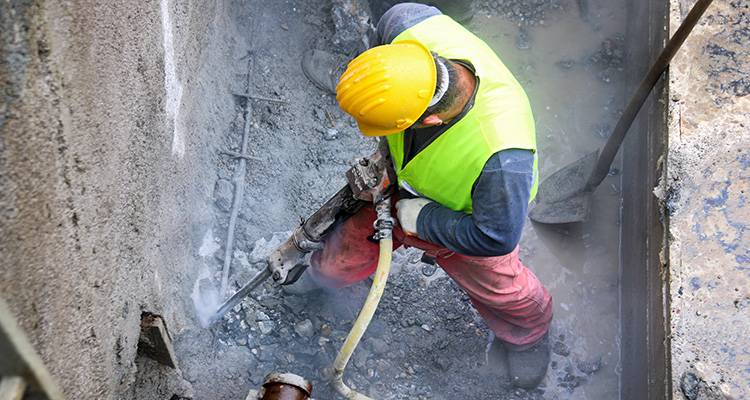
The following tools are considered to be disruptive to residents and local businesses when in use:
- Jackhammers/pneumatic drills
- Excavators
- Angle grinders
- Electric saws
- Compactors/rollers
If construction workers use these tools outside of the permitted noisy work times, local residents could complain. However, builders can turn up to building sites outside of these hours and can carry out quieter work.
These quieter tasks generally include indoor activities, such as:
- Painting/decorating/finishing work
- Installing fixtures/fittings
- Surveying
- Inspection/quality control
- Site clean-up
- Administrative work
It's important to note that noise can travel differently depending on the area, and contextual factors can influence decisions, so "permitted" tasks will vary from place to place.
For example, noisy work in a bustling commercial area might not be as noticeable as it might be in a quiet, rural residential setting.
What Tradespeople Does This Impact?
Some trades are inherently noisier than others (landscapers will probably be louder than painters and decorators, for example), but the rules regarding noisy working hours apply to all trades.

This means that all trades (builders, electricians, roofers, plumbers, landscapers, window fitters, etc.) must adhere to the permitted hours for the specific location they're working in.
The law applies equally to DIY work and commercial building work, although council guidance is often more relaxed for DIY. If the issue remains unresolved, your neighbours can contact the council, which can lead to an abatement notice. If ignored, this can lead to legal action and fines.
Summary
So, what time can building work start? If it's considered noisy work, the general times will be 8 a.m. to 6 p.m. Monday to Friday.
Here's a round-up of everything you need to know:
- The Control of Pollution Act 1974 sets out rules to regulate different forms of pollution — water, air, noise, and waste management — in the UK.
- Councils typically recommend noisy work between 8 a.m. to 6 p.m. Monday to Friday, and 8 a.m. to 1 p.m. on Saturday, with none at all on Sundays or Bank Holidays.
- Local variations to these rules exist, and you should check your local council's rulings before carrying out any loud work at your property.
- Failure to follow the guidelines can lead to a council notice and legal action, with unlimited fines in England and Wales, and fines of up to £20,000 in Northern Ireland.
- The law treats DIY and commercial building work the same way, though council guidance is often more relaxed for DIY — it's still worth following to avoid disrupting your neighbours.
It's important to check your local council's rules before any work begins on your property, as failure to comply with the permitted times can lead to legal action and large fines.
FAQs
Are There Exceptions to Permitted Work Hours for Emergency Work?
Yes, there are exceptions to the permitted work hours for emergencies and work that simply can't happen during daylight hours. For example, road work is likely to be permitted outside of noisy work hours to minimise the impact on traffic during the daytime.
However, the contractor's duty is always to ensure that their work minimises the impact on local residents and businesses.
Can You Request Changes to Permitted Work Hours for a Construction Project?
Yes. This is known as applying for prior consent, and it needs to happen before work starts. Your application should set out what the work involves, how it will be carried out, and what steps you'll take to keep noise down.
The council must grant consent if your application contains enough detail and gives no reason for it to serve a notice on the site instead. It has 28 days to decide. If it refuses, misses the deadline, or attaches conditions you're not happy with, you have 21 days to appeal to a magistrates' court.
Can You Do Building Work on a Sunday?
There's no law banning noisy building work on a Sunday anywhere in the UK. It only becomes a binding restriction if your local council has served a notice setting hours for that specific site, or made it a condition of consent. That said, almost every council recommends against noisy work on Sundays and Bank Holidays, and where no notice is in place, the council looks at whether the noise counts as a nuisance rather than simply the day of the week. Quieter work, such as painting and decorating, plumbing, and electrical work, can still go ahead.
As mentioned, DIY rulings are often more relaxed, but residents should always be mindful of their neighbours and let them know if noisy work is due to be carried out.
What Is Classed as Unreasonable Noise from Neighbours?
Excessive noise from neighbours can include the use of loud machinery as a result of extensive construction work, loud music or disturbing parties during antisocial hours, and barking dogs. If the noise disturbances become regular events, and a resolution can't be met between parties, you can involve the local council for them to carry out action on your behalf.