Builders
 Carpenters
 Electricians
 Flooring Specialists
 Gardeners
 Handymen
 Heating Engineers
 Painters & Decorators
 Plasterers & Renderers
 Plumbers
 Roofers
 Tilers
 my
myTradespersons Guide to Tax, HMRC & Self Assessments
Are you wondering about tradesperson tax and what you might need to pay? Want to know how to do a tax return?
Whether income tax, PAYE, or otherwise, we have you covered with the following guide.
We'll also help you get a grasp of the self-assessment business. We'll also look at other relevant topics, such as what a self-assessment is and what you can potentially claim back.
Any tradesperson looking to know the basic ins and outs of taxation and self-assessment will benefit from this blog.

Table of Contents
What Tax Does a Tradesperson Need to Pay?
There are various types of tax a tradesperson needs to pay or may need to pay depending on their work, circumstances, etc. The common examples are income tax, PAYE, national insurance, corporation tax, and VAT.
For information on how to pay your tax, see the next full section.
Let's take a closer look at each type:
Income Tax
This is the primary form of taxation. It is a tax calculated as a percentage of your income.
Before we look at income tax brackets, here is something else you should know:
Tax-Free Personal Allowance
In most cases, tradespeople can make up to £12,570 in total income without needing to pay tax. With that being said, personal allowance can be larger if you have a Blind Person's Allowance or Marriage Allowance.
There is no personal allowance if you earn more than £125,140, and this applies across every country of the UK.
When Your Tax Is Due and Other Important Details
The deadline to pay your income tax is generally 31 January. This payment covers your balancing payment for the previous tax year plus your first payment on account towards the current year, and your second payment on account is due on 31 July. You won't need to make payments on account if last year's Self Assessment bill came to under £1,000, or if HMRC already collected more than 80% of last year's tax at source, for example through your tax code.
Every tradesperson, whether self-employed or employed by another company, pays income tax on earnings above their Personal Allowance. The standard Personal Allowance is £12,570, and it marks the point where tax starts rather than exempting anyone from paying it.
Income Tax Brackets
For residents in the UK (with the exception of Scotland), the following tax brackets apply:
- 0% rate of income up to £12,570.
- 20% basic rate on income from £12,571 to £50,270.
- 40% higher rate on income from £50,271 to £125,140.
- 45% additional rate on income over £125,140.
If you live in Scotland, the following tax brackets apply:
- 0% rate of income up to £12,570.
- 19% starter rate on income from £12,571 to £16,537.
- 20% basic rate on income from £16,538 to £29,526.
- 21% intermediate rate on income from £29,527 to £43,662.
- 42% higher rate on income from £43,663 to £75,000.
- 45% advanced rate on income from £75,001 to £125,140.
- 48% top rate on income over £125,140.
PAYE
Pay As You Earn or PAYE is a system of taxation that is closely linked to income tax. This method is a way of collecting income tax. Income that is subject to PAYE is taxed at the time in which the payment is registered on the relevant payslip.
PAYE must be paid to HM Revenue and Customs or HMRC by the 22nd of the following tax month (if you are paying on a month by month basis) or the 22nd following the end of a given quarter should you part quarterly.
National Insurance
This is a form of taxation on profits and earnings for the self-employed, employees, and employers alike. Whether you need to pay national insurance as a self-employed tradesperson, and how much and what type you pay, can depend on your age, earnings, residence status and employment status.
National insurance contributions can potentially build your entitlement to benefits such as Maternity Allowance or the State Pension, but this would depend on if you are self-employed or an employee.
If you are paid via a PAYE system, your national insurance payments are automatically taken away from your salary. This happens whenever you are paid (weekly, every month, or otherwise).
The more you earn, the more National Insurance you'll pay. With that said, you can't claim more back, even if you make less in other parts of the year.
If you are self-employed, your National Insurance payments will be added up as part of your Self Assessment, and this is paid when you pay your income tax.
Corporation Tax
While corporation tax may seem bound for larger companies, any business that is a limited company is obligated to pay corporation tax on profits. This can apply to profits from the sale of assets, investments, or trading. The rate depends on your profits. Companies with profits of £50,000 or less pay the small profits rate of 19%, and companies with profits over £250,000 pay the main rate of 25%. Profits between these two thresholds are taxed at the main rate, reduced by Marginal Relief.

You register for Corporation Tax when you register your company with Companies House, which offers this option at the same time. If you didn't take it then, you can add Corporation Tax services to your business tax account afterwards. A new limited company that hasn't started trading is usually dormant for Corporation Tax.
It is essential to keep accurate company accounts and file a company tax return by the deadline and pay the right amount. The deadline to pay corporation tax is 9 months and a day after the end of the accounting period.
VAT
Value Added Tax (VAT) generally stands at 20%, which is the standard rate. There is a reduced rate and a zero rate for certain goods. You must register for VAT once your total taxable turnover for the last 12 months goes over £90,000, or if you expect to go over this amount in the next 30 days on its own. Registering is voluntary below this threshold.
A VAT-registered business includes VAT in the price of everything it sells, at the correct rate for that item. It keeps a record of the VAT it pays on its own purchases, and normally hands HMRC the difference between the VAT it charges customers and the VAT it pays to other businesses. Where it has paid more VAT than it charged, HMRC usually repays the difference.
Businesses are expected to submit VAT returns on a quarterly basis, and they are due a month and 7 days after the end of a given VAT period. If a VAT period ends on March 31st, you would need to pay before May 7th.
What Is a Tradesperson Self Assessment? And How to Pay Your Tax
Your tax HMRC self-assessment involves listing your income and expenses and calculating your tax for a given tax year. You must file your paper tax returns by October 31st or January 31st for online tax returns.
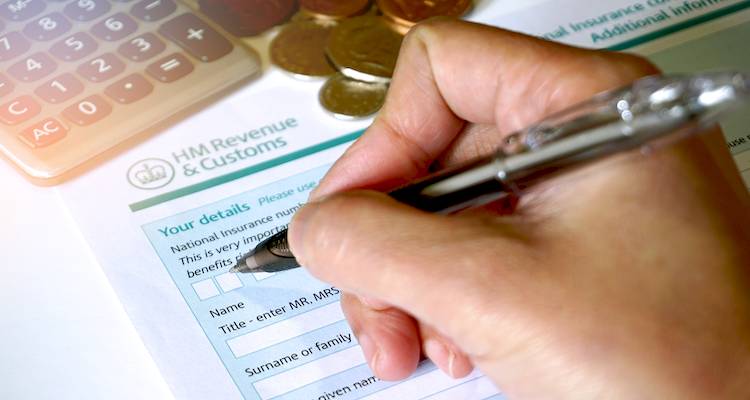
You register for Self Assessment through a single online service on GOV.UK. You'll need your National Insurance number before you start, and you sign in with a Government Gateway user ID or a GOV.UK One Login, which the service sets up for you if it's your first time.
If you have an online account, you can fill out your self-assessment any time before the deadline.
What Business Expenses Can a Tradesperson Claim?
There are many examples of business expenses that you may be able to claim. There are various categories like office expenses, travel, legal and financial costs, clothing expenses, marketing expenses, and staff costs, to name a few.

Examples of office expenses are postage, stationery, printing, and computer software. Travel expenses might be fuel/mileage expenses, or vehicle insurance, or services. More information on business expenses for the self-employed can be found on GOV.UK.
Conclusion
In this article, we've laid out the basics of HMRC, paying tax and dealing with self-assessments. Again, it is best to visit GOV.UK for further information, and you can always contact HM Revenue and Customs.
All in all, a tradesperson tax return doesn't need to be too complicated once you undertake the relevant research and plan things out in advance.
Last updated by MyJobQuote on 3rd September 2026.