Builders
 Carpenters
 Electricians
 Flooring Specialists
 Gardeners
 Handymen
 Heating Engineers
 Painters & Decorators
 Plasterers & Renderers
 Plumbers
 Roofers
 Tilers
 my
myHow to Become an Electrician
The UK needs an estimated 104,000 extra electricians by 2032 to meet government targets for housebuilding and renewable energy installations. If you’re wondering how to become an electrician and figuring out if it’s the right career path for you, there’s never been a better time to join the in-demand industry.

While there are already an estimated 230,000 electricians in the UK, it’s still not enough to fill the shortfall within the electrical industry. By the end of 2021, following Brexit, there was a 55% shortage of the required number of electricians in the UK.
Whether you’re a young adult wanting to explore a potential career as an electrician or are already an experienced tradesperson wanting to switch industries, the growing need for electricians in the UK should be a welcome invitation to the industry.
Here’s everything you need to know.
Let’s get into it.
Table of Contents
What Does An Electrician Do?
If you’re new to the trade and want to know what a typical day might look like for an electrician, here’s what you can expect:
- Installation of electrical systems (including wiring and installing fixtures)
- Repairing and maintaining electrical systems (re-wiring old properties, replacing fixtures, carrying out routine inspections)
- Electrical safety checks (ensuring compliance with codes and regulations, carrying out electrical safety checks and issuing certificates).
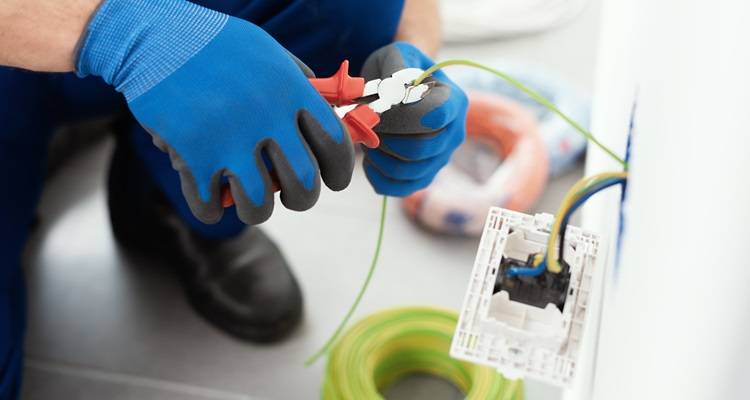
Depending on your job as a fully qualified electrician, along with any practical experience or specialist areas, then your day-to-day role can vary throughout your career. For example, working for an electrical company you may carry out regular maintenance and services within a specific region. Whereas if you become a trainer or training provider, you could spend your day in full-time education teaching electrical courses to the next generation of electricians.
Are Electricians in Demand in the UK?
The short answer: yes. Electricians will always be in demand, which is why the electrical industry and electrical engineering are a great career choice.
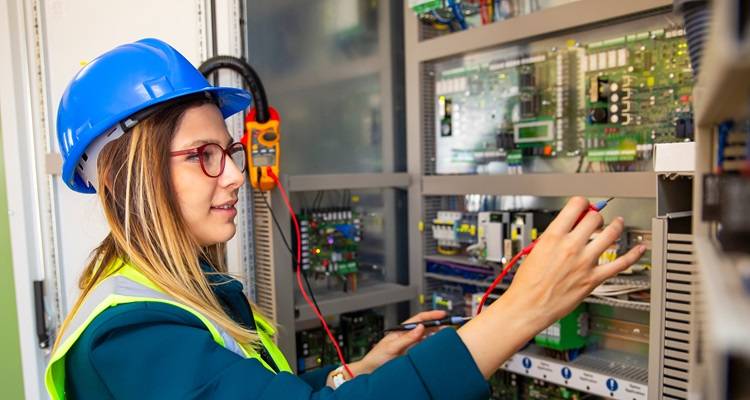
By 2032, an estimated 104,000 extra electricians will be needed in the UK to meet the government’s housebuilding and renewable energy targets. With vacancies at an all-time high, there’s never been a better time to become a fully qualified electrician.
This is due to several factors:
- An increase in demand for renewable energy sources
- An ageing workforce, with many older electricians reaching retirement age
- Brexit has continued to cause the departure of EU workers within the electrical industry
- Higher demand within smart home technology and electric vehicle (EV) charging points
Average Electrician Salary
How much do electricians make? Here’s a breakdown of average electrician salaries in the UK:
| Electrician Seniority/Position | Income Per Hour | Income Per Day |
|---|---|---|
| Apprentice electrician | £8 | £50 |
| Newly-qualified electrician | £20 | £150 |
| Experienced electrician | £25 | £200 |
| Self-employed sole trader | £40 | £320 |
| Limited company business owner | £45 | £360 |
All figures are estimates, pre-tax.
The UK’s national minimum wage in April 2026 is set at £12.71 per hour for over 21s, £10.85 for those aged 18 to 20, and £8 for both those under 18 and those classed as apprentices.
Apprentice electricians can expect their salary to start at around £13,500 (pre-tax). Once you’re newly qualified, this rate will rise to over £25,000, with an average yearly income of £35,000 (pre-tax).
Below is a summary of electrician salaries per year:
| Electrician Seniority/Position | Income Per Year |
|---|---|
| Apprentice electrician | £13,500 |
| Newly-qualified electrician | £35,000 |
| Experienced electrician | £52,000 |
| Self-employed sole trader | £60,000+ |
| Limited company business owner | £65,000+ |
All figures are estimates, pre-tax.

As you would expect, the more experienced you are, the more your income will increase. Experienced electricians can expect to earn £52,000 (pre-tax) and above. Moving into the self-employed and business owner arena will also boost incomes, with self-employed electricians earning in the region of £60,000 and limited company business owners around £65,000 (pre-tax).
As with all trades, regional differences will affect your exact salary.
Electrician Salary Comparison by Location
What areas of the UK have the highest earnings for a local electrician? Here are some newly qualified electrician incomes across the north, middle, and south of the UK to give you a better idea:
| Electrician Seniority/Position | Location | Income Per Year |
|---|---|---|
| Newly-qualified electrician | Manchester | £32,000 to £40,000 |
| Newly-qualified electrician | Birmingham | £35,000 to £45,000 |
| Newly-qualified electrician | Central London | £42,000 to £55,000 |
All figures are estimates, pre-tax.
Everything costs more in London, so you can expect salaries in the south of the UK to be more than in the north. A newly qualified electrician in central London can expect a starting salary of around £42,000+ (pre-tax), while an electrician of the same skill level in Manchester can expect a salary of around £32,000+.
To put this into context, let’s compare these salaries with other manual trades in the UK based on central London earnings:
| Trade Position | Income Per Year (Central London) |
|---|---|
| Bricklayer | £37,000–£42,000 |
| Electrician | £42,000–£55,000 |
| Gardener | £34,000–£40,000 |
| Plumber | £35,000–£40,000 |
All figures are estimates, pre-tax.
In London, electricians tend to be among the higher earners in manual trades, with typical salaries ranging from around £42,000 to £55,000 depending on experience and workload. Plumbers are broadly similar, while bricklayers and gardeners generally earn slightly less on average within the same region.
Self-Employed vs. Employed Earnings for Electricians
Let’s consider self-employed and business owner earnings for electricians. Although they see higher salaries, there are more deductions to be aware of and more responsibility.
It’s worth noting that being self-employed or a business owner will incur business fees, such as running and operational costs, which will bring down take-home salaries. The fees will typically include materials, vehicles, fuel costs, and insurance, which must be deducted from your yearly earnings before your take-home salary is calculated.
So, how much do self-employed electricians get paid? Let’s take a look at some sample fees for electricians in the UK:
| Electrician Seniority/Position | Income Per Hour | Income Per Day |
|---|---|---|
| Self-employed sole trader | £40 | £320 |
| Newly-qualified electrician | £18 | £150 |
| Limited company business owner | £45 | £360 |
The following shows how much this equates to for a yearly income, although if you run your own electrical business or work as a self-employed electrician there are more overheads and business expenses involved. This will need to be taken into consideration when quoting for electrical work.
| Electrician Seniority/Position | Income Per Year |
|---|---|
| Self-employed sole trader | £60,000 |
| Newly-qualified electrician | £32,000 |
| Limited company business owner | £65,000 |
All figures are estimates, pre-tax.
A self-employed electrician's hourly rate is around £320 per day, or £40 per hour, which averages out to an annual pre-tax salary of £60,000–however, business costs will impact these earnings.
You can expect expenses of around £7,300 per year for self-employed electricians in the UK to deal with business costs such as vehicles, fuel, tools, equipment, and any necessary insurance.
Specialisms for Electricians
A way of boosting your income as an electrician is to carve a niche for yourself with a specialism, and an excellent place to start is in the renewable energy sector.

Salaries for renewable energy project managers can be up to £80,000 per year (pre-tax), with electrical engineering and consultancy work earning up to £60,000 (pre-tax) and sales agents bringing in up to £56,000 (pre-tax). Renewable energy is an industry with no signs of slowing down, making it a great place to invest your time and efforts.
On top of your regular electrician training, you will need to complete additional renewable energy courses to get up to speed. To do so, there are several courses available:
- Green Electrical Upskill Package — a skills boot camp for experienced and qualified electricians wanting to move into solar, electric vehicle, and electrical energy storage installations.
- Renewable Technologies — a range of courses suitable for solar panel and electric vehicle charging point installations.
Electrician Career Requirements
How do you become an electrician? Before you begin training in the field, you must demonstrate your ability to undertake the job and show proof of your documentation.
You’ll likely need to show proof of the following before being accepted onto any electrician courses:
- Proof of a clean driving licence
- Willingness to undergo a criminal record check
- Evidence of your ability to undertake the physical demands of the job.
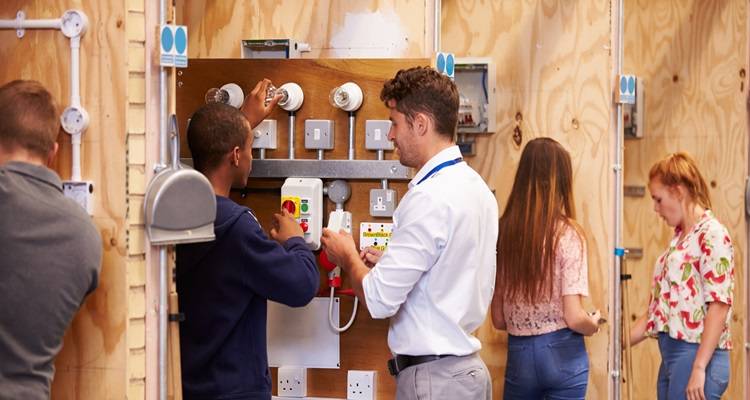
Once those steps are out of the way, you can move on to your official training.
Electrician Qualifications
There are several different types of electricians, all requiring different training and qualification routes:
- Domestic electrician (working in domestic/residential settings)
- Industrial electrician (working in industrial settings with large machinery)
- Commercial electrician (working in commercial buildings)
- Maintenance electrician (responsible for building safety and routine inspections)
- Highway systems electrician (responsible for road electrics, such as traffic lights and street lighting)
Your exact specialism will determine your training route. Here’s a list of the typical training and qualifications you may need as an electrician:
- Level 3 Electrical Installations Diploma — 8-week electrical training courses that focus on advanced electrical theory once you’ve completed Level 2 on the same topic.
- Level 3 NVQ Electrical — 6 months to 2 years, suitable for trainees who have completed their level 2 and 3 diplomas in electrical installations. This includes on-site work, and you’ll need to have already worked in the electrical field as an electrical improver, mate, or trainee.
- City & Guilds Level 3 Award in Requirements for Electrical Installations — for practising electricians and other professionals (surveyors, consultants) who need to enhance their understanding of IET Wiring Regulations.
- Achievement Measurement 2 (AM2) Assessment — the final assessment for electrical apprentices and trainees before becoming qualified electricians in the UK.
- Continuing Professional Development (CPD) — a commitment to “lifelong learning.” CPD is used to refresh knowledge, improve skills, and keep up to date with industry changes and developments.
- Competent Person Scheme membership — the UK government requires this to self-certify that their work has been completed in compliance with Building Regulations.
- Renewable Technologies — a range of courses suitable for solar panel and electric vehicle charging point installations.
- Green Electrical Upskill Package — a skills boot camp for experienced and qualified electricians wanting to move into solar, electric vehicle, and electrical energy storage installations.
Further to the technical requirements, you’ll also need some soft skills to do well in the industry. These can range from:
- Customer service skills, including good communication and clear explanations
- Basic computer skills
- Willingness to drive potentially long distances to reach clients
- Problem-solving attitude
- Good timekeeping and attention to detail.
How Long Does It Take to Become an Electrician?
As it is a skilled trade, it can take around three years to become a qualified electrician in the UK. This figure is based on an individual with no previous training. If you already have some baseline qualifications in the industry, your time to qualify will be shorter as a result.
Fast-track options are available for those wanting to qualify quickly, but they are more intensive and usually cost more.
The typical route for an untrained individual is:
- Complete your GCSEs (this is required before you enrol in an apprenticeship)
- Begin training as a domestic installer (this takes around a month)
- Gain work experience (usually by working alongside qualified electricians or taking on an apprenticeship or NVQ)
- Complete NVQ or apprenticeship (typically a diploma in electrical installation at level 2 or a diploma in electrical and electronic engineering at level 3)
From this point on, you can choose your specialism and train more deeply in that area.
Electrician Career Progression
There’s an increasing demand for renewable energy in the UK–MCS said that 2023 was a “record-breaking year for small-scale renewables”, with data showing how 2023 “surpassed every previous year on record for certified installations of low-carbon energy and heating across the UK.”–so, if you’re looking for a savvy move within the electrical industry, progressing your career into renewables could be a great move.
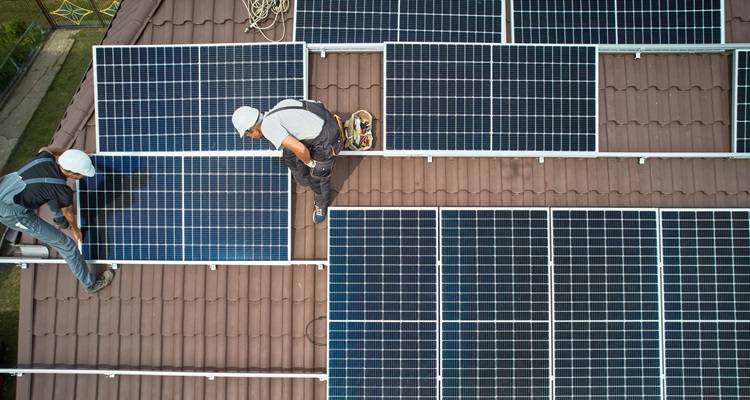
You can look at available courses in renewable energy, from installation to inspection and maintenance, to find something suitable for you. Many of these courses can act as a springboard to new niches, either in domestic or commercial settings, giving you ample opportunity to develop your skills as an electrician.
If you want more control over your day-to-day work, moving up the ranks to become a self-employed business owner can be a great route if you’re comfortable with business processes. Not only does this bring in more money, it affords you more flexibility with your schedule and allows you to hire additional electricians to grow your business.
Retraining as an Electrician
With a growing need for more electricians in the UK, it’s easy to see why individuals might want to switch career paths and retrain as an electrician after working in an adjacent trade. Whether you’re 30, 40, 50 or beyond, there are always opportunities to retrain, so if you’re not fulfilled in your current career, it’s not too late to switch to something else.
HSS Training, the UK’s number one health and safety training provider, says now is a “great time to work as an electrician and installer” because of the predicted growth in the electrical field. To meet the UK’s 70GW of solar capacity by 2035, an estimated 4,800 to 5,600 more electricians will be needed to manage solar installations in the UK alone.
With this in mind, suggested routes for retraining as an electrician include:
- NVQ courses (such as level 1, 2, or 3 diplomas, depending on existing qualifications)
- Apprenticeships (by following the Level 1 Diploma in Electrical Installation, Level 2 Electrical Installation, Level 3 Domestic Electrician, and Level 3 Installation and Maintenance Electrician)
- Online courses (great for flexible working, but you must check they’re endorsed by City & Guilds or EAL as it might not count towards anything otherwise).
Depending on your existing training, retraining can take 3 to 5 years. If you are 19 or over and undertaking an apprenticeship, you’ll be paid at least the appropriate minimum wage according to your age once you're finished the first year of your apprenticeship, which can help with course funding.
Fast-track options are available, but these will be more time-intensive and cost more. There is no age limit on retraining, but as being an electrician involves some physical labour, some may require the ability to prove physical fitness.
Summary
How do you become an electrician? By now, you should know the answer, but here are our key takeaways:
- Electricians are in high demand, and by 2032, the UK Trade Skills Index says an additional 104,000 electricians are needed to fill the “skills gap” in the UK, making the electrical industry a great opportunity to become a part of.
- Electricians receive the highest salaries compared to other labour-intensive trades, such as gardeners, bricklayers and plumbers.
- Specialising in renewable energy, solar panel fitting, or EV car charging can boost your income as an electrician.
Next Steps
If you’ve decided that becoming an electrician is the right choice for you and you want to enter into the industry, here’s a quickfire list of things you need to know:
- Get started with your qualifications by visiting Gov.uk and Apprenticeships.gov.uk
- Begin your training, working towards your qualifications or shadowing an experienced and qualified electrician
- Think about specialisms–do you want to focus on renewable energy or solar panel installations, or would you rather work in a commercial setting than a domestic one?
Build your reputation by completing work to a high standard and registering with trade bodies such as NICEIC to prove your commitment to electrical safety and standards.
FAQs
What Other Electrical Work are Electricians Responsible For?
What Are the Working Hours of an Electrician?
If you’re working as an on-call emergency electrician, while your earnings can expect to increase, your hours will rise too, and these are likely to be outside of “normal” 9–5 working hours.
Where Can I Find an Electrician Apprenticeship?
How Can I Grow My Salary as an Electrician?
Is Becoming an Electrician a Wise Career Move?
Sources
https://www.glassdoor.co.uk/Salaries/london-electrician-salary-SRCH_IL.0,6_IM1035_KO7,18.htm
https://www.tradeskills4u.co.uk/blog/electrician-salary-survey
https://www.theguilds.co.uk/post/do-electricians-earn-a-lot-of-money-uk